
Monica Piccinini
6 October 2025
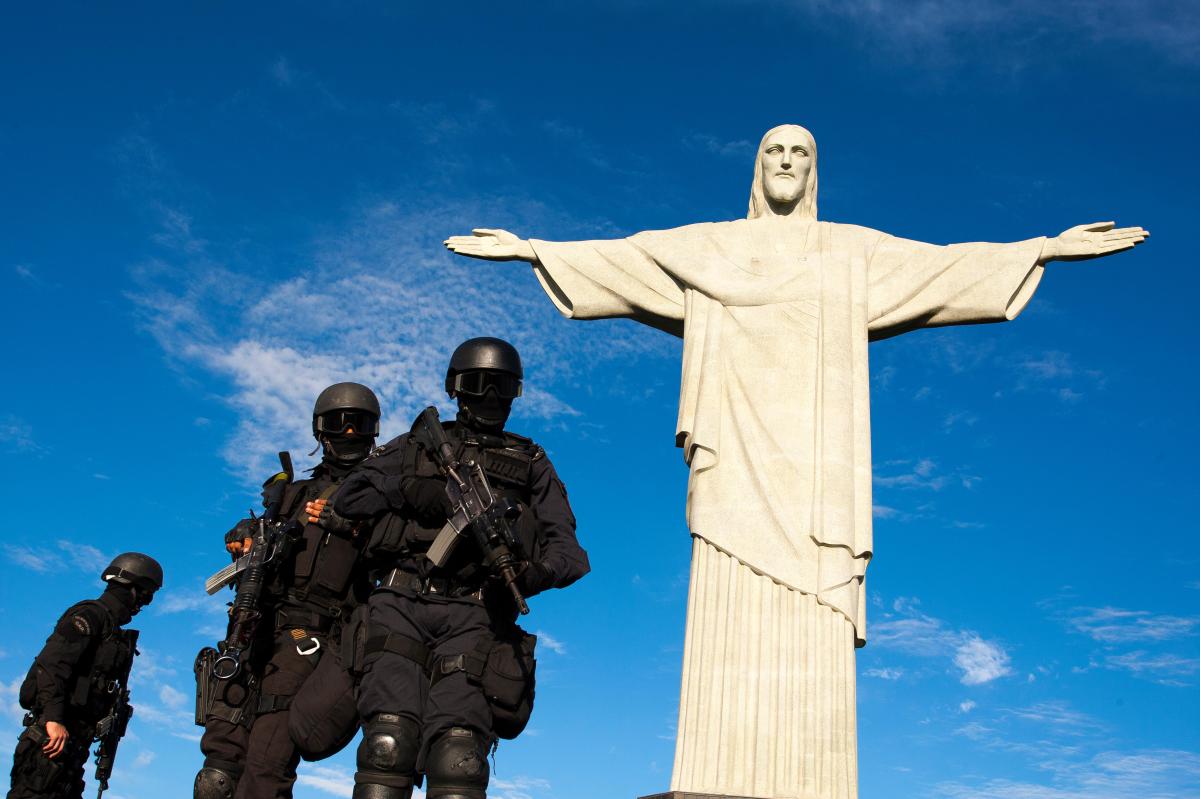
Rio de Janeiro is approaching a crisis where policing and killing may become indistinguishable. A new proposed law would reward police officers with cash bonuses for every suspect they kill.
Supporters argue this is an effective step to combat organised crime, but critics describe it as a state-sanctioned execution.
To many residents of Rio’s poorest communities, living in the shadow of both drug gangs and police raids, it feels like something out of a dystopian movie. Imagine waking up in a community knowing that your life or your child’s life might be worth money to someone with a badge and a gun.
The people sworn to protect you are now given financial incentives to treat the streets like a hunting ground.
César Muñoz, Human Rights Watch director, said:
Giving bonuses to police for killings is not only outright brutal but also undermines public security by creating a financial incentive for officers to shoot rather than arrest suspects.
The price of a life
The bill (6027/2025) risks turning the fight against crime into a deadly competition, a real “Squid Game”, where the scorecard is written in blood. Rather than incentivising arrests or prosecutions, it rewards lethal force.
It won’t be the wealthy in gated communities who’ll suffer. It won’t be the politicians drafting this bill protected by bodyguards, living behind marbled walls. It’ll be the young man or woman walking home from work, the child playing soccer in an alley. Undoubtfully, mistakes will be made, because under this law “mistakes” might mean bonuses.
On 24 January, Jeronimo Gomes da Silva, 44, a resident of Complexo do Alemão, one of Rio’s largest favelas, reported that a grenade was thrown from a drone into his home. He said:
They threw a grenade from a drone onto my balcony, destroying my house. My family and I almost died here.
Reports have also emerged of agents from Rio de Janeiro’s military police BOPE (Special Operations Battalion) entering a home in Complexo do Alemão and robbing a family, an incident that highlights abuse of power.
Speaking with Brasil de Fato, Jacqueline Muniz, an anthropologist, political scientist, and specialist in public security, warned that this bill could have far-reaching effects, particularly in how it blurs the line between policing and organised crime. She explained:
The police start organising organised crime itself, so they don’t just get close to the crime, they become partners, associates, okay? If you kill people who know about organised crime, you’re sabotaging the investigation itself and the production of intelligence that would serve to identify how organised crime works, who’s who within organised crime. You’re rigging the police for partisan purposes, for all sorts of rigging.
This ends up revealing corruption schemes, a logic of partnership with crime, right? It reveals, therefore, that death doesn’t result from a high-risk action, but rather becomes a commodity. It’s as if the state has militarised its police force and even cheapened the lives of police officers.
Brazilian authorities claim the policy would boost morale in a force stretched thin by violence and underfunding, while sending a tough message to cartels and militias that dominate Rio’s favelas.
But the cost of this action is crystal clear: human lives, particularly those of young, poor, and Black men who already make up a disproportionate number of victims in police confrontations.
Every year, Brazilian police are responsible for more than 6,000 deaths, many of them young Black men. Black Brazilians are about three times more likely to die in confrontations with the police compared to white Brazilians.
In 2024, Rio’s military police and civil police killed 703 people, almost two per day. At least 86% were Black. Between January and August this year, they’ve killed 470 people.
When the state decides that some lives are worth less, that some deaths are worth cash, it tells an entire class of people: you are disposable.
International groups, including Human Rights Watch, have condemned the bill warning it’d encourage extrajudicial killings, deepen mistrust between communities and the state, and establisha cycle of violence that has already scarred Brazil for decades.
Injustice reigns and scars are visible. Families who have lost sons in police raids hardly ever see accountability. Courts rarely prosecute officers involved in questionable shootings. Adding financial rewards only makes justice more elusive.
The Crossroads
Brazil stands at a crossroads. One path leads to more violence, more mistrust, more broken families, and the other demands courage and will, investing in education, creating real opportunities in the favelas, reforming police systems, and addressing poverty as the root of the crime.
Crime in Rio isn’t born from lack of policing, but from inequality.
The easy solution are bullets, the hard road is building a society where police do not need to be blackmailed to protect, where children don’t grow up expecting to die young, where safety comes from justice, not from fear.
Policies like this reduce people to targets, strip away humanity until all that’s left is a number: one more “suspect” eliminated, one more “bonus” earned.
For Muniz, the debate around public security goes beyond policing strategies and touches the core of Brazil’s democracy. She argues that real reform can only happen when armed institutions are brought under civilian control and when elected governments are able to exercise their authority without challenge.
If we want to play democracy, we must do it for real. The first dimension of democracy to guarantee legitimately elected governments, whether left or right, is the control of the sword. Something that has become out of control in Brazil,” Muniz warned.
Activists and minority groups
With COP30 approaching in November in Belém, Brazil is stepping into the international spotlight. Yet, President Luiz Inácio Lula da Silva has remained notably quiet on a contentious bill that could shape debates around human rights and environmental protections. His silence has raised questions over whether he is deliberately keeping his distance to avoid political fallout just as the country prepares to host the global climate summit.
The potential consequences of the proposed law are far-reaching. Should it be adopted more widely, whether under Lula’s administration or by a future far-right government, the impact could be profound. Critics warn it would not only endanger those labelled as “suspects” but also expose environmental activists, Indigenous leaders, and other minority groups to heightened risks in a country already filled with tensions over land and resources.
For Selma dos Santos Dealdina Mbaye, a prominent quilombola activist, the situation reflects the daily reality for those defending Brazil’s environment. She stresses that activists are already working under constant pressure:
We are often victims of unspeakable violence. At least 413 environmental and land defenders have been murdered or disappeared since 2012 in Brazil. According to Global Witness data on the attacks, 36 of them were of African descent.
We have not yet recovered from the assassination of our beloved leader, Mãe Bernadete, in 2023, six years after her son’s murder. We know that, before her death, Mãe reported several death threats against her and her community.
“here is no doubt that her role as a defender of the environment and the territory made her a target for those who attacked her. But, in addition, like other members of the Afro-descendant community who need collective protection, Mãe was more likely to suffer violent attacks because of her race.
A call to conscience
The world should not look away because what’s happening in Rio isn’t just Brazil’s problem, it’s a stark warning. Any society that starts placing a bounty on its own people, edges closer to societal collapse.
This bill is not protection nor justice, this is blood money, and history will not forgive those who turned human lives into a pay-per-kill system. In the end, this issue isn’t about crime rates or police bonuses, it’s about what kind of world we choose to build, one where life is valuable, or one where death has a price. Unless another path is chosen, the streets of Rio may soon resemble a game where survival itself is the prize.

 YourVoiz