
Monica Piccinini
25 February 2026
As artificial intelligence and cloud platforms move into the fields, a new alliance between Big Tech and agribusiness is reshaping who controls food, and who bears the risks.
IPES-Food, the International Panel of Experts on Sustainable Food Systems, has released Head in the Cloud, a report that challenges one of the most compelling narratives in contemporary agriculture: that digitalisation offers a straightforward solution to hunger, climate instability and rural decline.
The report’s findings are worrying. The rapid roll-out of artificial intelligence, cloud computing and precision farming platforms isn’t focused on farmers’ priorities. Instead, agricultural technology is increasing corporate control over food production, deepening farmer dependency and accelerating environmental harm.
A new alliance
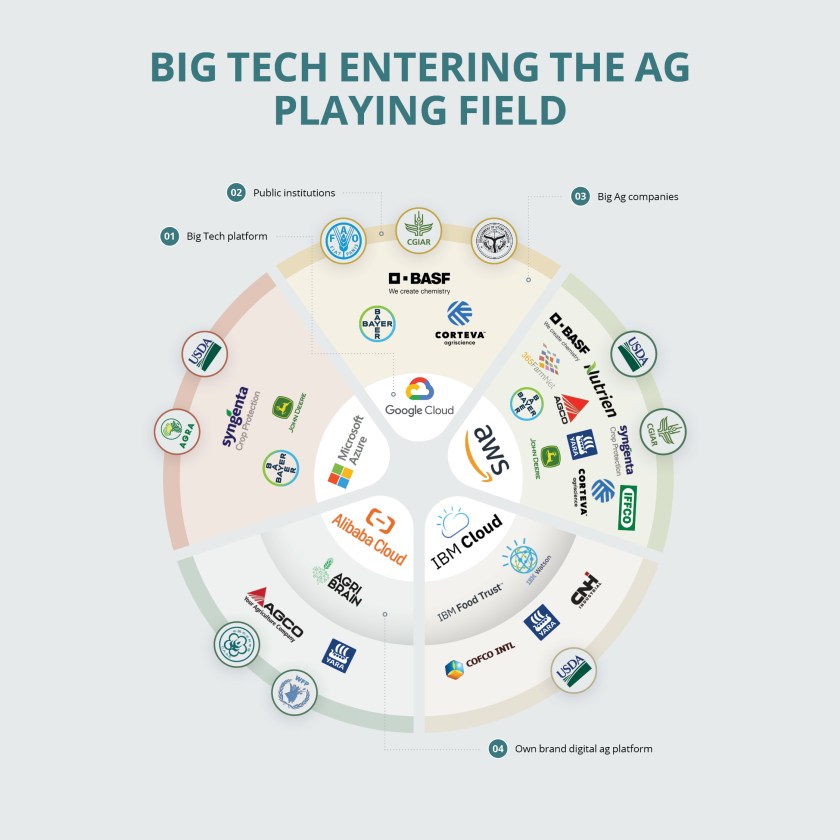
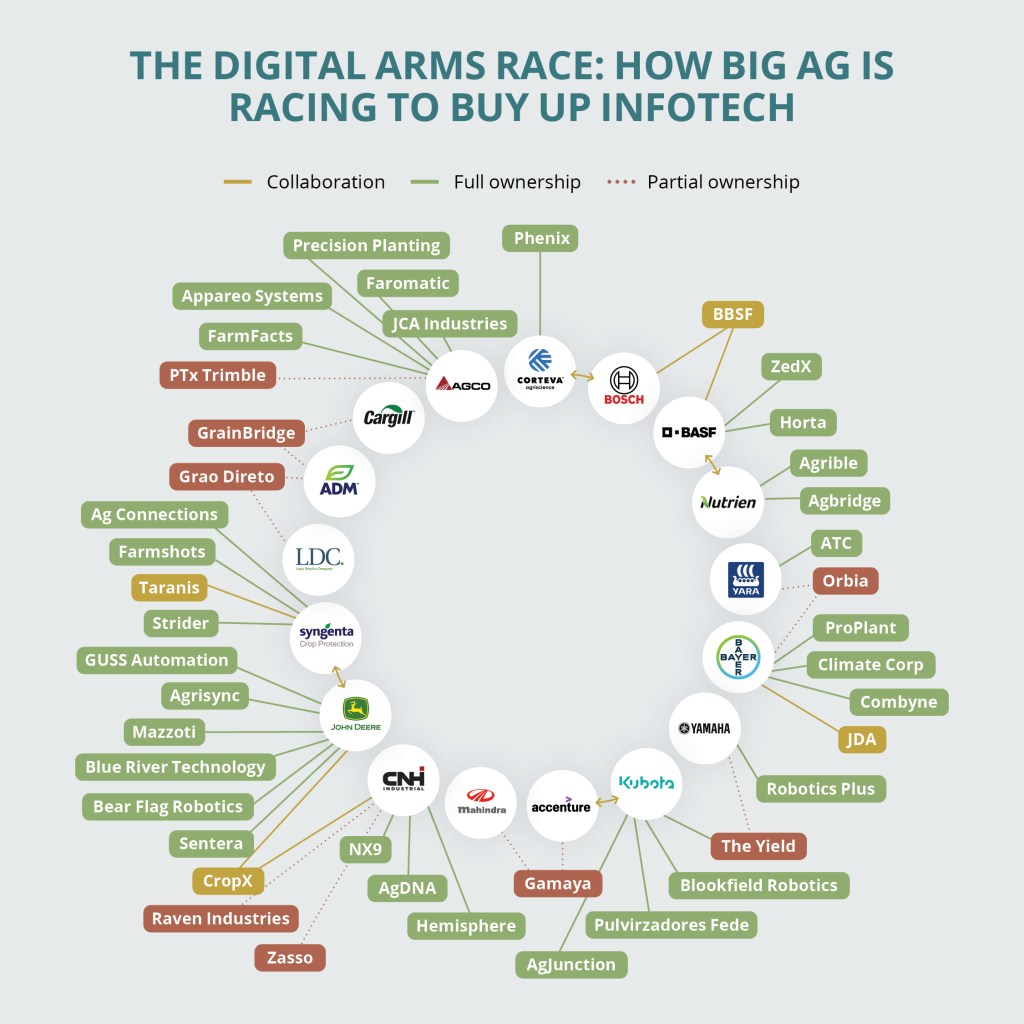
Across multiple regions, major technology companies, including Amazon, Microsoft, Google and Alibaba, have joined forces with agribusiness giants in seeds, agrochemicals and farm machinery. The result is an increasingly integrated digital infrastructure that reaches into every layer of industrial farming.
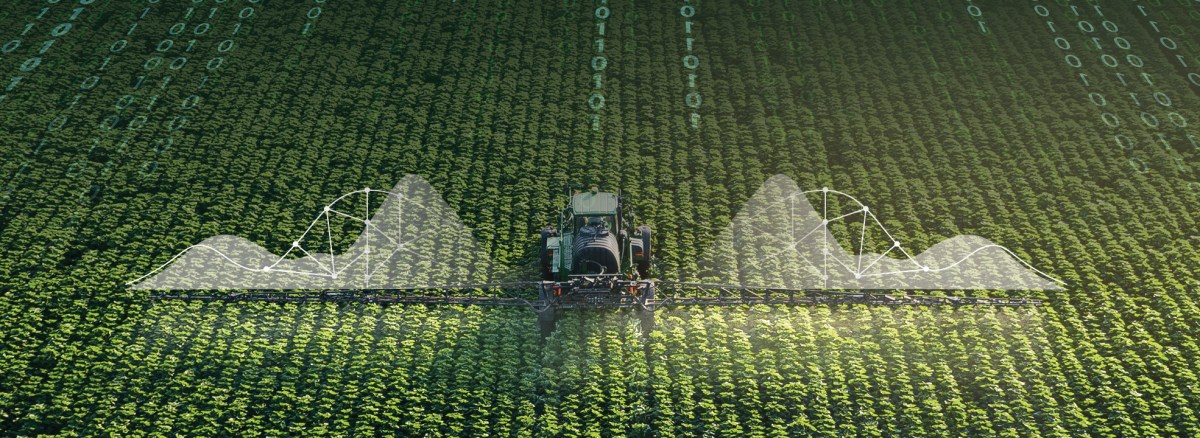
Satellites scan the fields, remote sensors measure soil moisture and nutrient levels, and automated tractors collect data as they move. This information is sent to cloud-based platforms where proprietary algorithms produce recommendations, such as which seed variety to plant, when to spray crops, and how much fertiliser to use. This data is used to refine products, influence markets and generate profit.
Decisions about what qualifies as “innovation” and which technologies get government support are often political. These decisions influence who holds power in the food system.
Lim Li Ching, co-chair of IPES-Food, describes this shift in stark terms. She said:
We are witnessing a quiet takeover of farming by Big Tech. But farming by algorithm is not the future farmers asked for.
Under the banner of innovation, tech giants are consolidating control over agriculture and biological heritage, sidelining the farmers who already grow our food in sustainable and resilient ways.
We can choose a different path. We must reimagine and govern innovation differently. It’s time to reclaim innovation for people and the planet.
Inequality
Digital farming systems are expensive. Precision technologies require specialised machinery, subscription-based software, reliable high-speed internet, technical training and ongoing technical support contracts. For large industrial operations, these expenses may be absorbed as capital investment, but for small and medium-scale farmers, this means new loans and debt.
The report shows how these technologies create dependency, described as technology lock-in. Once a farmer invests in a specific machinery or digital system, switching becomes complex and costly.
Machinery, seeds and chemical inputs are often designed to work together within proprietary platforms. Data may be stored in non-transferable formats, tying farmers to a single provider and pushing for continual upgrades to remain commercially competitive.
Pat Mooney, an IPES-Food expert, warned that this concentration of power comes at a dangerous moment. He said:
The world’s food security is more uncertain than it has been in decades, amid escalating global crises.
Yet Big Tech and Big Ag are jointly advancing proprietary AI, data platforms, and biotechnologies that narrow diversity when we need more of it, lengthen supply chains that should be shortened, and concentrate information that ought to be shared among farmers.
But our study shows that bottom-up, ecosystem-grounded, farmer-led innovations are already responding to today’s food crises – despite policy barriers and limited public investment.
Instead of changing the root problems of industrial farming, digital platforms often make them stronger. They increase the use of chemicals in large monoculture farms rather than reducing them. And instead of supporting local food systems, they make global supply chains even bigger.
It’s like being stuck on a treadmill. Farmers may see short-term improvements in efficiency or productivity, but prices soon fall and they feel pressure to invest in new technology again. Those who can’t keep up, often small farmers, are forced out, leading to fewer farms and the decline of rural communities.
Rather than making farming more equal, digital agriculture could make the gap even bigger between large industrial farms and smaller, community-based producers.
Control
If land was the defining source of past agricultural empires, data is fast becoming the new frontier.
Farmers don’t own the data generated on their own land, and in many cases, they can’t access the algorithms that transform it into advice. They have limited oversight over how their data is used.
Nettie Wiebe, a farmer and IPES-Food expert, reflects on what that means in practice. He said:
We’re being sold a vision of farming run by AI and robots. But farming is built on judgement developed over years in the field. When farmers lose control over our data and decisions, we lose control over our farms. That’s a dangerous path.
Real innovation doesn’t come from Silicon Valley – it comes from farmers, farmworkers, and Indigenous Peoples working with the land and with each other.
Around the world, farmers are developing tools, restoring soil fertility, breeding crops for a changing climate, and managing pests ecologically. That’s real innovation. It builds resilience without locking us into debt or dependency.
Digital tools focus more on numbers and data than on lived experience. Indigenous peoples and local communities, whose farming knowledge has protected biodiversity for centuries, are often left out of these systems.
The hidden footprint
Digital agriculture is often presented as environmentally progressive, but the infrastructure behind it is material and energy intensive.
Data centres use huge amounts of electricity and water. Servers and devices depend on minerals extracted from already stressed landscapes. Precision technologies might slightly reduce chemical use, but they usually reinforce farming methods that harm soil and biodiversity over time.
The “cloud” isn’t invisible, it leaves a real environmental footprint.
Meanwhile, farmer-led alternatives, participatory breeding, agroecology, and community seed-saving, get little support. These methods build resilience through diversity, shared knowledge and natural ecosystem management, rather than relying on expensive, proprietary technology.
Yiching Song, IPES-Food expert, highlights their significance. She said:
Our research shows that farmer-led seed systems and participatory breeding are among the most effective responses to climate change and biodiversity loss.
These innovations integrate scientific and farmers’ knowledge, strengthening both ecosystems and livelihoods. If we are serious about climate action, policy and investment must recognise and actively support these systems, not sideline them.
Political
The debate over digital farming is ultimately about governance and power.
Who decides which technologies are developed and scaled? Who owns the data? Who takes the risks and who benefits?
In a time of multiple crises, including climate breakdown, biodiversity collapse, and geopolitical instability, food security is already fragile. Concentrating control over seeds, data and decision-making in a handful of corporations just adds another layer of vulnerability.
IPES-Food is asking governments and funders to create stronger rules so that new ideas and technologies are fair and responsible. They also want more funding to go to local, community-led projects that focus on sustainability. In addition, they are calling for limits on the power of large technology and agriculture companies, and for a shift in how people think and talk about innovation.
As the Head in the Cloud report points out, the question isn’t whether farming should innovate, it’s whether innovation will serve big companies or the people and ecosystems that food systems rely on.
Featured image: IPES-Food.

 YourVoiz