Brazil’s silent war on women

Monica Piccinini

18 March 2026

In Brazil, four women are killed by femicide every day. Behind the statistics lies a deeper crisis, where gender violence collides with racism, colonial legacies and territorial inequality, leaving Black, Indigenous and rural women at greater risk.

When Brazilian journalist Vanessa Ricarte was killed by her former fiancé, the case briefly dominated national attention. Ricarte was 42 years old, and according to police investigators, she had already endured abuse and periods of captivity before the murder. Friends later described a relationship that had grown increasingly controlling. The killing, devastating as it was, didn’t come out of nowhere.

Like many femicide cases in Brazil, the violence didn’t begin with the murder, it grew slowly, through intimidation, control and escalating abuse, long before it became fatal.

Across the country, this pattern repeats itself with unsettling frequency.

According to the Brazilian Forum of Public Security, 1,568 women were killed in femicides in Brazil in 2025. That means four women die every day. The number represents a 4.7 percent increase compared with the previous year, and it’s the highest number recorded since femicide was formally recognised a crime in Brazilian law in 2015.

Since the law came into force, at least 13,703 women have been killed simply because they were women. Over the past five years, the number of cases has risen by around 14.5%. Between 2021 and 2024, 97.3% of femicide cases were committed exclusively by men.

Numbers alone can’t explain what’s happening. In many cases, the violence builds slowly: intimidation, insults, coercion, isolation, and threats.

What begins as psychological control can escalate into physical aggression. By the time authorities become aware of the situation, the danger is often already severe.

Jesem Orellana, epidemiologist and researcher at the Oswaldo Cruz Foundation (Fiocruz), pointed to a critical gap between legislation and prevention. He said:

Brazil has a robust legal framework to protect women, including harsh penalties for femicide. Yet thousands of women have been killed in recent years. Despite strict laws, we’ve made little progress in effective prevention, especially in public health.

We do little in primary care and struggle to recognise and report different forms of violence against women. This leads to a lack of early or timely intervention to prevent femicide.

Outside Brazil, violence in the country is frequently associated with drug trafficking or organised crime. Femicide tells a different story. Most killings happen inside intimate relationships.

Data analysed by the Brazilian Forum of Public Security show that nearly 60 percent of victims are killed by a current partner, while around 21 percent are murdered by former partners. In other words, the person responsible is usually someone the victim once trusted, a partner, a husband or ex-partner.

The location of the crime reflects this reality.

In 66.3 percent of femicide cases, the killing takes place inside the victim’s own home. The weapons involved are rarely sophisticated. Knives and other sharp objects account for nearly half of all cases, while firearms are used in roughly a quarter.

Orellana’s research highlighted how warning signs are often visible long before the crime. He said:

Most femicides, especially those linked to domestic violence, are preceded by relationship or financial problems. Jealousy and a sense of ownership over women are common and should be treated as mental health issues. Financial dependence also plays a major role, many women are prevented from working, which increases their vulnerability to psychological and physical abuse, including attempted femicide.

He added that violence often intensifies when women try to leave:

It’s often in this context of extreme violence that women decide to end the relationship, and the cycle of threats and aggression escalates. Some obtain protective measures, but others are still killed, even if they are a minority, despite these protections.

The racial dimension of femicide

The statistics also reveal deep racial disparities.

According to the Brazilian Forum of Public Security, between 2021 and 2024, 62.6% of femicide victims were Black women, while 36.8% were white. Gender violence in the country can’t be separated from its long history of racial inequality and social exclusion.

Demographer Jackeline Ferreira Romio, interviewed by the independent outlet Outras Palavras, argues that femicide must be examined through intersection of race, gender and class. She said:

Femicide is a violence based on hatred.

When racism intersects with misogyny, the violence intensifies, leaving women who already face discrimination or poverty at much greater risk of lethal violence.

Look at where cases occur and the inequalities become clearer. Women living in peripheral urban neighbourhoods, rural regions or historically marginalised communities, often face the highest levels of violence while having the least access to institutional protection.

In that sense, femicide isn’t just a gender issue, it’s also a political and historical problem shaped by legacies of colonialism and structural inequality in Brazilian society.

Indigenous women and colonial violence

For Indigenous women, violence is often connected to longer histories of colonial dispossession and contemporary disputes over land.

Analysis by the platform Gênero e Número shows that reports of physical, psychological and sexual violence against Indigenous women more than tripled between 2014 and 2023. During the same period, sexual violence, often affecting girls, nearly quadrupled.

Between 2003 and 2022, violent deaths of Indigenous women increased by around 500 per cent.

Indigenous sociologist, Pagu Rodrigues, argues that this violence can’t be explained as part of Indigenous cultural traditions. Instead, it reflects centuries of colonial violence and patriarchy. She said:

Violence against women isn’t Indigenous culture, it’s part of a colonial process of violence, of patriarchy.

In many territories, violence is closely linked to conflicts over land and natural resources. Indigenous women often take leading roles in defending their communities and territories, which can place them in situations of heightened risk.

Rodrigues notes that sexual violence is sometimes used deliberately as intimidation. She explained:

Rape has been used as a strategy to demobilise Indigenous women leaders.

Where mining and large infrastructure projects, agribusiness expansion, and other extractive industries push into Indigenous lands, gender violence can become entangled with environmental and territorial conflict.

Geography and institutional absence

Where a woman lives in Brazil can influence whether meaningful protection is available.

Smaller municipalities with fewer than 100,000 residents record the highest femicide rates in the country, around 1.7 per 100,000 women, compared to the national average of 1.4.

Although only 41 percent of Brazilian women live in these towns, they account for roughly half of all femicides recorded nationwide.

Part of the explanation lies in the absence of specialised services. More than 70 percent of these municipalities lack women’s police stations, shelters or dedicated support centres.

Orellana stressed that territorial inequality directly increases lethal risk:

In municipalities with less state presence, whether in security, healthcare, the judiciary or social services, the chances of women being killed are even higher, because there’s no safe or timely support.

These women are often re-victimised by the state, which sometimes not only denies protection but blames them, revealing another face of structural machismo and patriarchy.

For women in rural areas, seeking help involve travelling long distances, or reporting to authorities who still domestic violence as a private matter rather than a crime. The gap between legal protection and everyday reality can be wide.

Laws fall short

Brazil is often recognised for having one of the most comprehensive legal frameworks in Latin America for addressing violence against women.

At its centre is the Maria da Penha Law, enacted in 2006, and marking its twentieth anniversary this year. The law remains the country’s main legal instrument for combating domestic and family violence. But the problem is no longer about creating new laws, but rather the ability to implement them effectively.

Orellana argued that the failure is systemic and requires coordinated action:

Femicide isn’t a problem that can be effectively tackled by a single sector. It requires coordinated action across social assistance, public health, the judiciary and public security.

We have not yet understood that prevention demands integrated, intersectoral responses and a cultural shift in how we recognise violence against women.

Evidence analysed by the Brazilian Forum of Public Security shows that in 13.1 percent of women killed in femicide cases had previously obtained court orders. The justice system had already recognised the risk, but the protection failed to prevent the killing.

Paula Bevilacqua, researcher at the Oswaldo Cruz Foundation (Fiocruz), said that violence itself is constantly changing.

Speaking at the Amazonian Seminar on Intelligence Surveillance of Femicide, she noted:

There will always be the fact that the data is outdated. There will always be a new violence recreated, invented or reinvented.

Some researchers believe prevention must begin earlier. The media can play a role by following reporting guidelines promoted by UN Women, avoiding narratives that implicitly justify violence or sensationalise victims.

Health professionals could also be better equipped to identify psychological abuse, which often appears long before physical violence. Earlier detection can make intervention possible.

A system that normalises violence

Some scholars argue that femicide persists not only because of individual perpetrators but because earlier forms of violence are frequently tolerated.

At the same seminar, Danúzia Rocha, a professor at the Federal University of Acre, described femicide as the final stage of a cycle of violence that repeatedly goes unchecked. She said:

Femicide happens because men have permission to kill. This death is legitimised.

Tolerance toward harassment, intimidation or physical aggression can allow violence to escalate over time.

Bevilacqua cited a controversial case in Belo Horizonte, the capital of the state of Minas Gerais, where a prosecutor released a man accused of repeatedly raping a 12-year-old girl, arguing that the acts had occurred “out of love” and with consent.

For Bevilacqua, cases like this illustrate how sexism and prejudice can still shape decisions within the justice system. When institutions fail to respond consistently, impunity becomes more likely.

The scale of the crisis

Even measuring femicide remains a challenge.

According to Fiocruz, Brazil still lacks a fully integrated national system capable of accurately recording these deaths. Information is often spread across police records, health systems and judicial databases, which can result in underreporting and inconsistencies in classification.

Violence itself is constantly evolving. Digital harassment and online threats increasingly form part of abusive relationships, creating additional challenges for institutions trying to monitor risk.

In response, Fiocruz has launched a national network of monitoring and prevention observatories known as Vigifeminicídio. Coordinated by Fiocruz Brasília, the initiative aims to bring together researchers, public authorities and civil society organisations to monitoring and prevention strategies.

Orellana, coordinator of Vigifeminicídio, explained how new monitoring tools could improve prevention:

We developed a fast, low-cost strategy to track and characterise killings of women, allowing us to gather comprehensive data within months, something official statistics fail to do due to underreporting. This is the main advantage of Vigifeminicídio: it enables near real-time monitoring of lethal violence patterns.

However, he warned that these tools are still underused politically:

With this data, we could act more effectively in prevention. But unfortunately, we are not allowed to advance in this direction, despite awareness within federal ministries. Violence against women is also frequently ignored in research funding calls, which reflects the powerful effects of structural machismo in Brazil.

Beyond statistics

Ultimately, femicide in Brazil can’t be understood through statistics alone. The killings reflect deep structural inequalities, shaped by colonial history, racial hierarchy, economic marginalisation and entrenched patriarchal norms.

Black women, Indigenous women, and those living in rural or marginalised territories remain the most exposed and the least protected. Their vulnerability isn’t accidental; it’s produced by systems that distribute safety and justice unevenly.

Addressing femicide requires more than criminal punishment, it requires long-term structural change, from education, to institutional reform and to stronger public policies, recognising violence long before it becomes fatal.

Until then, the country’s silent war on women continues, often unseen, unfolding behind the closed doors, in homes where the warning signs were once small enough to ignore.

Featured image: Demonstrators take part in a protest marking International Women’s Day on Paulista Avenue in central São Paulo, Brazil, on 8 March 2026. The mobilisation brings together feminist organisations and social movements protesting against femicide and gender-based violence in Brazil, while calling on authorities for stronger measures to protect women and ensure equal rights and justice for victims of violence. Credit: Vilmar Bannach/Alamy
Farming by algorithm

Monica Piccinini

25 February 2026

As artificial intelligence and cloud platforms move into the fields, a new alliance between Big Tech and agribusiness is reshaping who controls food, and who bears the risks.

IPES-Food, the International Panel of Experts on Sustainable Food Systems, has released Head in the Cloud, a report that challenges one of the most compelling narratives in contemporary agriculture: that digitalisation offers a straightforward solution to hunger, climate instability and rural decline.

The report’s findings are worrying. The rapid roll-out of artificial intelligence, cloud computing and precision farming platforms isn’t focused on farmers’ priorities. Instead, agricultural technology is increasing corporate control over food production, deepening farmer dependency and accelerating environmental harm.

A new alliance

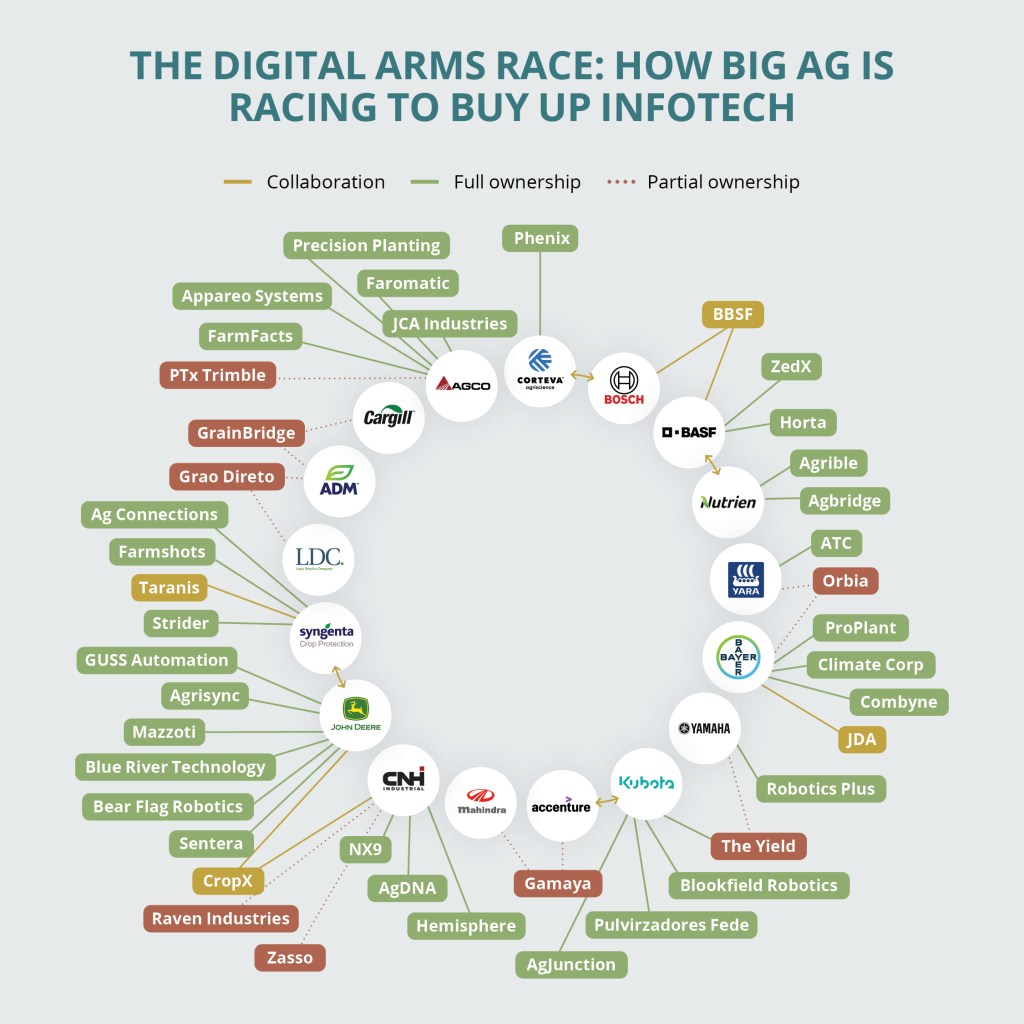
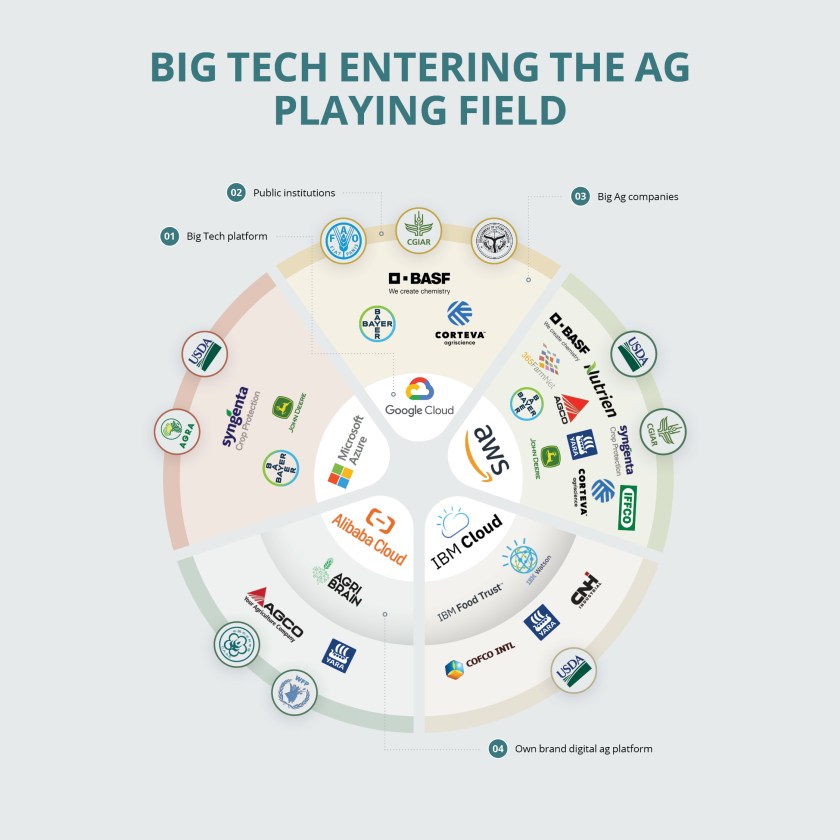
Across multiple regions, major technology companies, including Amazon, Microsoft, Google and Alibaba, have joined forces with agribusiness giants in seeds, agrochemicals and farm machinery. The result is an increasingly integrated digital infrastructure that reaches into every layer of industrial farming.

This figure illustrates some of the major collaborations between leading technology companies and key agribusiness corporations and/or public institutions. The list is not exhaustive as Big Tech actors are also engaging with a broader range of public, private, and non-profit organizations. Image: IPES-Food.

Satellites scan the fields, remote sensors measure soil moisture and nutrient levels, and automated tractors collect data as they move. This information is sent to cloud-based platforms where proprietary algorithms produce recommendations, such as which seed variety to plant, when to spray crops, and how much fertiliser to use. This data is used to refine products, influence markets and generate profit.

Decisions about what qualifies as “innovation” and which technologies get government support are often political. These decisions influence who holds power in the food system.

Lim Li Ching, co-chair of IPES-Food, describes this shift in stark terms. She said:

We are witnessing a quiet takeover of farming by Big Tech. But farming by algorithm is not the future farmers asked for.

Under the banner of innovation, tech giants are consolidating control over agriculture and biological heritage, sidelining the farmers who already grow our food in sustainable and resilient ways.

We can choose a different path. We must reimagine and govern innovation differently. It’s time to reclaim innovation for people and the planet.

Inequality

Digital farming systems are expensive. Precision technologies require specialised machinery, subscription-based software, reliable high-speed internet, technical training and ongoing technical support contracts. For large industrial operations, these expenses may be absorbed as capital investment, but for small and medium-scale farmers, this means new loans and debt.

The report shows how these technologies create dependency, described as technology lock-in. Once a farmer invests in a specific machinery or digital system, switching becomes complex and costly.

Machinery, seeds and chemical inputs are often designed to work together within proprietary platforms. Data may be stored in non-transferable formats, tying farmers to a single provider and pushing for continual upgrades to remain commercially competitive.

Pat Mooney, an IPES-Food expert, warned that this concentration of power comes at a dangerous moment. He said:

The world’s food security is more uncertain than it has been in decades, amid escalating global crises.

Yet Big Tech and Big Ag are jointly advancing proprietary AI, data platforms, and biotechnologies that narrow diversity when we need more of it, lengthen supply chains that should be shortened, and concentrate information that ought to be shared among farmers.

But our study shows that bottom-up, ecosystem-grounded, farmer-led innovations are already responding to today’s food crises – despite policy barriers and limited public investment.

Instead of changing the root problems of industrial farming, digital platforms often make them stronger. They increase the use of chemicals in large monoculture farms rather than reducing them. And instead of supporting local food systems, they make global supply chains even bigger.

It’s like being stuck on a treadmill. Farmers may see short-term improvements in efficiency or productivity, but prices soon fall and they feel pressure to invest in new technology again. Those who can’t keep up, often small farmers, are forced out, leading to fewer farms and the decline of rural communities.

Rather than making farming more equal, digital agriculture could make the gap even bigger between large industrial farms and smaller, community-based producers.

Data from 2002-2023 sourced from Strömberg, L. & Howard, P., 2023. Image: IPES-Food.

Control

If land was the defining source of past agricultural empires, data is fast becoming the new frontier.

Farmers don’t own the data generated on their own land, and in many cases, they can’t access the algorithms that transform it into advice. They have limited oversight over how their data is used.

Nettie Wiebe, a farmer and IPES-Food expert, reflects on what that means in practice. He said:

We’re being sold a vision of farming run by AI and robots. But farming is built on judgement developed over years in the field. When farmers lose control over our data and decisions, we lose control over our farms. That’s a dangerous path.

Real innovation doesn’t come from Silicon Valley – it comes from farmers, farmworkers, and Indigenous Peoples working with the land and with each other.

Around the world, farmers are developing tools, restoring soil fertility, breeding crops for a changing climate, and managing pests ecologically. That’s real innovation. It builds resilience without locking us into debt or dependency.

Digital tools focus more on numbers and data than on lived experience. Indigenous peoples and local communities, whose farming knowledge has protected biodiversity for centuries, are often left out of these systems.

The hidden footprint

Digital agriculture is often presented as environmentally progressive, but the infrastructure behind it is material and energy intensive.

Data centres use huge amounts of electricity and water. Servers and devices depend on minerals extracted from already stressed landscapes. Precision technologies might slightly reduce chemical use, but they usually reinforce farming methods that harm soil and biodiversity over time.

The “cloud” isn’t invisible, it leaves a real environmental footprint.

Meanwhile, farmer-led alternatives, participatory breeding, agroecology, and community seed-saving, get little support. These methods build resilience through diversity, shared knowledge and natural ecosystem management, rather than relying on expensive, proprietary technology.

Yiching Song, IPES-Food expert, highlights their significance. She said:

Our research shows that farmer-led seed systems and participatory breeding are among the most effective responses to climate change and biodiversity loss.

These innovations integrate scientific and farmers’ knowledge, strengthening both ecosystems and livelihoods. If we are serious about climate action, policy and investment must recognise and actively support these systems, not sideline them.

Political

The debate over digital farming is ultimately about governance and power.

Who decides which technologies are developed and scaled? Who owns the data? Who takes the risks and who benefits?

In a time of multiple crises, including climate breakdown, biodiversity collapse, and geopolitical instability, food security is already fragile. Concentrating control over seeds, data and decision-making in a handful of corporations just adds another layer of vulnerability.

IPES-Food is asking governments and funders to create stronger rules so that new ideas and technologies are fair and responsible. They also want more funding to go to local, community-led projects that focus on sustainability. In addition, they are calling for limits on the power of large technology and agriculture companies, and for a shift in how people think and talk about innovation.

As the Head in the Cloud report points out, the question isn’t whether farming should innovate, it’s whether innovation will serve big companies or the people and ecosystems that food systems rely on.

Featured image: IPES-Food.

Brazil’s growing water crisis

Monica Piccinini

19 February 2026

Brazil’s forests do more than store carbon, they regulate the water systems that sustain rivers, agriculture and cities across South America. As deforestation and degradation accelerates, scientists warn the country is entering a hidden water crisis with global consequences.

At sunrise along the Rio Negro, fishermen often speak about water as if it were alive. They read the river’s moods, measure time by its levels and mark the seasons through its currents. For generations, waterways across the Amazon have shaped daily life. Now, those familiar rhythms are becoming harder to read, and trust.

Brazil is often described as a nation shaped by water. It holds roughly 12 per cent of the world’s freshwater reserves, while the Amazon basin forms the largest freshwater system on Earth. The Cerrado, the country’s vast tropical savanna, feeds rivers that supply cities and agriculture across South America.

On paper, Brazil appears water secure. However, scientists warn that this security depends heavily on ecosystems that are gradually losing their ability to regulate rainfall and river flows.

Augusto Getirana, research scientist at NASA’s Goddard Space Flight Centre in the Hydrological Sciences Laboratory, explains how Brazil’s water systems influence global food supply:

Brazil is the world’s largest producer of coffee, soybeans, and beef, among other water-dependent commodities.

A water crisis in Brazil that results in a disruption in domestic food production quickly becomes a global crisis. We saw that in 2021, when prices of these commodities increased substantially worldwide.

Luciana Gatti, senior researcher at Brazil’s National Institute for Space Research (INPE), argues that deforestation and degradation in the Amazon driven by Brazil’s export-driven agricultural expansion is directly tied to the water crisis:

There’s been an enormous increase in exports of wood, beef, soy, corn, and minerals. This is a project based on destroying nature to sell primary commodities.

Water systems are harmed by these development models, with severe consequences for ecosystems and the Brazilian population, while concentrating wealth and power among large landowners.

A water network

Brazil’s water system depends on a delicate partnership between the Amazon rainforest and the Cerrado. Together, they form a vast hydrological network that moves moisture through the atmosphere, stores groundwater and stabilises river basins across much of South America.

Water insecurity in Brazil isn’t just about declining rainfall. Researchers describe it  as the weakening of natural climate regulation processes, a gradual shift with potentially far-reaching consequences.

Research from the University of São Paulo estimates that the Amazon deforestation accounts for roughly 74.5 per cent of rainfall reduction and 16.5 per cent temperature increase during the dry season.

The Amazon plays a central role in South America’s water cycle. Trees draw moisture from the soil and release it into the atmosphere, generating currents of humid air often described as “flying rivers”.

These invisible air currents carry rainfall far beyond the forest, sustaining agricultural regions, reservoirs, and major urban centres. For example, a large percentage of rainfall supplying São Paulo’s Cantareira water system depends on moisture originating in the Amazon.

For many Brazilians, these atmospheric water currents are invisible, but their effects shape when crops grow, reservoirs refill and whether rivers remain navigable.

According to Brazil’s National Water and Basic Sanitation Agency (ANA), on 30 January, the Cantareira system was reported to be operating at 22 per cent.

As forests shrink, scientists warn that this moisture recycling process weakens. Reduced tree cover means less moisture in the air, rainfall becomes more erratic, and rivers flows grow increasingly unstable. Some regions face prolonged drought, while others experience intense rainfall over shorter periods.

Researchers say these extremes aren’t isolated anomalies but signs of mounting ecological stress. Drier soil reduces groundwater recharge, while rivers respond more sharply to both drought and heavy rainfall.

Large-scale climate events, such as El Niño, La Niña, and warm conditions in the North Tropical Atlantic (NTA) only add to the strain, triggering floods or droughts that cascade through river systems and aquifers.

Along the Amazon’s waterways, communities are already feeling the consequences. Fish stocks are declining, drinking water is less unreliable, and river transport routes are disrupted during dry seasons, isolating villages and restricting access to food and essential supplies.

Brazil’s overlooked water source

While the Amazon often dominates headlines, scientists emphasise that the Cerrado plays an equally critical role in maintaining Brazil’s water balance. Covering roughly a quarter of the country, the biome feeds major river systems, including the São Francisco, Paraná and Tocantins.

Gatti stresses that the Cerrado biome is fundamental in sustaining Brazil’s water systems and river basins:

The Cerrado contains around 80 per cent of Brazil’s hydrographic basins. It functions like an upside-down forest, concentrated in deep root systems. These roots allow rainfall to infiltrate gradually and recharge groundwater reserves.

When deforestation occurs, the natural buffering system disappears. Rainwater is no longer absorbed properly. The soil becomes exposed and water runs off instead of penetrating the ground.

For generations, rural and Indigenous communities have depended on these groundwater-fed streams for farming, fishing and cultural practices tied to seasonal water cycles.

But the Cerrado is disappearing fast. Soy cultivation, cattle ranching, and large-scale monoculture have replaced vast areas of native vegetation. Shallow-rooted crops capture less water, reduce groundwater recharge and accelerate soil erosion. Streams that once supported rural farming communities are shrinking or disappearing altogether.  

Expanding industrial pressure

Brazil’s agricultural sector has become a pillar of economic growth, but it has also intensified pressure on water resources.

Demand for irrigation is increasing, while fertilisers and pesticides frequently run off into river systems polluting the water, soil and wildlife. Globally, agriculture accounts for 70 per cent of freshwater use, a pattern reflected in Brazil’s agribusiness expansion.

Gatti emphasises the role of international commodity demand in sustaining deforestation:

It’s hypocritical to blame Brazil alone for failing to combat deforestation while countries such as the United States, those in Europe, China, the UK, and others continue to buy products linked to deforestation.

If they stopped buying timber, meat, soy, corn and minerals produced in deforested areas, deforestation could end very quickly.

Fires introduce another layer of risk. Burned landscapes absorb and release water unevenly, increasing flood risk during rainy periods and worsening drought conditions during dry months. Repeated fires are altering forest composition in parts of the Amazon, potentially weakening rainfall generation over time.

Gatti argues that fire emissions are among the main contributors to the crisis:

In 2024, the Amazon recorded its highest carbon emissions on record due largely to fires. Brazil’s ministry of science, technology and innovation (MCTI) treats emissions from Amazon fires as net zero in its official methodology. Yet fires represent the Amazon’s largest source of carbon emissions.

In 2024, fires burned across 3.3 million hectares of the Amazon, releasing roughly 791 million tons of CO₂, about what Germany emits in a year. For the first time, forest degradation from fire was overtaken deforestation as the Amazon’s top carbon culprit.

Mining operations further strain water systems. Rivers courses are sometimes diverted, forests cleared and waterways contaminated with chemicals, reducing the amount of safe freshwater available for drinking, fisheries, agriculture, transport and ecosystems.

Scientists warn that if deforestation and ecosystem degradation continue, river flows and rainfall patterns could become progressively less predictable, threatening agriculture and urban water supplies.

The United Nations University Institute for Water, Environment and Health (UNU-INWEH) describes this emerging challenge as “water bankruptcy”, a situation in which freshwater is consumed faster than nature can replenish it.

Experts warn that unequal access to water could deepen social inequality, fuel migration and increase the risk of conflict in vulnerable regions.

Political

Despite mounting scientific evidence, water scarcity is still widely perceived as a distant or regional problem in a country historically defined by abundance.

At the same time, policy decisions are reshaping the rivers themselves. Signed by Brazil’s President Luiz Inácio Lula da Silva in August 2025, Decree 12,600/2025 added the Tapajós, and Tocantins rivers (state of Pará), as well as the Madeira river (state of Amazonas) to Brazil’s privatisation pipeline to expand shipping along the Northern Arc.

Hydrologists and riverside communities warn that dredging riverbeds and removing rock to keep these routes open for larger cargo vessels could disrupt sediment movement and seasonal flood patterns. In a basin already strained by intensifying droughts, these changes could further weaken water security for ecosystems and the people who depend on them.

Getirana highlights that Brazil’s emerging water crisis is rooted in longstanding political and cultural practices:

Many of Brazil’s political and economic decisions have been based on the idea that it’s a water-rich country. Poor political decisions that resulted in negative impacts on the environment and water availability are not party- or ideology-related.

It’s the culture in the country. It’s been happening for decades, maybe centuries, regardless who’s in power. Poor water management is rooted in Brazil’s culture.

A political change needs, first, a mindset shift in the Brazilian population. Maybe a way to change that mindset is by demonstrating how poor management is impacting their livelihoods and finances.

Gatti warns that in Brazil, scientific research is often overlooked in policy development:

Scientific evidence isn’t reaching decision-makers. Promises of zero deforestation by 2030 risk being too late because parts of the Amazon may already be approaching ecological tipping points.

Although Brazil has experienced political changes in leadership, structural land-use policies driving deforestation have remained largely unchanged.

Recovery

Despite growing concern, some scientists emphasise that recovery remains possible.

Gatti highlights that several measures could make a considerable difference to Brazil’s water security:

Zero deforestation across the entire country by 2027, not just in the Amazon, is essential to stabilise rainfall and water systems.

Reducing cattle herd size, establishing limits on large monoculture farming and requiring forest restoration within agricultural landscapes would help reduce environmental pressure and water instability.

Expanding agroforestry systems on a large scale could help restore ecological balance while maintaining agricultural productivity.

Getirana argues that reforming water governance should be the first step in restoring Brazil’s water stability:

I believe that reforming water governance would be the baseline for other measures, such as restoring degraded land and tackling climate mitigation. Additionally, policies that prevent water from being polluted could have almost immediate impacts.

Some researchers are examining whether recognition of rivers as living entities could provide stronger environmental protection. A project led by the University of Leeds is exploring how such legal frameworks might help prevent pollution, deforestation and industrial over-exploitation.

For communities along the Rio Negro and throughout Brazil’s interior, the crisis is already deeply personal. Rivers are less predictable, rainfall patterns are shifting and water quality is declining. Their daily experiences reflect a broader reality: Brazil’s water future depends on the survival of the ecosystems that sustain it.

Protecting Brazil’s forests may ultimately determine not only the country’s environmental future, but the stability of water systems that millions of people depend on every day.

Disclaimer: Augusto Getirana speaks in his personal capacity and not on behalf of NASA Goddard Space Flight Centre.

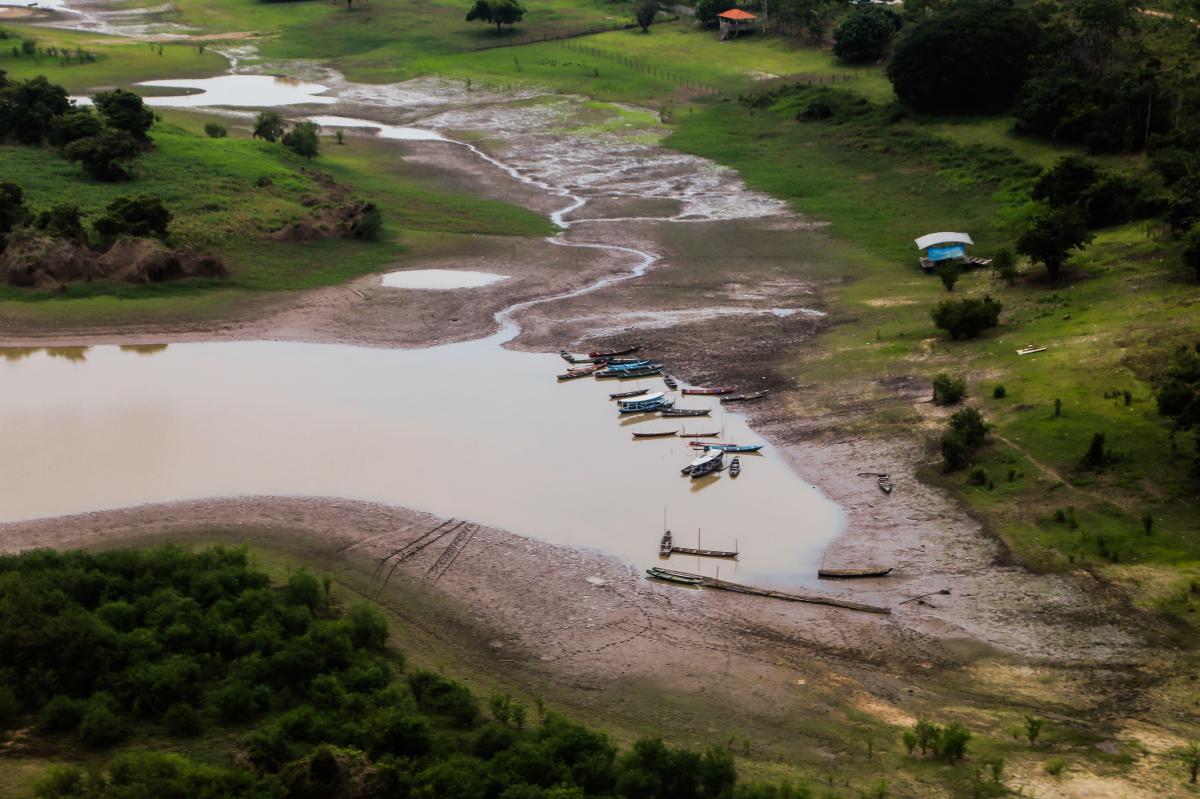
Featured image: Parintins, Brazil. September 2023. Boats stand at the edge of a river whose water level has dropped due to drought. The world’s largest rainforest area is suffering from the worst drought in over a century. Credit: Aguilar Abecassis/dpa/Alamy Live News

From Brazil to Britain: the hidden cost of soy and beef

Monica Piccinini

1 February 2026

Often overlooked in global conservation debates, Brazil’s Cerrado is being rapidly transformed by industrial agriculture, with UK trade playing a direct role in the loss of water systems, biodiversity and climate stability.

As global demand for commodities grows, Brazil’s Cerrado is being lost at an alarming rate, with consequences that reach far beyond South America. This extending mix of grasslands, savannas, and forests plays a key role in South America’s water systems and climate, yet it’s one of the continent’s most threatened ecosystems.

The destruction of the Cerrado reaches the UK through the food we eat, turning a regional crisis into a shared responsibility with global consequences.

A scientific review in Nature Conservation finds that over half of the Cerrado’s native vegetation has vanished, mostly in the last five decades. That’s roughly 1,000,000 square kilometres, larger than France and Germany combined, now replaced by farmland, pastures, and expanding towns.

Often described as Brazil’s hydrological engine, the Cerrado feeds eight of the country’s twelve major river basins. Its continued degradation threatens water security far beyond its borders, with consequences felt across much of South America.

According to Cássio Cardoso Pereira, researcher at the Federal University of Minas Gerais (UFMG) and the lead author of the review, the ecological damage extends far beyond habitat loss:

The most urgent consequence is the disruption of the Cerrado’s role as a continental water regulator. The loss of native vegetation reduces aquifer recharge, dries up rivers that supply important hydrographic basins in South America, and exacerbates droughts and extreme heatwaves.

At the same time, we are losing unique biodiversity and enormous underground carbon reserves, which makes this destruction a direct threat to both species and climate stability.

The Cerrado is the second largest Ecodomain in South America, after the Amazon, occupying 23% of Brazil’s surface.

The authors of the review use the term “Ecodomain” to refer to large ecological areas that include multiple ecosystems, biomes, and ecoregions. The term describes these regions as they existed in their original extent, regardless of their current state of conservation.

Soy and beef

The destruction of the Cerrado is not driven by Brazil alone, it’s closely tied to global demand for soy and beef, commodities that bind this landscape directly to the UK’s food system and climate footprint.

Industrial agriculture drives much of this loss. Since satellite monitoring began in 2001, over 326,000 square kilometres of the Cerrado have been cleared, sometimes faster than even the Amazon.

Soy plantations and cattle ranches now dominate large areas that once supported extraordinary biodiversity. These landscapes, mainly monocultures, depend on heavy machinery, fertilisers and agrochemicals, leaving little room for ecosystems to recover.

The review highlights the MATOPIBA region, covering the states of Maranhão, Tocantins, Piauí and Bahia, as a focal point of recent land-use change, where agricultural expansion continues to push deep into remaining native vegetation.

Deforestation is reshaping the Cerrado’s climate: the rainy season now arrives about a month later, overall rainfall has dropped, and daytime temperatures have climbed roughly by 1.5oC.

As rain becomes less predictable, farming grows increasingly dependent on irrigation. This creates a dangerous feedback loop, accelerating water depletion and deepening ecological breakdown across the region.

Much of the Cerrado’s carbon lies underground, locked in roots that can reach over 15 metres deep. This “inverted forest” helps plants endure long dry seasons while quietly replenishing aquifers.

When native vegetation is cleared, that long-stored carbon is released. Landscapes that once absorbed emissions are transformed into sources of greenhouse gases, intensifying the climate pressures already bearing down on the region.

Ecological breakdown

The Cerrado plays a central role in Brazil’s water system. It gives rise to eight river basins and sits above three immense aquifers holding vast freshwater reserves. Rising demand from industrial farming, hydropower and expanding cities is placing these systems under relentless stress.

Large-scale water extraction, combined with widespread agrochemical use, is contaminating soils and waterways while draining underground reserves. Rivers are shrinking, ecosystems are destabilising and biodiversity is declining as water systems lose their resilience.

Hydropower development has accelerated the damage. Dams fragment rivers, disrupt natural flows and blocks fish migration routes that both wildlife and local communities rely on. Over time, these changes are fundamentally reshaping entire river systems.

The review also documents extensive fire-driven degradation that often goes uncounted in official deforestation figures. Natural fires in the Cerrado are rare, usually sparked by lightening, yet an estimated 99 per cent of fires in Brazil are caused by human activity linked to land clearing and agricultural expansion.

Between 1985 and 2022, around 40 per cent of the Cerrado burned at least once. Nearly two-thirds of that area burned repeatedly, killing fire-sensitive species and encouraging invasive grasses that trap landscapes in cycles of degradation.

The Ecodomain supports around 13,000 plant species, more than 3,200 vertebrates and tens of thousands of invertebrates. Roughly a third of its plant life is endemic, found nowhere else on Earth.

Yet only a small share of the Cerrado is strictly protected. Many threatened species, particularly plants and insects, remain poorly assessed and politically overlooked. Ecosystems with lower tree cover, such as grasslands, continue to be undervalued despite their immense ecological importance.

It’s not only a matter of protecting threatened species. Around 80 Indigenous peoples live on more than 200 recognised territories across the Cerrado, many safeguarding the region’s last stretches of intact vegetation.

For generations, these communities have cared for the land, guiding rivers, protecting wildlife, and keeping landscapes resilient. Many territories remain only partially recognised under the law, leaving both people and ecosystems exposed to the expanding pressures of agriculture and deforestation.

Rodolfo Salm, ecologist, activist, lecturer at the Federal University of Pará (UFPA), and one of the authors of the review, says today’s legal gaps are rooted in a long history of dispossession, now reinforced by new laws:

For much of the Cerrado’s history, Indigenous peoples were progressively expelled from their territories, first by cattle ranching, later by large-scale grain production. This process accelerated with the move of Brazil’s capital to Brasília and deepened under the military dictatorship of the 1960s and 70s.

Today, the recently approved Temporal Framework Law (Marco Temporal), which restricts the right to legal recognition of an Indigenous territory to those areas that were effectively occupied by Indigenous peoples at the time of the 1988 Constitution, combined with complex legal and bureaucratic barriers, has made the recognition of new Indigenous lands in the Cerrado almost impossible.

This is a severe blow to biodiversity, because Indigenous territories are among the most effective and reliable areas for ecosystem protection.

The UK’s stake in the Cerrado

Many people in the UK would be surprised to learn how closely their diets are tied to this distant landscape.

Britain imports millions of tonnes of soy each year, most of it used as animal feed. Around 90% goes to livestock, particularly poultry and pigs, linking the destruction of the Cerrado directly to the meat supply chain.

We’re deeply dependent on the rest of the world, importing around 40 to 50 per cent of our food. And much of this from regions that are hammered themselves by the climatic impacts that we’ve been talking about, said Professor Paul Behrens at the National Emergency Briefing in London last November.

Investigations by NGO Mighty Earth show that major global traders supplying the UK and European markets continue to source soy from areas linked to the Cerrado destruction, despite repeated public commitments to sustainability.

Mighty Earth has also warned that weak UK due-diligence rules risk turning Britain into a dumping ground for deforestation-linked soy and beef, as companies divert high-risk supply away from more tightly regulated markets.

Despite government pledges, UK imports of soy and beef continue to drive the Cerrado destruction through animal feed supply chains.

Philip Fearnside, research professor at Brazil’s National Institute for Research in Amazonia (INPA), and one of the authors of the review, explains why voluntary pledges and sustainability codes have fallen short, highlighting the overlooked indirect impacts of commodity production:

Most soy expansion in the Amazon and the Cerrado occurs not through direct forest clearing, but by converting existing cattle pastures into soy plantations. This transformation is usually the result of ranchers selling their land to soy planters, rather than switching to soy farming themselves.

Because land suitable for soy commands high prices, ranchers often use the proceeds to purchase much larger, cheaper tracts of rainforest deeper in the Amazon, indirectly driving further deforestation. These indirect impacts have largely escaped all existing monitoring and certification schemes.

The UK can establish legally binding rules for companies supplying commodities like soy, requiring them to account for both direct and indirect environmental impacts. By tracking these combined effects, the UK could avoid sourcing soy linked to widespread deforestation in both the Cerrado and the Amazon.

The UK Forest Risk Commodity Regulation (UKFRC) under the Environment Act 2021 has yet to come into force. And because the law only targets illegal clearing, vast areas of land that have been legally converted, but are still wiping out unique habitats, remain unprotected.

Much of this damage remains hidden from view. The soy required for animal feed is a “ghost footprint”, invisible in labels, but very real in climate and ecological terms.

Pereira says the drivers of the Cerrado destruction are well known and largely tolerated:

The rapid destruction of the Cerrado is driven primarily by the expansion of agribusiness, especially soy and livestock farming, enabled by permissive land-use policies and deficient enforcement.

Unlike the Amazon, most deforestation in the Cerrado is still legally permitted, which protects corporations and supply chains from oversight. International accountability has failed because global climate and biodiversity frameworks largely neglect grasslands and savannas, treating them as disposable landscapes rather than critical ecosystems.

A warning, and a choice

According to the Nature Conservation review, the Cerrado is being pushed towards collapse.

Fearnside warns that continued destruction of the Cerrado isn’t just a regional crisis but a global risk, accelerating climate breakdown while undermining water systems, biodiversity and the communities that depend on them:

The loss of the Cerrado contributes directly to global warming and to the breakdown of water recycling, just as Amazon deforestation does. Together, these processes destroy biodiversity and the human societies that depend on native vegetation.

Current practices are pushing the global climate toward tipping points that, if crossed, would be devastating not only for Brazil, but for the world. Avoiding this outcome requires more than protecting forests alone: it means ending the clearing of the Cerrado and the Amazon and rapidly ending the use of fossil fuels.

For the UK, the Cerrado isn’t a distant problem. Its fate connects directly to our imports, diets, and daily choices. Climate responsibility starts long before the shoreline, in our kitchens, on our plates, and through the choices we make every day.

Featured image: Prime Minister Sir Keir Starmer (left) meeting with the President of Brazil Luiz Inacio Lula da Silva for a bilateral meeting in New York ahead of addressing the United Nations General Assembly. Alamy/Leon Neal

From the Thames to Brazil: water for sale

Monica Piccinini

19 January 2026

Polluted rivers, collapsing ecosystems and communities left to pick up the damage: Britain’s privatised water system has normalised environmental harm at home. Now the same model is being exported to Brazil, where its impacts could be even harder to undo.

In the UK, the sight of raw sewage pouring into rivers has become disturbingly familiar. What once caused outrage is now just background noise. Each year brings new data, new apologies from water companies, and new fines from regulators. Rivers remain polluted, wildlife declines, and communities are left to live with the consequences.

After more than three decades of water privatisation, the pattern is clear. Household bills keep rising, long-term investment has fallen, corporate debt has soared, and environmental damage has become routine. Regulation exists largely on paper, stepping in only after harm has already been done.

This matters because the UK’s failed water model is no longer contained within its borders. It’s now being exported to countries like Brazil. There, the damage risks being deeper, longer lasting and far harder to challenge and reverse.

Political

Brazil’s sanitation crisis is often blamed on geography or lack of development, but this is misleading, as it’s one of the most water-rich countries on Earth. The problem isn’t scarcity, but political decisions about who controls water and who it’s meant to serve.

Despite holding one of the world’s largest freshwater reserves, over 100 million Brazilians are without adequate sewage treatment.

Livi Gerbase, a researcher at the Centre for International Corporate Tax Accountability and Research (CICTAR) for Latin America and the Caribbean, frames access to water and sanitation as one of the clearest expressions of inequality in Brazil:

Access to water and sanitation is one of the strongest indicators of inequality in Brazil. Around 40 per cent of the population still lacks access to proper water and sanitation systems, particularly in rural areas and in the North and Northeast, where the most vulnerable communities live.

These failures fall disproportionally on poorer, racialised and rural communities, particularly in the North and Northeast of the country. This is environmental injustice, not technical failure.

These outcomes reflect political choices about ownership, financing and regulation, mirroring the path taken by the UK in the late 1980s, when water was removed from public control and redefined as a commercial service rather than shared resource.

Water as an asset

In 2020, Brazil passed the New Sanitation Legal Framework, promising near-universal of sanitation and water supply by 2033.

According to an analysis by CICTAR and the Union of Workers in Water, Sewage and Environment in the State of Bahia, SINDAE, this method was familiar: privatisation, private finance, and protections designed to reassure investors.

Municipalities in Brazil were encouraged to auction off water and sewage services through concessions lasting up to 35 years. Brazil’s national development bank, BNDES, plays a central role, structuring deals and absorbing risk. At least 67 new sanitation projects are now moving forward, many explicitly structured to attract international capital.

The financing model mirrors the UK’s post-1989 settlement. Infrastructure is no longer funded primarily through public investment, but through debt (borrowing).

In Brazil, the key instrument is incentivised debentures, tax-exempt bonds sold to investors, which resembles the bond-heavy structures used by British water companies after privatisation.

Gerbase describes how Brazil’s 2020 sanitation reforms accelerated privatisation and shifted financial risk onto the public:

After the 2020 sanitation reforms, privatisation accelerated and international investors moved in. Incentivised debentures became a key tool, allowing companies to raise large sums quickly while the real cost is carried out by the public, not by companies or local authorities.

Between 2017 and 2024, nearly R$ 40 billion (£5.5 billion) was raised through these instruments in Brazil’s sanitation sector. More than half of this money wasn’t used to improve infrastructure, but to pay concession fees for refinance debt. This closely reflects the UK experience, where borrowing has been used to sustain corporate balance sheets rather than upgrade deteriorating systems.

Gerbase stresses that the use of incentivised debentures is a political choice that could be reversed through regulatory change:

Every incentivised debenture must be approved by the government, and there are already rules defining which projects qualify for the tax benefit. Through an executive decree changing the regulation of the incentive, it’d be possible to stop public funds being used to subside privatisation rather than infrastructure.

BRK and Thames Water

A detailed investigation by CICTAR identifies the strongest parallel with the UK in the case of BRK Ambiental, Brazil’s largest sanitation operator, controlled by Canadian asset manager Brooksfield, a major player in Britain’s privatised infrastructure and a familiar presence in the UK water sector.

In Brazil, BRK operates in more than 100 municipalities and has rapidly expanded through debt-backed acquisitions. The company has raised over R$12 billion (£1.6 billion) in debt, generating substantial interest payments, while average tariffs increased by more than 70 per cent between 2017 and 2024, far above inflation levels.

Gerbase explains how financialised concession models limit real investment, leaving poorer communities with inadequate alternatives:

These populations aren’t completely without solutions, but alternatives like septic tanks are only accessible to people with the financial means to build them. When companies spend large sums on concession fees and debt, very little is left for expanding and improving infrastructure. That’s exactly what the BRK model shows.

For UK households served by Thames Water, this story is well known. Rising bills are paired with rising debt, while environmental performance worsens and promised improvements fail to arrive.

Thames Water serves roughly a quarter of the population. Since privatisation, household bills have risen by roughly 40 per cent in real terms, while investment has fallen by around 15 per cent. Leakage remains widespread and rivers are routinely polluted with untreated sewage.

Thames Water’s failures are not an isolated case. This month, South East Water left at least 30,000 households without running water for several days, exposing the fragility of a system shaped by fragmented ownership and financialisaton.

South East Water is jointly owned by an Australian infrastructure fund, a Canadian private equity firm and the NatWest pension fund, underscoring how essential services are increasingly run by distant investors with no real stake in places affected by failures.

Regulation

Despite environmental failures, Thames Water accumulated tens of billions of pounds in debt, much of it used to finance shareholder payouts.

In 2023, it was fined £122.7 million for environmental breaches and now survives through emergency regulatory intervention.

Brazil’s moving in the same direction, but with weaker regulatory institutions and deeper inequality.

CICTAR records that BRK subsidiaries have been fined nearly R$50 million (£6.9 million) for environmental violations, including sewage discharges and failure to deliver contracted works. Complaints over water quality, billing and service interruptions are widespread.

Gerbase argues that regulation in Brazil tends to intervene only after harm has already occurred, offering limited accountability during long concessions:

Regulation is not very effective. What usually happens is that problems escalate until fines and sanctions have already failed to change company behaviour. The biggest moment for accountability comes when a concession ends and the process starts again, because public scrutiny increases. But in BRK’s case, most concessions still have many years left to run.

As in the UK, regulation is slow and fragmented. Long term contracts limit public oversight, while political leaders are reluctant to challenge powerful private operators. Parliamentary inquiries in Brazilian states such as Tocantins have raised concerns about accountability, echoing debates long familiar in Britain.

Research evidence undermines the case for privatisation. A comparative study published in Frontiers in Water found that public sanitation providers in Brazil frequently outperform private ones on efficiency, service quality and equity, directly challenging claims that private ownership delivers better outcomes.

Exporting failure

This is fundamentally an environmental justice issue. The United Nations recognises access to water and sanitation as human rights, yet privatised systems allocate access according to profitability, not social need.

In both Brazil and the UK, the same communities pay the highest price. Poorer areas face higher bills, worse service and greater exposure to pollution.

Smaller municipalities in Brazil, like deprived areas in the UK, are less attractive to investors because returns are slower and risks higher.

Reports suggest that Brooksfield is preparing to sell BRK Ambiental, treating it as a mature asset. If the UK experience is any guide, the likely legacy will be a heavily indebted operator with limited capacity to invest, while communities remain locked in long term contracts they didn’t design.

For UK readers, the lesson is clear. Britain’s water crisis isn’t an exception, it’s a template. From the Thames to Brazil, the same financial logic produces the same results: polluted rivers, rising bills, weakened accountability and deepening inequality.

The UK is a major warning sign of how things can go wrong. Our research shows that Brazil is heading in the same direction, even if it has not fully collapsed yet, said Gerbase.

Environmental justice means rebuilding public control, prioritising ecological repair, and measuring success in clean rivers, public health and dignity, not investor returns and exit strategies.

Brazil’s being sold the same promises Britain heard more than 30 years ago. In the UK, the outcome is already visible in polluted rivers and failing infrastructure. That alone should make us deeply sceptical of treating water, anywhere, as just another asset.

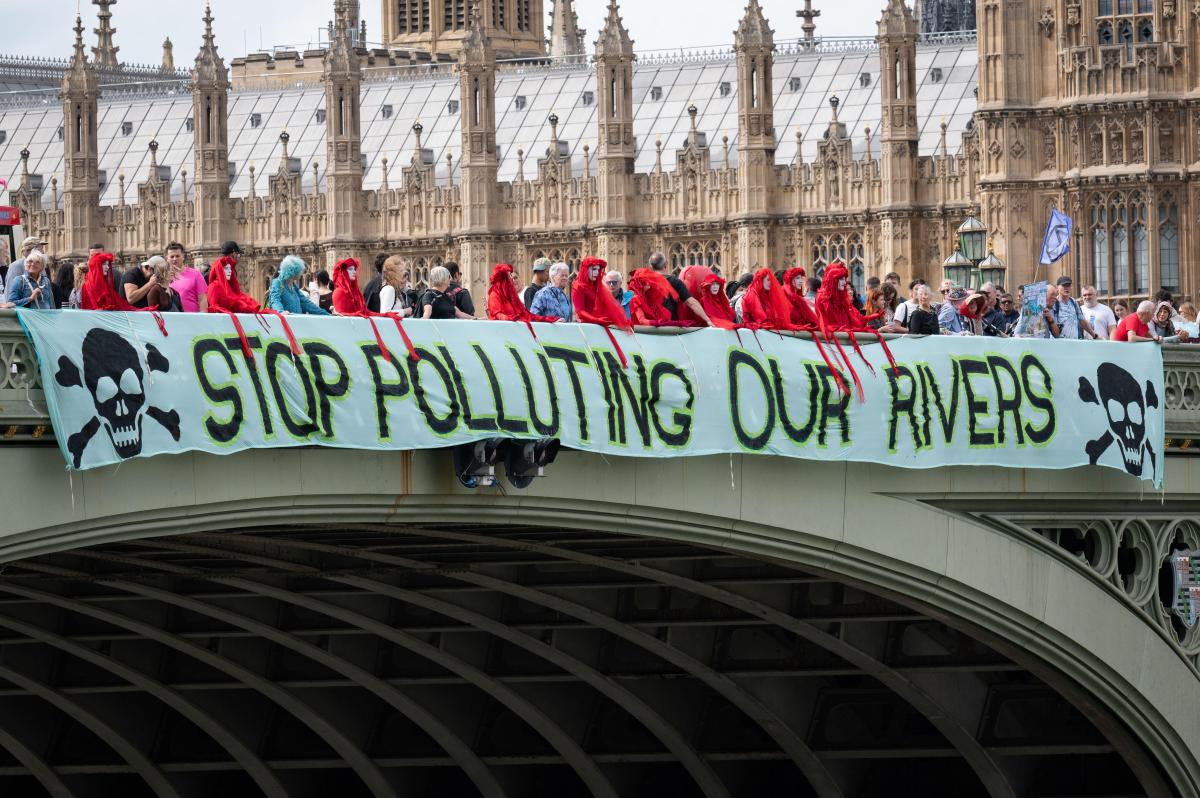
Featured image: London, UK. 30 August 2025. Environmental activists from Extinction Rebellion, accompanied by the Red Rebels mime troupe, drop a large banner demanding “Stop Polluting Our Rivers” from Westminster Bridge over the River Thames. According to the UK’s Environment Agency, raw sewage outflow into England’s rivers and seas doubled in 2023, with only 14% of rivers achieving “good” ecological status in 2025, while profits and dividend payouts of private water companies have soared. Credit: Ron Fassbender/Alamy Live News

The age of fungi

Monica Piccinini

7 January 2026

Climate change, fungal disease, and the Brazilian hospital on the frontline of a heating world.

In October 2025, healthcare workers and patient companions on the oncology ward of Santa Rita de Cássia Hospital in Vitória, capital of Brazil’s Espírito Santo state, began reporting respiratory illness: coughing, fever, fatigue, shortness of breath.

Treatments that usually worked failed, and recovery was slow or absent.

As more people fell ill, it became clear the problem wasn’t individual, something was circulating through the hospital itself.

After weeks of investigation, state health authorities confirmed 33 cases of histoplasmosis, an infection caused by the fungus Histoplasma capsulatum. The organism, commonly found in soil enriched by bird and bat droppings, had entered a clinical environment assumed to be sealed from ecological exposure.

This wasn’t a failure of hygiene alone. It was a sign of environmental change reaching places designed to keep it out. It was an organism older than humanity itself, one that’s learned to survive in a world we’re rapidly changing, overheating.

This fungus is part of the environment. But environmental exposure can reach places we believe are controlled, said Tyago Hoffmann, Espírito Santo health secretary.

The outbreak wasn’t an anomaly; it was a warning.

The invisible kingdom

Fungi are essential to life on land. They decompose organic matter, cycle nutrients and sustain plant ecosystems. Without them, soils would fail and forests would collapse. Yet they remain among the least studies and least understood organism on Earth.

Scientists estimate there may be between 1.5 and 3.8 million fungal species and fewer than 10 per cent have been formally described. Even fewer are studied for their impact on human health.

Historically, this gap in knowledge hasn’t been particularly dangerous, as our bodies have been protected by heat. The average human temperature, around 37oC, creates a natural biological barrier, which most fungi simply couldn’t survive.

As global temperature rises, this barrier is weakening. Fungi are adapting, species once restricted to cooler environments are now evolving to tolerate higher heat. Some are now capable of surviving at temperatures closer to those of the human body.

Fungal pathogens pose a serious threat to human health. Climate change will make these risks worse, said Viv Goosens of the Wellcome Trust.

What’s shifting isn’t fungal behaviour, but the ecological conditions that once limited it.

Adaptation

Climate change doesn’t create fungal disease from nothing. It reshapes the conditions in which fungi live, spread and persist.

Warmer temperatures expand the geographic range of many species. For example, changes in rainfall change soil moisture, helping fungi flourish in places they once couldn’t. Floods carry spores across landscapes, and droughts dry out soil, allowing microscopic particles into buildings never designed to keep them out.

Fungi are exceptionally good survivors, as their spores are light, durable and capable of travelling long distances. In a destabilised climate, those survival traits become a public health risk.

Medical researchers increasingly recognise climate change as a driver of emerging fungal disease. A review published in Therapeutic Advances in Infectious Disease warns that warming temperatures and ecological disruption are redrawing the global map of disease.

We’ve already seen what this looks like with Candida auris. First identified in 2009, the multi-drug-resistant fungus has since been detected in hospitals in more than 50 countries across six continents. Many researchers believe rising environmental temperatures may have helped it overcome the thermal barriers that once prevented fungi from infecting humans.

 Dr. Norman van Rhijn at the University of Manchester said:

We’ve already seen the emergence of the fungus Candida auris due to rising temperatures, but, until now, we had little information of how other fungi might respond to this change in the environment.  

Fungi are relatively under researched compared to viruses and parasites, but these maps show that fungal pathogens will likely impact most areas of the world in the future.

The victims

Histoplasma capsulatum has long been present across the Americas. Infection occurs when spores are inhaled, often after soil is disturbed by construction, wind or changes in ventilation.

In Vitória, investigators believe spores entered Santa Rita de Cássia Hospital through the air conditioning system or structural vulnerabilities. Once inside, they encountered people least able to resist infection: immunocompromised cancer patients and overstretched healthcare workers.

Histoplasmosis often resembles flu or pneumonia, delaying diagnosis. In healthy individuals, it may resolve without treatment, but in vulnerable people, it can spread beyond the lungs and become fatal.

Similar patterns are emerging elsewhere. Fungal diseases are appearing in new regions, linked to warming temperatures, ecological disruption and failing infrastructure.

Inequality

Those most exposed are rarely those most responsible.

Healthcare workers, cleaners, junior staff and patient companions are often the first affected and the last protected. Many live in hotter neighbourhoods, rely on underfunded public health systems and lack access to early diagnosis or paid leave.

The communities least responsible for fossil fuel emissions are being forced to breathe the consequences first. This is climate injustice, playing out at the microbial level.

Despite growing evidence of risk, fungal disease remains neglected. There are few antifungal drugs, rising resistance and limited surveillance. Research funding and political attention remains minimal, particularly when compared to viral threats affecting wealthier populations.

A warning

The Santa Rita de Cássia Hospital outbreak isn’t just a medical story; it’s an ecological one. It shows how environmental disruption doesn’t stay outside hospital walls. It enters buildings through air systems, infrastructure weaknesses and assumptions of separation between human health and the natural world.

Climate change is often discussed in distant terms, such as melting ice caps, burning forests and rising seas, but its effects are already present in hospitals, workplaces and lungs.

Human health depends on stable ecosystems and when those systems destabilise, disease patterns change. The spores that circulated through a hospital in Brazil carried a message we can’t afford to ignore.

Climate change is reshaping disease, and the institutions designed to protect us are no longer insulated from the consequences.

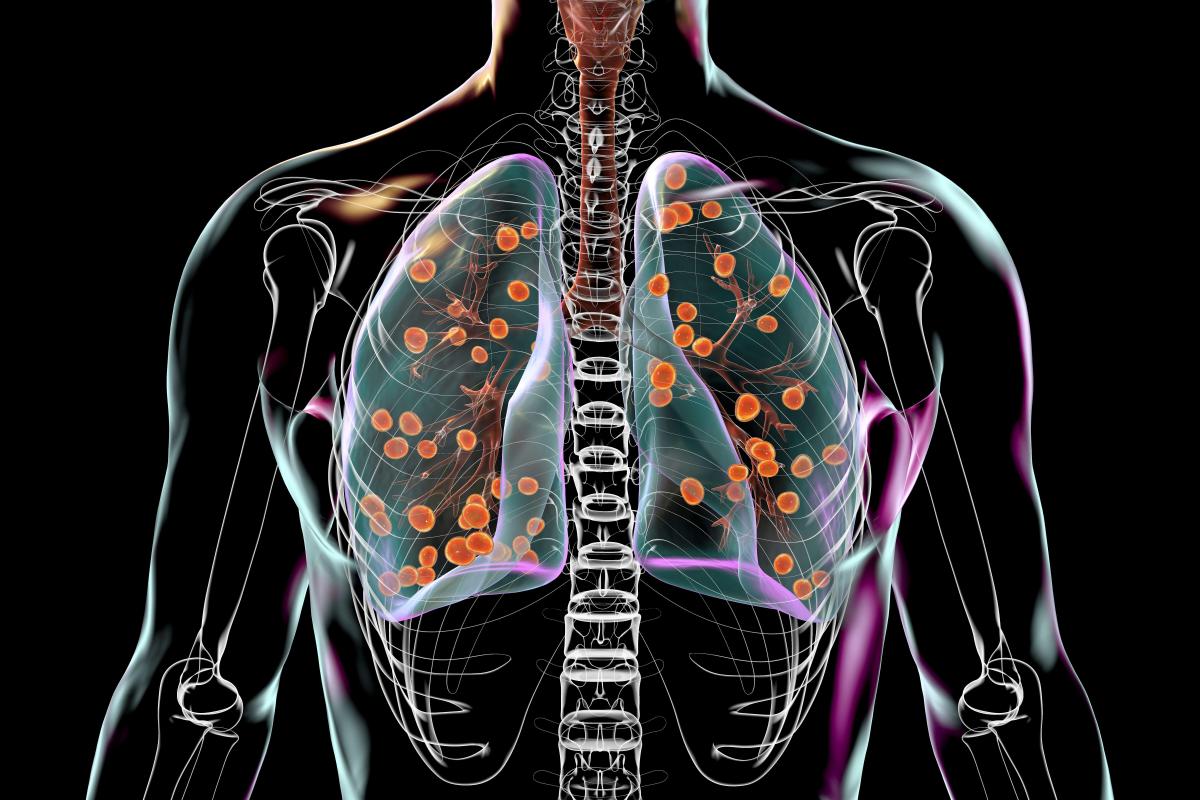
Featured image: lung histoplasmosis, a fungal infection caused by Histoplasma capsulatum. Photo credit: Kateryna Kon/Science Photo Library/Alamy

The breast cancer blind spot

Monica Piccinini

20 December 2025

Wes Streeting, the secretary for health and social care, must find funding for research into invasive lobular breast cancer – to save lives and end an injustice towards women.

Imagine a cancer that grows quietly throughout the body, slipping past every test we’re told to trust – no obvious lump that women are taught to look for. A cancer that can be almost invisible on a mammogram or ultrasound and that often reveals itself once it has already advanced.

This is invasive lobular breast cancer (ILC), a disease so silent it often steals time before anyone realises it’s there.

Over the next decade, around 3.75 million people worldwide are expected to hear the words “you have invasive lobular breast cancer.”

Today, 22 people in the UK and over 1,000 globally are diagnosed with lobular breast cancer every single day. These aren’t just numbers, they are mothers, daughters, partners, friends, people who believe their mammograms would warn them if something was wrong.

ILC accounts to 15 percent of all breast cancer cases, and is the sixth most common cancer affecting women. Yet, it still sits in the shadows of medical research, guidelines, and public awareness.

The legacy of Susan Michaelis

One person who understood the urgency of the crisis better than anyone was Dr Susan Michaelis, founder of the Lobular Moon Shot Project, a UK based volunteer-led organisation run by women with lobular breast cancer and their families, trying to secure funding for research into lobular breast cancer.

A former Australian pilot, Susan became one of the most influential voices in the campaign for lobular breast cancer research. She channelled extraordinary determination into campaigning for research that could save lives like hers.

First diagnosed in 2013, Susan went to endure ten generic cancer treatments, none tailored for her disease. She died on 9 July 2025, after her cancer spread to her neck, spine, pelvis, ribs, head and eye area.

Before she passed, Susan left behind a message that feels even more pressing now:

Mr Streeting, you’re the health secretary, you’re responsible for the health of the people. When it comes to lobular breast cancer, you’re failing.

They knew about this type of breast cancer well before I was born, and they still today don’t understand the basic biology of how this unique type of breast cancer works. So, I, and many others, we haven’t been given specific treatments.

I’m going into my seventh type of treatment in 12 years, none of them specific for lobular, and it’s not going to save my life, and many others, I suspect, but you can change this. What we need is a moon shot type of approach to resolve this and Manchester Breast Centre can do this.

The majority of MPs said this work can be funded, so please Mr Streeting, you must fund this work, please!

Susan’s words have echoed in Parliament. Since the 2024 general election, 460 MPs have pledged support to the Lobular Moon Shot Project.

A recent national survey conducted by Merlin Strategy found that eight in ten Britons support the government funding for a £20 million research initiative to combat lobular cancer, with nearly nine in ten (86%) of 2024 Labour voters in favour.

The Lobular Moon Shot Project team sat down with the health secretary, Wes Streeting, and senior officials on 14 July to highlight the urgent need for research into the basic biology of lobular breast cancer. Among those at the table was Professor Lucy Chappell, the government’s chief scientific adviser and head of the NIHR. After hearing the team outline the gaps in current knowledge and the stakes for patients, Streeting’s team said they would investigate what support might be possible.

A proposed plan by researchers at the Manchester Breast Centre  could transform the future of lobular breast cancer. They’re ready to run a coordinated set of studies to unlock the disease’s biology and develop treatments tailored to it. But such a programme requires time, approximately five years, and money, £20 million.

A patient’s reality: Alison’s story

In June 2023, at 52, Alison Livingstone found something she couldn’t ignore – a lump she instinctively knew wasn’t right. Her mammogram showed nothing. It had also shown nothing the year before, and the year before that.

Only after an MRI was finally carried out did the full picture emerge: a 4cm tumour, cancer spread to 11 lymph nodes. What she believed would be a small operation and radiotherapy became a mastectomy, eight rounds of chemotherapy, weeks of radiotherapy, ovarian removal, and years of ongoing treatment ahead. She’s still waiting for reconstruction.

Her diagnosis arrived late not because she didn’t attend screenings, but because lobular breast cancer often evades the very tools meant to protect women.

The emotional and physical toll has been immense, and the financial toll on the NHS too. One of her essential medications, Abemaciclib, costs £3,000 a month alone. What shocked her most was realising that despite how common lobular breast cancer is, there’s still no treatment made specifically for it.

Alison describes the impact of her diagnosis and treatment:

Treatment ended, but the fatigue didn’t. It was so severe I had to reduce my working hours considerably. And every single day I live with the fear it might come back, because with lobular, that risk is higher.

I work hard to stay upbeat for my family. I don’t want my three teenagers carrying the weight of this, even though I know they worry.

What angers me is how long this cancer has been ignored. Fifty years of being overlooked. If proper research had been done earlier, my cancer might have been found sooner, and I might have had treatments designed for my disease, not borrowed from another.

Her experience is not uncommon, as it reflects what countless women with lobular breast cancer face every day.

Why so many cases are caught too late

The problem begins with detection, as lobular breast cancer does not behave like the more familiar ductal cancer. Instead of forming a mass, it spreads in thin lines weaving through breast tissue. Too many women walk away from routine scans feeling reassured, when in fact the cancer is already present.

By the time symptoms can be felt, such as thickening, a change in shape, a sense that something is “off”, the disease has often grown far beyond its early stages. Many women receive their diagnosis too late, and with that delay comes a far greater risk of long-term complications.

Up to 30 per cent of those with early-stage lobular breast cancer may face later metastasis, sometimes years after their initial treatment.

And yet, despite everything we know about its behaviour, there’s still no treatment designed specifically for lobular breast cancer. Women are instead offered therapies originally developed for other forms of the disease.

For many women, it feels like an injustice. They did what was asked of them; they attended their screenings, trusted the system, and followed medical advice. What they never received was the early detection or tailored care they deserved. Their children too deserved better. Families lose precious time not because the science is impossible, but because it hasn’t yet been properly funded or prioritised.

Costs

Against the huge cost of breast cancer to society, £20 million funding for research seems almost modest. In 2025, breast cancer cost the UK economy £3.2 billion; by 2050, this could rise to £24.5 billion. Meanwhile, a report by the NHS Confederation showed that just £1 of additional investment per woman could produce £319 million in economic benefit.

Neglecting women’s health doesn’t save money, it costs more in every way imaginable.

Even MRI scans, known to detect lobular breast cancer more effectively than mammograms, are still not recommended by the National Institute for Health and Care Excellence (NICE) for routine screening. The gap between what we know and what we do continues to harm women every single day.

Time to act

Lobular breast cancer isn’t rare, it isn’t new, and it’s not going away. And what it makes it so dangerous is how little attention it has received.

Behind every statistic sits someone trying to make sense of a diagnosis that might have been caught earlier, treated more effectively, or even prevented. Each delay and missed opportunity is a reminder of how unevenly our systems still value women’s health.

Every woman deserves a fair chance at early detection, every patient deserves a treatment designed for their disease, and every family deserves hope.

Research into lobular breast cancer is not an option, it’s essential. This cancer has been hiding in plain sight and it’s time we finally choose to see it.

Health secretary, Wes Streeting, was contacted twice but didn’t respond to a request for comment.

Featured image: Breast cancer © Nyul / Dreamstime

A cocktail of pesticides

Monica Piccinini

4 December 2025

Every week, millions of shoppers in the UK pick up everyday staples, including bread, fruit, vegetables, trusting that they are safe to eat, but recent analysis and studies suggest that many of these products carry multiple pesticide residues whose long-term effects on human health remain poorly understood. 

According to a new analysis by Pesticide Action Network UK (PAN UK), three-quarters of fruit and a quarter of vegetables tested by the UK government contain a cocktail of pesticides.

Of the 17 types of produce examined, scientists detected 123 different pesticides. Among them are chemicals linked to cancer, and others known to disrupt human hormones, the systems that shape fertility and healthy development.

Grapes emerged as one of the most contaminated foods, with one single sample containing residues from 16 different pesticides.

The ‘invisible’ cocktail effect

Shoppers often hear that chemical residues remain “within safe limits”, but those limits only apply to one chemical at a time, even though we rarely just eat one.

Regulators state that staying under MRLs (maximum residue levels) is considered safe. The rules were designed around single chemicals, assuming that each is unlikely to cause harm if applied correctly, but many scientists and campaigners argue that this system does not account for combined effects of multiple chemicals consumed over the years, or even decades.

Nick Mole, who led the analysis for PAN UK, warns that this blind spot in regulation leaves us dangerously exposed:

Safety limits are set for one pesticide at a time, completely ignoring the fact that it’s all too common for food to contain multiple chemicals. The truth is we know very little about how these chemicals interact with each other, or what this exposure to hundreds of different pesticides is doing to our health in the long term.

We do know that pesticides can become more toxic when combined, a phenomenon known as ‘the cocktail effect’. Given how high the stakes are, the government should be doing everything it can to get pesticides out of our food.

The top offenders

The new Dirty Dozen list reveals the produce most likely to carry multiple chemicals. Grapefruit comes first, followed by grapes and limes. Each of them appears regularly in supermarket promotions celebrating freshness and wellness – yet behind the marketing, contamination is widespread.

PAN UK looked at the test results to figure out which Highly Hazardous Pesticides (HHPs) showed up the most in our fruit and vegetables. Two fungicides topped the list: imazalil and thiabendazole. They were found in about 9% of samples, mostly on fruits like bananas, grapefruit and melons.

They’re used to stop mould from growing during storage and transport, but there are serious worries about their safety. Both are suspected of disrupting hormones and may even be linked to cancer.

Our daily bread

Even the food we rely on more than any other, our daily bread, is affected. The government’s tests found that almost every loaf contained chlormequat, a developmental toxin that scientists warn may harm our babies and children.

More than one in four bread samples contained glyphosate, the UK’s most used herbicide, repeatedly associated with cancers and other chronic diseases.

Almost half the bread tested contained multiple chemicals. Even the nation’s toast has become a source of chemical exposure.

While regulatory bodies argue that exposure levels detected in bread are well below thresholds considered dangerous, the absence of comprehensive studies on mixture toxicity means uncertainty remains. Low-dose, chronic exposure over decades, essentially a lifetime of daily consumption, has not been studied thoroughly.

Banned at home – yet allowed on our plates

A particularly troubling detail hides deeper in the data: nearly one-third of pesticides detected aren’t approved to be used on British farms.

Crops grown overseas using chemicals banned in the UK can still be imported and sold on British shelves. The government’s own advisory bodies have warned that this unfairly hurts UK farmers who work under stricter rules and, far worse, exposes consumers to risks regulators have already acknowledged are too great.

We’re eating the very chemicals that are considered too dangerous to be sprayed here in our farms.

The UK risks importing produce containing high levels of pesticides, including Highly Hazardous Pesticides (HHPs) already banned in the country. For instance, Brazil is the largest consumer of pesticides in the world, and half of them are HHPs.

Still, UK trade minister, Sir Chris Bryant, who describes himself a “passionate Latinophile”, said to Politico that the UK-Mercosur (South American trading bloc including Brazil, Argentina, Paraguay, Uruguay and Bolivia) agreement is a ‘no brainer’.

Bryant commented:

I’ve had very positive conversations in Argentina and with Brazil, but I haven’t had any conversations with Uruguay and Paraguay yet.

We deserve better

PAN UK is calling on the UK government to rethink its new pesticide-reduction strategy, which now only covers crops like grains. They argue that fruit and vegetables – the foods we and our children eat the most of, and where chemical residues are often highest – must be included if the plan is going to truly protect people and the environment.

The organisation is also calling for support to help farmers transition to safer methods, and for phasing out and banning Highly Hazardous Pesticides (HHPs) known to harm human health.

Mole emphasises that the current system can’t realistically shield us from exposure:

Pesticides appear in millions of different combinations and varying concentrations in our food so it’s simply impossible to design a system sophisticated enough to protect us from these chemical cocktails. The only way forward is to cut our overall pesticide use significantly.

This year, the UK government introduced a target to reduce pesticides in the arable sector. But this latest testing data reveals that – for the sake of our health – we urgently need to expand the target to also cover fruit and vegetables.

This isn’t a distant environmental concern; it’s a public health issue on our plates.

Most families don’t have the luxury of filling their baskets with organic alternatives. Parents shouldn’t have to scrutinise spreadsheets of chemical substances when doing their weekly shop. And farmers often say they don’t really have a choice – the system pushes them to use chemicals, while also making it harder for them to earn a fair living and stay competitive.

Food should nourish, not damage our bodies. Wanting food that doesn’t come with a side-order of chemicals shouldn’t be seen as radical, it’s a basic expectation that what we feed our families won’t harm them, and that the people growing it aren’t put at risk either.

Featured image: Bruno D Andrea / Dreamstime

The climate briefing Britain can’t ignore

Monica Piccinini

1 December 2025

On 27 November, the National Emergency Briefing on Climate & Nature took place at Central Hall Westminster, bringing together leading experts from climate science, national security, energy, food systems, health, and the economy.

Their mission was to deliver a stark, science-led wake up call to politicians, business leaders, and the media of the accelerating threats facing the UK.

The message left the room in no doubt: Britain isn’t ready for what’s coming.

Naturalist and broadcaster Chris Packham opened the event with a stark warning:

This beautiful little blue planet is where we will either learn to live in harmony with the environment or we will destroy ourselves and much of other life, too.

He stressed that misinformation isn’t just corrupting public opinion – it’s corrupting policy:

A dangerous wave of misinformation and lies fills our lives. But worse, it fills the lives of our decision makers. And these are the people who shape policy.

His challenge to MPs was simple:

You must listen to the science because if you don’t, then things go wrong and lives are lost.

15,000 scientists have already warned that environmental breakdown is pushing societies toward “socio-economic collapse.”

Recent heatwaves, deadly floods and supply chain shocks, once treated rare events, are now early warnings of a destabilising global system.

Experts argue this demands a response on the scale of wartime mobilisation, coordinated across government, backed by clear public communication, and grounded in science, not politics.

The contradiction at the heart of UK energy policy

Several speakers highlighted a dangerous contradiction at the heart of UK policy: while climate risks intensify, Britain’s still building infrastructure as if the climate were stable and predictable.

Even as talk of a green transition grows louder, the country still relies heavily on fossil fuels at home and abroad.

Professor Mike Berners-Lee said the world has had more than three decades of warnings, yet emissions are still rising:

As we’ve just heard, it’s not surprising that the climate is coming to bite us after 30 COPs have failed to even reduce the rate at which we’re putting fossil fuel emissions into the atmosphere. It’s still going up year on year. It hasn’t even begun to come down.

Economist Angela Francis argued that markets currently reward polluting industries and punish those trying to change:

Net-zero and nature-positive solutions will not win in markets which take for granted a stable climate, clean air, fresh water, pollinators.

As Lt Gen Richard Nugee explained, decentralised clean energy delivers “more secure energy, more resilient infrastructure and a safer, more stable society.”

Despite the warning and proven alternatives, the UK still grants new fossil fuels licenses.

British energy decisions ripple far across the planet and eventually circle back to affect us here.

Take Brazil, now a hotspot for British oil ambitions. BP announced its biggest oil and gas find in the Santos Basin. Shell also continues to expand in Gato do Mato, a deep-water project in the pre-salt area, also in the Santos Basin. Thousands of miles away, these operations contribute to emissions the UK claims to be cutting.

Researchers at the Economic Statistics Centre of Excellence (ESCoE) show that much of the UK’s real carbon footprint is hidden in imported goods and financed industries abroad. We may cut emissions from our homes and power stations, but carbon generated on our behalf in other countries remains massive.

More than half of the emissions linked to daily UK consumption happen outside the UK. The clothes we wear, the food on our tables, and the fuel we pump from foreign soil all carry a hidden climate cost.

There’s no distinction between a tonne of carbon in Aberdeen or São Paulo. The warming it causes returns to us in the form of rising seas, harsher storms, droughts and climate extremes.

If Britain wants to lead, it must confront not only what its own emissions, but the consequences of its footprint overseas.

Food security

Food security featured heavily in the briefing. The Climate Change Committee warned that national planning on food resilience is “insufficient”, red-rated across key indicators.

Professor Paul Behrens warned:

I’m going to tell you about a threat that will affect everyone in this room, every family in this country, and every constituent – a threat for which we’re woefully unprepared. And I’m talking about the increasing pressure on global food supplies in the face of accelerating climate change and nature loss.

This is what happens when food systems fail. Empty supermarket shelves, people queuing for hours for food, protests, and civil unrests.

Britain depends on a food system that stretches across the globe, a system growing ever more fragile. It imports around 40-50% of its food. What we buy and eat here affects forests, farmers, and communities thousands of miles away. Shocks abroad return as higher prices, shortages, and climate-driven disruptions.

NGO Global Witness found that last year alone, UK demand for forest-risk commodities, including beef, soy, palm oil, cocoa, coffee and rubber, drove deforestation equivalent to the size of major British cities.

Laws like the Environment Act promised safeguards, but key measures have never been implemented. Supply chains linked to illegal deforestation continue largely unchecked, almost half arriving in the first six months of Labour’s new term.

The climate footprint of global agribusiness is staggering. Research by Foodrise shows the five largest meat and dairy companies (JBS, Marfrig, Tyson, Minerva and Cargill) emit more greenhouse gases than oil giants like Chevron, Shell or BP. Their methane alone exceeds the combined output of the UK and EU.

Rich countries like the UK consume the most meat and dairy, so the choices we make abroad end up driving the very climate disasters we face at home.

Food insecurity isn’t just about climate related. Global agribusiness is dominated by a handful of powerful corporations controlling seeds, fertilisers, livestock feed, and even crop genetics. This concentration weakens resilience, increases inequality, accelerates ecological destruction, and traps farmers into dependency.

Meanwhile, small-scale farmers, whether in Brazil or here at home, receive a fraction of the support (subsidies) industrial agriculture gets, despite producing most of the food consumed locally.

The UK can’t claim security while shifting risk onto others. Every import, every policy, every meal in Britain carries a global footprint. Food insecurity abroad returns as floods, fires, shortages, and soaring prices at home.

Behrens said:

We need a great food transformation built on four main pillars. Shifting to plant-rich diets, reducing food waste, improving production, and increasing climate resilience.

Health: how climate change is already hitting the UK

Climate change isn’t just a future threat; it’s already making people sick here. Rising heatwaves are taking lives now.

Professor Hugh Montgomery explained:

Without a functioning economy, without food supply available to us, we can’t run a health service. We can’t have health.

The climate emergency is a health emergency. And it’s about time we started treating these.

According to the UK Health Security Agency (UKHSA), 1,311 heat-related deaths occurred in England in 2024 alone. Without action, the NHS projects heat-related deaths could reach around 10,889 by 2050.

Warmer conditions are expanding the range of disease-carrying insects like ticks and mosquitoes. The UK’s HECC report warns that species such as Aedes albopictus, which can carry dengue, Zika, or chikungunya, could become more common here.

Climate-sensitive infections are rising. Changes in temperature and rainfall make food and water-borne illnesses more likely and alter how other pathogens spread.

At the same time, antimicrobial resistance (AMR), the “superbug” problem, is worsening. Heavy antibiotic use in global food systems, combined with climate impacts on sanitation, helps resistant bacteria thrive.

The impacts hit the most vulnerable hardest. Poorer communities are more exposed to heat, air pollution, and emerging infections, and less able to adapt.

The message is simple: cutting emissions, reforming food systems, and investing in resilient health services aren’t distant policies, they’re essential to protecting lives in the UK and globally.

The cost of delay

The economic reality is no softer. The latest Lancet Countdown report  estimates that extreme heat wiped 639 billion working hours in 2024, more than a trillion dollars in lost income. Agriculture was hit hardest.

Behind those figures are real stories: farm workers forced out of the fields by midday heat, construction workers slowing down to avoid heat exhaustion, and entire shifts cut short because temperatures simply became too dangerous.

The report makes the case that it doesn’t have to be this way: investing in cleaner energy and building resilience into communities could protect both livelihoods and the people who depend on them.

Angela Francis highlights a striking economic truth: the faster we transition away from fossil fuels, the more money we save:

The Oxford Martin School and the Smith School have been looking at this in the context of the energy transition. They compared a fast, a slow, and no transition. And faster is cheaper.

The faster transition saves $12 trillion compared to staying on fossil fuels. That’s more than twice the saving of a slow transition.

National security: conflict & migration

Climate change is already driving global instability. Crop failures, food shortages and worsening weather are pushing some regions towards crisis.

As rising heat, drought and sea-level change make parts of the world unliveable, researchers now suggest that 20–25% of people in some areas may be forced to relocate, far more than earlier projections.

These pressures feed conflict, overwhelm border systems destabilise economies and, ultimately, pose direct security risks to Britain.

Senior UK military figures have warned repeatedly: climate change is no longer a distant or secondary issue. It’s a central threat shaping global security.

Lt Gen Richard Nugee highlighted the security risks of a warming planet:

Climate change can be thought of as a threat multiplier, making existing threats worse and more frequent and introducing new threats. Climate shocks fuel global instability.

People are forced to move within countries and across borders – that puts pressure on receiving regions, can stoke instability, and feeds into wider political tensions.

There’s risk of conflict over access, over resources, and of course, over shipping routes. So, the climate crisis is now shaping strategic and military competition.

But what concerns me most is not any single crisis. It’s crises cascading together. Multiple crises, food, health, infrastructure, migration, energy, extreme weather, etc., all hitting at the same time, eroding trust in government by slow or failed responses and reactionary politics claiming to be able to solve all these crises at once.

A briefing that demands action

Organisers stress that the event is non-partisan. Its purpose is to ensure MPs; business leaders and the media understand the scale of the emergency – and the pathways out of it.

Among the recommendations include establishing a permanent Climate COBRA, reviving public information campaigns and holding annual briefings to keep decision-makers accountable.

The experts insist that the solutions already exist. What’s missing is the courage to act quickly and decisively.

The warning from the briefing was unmistakable: delay isn’t neutral. Its costs are measured in lost harvests, rising instability, mounting deaths and a future made harsher with every year of inaction.

The briefing left one question hanging in the air, one now facing the country as a whole: if this isn’t the moment to mobilise, then what is?

Featured image: ZUMA Press, Inc./Alamy

The hidden cost of Brazil’s climate crisis for UK supermarkets

Monica Piccinini

24 November 2025

Most people in the UK have little idea that the meals on their plates are closely connected to extreme weather now sweeping Brazil. Yet, the UK imports more food from Brazil than any other country outside Europe.

This means that the food on British shelves is increasingly shaped by droughts, floods, and heatwaves that are now becoming the norm in Brazil.

According to a recent report by the Energy & Climate Intelligence Unit, ECIU, almost two-fifths of the UK’s food is imported. Brazil is a major supplier of soybean, beef, chicken, coffee, sugar, and fruit, and it’s also one of the countries experiencing the fastest climate shifts.

Over the past two years, the Amazon has faced its worst drought in seven decades, the south has endured deadly floods that scientists say were made twice as likely by global warming, and extreme heat forced schools close for children’s safety.

These changes are harming the farms that supply so much of the UK’s food.

Gareth Redmond-King, international programme lead at the ECIU, said:

British families are already paying the price at the tills for climate extremes hitting both here and abroad. This year saw the UK’s second worst harvest on record.

Climate change

The Amazon’s drought left boats stuck in mud, entire communities cut off, and forest areas dry enough to burn. Meanwhile, towns in southern Brazil were underwater, destroying crops and livestock almost overnight. Heat is rising across the country, with far more days now reaching dangerous temperatures.

These events are no longer exceptional. Dry seasons are longer, rainfall is becoming erratic, and forests are losing their natural ability to recycle moisture.

The result is a weaker, less stable climate system, one that affects not only Brazilians, but also thousands of people miles away, including UK consumers.

We depend on Brazil for coffee, sugar, oranges and tropical fruits – as well as a lot of soy to feed livestock grown in the UK. In addition to the threat from climate change, vast swathes of rainforest and other biomes have been cleared to grow some of these foods; this deforestation is itself a key driver of the climate change affecting the ability to produce these foods, mentioned Redmond-King.

A Global Witness analysis shows that, despite a 2021 law meant to clean up supply chains, UK shoppers are still buying products linked to deforestation.

The group found that recent imports of beef, soy and palm oil were tied to forest loss on a scale comparable to the size of cities like Newcastle, Liverpool or Cardiff.

The Environment Act was supposed to stop companies sourcing goods from illegally cleared land, but years later it still hasn’t been enacted because of repeated government delays, leaving the UK market open to “forest-risk” products linked to deforestation and human rights abuses.

Soy: Britain’s hidden connection to Brazil

Soy is the strongest link between UK diets and Brazilian farms. Nearly all soy imported to the UK is fed to animals, mainly chickens. In 2024, the UK imported £243m of soy from Brazil.

Brazilian soy production is now under pressure from long dry spells and extreme heat. Rivers used to move the crop have dropped so low that transports have slowed or stopped. Scientists say that every 10C of global warming is estimated to cut soy production by around 6%.

There’s also a much bigger danger: the Amazon’s long-term survival is at risk. Experts warn that if deforestation reaches 20-25%, the forest could tip into a state where it can no longer sustain itself; roughly 17% has already been lost.

This would change weather patterns across Brazil, making soy production even more unstable, and threatening the UK’s poultry industry.

There’s also a social, environmental, and health dimension to Brazil’s soy industry that often gets overlooked.

As Unearthed reports, the introduction of herbicide-resistant seeds reshaped the country’s soy sector, to the point where roughly 98% of today’s crop is believed to be genetically modified.

This rapid expansion hasn’t been without consequences, it has pushed soy farming into huge new areas, contributing to deforestation and sparking land disputes in regions like the Amazon and the Cerrado.

A daily habit at risk

Brazil supplies up to 35% of the UK’s green coffee beans. But coffee is highly sensitive to drought and heat. The 2023-24 drought in Brazil caused global prices to spike. By the time the shock reached the UK, supermarket coffee prices had risen more than 13%.

Millions of Britons’ morning cups are now at risk from a warming planet.

Forest loss on the menu

Beef and chicken imports connect UK shoppers directly to the forests under threat.

Cattle farming, the leading driver of Amazon deforestation, is responsible for around 80% of forest loss. High heat makes it harder for animals to survive, pushing ranchers into untouched forest areas.

The UK imports over 500,000 tonnes of Brazilian chicken each year. Because the chicken industry depends heavily on soy feed, this links British diets to the same environmental pressures affecting soy farming.

Crops at risk

Mangoes, melons, limes, papayas, and sugar that arrive in UK shops come from regions in Brazil now struggling with water shortages and heat. In the centre-south, dry conditions have cut sugar cane production, and northeastern fruit farmers are forced to use far more water to keep the crops alive.

The orange juice industry, which supplies more than 70% of global exports, is also under strain. Heat and disease have hit citrus trees across the country.

As a result, UK fruit juice prices are still about 30% higher than in 2022, and orange juice prices more than doubling since 2020.

What this means for the UK

Climate shocks in Brazil are already reflected in UK supermarkets. Food becomes more expensive when crops fail, supply chains become less reliable, and families on tight budgets are hit hardest.

Global supply chains also face more risks from plant diseases and poor harvests linked to hot weather. The UK’s dependence on food from places deeply affected by climate change makes the country more vulnerable than most people realise.

The UK climate change committee released its progress report and adaptation and it’s horrendous to look in there and see for food security, in this grid they have, they’ve got red and amber, and green, and when it comes to planning, and when it comes to actual action on adaptation, the planning for food security in the UK is red, it’s insufficient, the plans are not good enough.

There aren’t even metrics for us to understand how the threat to food security is happening, said Laurie Laybourn-Langton, associate fellow at the Chatham House sustainability accelerator during an Innovation Zero webinar last May.

A shared responsibility

The food we consume in the UK is now tied to Brazil’s forests, rivers, and farmland. When the Amazon dries, southern Brazil floods, or crops fail in the heat, the impacts don’t stay in Brazil. It travels. It influences what we can find in our supermarkets, what families can afford, and how reliable our supply chains truly are.

Climate change isn’t a distant worry anymore; it’s already shaping the price and availability of everyday meals. Understanding this connection, and choosing to act on it, means taking some of the pressure off vulnerable environments and helping to build a food system that can cope with the changes ahead.

Featured image: Dzmitry Skazau/Alamy

COP30 in Belém: a summit in search of credibility

Monica Piccinini

14 November 2025

As COP30 begins in Belém, the world once again gathers promising salvation, a solution to the climate crisis. Global leaders fly in and meet under the canopy of the Amazon rainforest, pledging ambition, justice and preservation.

Brazil’s president Luiz Inácio Lula da Silva stands before the cameras proclaiming his nation’s leadership in the global climate fight, but his rhetoric seems to be out of sync with reality.

The Brazilian government that now dress itself in the language of sustainability is the same one advancing laws, projects, and extractive industries that endanger the very forest it claims to protect.

The Amazon is under threat not only from loggers and illegal miners, it’s under threat from the country’s own government, which hosts a climate summit even as it opens new oil frontiers, weakens Indigenous land protections and fast tracks eco-destructive licences.

Smoke and mirrors

While diplomats sip açaí smoothies in Belém, fires, deforestation, and degradation continue to rage across the Amazon.

In late 2023, the capital of Amazonas, Manaus, disappeared beneath a suffocating dark cloud of smoke. Residents awoke to grey skies and the taste of burning forests in their mouths. Masks were no longer a protection from a virus; they were shields against the very air they needed to survive.

Air monitors registered PM2.5 levels twenty times the World Health Organisation’s limit. This is the Amazon speaking, and it was screaming.

The fires trace a very familiar path: the BR-319 highway, once abandoned, now being revived under Lula’s government, carving through the rainforest like a knife. Bulldozers are cutting a corridor of destruction through one of the most intact parts of the rainforest, opening it to cattle ranching, land grabbing, organised crime, illegal and legal mining, fire, and possibly new pandemics.

Brazil is moving backward while promising climate leadership, it’s heading in the opposite direction of its commitments for COP30, says Lucas Ferrante, researcher at the University of São Paulo (USP).

Deforestation and degradation are already seen around BR-319. If the highway is rebuilt, it could set off an irreversible chain reaction that will devastate the Amazon, harm Indigenous communities, and accelerate climate change beyond control, he added

Cássio Cardoso Pereira, ecologist and editor of the BioScience journal, said:

While deforestation grabs headlines, the deeper crisis of forest degradation continues unchecked. And now, reckless projects, including the BR-319 highway, the Ferrogrão railroad, and the disastrous proposal to drill for oil at the mouth of the Amazon, push the rainforest closer to collapse.

Drill, drill, drill

One of the most striking contradictions is Brazil’s approval of oil exploration at the mouth of the Amazon River, on the so-called Brazilian equatorial margin.

Despite global calls to phase out fossil fuels, state-owned giant Petrobras received environmental authorisation from Brazil’s environmental agency, Ibama, to drill an exploratory well in Block 59, about 500 km from the river’s mouth, in an area home to sensitive ecosystems, including the Great Amazon Reef System, and mangroves. Environmentalists warn about the risks of such project and the tragic consequences of an oil spill.

How can a country host a summit on climate action while expanding oil extraction in one of the world’s most biodiverse and climate-sensitive regions?

The contradiction is so glaring it almost seems deliberate, a reminder that climate diplomacy too often serves the optics of progress, it signals that the summit may serve branding more than change.

The battle over Indigenous land

Brazil’s climate narrative also collapses when it comes to Indigenous rights.

The controversial “marco temporal” or “time frame”, a legislation backed by the agribusiness lobby (“ruralistas”), claims that Indigenous peoples can only claim land they physically occupied on 5 October 1988, the date when Brazil’s constitution came into force.

Entire Indigenous communities displaced before that date would lose their rights to ancestral territories.

Though Brazil’s supreme court struck the bill down in 2023, congress soon passed Law 14.701/2023 to reimpose it, a legislative deceptiveness that undermines constitutional justice.

For those who live by the forest, the stakes are existential.

UN experts have warned that the law could invalidate hundreds of land demarcations and accelerate deforestation. Yet, at COP30 Indigenous delegates will likely appear on governmental panels, their presence used as proof of inclusion, even as their land rights are being eroded at home.

Deregulation

As if this weren’t enough, in July 2025, Brazil’s congress passed the so-called “devastation bill”, officially bill 2159/2021. This legislation radically loosens environmental licencing rules, allowing many projects to proceed under weaker impact assessments, sidestepping oversight, and handing more authority to states and municipalities.

Human rights groups have warned that the bill puts people and the planet at risk by weakening protections related to Indigenous and Quilombola communities.

Although President Lula vetoed or amended 63 of the bill’s nearly 400 articles in August, observers warn that the remaining provisions still pose a serious threat. Aware that congress could overturn his vetoes, Lula appeared to strike a delicate balance, seeking to appease both the right and the left while maintaining an appearance of neutrality.

To host a climate summit whilst your government is passing this kind of law is to declare war on credibility. A country can’t simultaneously chair the climate table and fast track deregulation that invites deforestation and community displacement.

The bioeconomy in green disguise

Another of President Lula’s proudest talking points is Brazil’s “bioeconomy revolution”. At the BRICS Business Forum, he declared:

Our countries can lead a new development model based on sustainable agriculture, green industry, resilient infrastructure, and the bioeconomy.

It sounds visionary, but behind the slogans, the same extractive dynamics persist.

Large-scale soy, sugarcane, palm oil, and corn monocultures are expanding across the Amazon, justified as “renewable”, “green”, “clean”, “sustainable” biofuel crops, the “fuel of the future”. Projects like Amazônia 4.0 promise sustainable innovation, yet risk replicating the colonial logic of resource extraction in a green disguise.

The extension of this concept to the Amazon carries the inherent risk of it ending up being pulped and sold for profit, warns researcher Ossi Ollinaho from the University of Helsinki.

Meanwhile, environmental policy expert, Jorge Rodriguez Morales, observes that:

Positioning bioenergy as a climate strategy has effectively justified broader policies supporting the biofuel industry and contributed to the greenwashing of Brazil’s climate policy.

Offsets

Meanwhile, another COP30 spotlight is on carbon markets, the supposed magic wand of climate action, but voluntary carbon offsets are now under intense scrutiny. Research led by Dr. Thales West at Vrije Universiteit Amsterdam found that many REDD+ forest projects, once celebrated as a proof of progress, are built on “hope, not proof”, relying on shaky assumptions.

Nature reports that offset often “undermine decarbonisation by enabling companies and countries to claim reductions that don’t exist.”

At the heart of the problem is the baseline scenario: exaggerated threats allow projects to sell more credits, even for forests never at risk.

Even with the best intentions, if you follow the ‘wrong recipe’, you’ll probably not get the right result, says Dr. West.

Certifications systems, paid by the very projects they audit, create conflicts of interest, while many credits fail to account for forest loss through fire, logging, or displacement.

The Suruí project in Brazil, once celebrated as an Indigenous-led conservation success, collapsed under illegal mining and land pressures, demonstrating that even well-designed offsets can’t succeed in a broken system.

Critics warn that offsets have become a form of greenwashing, letting airlines, tech firms, and luxury brands continue polluting.

Dr. West cautions:

Unless there’s a change in attitude among companies, governments, and organisations such as the UN, the market is likely to continue prioritising convenience over integrity.

Integrity, truth and justice

Lula’s international rhetoric remains powerful, his speeches about “saving the Amazon” still win applause in New York, London, Paris, and Davos, but power without integrity is just noise.

At COP30, the word “justice” will be repeated many times, but justice requires more than words, it requires action, alignment of policy and principle.

Brazil can’t host the world’s climate summit while giving licenses for oil at the mouth of the Amazon, while loosening land protections for Indigenous peoples and while fast-tracking environmentally sensitive projects under the “devastation bill”.

The Amazon is not just a forest, it’s the lungs of a continent, the keeper of “flying rivers” that bring rain and moisture across Brazil and other regions, a shield against climate chaos. Destroy it, and the consequences ripple far beyond Brazil, bringing droughts, floods, climate instability, and even new pandemics.

The forest is already speaking in fires, in the smoke, in the disappearing rivers and threatened people. The world will hear COP30 speeches, but the forest hears actions, it hears what’s done, not what’s promised.

The Amazon has no more time for hypocrisy.

Photo taken on Nov. 10, 2025, shows the venue of the 30th session of the Conference of the Parties to the U.N. Framework Convention on Climate Change, known as COP30, opening the same day in Belem, Brazil, and running through Nov. 21.

Image featured: B. J. Warnick/Newscom/Alamy Live News

Porto Central: Brazil’s deepwater dream built on shaky foundations

Monica Piccinini

10 November 2025

By late 2024, dredgers begin carving through the seabed off the coast of Presidente Kennedy, a small town in southern Espírito Santo, once known for its quiet beaches. This is the chosen site of Porto Central, Brazil’s next mega-port and one of the most ambitious private logistics projects in the country’s history.

Promoters describe Porto Central as “one the largest industrial port complexes in Latin America”, a project meant to redefine Brazil’s export future. Yet, behind the promises of jobs and progress, tension is growing along this quiet stretch of coast. Critics are questioning who truly benefits from this ambitious initiative and who bears the hidden costs.

Porto Central spans 2,000 hectares, an area roughly the size of 2,800 football pitches, with a 25-metre-deep access channel capable of hosting giant VLCC (Very Large Crude Carrier) vessels. A single VLCC can carry approximately two million barrels of crude oil.

The project would host up to 54 terminals serving oil and gas, agribusiness, minerals, containers, and even renewable energy. Construction is divided into five phases, with total investment estimated around R$16bn (approximately $2.9bn).

A city by the sea

Porto Central’s attraction is geography. Sitting halfway along Brazil’s coastline, it promises to reduce transshipment and shorten export routes for oil and gas, grains, and iron ore.

Several major backers, including TPK Logística S.A., the Dutch company Van Oord, and the European subsidiary of US-based company Modern American Recycling Services (M.A.R.S.), are supporting Porto Central’s vast project, a deepwater hub designed to link Brazil’s pre-salt oil fields, agribusiness, and mining industries directly to global trade routes.

The pitch is clear and simple: reduce transshipment costs, shorten export routes, and compete with maritime giants like Rotterdam, Singapore, and Shanghai.

Phase 1 involves four core components: dredging 60 million m3 of seabed (the equivalent of 25,000 Olympic swimming pools); constructing a south breakwater with rock quarried 26 km inland; building a deep-water bulk and liquids terminal for oil transshipment; and developing a 65-hectare back area to assemble pipelines and foundations. Implementation began in late 2024, with full operational capacity planned for the end of the decade.

Yet, beneath the display of engineering confidence, lies a tangled web of risks.

 Dredging up damage

The socio-environmental stakes are immense. Porto Central’s environmental impact report (RIMA) outlines a list of risks rarely seen in such concentration: seabed dredging that could raise turbidity suffocating coral and fish, altering sediment flow, accelerating coastal erosion.

Protected species, including sea turtles, dolphins, and even migrating whales, use this stretch of coast to feed and breed. Noise, ship traffic, and artificial light threaten those rhythms.

Artisanal fishermen, farmers, and quilombola communities, many of whom operate within sight of the dredging site, risk losing both fishing grounds and income. Past compensation programmes for similar projects have proved inconsistent.

In 2023, Brazil’s environmental agency, Ibama, issued an installation license (LI) to Porto Central relating to Phase 1 of the project, requiring extra monitoring and mitigation. Environmentalists warn that enforcement capacity remains limited.

Voices

Local voices warn that the ecological and social costs of Porto Central could far outweigh its promises. Teacher, environmentalist and activist, José Roberto da Silva Vidal, who has been following the project’s impact in Presidente Kennedy, spoke with deep concern:

It’s heartbreaking to see what’s happening to our land and sea as Porto Central moves forward. The restinga forests are being cleared, rocks are blasted apart, and the water that sustains life here is under threat.

Every new truck, every machine adds to the damage releasing more emissions into an already fragile atmosphere. Calling this progress ignores the truth we’re all facing – the planet is warning us, and yet we keep choosing to look away.

On the front line against the Porto Central project, the grassroots group REDI gives voice to fishing families and riverside communities whose lives and traditions are at risk. FASE Espírito Santo stands with them, supporting local communities, defending their land and waters, and demanding accountability from those pushing destructive projects.

Marcos Pedlowski, a researcher and associate professor at the State University of Northern Rio de Janeiro (UENF), expresses deep concern about the potential impact of Porto Central on the small, fragile town of Presidente Kennedy. His worries are based in nearly two decades of research and firsthand experience living among those affected by the Açu Port, another large-scale project located less than 100 km from Porto Central:

Presidente Kennedy is a poor, quiet place, unprepared for a project of this size. When thousands of workers arrive, life here will change overnight, and not for the better. We’ll see more social tension, more prostitution, more alcohol and drugs. Violence will rise, and the community will be left to deal with the consequences.

He warns that these social risks are tied to deeper political realities:

We already live with corruption and heavy-handed policing in Espírito Santo. When you add a project like Porto Central to that mix, you’re setting the stage for even greater injustice.

For Pedlowski, what’s happening in Presidente Kennedy is part of a larger story, one he has seen unfold before along Brazil’s coast:

These are what I call sacrifice ports. The investors know the damage they’ll cause: the erosion, the pollution, the displacement of fishermen and quilombola families. But the profits speak louder. Behind all the promises, what’s really at play is the takeover of land and sea, with the state working hand in hand with corporate power.

A fossil fuel magnet

Some of Porto Central’s confirmed clients are hardly green. The company has signed contracts with Brazil’s state-owned oil and gas company, Petrobras (2021), Norwegian Equinor (2024), Chinese CNOOC (2024), and Spanish Repsol Sinopec (2025), to handle crude oil and derivatives.

José Maria Vieira de Novaes, Porto Central’s CEO, described oil as “one of the anchors of the project”, citing government forecasts of booming exports and limited existing infrastructure. He told Folha Business in 2022:

The existing terminals can’t absorb what’s coming.

While Brazil pledges to decarbonise, its newest mega-port is potentially built to accelerate fossil-fuel throughout.

Who profits?

At the heart of Porto Central is TPK Logística S.A., owned by the Polimix Organisation, a major Brazilian conglomerate in concrete, aggregates, and logistics. Polimix is controlled by Ronaldo Moreira Vieira, and José Maria Vieira de Novaes is one of TPK Logística’s partner.

According to the International Consortium of Investigative Journalists (ICIJ), Ronaldo Moreira Vieira is listed in the Panama Papers database. Being listed “active” in that database means the entity was operational at the time of the 2016 leak, evidence of involvement in offshore structuring. Though not proof of illegality, the revelation invites scrutiny over transparency and beneficial ownership.

A president with 13 companies

José Maria Vieira de Novaes, meanwhile, wears many hats. Corporate registries show his name linked to 13 companies, from Agropecuária Limão Ltda to Kennedy Energia Solar Ltda and Praia Kennedy Empreendimentos Ltda, collectively controlling over R$388m (approximately $72m) in share capital.

Several of these companies operate within the same region as the port. Some are active in real estate and energy, the very sectors poised to benefit from Porto Central’s rise. Such overlap could allow Novaes to benefit indirectly from Porto Central’s infrastructure expansion, a potential conflict of interest that blurs the line between public good and private gain.

Hazards and mitigation

Brazil’s environmental agency, Ibama, has already required Porto Central to conduct additional sediment and noise studies before advancing major phases of construction. While the company claims to operate under “international environmental standards”, local NGOs accuse it of pre-emptying full approval.

The list of some of the potential hazards reads like an environmental check-list from hell: destruction of marine habitats from dredging, disturbance to turtle nesting and marine mammal migration, erosion of beaches from altered sediment flow, pollution from oil spills, waste and sewage, noise and vibration from heavy machinery disturbing wildlife and residents, salinisation of groundwater, introduction of invasive species via ballast water, accident and spills during ship-to-ship transfer, destruction of mangroves, long-term erosion along the Presidente Kennedy coastline.

Porto Central vs Açu Port: a tale of two mega ports

Both Porto Central and Açu Port, located less than 100 km apart along Brazil’s southeast coast, share grand visions, deepwater and export terminals, and industrial zones promising jobs and growth.

Açu, launched in 2013 in São João da Barra, in Rio de Janeiro state, has matured into a functioning port and energy hub. Yet, academic research reveal deep scars: displacement of fishing families, salinisation of water tables, and unfulfilled social compensation. Research papers describe community disruption and environmental degradation as long term legacies of the project.

Carlos Freitas, an environmentalist with the NGO REDI, says the story repeating in Presidente Kennedy is painfully familiar. His group has been working with fishing families and the farmers in the MST (landless worker’s movement) settlements near Morro da Serrinha, where quarrying for Porto Central’s construction has already disrupted lives:

What happened at Açu Port is happening again here – the same promises, the same silence about the damage. They call it progress, but what we see is destruction disguised as development.

He explains that company meetings are called with only a few days’ notice, leaving little room for real participation. Meanwhile, explosions from the quarry scare off animals, cause livestock miscarriages, and shake the homes of farming families:

People are being misled with talk of jobs and growth, while explosions shake their land and animals flee. In the MST settlements, families are watching their crops and animals suffer. Porto Central isn’t bringing life to this region – it’s taking it away.

This illustrates a shared Brazilian dilemma, rapid industrialisation without governance or ecological safeguards.

Logistics

Beneath the promise of progress lies uncertainty. The project relies on unfinished national logistic links, including the EF-118 railway between the capital of Espírito Santo, Vitória, and Rio de Janeiro, EF-352 linking the states of Espírito Santo, Minas Gerais and Goiás, and highway upgrades on BR-101 and BR-262. Without them, Porto Central could become a bottleneck. The port’s promoters insist the state government’s commitment will guarantee completion, but Brazil’s infrastructure history is littered with stalled railways.

Add to that the climate challenge, as rising seas and stronger storms could test the port’s defences before it’s even operational.

Ambition and accountability

Porto Central sums up Brazil’s eternal paradox: vast potential, fragile governance.

It could, in theory, anchor Brazil’s future in global trade. Yet, without transparency, oversight and rigorous socio-environmental stewardship, it risks becoming another cautionary tale, of profit for a few and pollution for many, a crossroads between development and destruction.

With ownership structures stretching into offshore secrecy jurisdictions, and leadership linked to a constellation of private companies, accountability remains elusive.

 Whether Porto Central becomes Brazil’s Rotterdam, or its next development scandal, will depend less on engineering than on ethics.

For many locals, the question isn’t whether Porto Central will rise, but who it’ll serve once it does.

Porto Central did not respond to a request for comment.

Featured image: Governo do Espírito Santo.