Toxic Dependency: Fossil Fuels Undermine Food Security, Experts Warn

Monica Piccinini

7 July 2025

Despite consuming 40% of all petrochemicals and 15% of the world’s fossil fuel, global food systems remain largely absent from global climate discussions. This oversight obscures a critical reality: without rethinking how we produce, process, and consume food, meaningful progress on climate goals will remain out of reach.

As oil prices increase in the wake of escalating global conflicts, a new report from the International Panel of Experts on Sustainable Food Systems (IPES-Food) delivers a stark warning: the world’s food systems are dangerously dependent on fossil fuels, and this addiction is driving both climate chaos and food insecurity.

The report, Fuel to Fork: What will it take to get fossil fuels out of our food systems?, reveals that food systems have become Big Oil’s next big target. A staggering 40% of global petrochemicals and 15% of all fossil fuels are now funnelled into agriculture and food supply chains through synthetic fertilisers, pesticides, plastic packaging, ultra-processed foods, cold storage, and transport.

“Fossil fuels are, disturbingly, the lifeblood of the food industry,” says Errol Schweizer, IPES-Food expert. “From chemical fertilisers to ultra-processed junk food, to plastic packaging, every step is fossil-fuel based. The industrial food system consumes 40% of petrochemicals – it is now Big Oil’s key growth frontier. Yet somehow it stays off the climate radar.”

For years, the climate impact of our food systems has been clear, and today, it can no longer be overlooked. Food production now contributes nearly one-third of global greenhouse gas emissions, with agriculture and land-use change driving much of the damage. Forests are cleared for cattle, and vast areas are transformed into chemically intensive, resource-heavy crop systems.

Global Conflicts Driving Food Prices Up

With Israel-Iran tensions pushing oil prices higher, the knock-on effects on food are becoming more acute. Food and energy markets are deeply linked, the report emphasises, and when oil prices spike, food prices quickly follow, worsening hunger and economic instability worldwide.

IPES-Food expert, Raj Patel, warns:

Tethering food to fossil fuels means tying dinner plates to oil rigs and conflict zones. When oil prices rise, so does hunger – that’s the peril of a food system addicted to fossil fuels. Delinking food from fossil fuels has never been more critical to stabilise food prices and ensure people can access food.

The Invisible Engine of Big Oil’s Expansion

Global subsidies for coal, oil, and gas, both direct and hidden, have surged to a staggering $7 trillion, equivalent to 7.1% of the world’s GDP. This massive sum surpasses total annual government spending on education and amounts to nearly two-thirds of global healthcare expenditures.

In 2024 alone, $2 trillion was funnelled directly into fossil fuel industries, while and additional $5 trillion represents the devastating societal costs, from toxic air pollution to oil spills and widespread environmental destruction.

At the same time, nearly 90% of the $540 billion in annual agriculture subsidies is driving harm, to both people and the planet. These funds overwhelmingly support chemical-intensive commodity crop production, entrenching destructive practices. Most of this money flow through price protections and input-linked payments, locking farmers into unsustainable systems that degrade ecosystems, threaten health, and undermine long-term food security.

Fossil Fuels in Every Bite: How Pesticides and Plastics Feed Big Oil

As industries around the world start the slow shift toward decarbonisation, the global food system is quietly doing the opposite, pushing fossil fuel demand even higher. Major food corporations routinely deploy aggressive tactics to undermine or obstruct public health and environmental policies, replicating the same playbook fossil fuel giants have used for decades to stall climate progress.

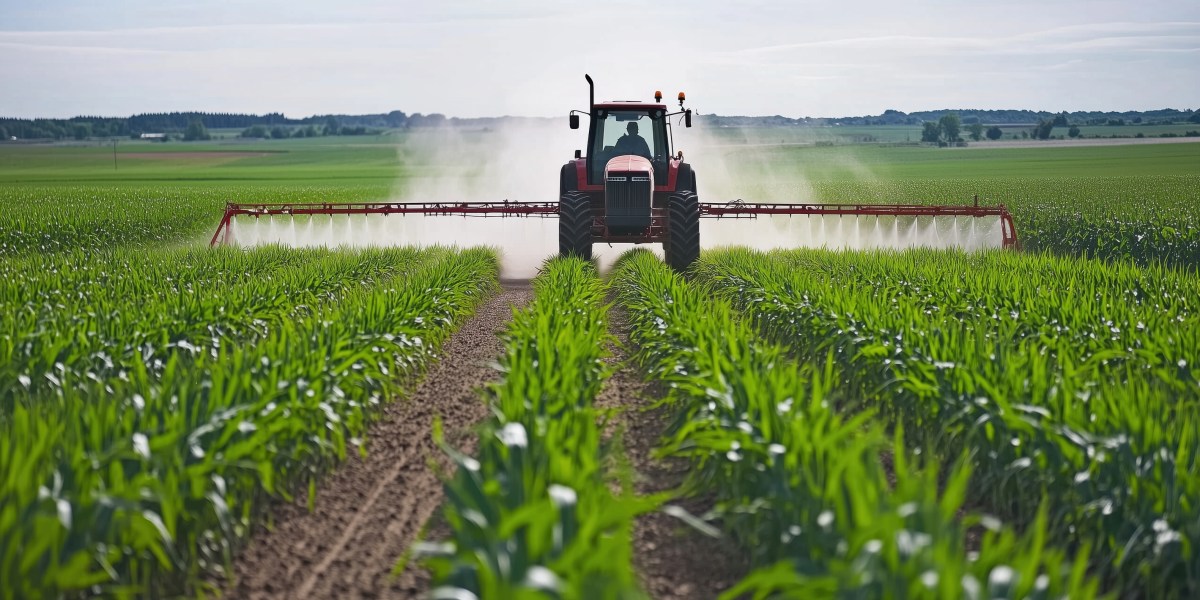
According to the report, nearly all synthetic fertilisers and pesticides, an astonishing 99%, are made from fossil fuels. Fertiliser production alone eats up a third of the world’s petrochemicals, making agriculture a major profit driver for oil and gas companies.

Global pesticide use continues to grow, having risen by 13% over the past decade, and doubling since 1990, particularly in countries like China, the United States, Brazil, Thailand, and Argentina. China stands out as the world’s largest pesticide producer, responsible for one-third of global output.

Pesticides have emerged as one of the leading global drivers of biodiversity loss. Their toll on human health is just as alarming: every year, over 385 million people suffer from unintentional pesticide poisonings, resulting in 11,000 deaths and impacting nearly 44% of the world’s farming population.

Moreover, the extensive use of plastics, over 10% of global plastic production for food and beverage packaging, and an additional 3.5% for agriculture, reveals a stark reality: the food system is a powerful but overlooked driver of Big Oil’s continued growth.

Yet, despite this heavy footprint, food systems are still largely ignored in national climate strategies and global negotiations, a dangerous blind spot that experts warn can no longer be overlooked.

Tech Fixes Are a False Solution

The report is highly critical of so-called “climate-smart” innovations such as “blue” ammonia fertilisers, synthetic biology, and high-tech digital agriculture. These approaches, the authors argue, are energy-intensive, costly, and risk locking in fossil fuel use and agrochemicals under the guise of climate progress.

Molly Anderson, IPES-Food expert, mentioned:

From farm to fork, we need bold action to redesign food and farming, and sever the ties to oil, gas, and coal. As COP30 approaches, the world must finally face up to this fossil fuel blind spot.

Food systems are the major driver of oil expansion – but also a major opportunity for climate action. That starts by phasing out harmful chemicals in agriculture and investing in agroecological farming and local food supply chains – not doubling down on corporate-led tech fixes that delay real change.

A Clear Path Forward

There is hope, and there are already alternatives. Agroecology, Indigenous foodways, regenerative farming, and local supply chains offer viable, fossil-free models for nourishing people and the planet.

Georgina Catacora-Vargas, IPES-Food expert, said:

Fossil fuel-free food systems are not only possible – they already exist, as the world’s Indigenous people teach us. By shifting from ultra-processed diets to locally sourced, diverse foods; by helping farmers step off the chemical treadmill and rebuild biological relationships; by redignifying peasant farming and care work – we can feed the world without fossil fuels.

With COP30 in Brazil on the horizon, IPES-Food is calling on governments to phase out fossil fuel and agrochemical subsidies, cut fossil fuels from food systems, and prioritise agroecological, healthy, and resilient food systems.

The takeaway is clear: continuing to power our food system with fossil fuels is driving us toward climate chaos, economic upheaval, and deepening world hunger. We must break free from this destructive cycle. The future of our planet depends on the choices we make now.

Climate Change and El Niño: Pushing Brazil’s Amphibians to Extinction

Monica Piccinini

7 July 2025

A groundbreaking new study has challenged a long-standing belief in conservation science, revealing that climate change, intensified by increasingly extreme El Niño events, is the true force accelerating the extinction and decline of Brazil’s amphibians. Contrary to decades of assumptions, researchers have found that the aquatic fungus Batrachochytrium dendrobatidis (Bd), once blamed as the main cause, plays only a secondary role in the crisis.

The study delivers a striking revelation: while Bd is undeniably harmful, it acts not as the trigger but as an opportunistic invader, targeting amphibian populations already weakened by climate stress, loss of immunity, and reduced genetic diversity.

Rather than causing mass deaths directly, Bd outbreaks tend to emerge years after populations have already declined, revealing the real danger: environmental instability. Intense droughts, rising temperatures, and erratic weather patterns fuelled by El Niño have severely damaged amphibian habitats, stripping species of their ability to adapt and survive.

The research also highlights a surprising twist, Brazilian amphibians, through generations of exposure, have developed herd immunity to Bd. Their vulnerability originates not from the fungus itself, but from a changing environment.

Shifts in temperature and rainfall have disrupted ecosystems and damaged the skin microbiomes that amphibians rely on for defence. As water sources dry up, frogs and other species are forced into smaller, crowded areas, perfect conditions for disease to spread.

This study marks a critical turning point in our understanding of amphibian decline, redirecting attention from disease to the broader and more urgent threat of a destabilised climate.

Célio Fernando Baptista Haddad, biologist in the department of biodiversity and CBioClima centre at São Paulo State University (UNESP), and one of the authors of the study, mentioned that adapting conservation strategies to address human-induced climate change is a multifaceted challenge that requires profound changes in our way of life. He further explained:

We must urgently transition to cleaner energy sources, but this is obstructed by powerful oil and coal lobbies that resist ending the exploitation of polluting resources – resources that are not only heating the planet but also pushing wildlife and ecosystems toward extinction.

Haddad also emphasised that deforestation remains a major concern, driven by a growing global population, now over 8 billion, exceeding the Earth’s carrying capacity and prompting land clearing for agriculture and livestock.

From 1923 to 2014, scientists documented the extinction or decline of 90 Brazilian frog species, with at least eight possibly extinct. One species was classified as critically endangered, while another was deemed endangered. This trend began in the 1970s and shows no signs of stopping, driven by a combination of factors: loss of biodiversity, agricultural expansion, pesticide use, disruption of aquatic and terrestrial ecosystems, and, most significantly, climate change.

The lead author of the study, Lucas Ferrante, said:

Our research refutes the hypothesis that the decline of Brazilian amphibians was primarily caused by the Bd fungus. Using causal effect equations, we demonstrate that climate change, extreme weather events, and rising temperatures are in fact the main culprits. This is particularly important because the declines began after the Industrial Revolution – the same period during which humans began significantly altering the planet’s climate.

He further stresses that current mitigation targets are no longer sufficient. Brazil plays a significant role in this scenario: when deforestation alone is considered, the country ranks as the fourth-largest global emitter of greenhouse gases.

Moreover, emissions from wildfires, which have increased under the current government, have yet to be fully accounted for. The situation is further worsened by President Lula’s plans to expand oil exploration, including in environmentally sensitive areas such as the Amazon River mouth, as well as in several other sites within the Amazon rainforest.

Brazil is home to the world’s largest number of amphibian species, the majority of which are found nowhere else on Earth. This makes the country a critical hotspot for biodiversity, and the ongoing amphibian crisis is a blow to global conservation efforts.

Zoonotic Spillovers

Adding another layer of concern, climate change and extreme weather events, such as the severe droughts and rising temperatures linked to El Niño, are also accelerating the spread of zoonotic diseases, which pose significant risks to both wildlife and human populations.

In the Amazon region, record-breaking temperatures and unusual weather patterns – combined with deforestation driven by road projects like the BR-319 highway and the expansion of cattle farming into conservation areas – are amplifying the risk of disease spillover.

As ecosystems are disrupted and human activities encroach deeper into wildlife habitats, the likelihood of disease transmission increases, posing a growing threat to both animals and humans.

Haddad highlights how deforestation and infrastructure projects not only disrupt ecosystem, but also contribute to the spread of infectious diseases and climate instability:

Human-driven environmental degradation is a key driver of climate change, with deforestation altering critical abiotic factors like temperature, humidity, and light, often making habitats uninhabitable for many species. While the link between deforestation and diseases like chytridiomycosis is complex and context-dependent, one principle holds true: the more intact and undisturbed an ecosystem is, the greater the resilience of its wildlife, including against disease.

Infrastructure such as roads not only accelerates deforestation by enabling easier access for logging and agriculture but also serves as a vector for the spread of infectious agents. In regions like the Amazon, a moratorium on deforestation, highway and dam construction, and extractive industries is urgently needed. Sustainable, economically viable alternatives for local communities are not only possible, but they’re also essential for the survival of both the forest and the planet.

Research indicates that intensified agriculture and the conversion of forests into farmland and cattle pastures increase interactions between humans and pathogens, thereby facilitating the emergence of viral, bacterial, fungal, and parasitic infections.

The rising frequency of these extreme climate events not only strains the survival of amphibians but also compromises the overall health of the Amazon’s delicate ecosystem.

Haddad warns that human disruption of ecosystems not only threatens wildlife but also increases our own vulnerability to future pandemics:

Human-induced environmental degradation increases the exposure of wildlife to infections and parasites, often introducing pathogens into species that have never encountered them before.

While Bd is unlikely to infect humans, diseases affecting birds and mammals, species with physiologies closer to ours, pose a much greater risk. As we’ve seen with COVID-19, environmental disruption can bring humans into contact with novel pathogens capable of adapting to our bodies and causing serious public health crises.

As the situation grows more dire, the study highlights the urgency of addressing climate change and its cascading effects. The decline of amphibians, once considered a silent environmental crisis, is now an unmistakable signal that broader ecological changes are underway.

Haddad underscores that environmental restoration, and systemic change must occur simultaneously, despite the political and economic challenges. He said:

We need immediate local actions like halting deforestation, road and dam construction, and extractive projects, alongside global measures such as transitioning away from fossil fuels and restoring degraded ecosystems.

Forest restoration can help absorb excess carbon, but implementing these solutions in a world driven by economic power and home to over 8 billion people is far more difficult than it sounds.

The extinction of amphibians, especially in a biodiversity-rich country like Brazil, serves as a clear warning of the broader environmental challenges confronting humanity. If we fail to take meaningful action to combat climate change and safeguard ecosystems, the planet’s vulnerable species, particularly those that rely on fragile habitats, will continue to suffer the consequences of our collective neglect.

COP30 Spotlight: The Shadows of Amazon Dams

Monica Piccinini

11 April 2025

As Brazil prepares to host COP30 in the city of Belém, it stands before the world as a self-declared leader in clean energy. The Amazon rainforest, often described as the lungs of the planet, has been at the heart of this vision, seen as a source of nearly limitless hydropower potential. For decades, Brazil has promoted hydroelectricity as a clean, sustainable, and cost-effective solution to boost economic growth and fulfil its climate commitments.

But while hydropower now constitutes over 60% of Brazil’s energy matrix, this narrative of progress has come at a deep and often irreversible cost, one paid by ecosystems and communities that have long existed in harmony with the rivers now being harnessed for power.

The Brazilian government, energy companies, and mainstream media have long presented hydropower as a national achievement, a keystone of development and environmental responsibility. Yet, beneath the surface, scientific research and the lived experiences of countless displaced people tell a different story.

Since the 1960s, Brazil has invested heavily in dam construction, increasingly targeting the Amazon basin, one of the most ecologically rich and water-abundant areas on Earth. These gigantic projects have not only disrupted sensitive ecosystems but have also led to the mass displacement of Indigenous and traditional communities, disrupted their food sources, such as fishing, triggered widespread deforestation and environmental pollution. Worse yet, these dams contributed to the release of greenhouse gases like methane and carbon dioxide.

Furthermore, the influx of workers to dam sites often drives rapid urbanisation, placing stress on existing infrastructure and contributing to a surge in violence, crime, and both mental and physical health issues, leaving deep scars on communities that are already struggling to survive.

Belo Monte – a monument loss

One of the most impactful projects, with significant irreversible socio-ecological consequences, was the construction of the Belo Monte hydroelectric complex in Pará, the host state for COP30.

Igor Cavallini Johansen, professor in the demography department of the State University of Campinas (UNICAMP), said:

We must reckon with the persistent inequalities created by large hydropower dams – both in the Altamira region and across the Amazon basin. This legacy of uneven development, where local communities bear the environmental and social costs while distant urban centres reap the energy benefits, demands urgent redress.

Built between 2010 and 2015 during Dilma Rousseff’s administration, and completed just before her impeachment, Belo Monte has a capacity of 11.2 GW and a cost of around $13 billion. It stands as Brazil’s second-largest hydropower plant, operated and managed by Norte Energia.

In June 2022, prior to his election, Brazil’s president, Luiz Inácio Lula da Silva, stated that he had no regrets about supporting Belo Monte in the past, and that he would make the same decision to build the dam again if given the chance. He has consistently expressed his strong support for the Belo Monte project.

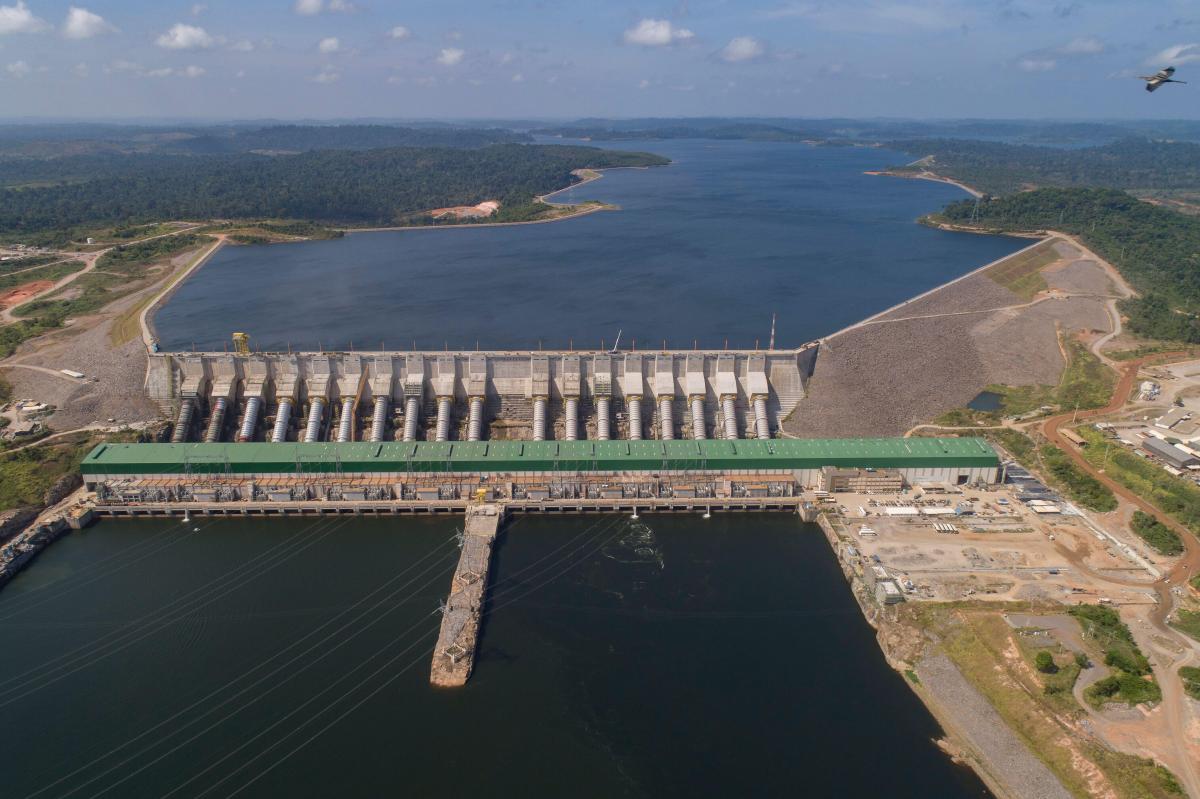
Belo Monte is made up of two dams: an upper dam, Pimental, which diverts water to the canal, and lower dam, Belo Monte, where the powerhouse is located, along a 130-km river stretch of the Xingu River, known as Volta Grande.

For many, Belo Monte symbolises tragedy, rather than triumph

The construction of Belo Monte forcibly displaced around 40,000 people, including riverside communities (Ribeirinhos) and a quarter of Altamira’s population, who were relocated to remote resettlements on the city’s outskirts.

For those who stayed, the consequences were equally devastating. Indigenous people and Ribeirinhos lost access to their primary food source – fishing – as fluctuating water levels led to the extinction of fish species. The river’s flow was reduced by an alarming 80%, all due to the diversion of its natural course.

Photograph: Maria Francineide Ferreira dos Santos

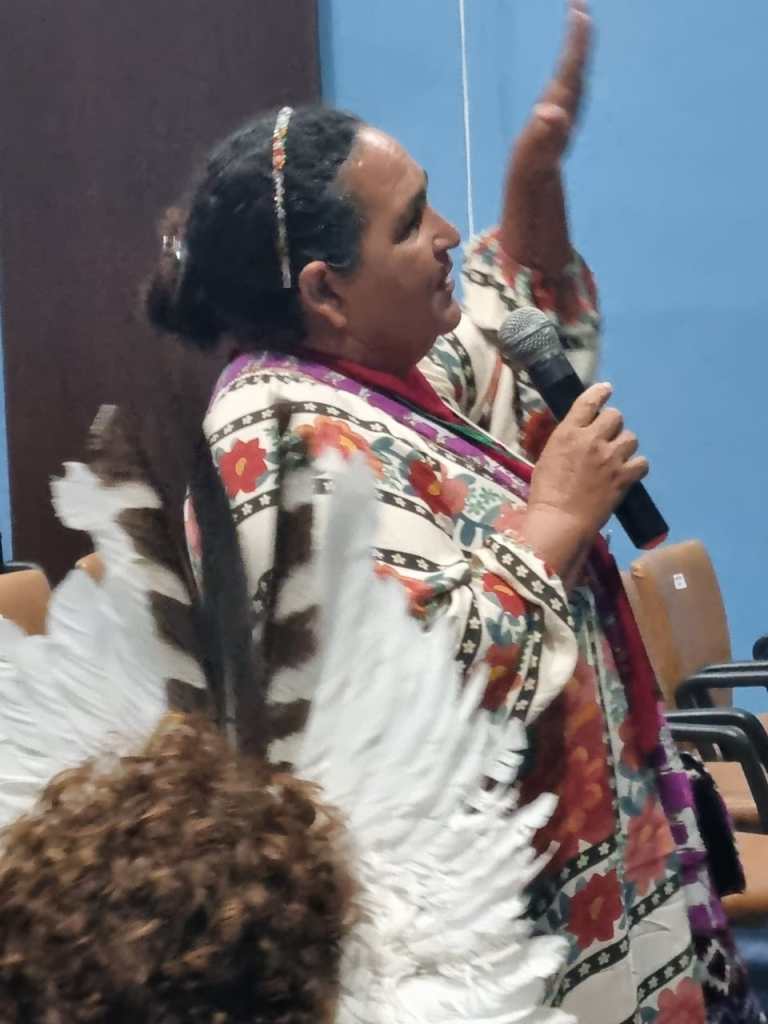
Maria Francineide Ferreira dos Santos lost her paradise to silence. Her home in Paratizinho was taken from her after she dared to speak against the destruction caused by the Belo Monte dam. She was forced to move into the city, but never stopped fighting. Today, she lives in Volta Grande do Xingu, not just as a survivor, but as a fierce guardian of the river and its people.

Francineide spoke out about the lasting harm Belo Monte has brought to her life and the lives of countless others:

All the impacts we’ve had are irreparable. The first impact was the biggest crime that Belo Monte committed in the Xingu, the death of the fish and with the displacement of its people who were born and raised in this region, who lived on the islands, without rights, without being heard, without respect, having their houses ripped out and burned, violating our rights.

Another impact was seeing our people, who didn’t understand anything, lose their homes, being moved to the city where land had exorbitant prices, not giving us the conditions to survive. The government does what it wants. This has been a losing fight. No justice has been done.

Rodolfo Salm, ecologist, activist, and lecturer at the Federal University of Pará (UFPA), who lives in Altamira, spoke about some of the impacts of the project:

The Belo Monte hydroelectric project stands as a clear example of environmental, social, and economic failure. While presented as a symbol of progress, it has instead triggered widespread destruction in the eastern Amazon. The social consequences have been equally severe, marked by displacement, violence, and unfulfilled promises. Despite the billions spent on compensation, these efforts fall far short of addressing the loss of livelihoods, natural beauty, and vital ecosystem services once provided by the preserved Xingu River.

Far from bringing prosperity, the project has left the region economically weakened and environmentally damaged. Energy production at Belo Monte is unreliable, with the Xingu River running too low for most of the year, a flaw that was well understood before construction even began.

Food insecurity

A study published in the Environmental Research and Public Health highlights concerning levels of food insecurity in the region impacted by Belo Monte. Rather than enhancing quality of life, the project triggered a series of negative outcomes: displacement, loss of homes, and the disruption of essential food sources like agriculture and fishing. As a result, food security deteriorated, contributing to increased poverty.

Johansen, one of the authors of the study, explained:

The long-term food insecurity faced by communities displaced by Belo Monte is one of the most alarming consequences of the dam’s construction. Our research shows that, nearly 70% of households reported increased difficulty accessing enough food or the types of food they wanted after Belo Monte was built. For more than half of them, this struggle began even before the COVID-19 pandemic, meaning the dam’s impacts – not just external crises – are a relevant driver of this problem.

One of the most revealing findings is that people officially recognised as ‘impacted’ by Belo Monte – and thus relocated to government resettlement neighbourhoods – were significantly more likely to face hunger. This suggests that the resettlement process itself, rather than improving lives, has maintained or deepened vulnerabilities.

The resettled communities were stripped of a fundamental human right: access to adequate, nutritious food.

Miquéias Freitas Calvi, professor of forestry engineering at the Federal University of Pará (UFPA), and one of the authors of the study, said:

The disruption of the river’s natural balance deeply affects the Indigenous and riverside communities whose lives are rooted in it. Fishing, their primary source of sustenance and income, is under threat, placing food security, health, and cultural survival at risk. As the river fades, so does their self-reliance. More families are forced to abandon their ancestral lands, relying on government aid to survive. Traditional diets give way to ultra-processed foods, compromising their health and identity. What begins as environmental damage quickly becomes a social crisis, eroding generations of sustainable living in harmony with the river.

In just two years, the city of Altamira’s population (urban area) doubled as thousands arrived from across Brazil, drawn by the promise of work, not only on the Belo Monte dam, but in the web of opportunities it created. With such rapid growth, the most basic human need, food, became a pressing challenge. Yet instead of preparing to sustain a growing city and strengthen the local economy, the region scaled back its food production and deepened its dependence on distant supply chains.

Johansen explained some of the impacts that go far beyond nutrition:

The loss of traditional food sources like fish has had devastating impacts that go far beyond nutrition – it’s severed a vital connection to cultural identity and community health. For Indigenous and riverine populations around Belo Monte, fish weren’t just protein; they anchored entire systems of knowledge, social bonds, and spiritual practices.

Generations developed intricate fishing techniques tied to the Xingu’s seasonal floods, passing down this wisdom through stories and shared labor. The act of fishing itself was communal – a space where elders taught youth, where myths were retold, where social ties were reinforced. With the dam’s disruption of river ecology, we’ve seen not just declining catches but a rupture in this intergenerational transmission.

Perceptions

A study published in the Energy Research & Social Science journal explores how communities living near major hydropower dams perceive this form of energy, in sharp contrast to the broader national population. Focusing on the Altamira region, deep in the Amazon and heavily impacted by the Belo Monte dam, the study offers a glimpse into the lived reality behind Brazil’s hydropower narrative.

Although Altamira is not located directly beside the dam, it served as a central hub for its construction. As a result, the city experienced significant negative impacts, including the rise in crime, prostitution, drug use, public health challenges such as increased dengue fever cases, and social disruption.

Having lived through these changes, Altamira’s residents perceive the social and environmental consequences of hydropower far more critically than the general population. Still, 60% of residents continue to express support for hydropower, a complex and conflicted relationship with a project that has profoundly altered their daily lives.

This contradiction reveals the harsh reality of “sacrifice zones”, areas like Altamira and its neighbouring communities that are left to absorb the full cost of national development while receiving little in return. The psychological cost is profound: some residents appear to cope by believing their hardship is a necessary contribution to the nation’s progress.

Perhaps most heartbreaking is the widespread frustration over energy costs. A staggering 84% of Altamira’s population say they are dissatisfied with the affordability of electricity, despite living in the shadow of one of the world’s largest hydropower projects.

Johansen further explained:

There’s the powerful narrative of progress and modernity that dominates media coverage and political discourse. Hydropower is consistently framed as “clean energy” and a driver of national development, with stories appearing almost exclusively in economic sections of newspapers. This selective coverage emphasises job creation and energy security while minimising reports about displacement, ecological damage, and cultural loss. The result is a skewed public perception where the benefits feel abstract and national, while the costs remain hyper-localised.

In addition, there’s the entrenched notion of sacrifice zones – the idea that certain regions must bear the burden of development for the greater good. Many in Altamira express a resigned acceptance that “someone has to pay the price” for Brazil’s energy needs. This sentiment is reinforced when they see the electricity from Belo Monte, which is connected to the national grid, primarily powering distant urban centers in the southeast while there are local communities in the Amazon facing energy poverty.

The stark reality of Altamira – sitting in the shadow of one of Brazil’s largest hydropower plants yet struggling with expensive electricity – exposes a fundamental injustice in our energy system. This isn’t just poor planning; it’s a systemic failure that treats local communities as infrastructure sites rather than equal beneficiaries

As Brazil prepares to welcome the world at COP30, it faces an urgent question: can a nation truly claim climate leadership while ignoring the voices of those sacrificed in the name of energy?

Johansen’s shared a powerful message to Brazil and the world about the irreversible consequences of hydropower dams in biodiversity hotspots like the Amazon:

The construction of hydropower dams in biodiversity hotspots like the Amazon has taught us several hard lessons that should fundamentally reshape future energy planning. First and foremost, these projects cause irreversible ecological damage – flooding vast areas of pristine rainforest, destroying unique habitats, and potentially driving species extinction.

Equally troubling is the consistent pattern of human rights violations. Indigenous and traditional communities repeatedly face displacement without proper consultation or fair compensation, as starkly demonstrated by the Belo Monte project. These aren’t isolated incidents but systemic failures in how such projects are approved and implemented.

The climate calculus for tropical dams has also proven flawed. Rather than being clean energy solutions, their reservoirs become methane factories as submerged vegetation decomposes – in some cases making them worse climate offenders than fossil fuel plants. This challenges the very rationale for prioritising hydropower in rainforest regions.

Perhaps the most crucial lesson is that we can no longer justify sacrificing the Amazon’s ecological and cultural wealth for questionable energy gains. The evidence clearly shows that in biodiversity hotspots, the costs of large dams nearly always outweigh the benefits – a reality that demands a fundamental shift in energy policy.

Right of reply

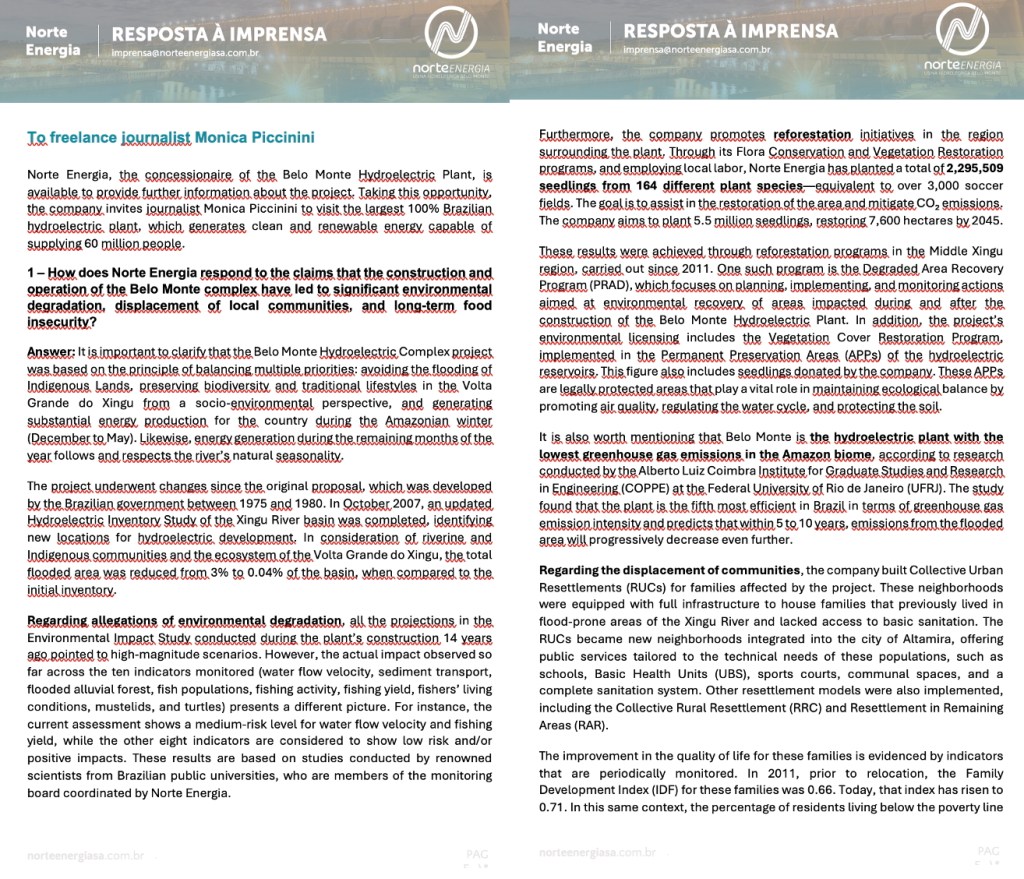
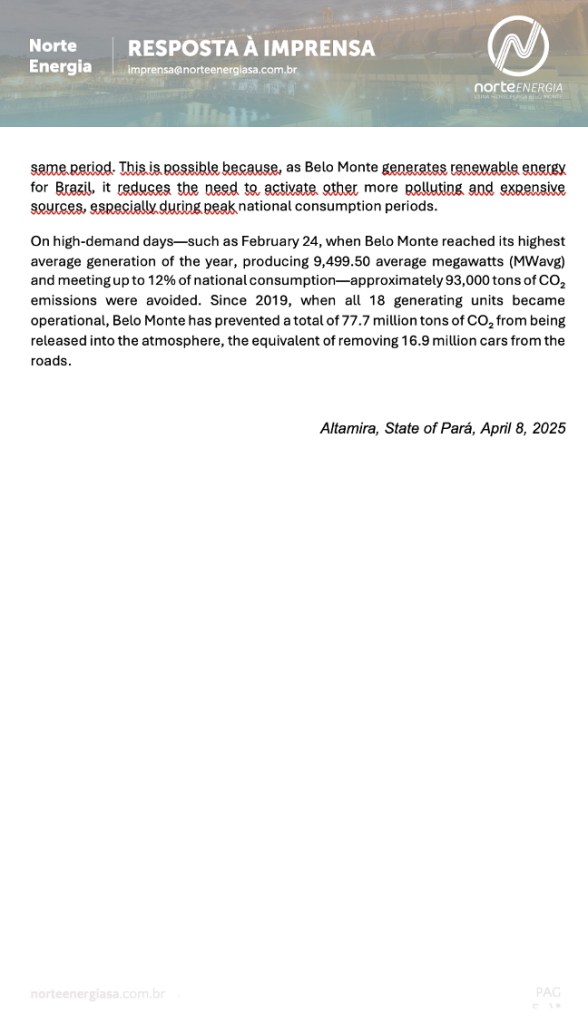
When asked for comment, Norte Energia issued to following statement:

Screenshot
Screenshot
Screenshot
Screenshot

BR-319: Paving the Way for Indigenous Displacement and Environmental Catastrophe

Monica Piccinini

28 March 2025

Since European colonisers set foot in Brazil, Indigenous people have fought a relentless battle to protect their lands and preserve their way of life. Centuries of oppression have forced them to alter their cultures, traditions and beliefs, yet their resilience remains unbroken. Today, they still endure violent invasions by farmers, loggers, miners, and organised crime, keeping their communities locked in a constant fight for survival.

The protection of Brazil’s Indigenous lands is crucial for the survival of the Amazon rainforest. However, multiple projects – including oil and gas exploration, agribusiness expansion, cattle farming, biofuel production, legal and illegal mining, logging, and organised crime – threaten this vital ecosystem.

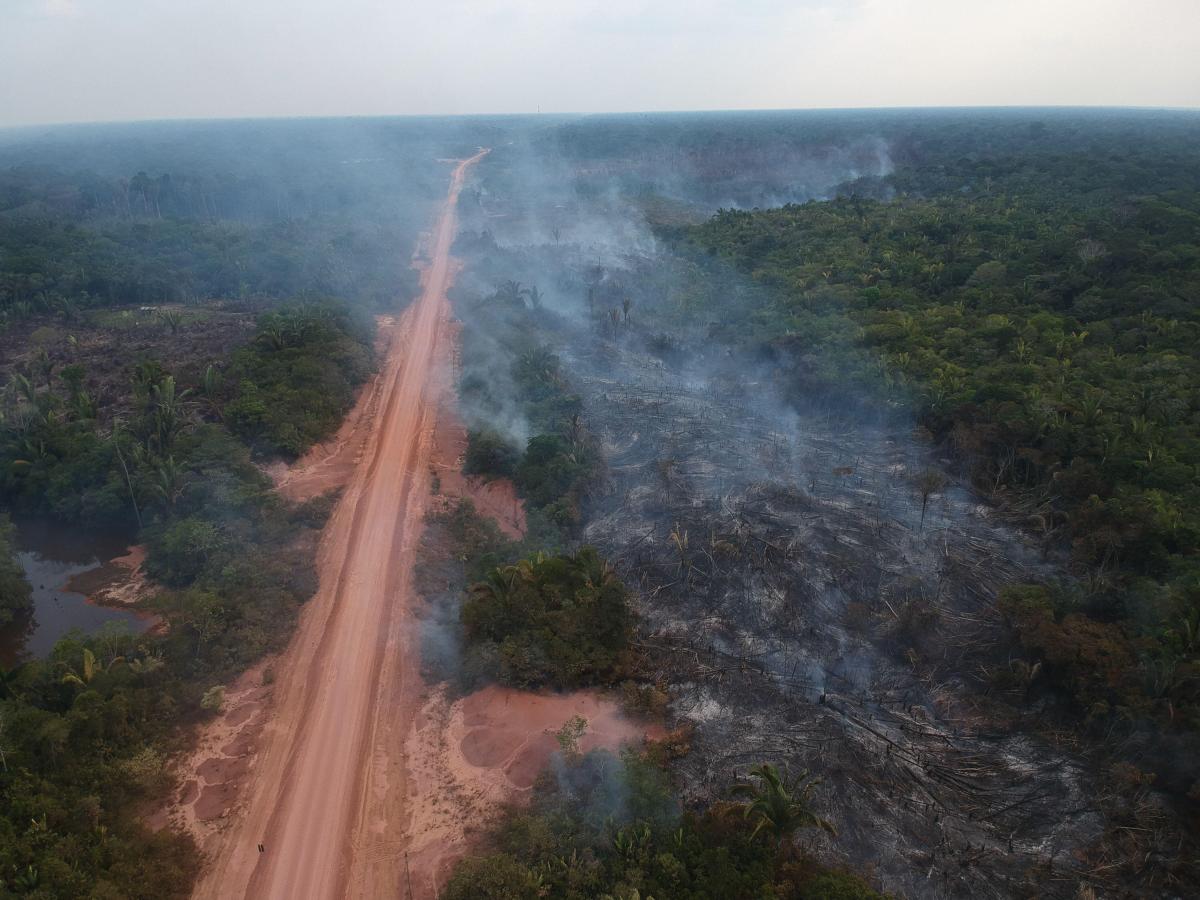
The reconstruction of Amazon’s BR-319 highway, one of the world’s most environmentally damaging projects, serves as a catalyst for these destructive activities. Stretching 885 km, the highway connects the capital of Amazonas, Manaus, to Porto Velho, cutting through pristine areas of the rainforest. A proposed 408 km reconstruction would open a gateway to deforestation, crime, and corporate exploitation, directly impacting over 18,000 Indigenous people.

The Amazon plays a critical role in regulating global climate and generating water vapour that brings rain across Brazil through the “flying rivers.” The reconstruction of BR-319 will disrupt this vital system, threatening the region’s health and overall environmental balance.

Deforestation and degradation along BR-319 will disrupt the “flying rivers,” potentially leading to devastating droughts, food and water shortages, and a collapse of Brazil’s agribusiness sector, including family farming – ultimately destabilising the country’s economy.

Violation of Indigenous Rights Along BR-319

Indigenous territories are not merely land – they are living, breathing places, rich with history, culture, and meaning. These lands hold the heartbeat of traditions, where communities coexist in a delicate, sacred balance with the animals, the water, the forests, and the earth itself. Their bond with nature is deep and sacred, as their very survival depends on its health and strength. It is a bond built on respect and care, a promise to nurture the land that sustains them, ensuring that it flourishes for generations to come.

However, this bond is now under threat. In the areas surrounding the BR-319 highway, Indigenous leaders from Lake Capanã Grande and Baetas have reported serious violations of their rights and growing threats due to the degradation of their territories and the expansion of the highway. There has also been an alarming attempt by a non-governmental organisation (NGO) to validate the consultation protocol with the communities.

This concerning situation emerged during an event at the Federal University of Amazonas (UFAM), which included the participation of the federal prosecution office, a representative from the ministry of the environment, an NGO, and Indigenous leaders. The meeting was organised by researcher Lucas Ferrante and covered by Revista Cenarium.

The issue was further detailed in the article “BR-319: Narratives, Business and Power”, published by Revista Cenarium in February. According to the article, NGO Instituto Internacional de Educação do Brasil (IEB) produced a document falsely claiming that the Indigenous community had been consulted and had agreed to the reconstruction of the highway, provided that an extractive reserve was created to protect them. Shockingly, the community only learned of this approval after they had signed the document.

In 2020, Ferrante travelled along the BR-319 highway, interviewing several Indigenous people and leaders impacted by the road. Since then, their views on the highway’s effects have remained consistent. One Indigenous leader from Lake Capanã shared his concerns about the highway’s impact on his village (his name has been withheld to ensure his safety):

I would like to express my indignation in front of everyone regarding the impact of the BR-319 highway on the Indigenous lands of Lake Capanã. This brings us problems, manipulation of rights, violation of our traditional areas, occupation by land grabbers, pollution of our river, destruction of our nature.

And this is causing major problems in the flow of our rivers. Streams are being buried. Here we use the water from the river. The result of this BR will become an open door for the entry of criminals, drug dealers, all types of drugs, as already exists.

The Indigenous population lives off food from nature, the Indigenous population does not live off livestock. The Indigenous people live off traditional objects. They live off the subsistence of nature and subtract nature for itself for their survival and protect their own nature. I am against this paving.

The expansion of BR-319 is driving the rapid growth of agribusiness in the region, particularly on unallocated public lands. Soybean farmers from Mato Grosso do Sul are increasingly moving into Rondônia, buying land from livestock farmers who are then shifting southward within the BR-319 corridor to plant soybeans. These lands are often seized illegally through land grabbing, illegal deforestation, or violent evictions of Indigenous and traditional communities.

This situation brings attention to critical issues like the Soy Moratorium, especially as there have been growing attempts to abolish it, which could have devastating effects on the environment and Indigenous and traditional communities.

Soy Moratorium

Brazil’s Soy Moratorium, established in 2006, is an agreement where signatory companies pledge not to buy soy grown on land deforested in the Amazon after July 2008. This agreement has been a vital tool in the fight against deforestation. Yet now it faces a threat, as Brazil’s powerful agribusiness lobby intensifies efforts to dismantle it. As the world’s largest producer and exporter of soybeans, Brazil’s agricultural policies hold immense global consequences.  

In October 2024, the state of Mato Grosso, leading soy producer, enacted Bill 12.709/2024, effectively cutting tax incentives for companies that adhere to the Soy Moratorium. On February 19, Brazil’s Legislative Assembly president, Max Russi, made the following statement:

We are all united in defence of one of the most important pillars of our economy – agribusiness.

During the same month, a troubling report from Repórter Brasil revealed that Cargill, one of Brazil’s largest grain exporters, was suggesting distancing itself from the Soy Moratorium rules.

On 11 March, Brazil’s agriculture minister, Carlos Fávaro, arranged a meeting with agribusiness leaders and supreme court minister Flávio Dino, who is overseeing the case concerning the Soy Moratorium. Among the key figures were Blairo Maggi, chairman of the Brazilian Association of Vegetable Oil Industries (Abiove) and Fávaro’s political mentor, as well as representatives from major agricultural giants such as Grupo Bom Futuro and Amaggi, the nation’s largest agricultural trading company.

Concerns emerge from the overlapping roles and connections involved. Maggi’s significant influence in both policymaking and agribusiness, coupled with family ties and Amaggi’s vested interests in the Soy Moratorium, raise questions about impartiality of these discussions.

Fávaro has expressed strong opposition to the Soy Moratorium, calling it “discrepant” and “unprofessional,” and has firmly declared his position:

I tried to demonstrate that the Soy Moratorium is also not constitutional, and I am confident that Minister Dino will act in this sense.

If the Soy Moratorium is lifted, soybean farmers will migrate to the Amazon, triggering rampant deforestation, environmental degradation, pollution, and violation of Indigenous rights, including violence and land invasion. This could also result in a sharp rise in greenhouse gas emissions, leading to disastrous social and environmental consequences.

In a nation where agribusiness drives the economy, Indigenous territories are seen as obstacles to relentless capitalist growth. With Brazil’s Congress dominated by the powerful rural caucus, the “ruralistas,” there is little concern for Indigenous rights as they push relentlessly for laws that serve their own interests. For them, the survival of Indigenous communities is a mere roadblock in their pursuit of profit.

The future of the Amazon, its Indigenous communities, and our planet is at risk. Rebuilding BR-319 isn’t just about a road – it’s a dangerous move that could destroy centuries of heritage and harm the environment beyond repair. If Brazil takes this path, the damage will be permanent, leaving deep scars on the land, its people, and the world.

As the world prepares for COP30, the urgency for protecting the Amazon and its ecosystems has never been clearer. The decisions made at this summit will have a profound impact on the preservation of the Amazon, and we must ensure that sustainability, Indigenous rights, and environmental protection take centre stage in these discussions.

Brazil’s New Pesticide Law: No Safe Distance from Toxic Exposure

Monica Piccinini

20 March 2025

Brazil’s current pesticide legislation currently mandates a minimum safety distance of 90 metres during chemical applications to reduce exposure risks. This regulation aims to safeguard both human health and the environment from the harmful effects of pesticides.

However, a new proposal – Bill 1833/2023 – seeks to significantly reduce this buffer zone, allowing just 25 metres for large properties. For small and medium-sized properties, there would be no mandatory safety distance at all. This would enable pesticide applications without any protective distance around traditional communities, rivers, or conservation areas, raising serious concerns about the potential dangers to public health and ecosystems.

This drastic reduction raises alarming concerns among experts, as it could lead to increased contamination risks for ecosystems and nearby communities, amplifying the threats to public health and the environment.

If passed, the proposal would allow farmers to apply pesticides dangerously close to small properties, putting surrounding communities at risk and potentially resulting in severe health repercussions.

The existing regulations in the state of Mato Grosso, which govern the use, production, storage, trade, application, transportation, and monitoring of pesticides, play a crucial role in protecting water resources, soil quality, animals, and the region’s most vulnerable populations – especially small family farmers and residents living near agricultural areas.

A weakening of these protections would open the door to catastrophic environmental degradation and irreversible harm to public health. As one of the world’s largest pesticide users, Brazil – and particularly Mato Grosso – cannot afford to take such a dangerous step backward.

Several  studies have demonstrated that pesticide exposure significantly affects the health of the Brazilian population across all age groups and genders. Health consequences include central nervous system damage, cancer, poisoning, birth defects, and disruptions to the endocrine system.

A study published in the journal Acta Amazônica by scientists Lucas Ferrante and Philip Fearnside stresses the importance of maintaining a safety distance of at least 300 meters between pesticide areas and sensitive locations, such as conservation areas, water sources, and rural communities. This recommendation is based on findings that negative effects, including local extinctions, genetic mutations, and deformities in wildlife, were observed more than 250 meters from treated areas, as shown in various studies across Brazil.

Ferrante said:

“Bill 1833/2023 represents a threat to Mato Grosso’s own agriculture by allowing the application of pesticides without respecting adequate safety zones.

“We conducted measurements in the pesticide application area without a safe distance and observed extinctions, mutations, and anomalies. These effects extended at least 250 metres, indicating that a minimum safe distance of 300 metres is necessary”.

The impact of pesticides on wildlife is not only a concern for researchers but is also acknowledged by the industry. Syngenta, on its official website, admits that pesticides contribute to the decline of pollinators, noting that “75% of crops intended for human consumption depend on bees” and that “they are the most important pollinators on the planet. In addition to allowing plants to reproduce, pollination also increases crop productivity levels and results in the production of better-quality fruits and a greater number of seeds”.

Syngenta points out that “the disappearance of bees and other pollinators could eliminate crops such as melon, watermelon, and passion fruit,” highlighting that the decline of pollinators due to pesticide use in sensitive areas directly threatens agricultural productivity and food security.

Approximately 80% of the pesticides approved in Brazil are banned in at least three countries within the Organisation for Economic Cooperation and Development (OECD) of the European community.

On average, each Brazilian consumes seven litres of pesticides annually, a staggering figure tied to the 70,000 cases of both acute and chronic poisoning reported across the country. This alarming statistic is highlighted in a dossier compiled by the Brazilian Association of Public Health (ABRASCO).

The proposed Bill 1833/2023 not only dismisses solid scientific evidence but also endangers the sustainability of agriculture in Mato Grosso and puts public health at risk by amplifying the potential for widespread pesticide contamination.

Ferrante warned about the risks associated with this new proposal, stressing the potential implications it may have:

“The approval of Bill 1833/2023 marks a severe regression in environmental and public health protection, sanctioning pesticide use at alarmingly close distances to vulnerable areas such as rural communities, water sources, and ecosystems. This reckless decision not only endangers local biodiversity but also jeopardises global food security.

“Nations that import Brazilian commodities, like soy and other pesticide-reliant agricultural products, must urgently reevaluate these imports. The dilution of environmental safeguards amplifies the risk of chemical contamination and breaches international food safety standards.”

Supermarkets Turn a Blind Eye to Methane Emissions from Meat and Dairy

Monica Piccinini

13 March 2025

Despite mounting evidence of the environmental impact of methane emissions, the world’s largest supermarkets are failing to take responsibility for their role in the crisis.

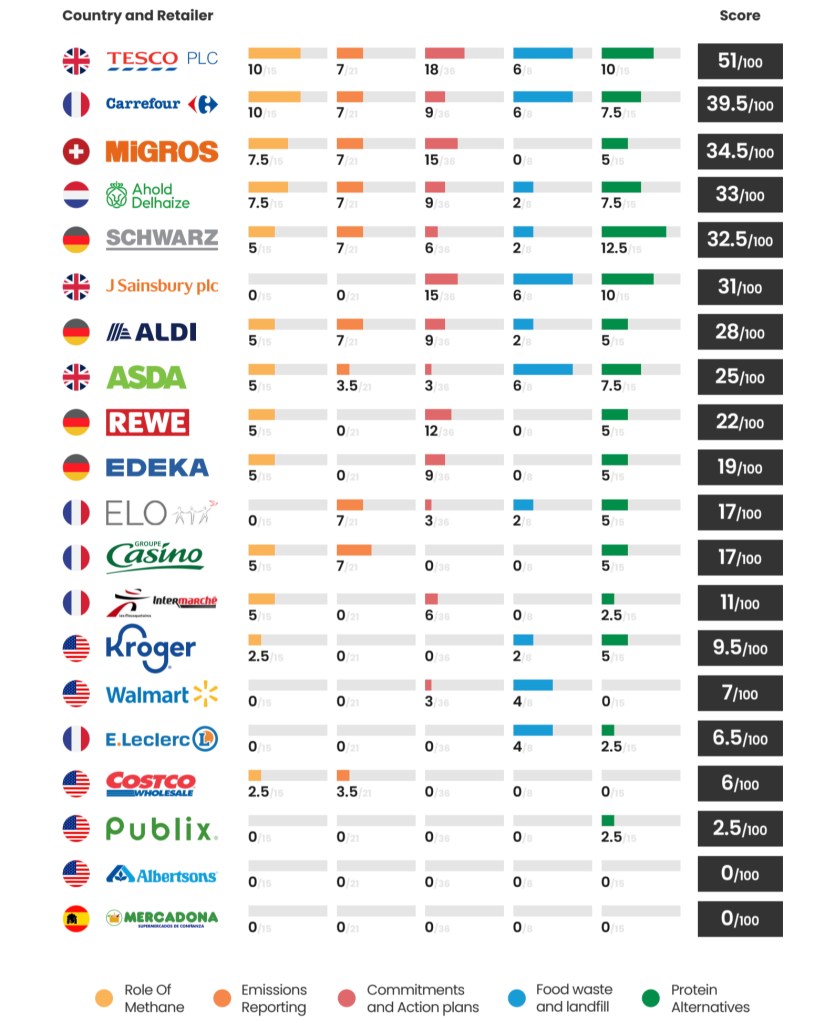
A new report by Changing Markets Foundation and NGO Mighty Earth reveals that 20 major supermarkets – including Carrefour, Lidl, Tesco, Walmart, and Ahold Delhaize – are ignoring the need to track or reduce the methane emissions linked their supply chains. With meat and dairy responsible for at least a third of their total emissions, this alarming failure raises serious questions about their commitment to sustainability and climate action.

The findings expose a troubling lack of transparency, as none of these industry giants publicly report their methane emissions, despite methane being 80 times more potent than carbon dioxide (CO₂) in the short term.

As global efforts intensify to curb greenhouse gases, the failure of these companies to acknowledge and address their methane footprint puts them under increasing scrutiny. With pressure mounting from regulators, investors, and consumers, these retailers must move beyond greenwashing and take concrete steps to slash emissions before it’s too late.

Gemma Hoskins, global methane lead at Mighty Earth, said:

Food retailers are ignoring the methane problem hidden in the meat and dairy aisles and risk losing consumer trust. Methane is a superheater greenhouse gas responsible for about a quarter of the heating the planet has already experienced. But it’s short-lived, so rapid cuts would be a win for climate and nature.

Retailers are uniquely positioned to urgently drive down agricultural methane emissions in their supply chains. That starts with being honest about the impact of the products they sell and working harder and faster to reduce that impact.

The report reveals that over 90% of European food retailers’ emissions come from their supply chains, with meat and dairy accounting for nearly half. Yet, none of the retailers analysed disclose methane emissions or the footprint of the meat and dairy products they sell.

Food retailers also fail to commit to deforestation-free supply chains for key commodities like beef, soy, and palm oil, despite the 2025 EU Deforestation Regulation (EUDR) deadline. Livestock farming is a leading driver of the Amazon’s destruction, responsible for 88% of deforestation.

While fossil fuel companies face intense scrutiny, the climate impact of the meat and dairy industry remains largely neglected. Rapidly cutting methane emissions by transforming this sector – alongside phasing out fossil fuels – could be a game changer in the fight against climate disaster.

Methane Alert

Methane levels have more than doubled in the past 200 years, with around 600 million tonnes released into the atmosphere annually – roughly 40% from natural sources and 60% driven by human activity.

As a greenhouse gas, methane is 80 times more potent than carbon dioxide over a 20-year period, responsible for 25% of global heating. Though it remains in the atmosphere for a shorter time than CO2, it is far more effective at trapping heat, earning its reputation as a ‘super-heater’.

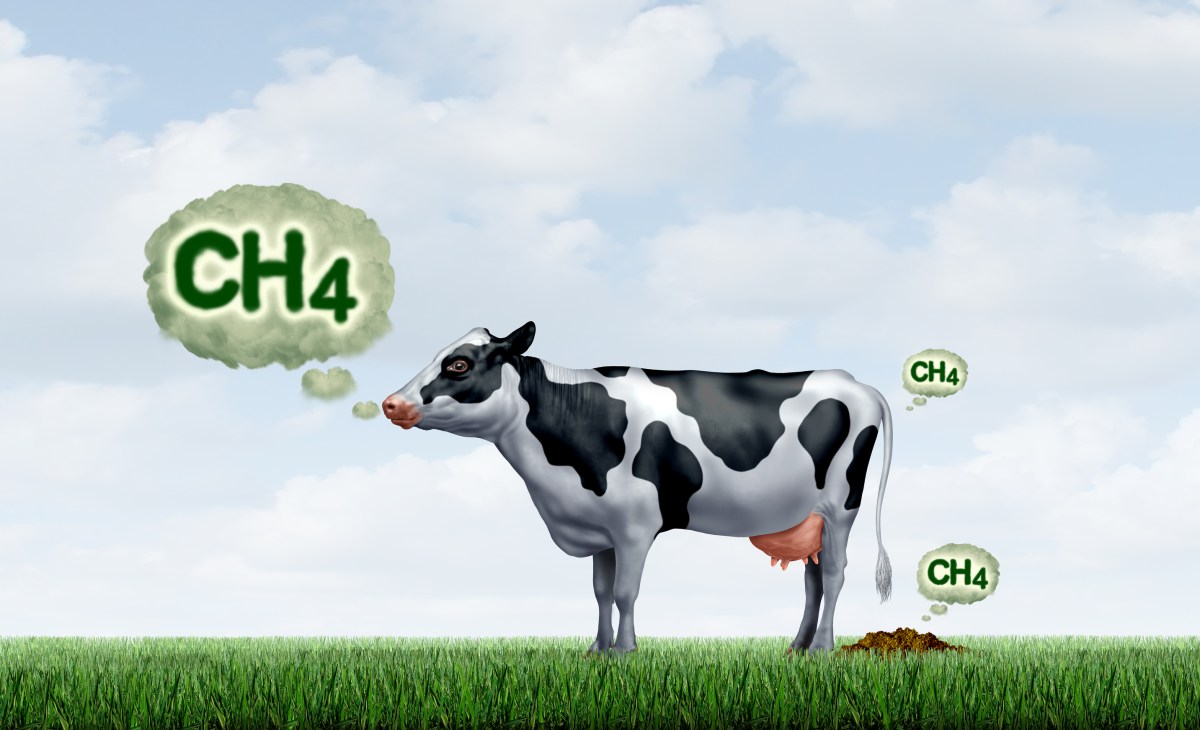
Animal agriculture is a major contributor, responsible for 16.5% of global greenhouse gas emissions and 32% of human-caused methane emissions – largely from a byproduct of livestock digestion process (burps) called enteric fermentation, and manure. Each year, 83 billion land animals are slaughtered for meat production, further driving these emissions.

Changing Markets Foundation and Mighty Earth are calling on food retailers to take responsibility by publicly reporting their emissions, setting science-based climate targets, and reducing methane emissions by at least 30% by 2030, in line with the Global Methane Pledge adopted at COP26. With their vast influence over supply chains and consumer choices, food retailers must lead the shift toward a sustainable food system, rather than placing the burden on consumers.

As key players in the global food industry, major food retailers have the power – and the duty – to pressure dominant meat and dairy producers, including JBS, Tyson, and Cargill, to adopt more transparency and sustainable practices, and cut methane emissions at the source.

Maddy Haughton-Boakes, senior campaigner at the Changing Markets Foundation, said:

Methane emissions are a major blind spot of supermarkets. Our scorecard reveals a complete lack of action, with the most powerful players in the food supply chains completely ignoring their government’s commitments to cut methane emissions by 30% by 2030. This must change urgently.

Some retailers acknowledge the problem and have taken small steps, but none are treating it with the urgency it demands – there are no real leaders here. Cutting methane this decade is our emergency brake on runaway global heating, yet retailers are barely pressing it. The companies that dominate our food system must step up now and take real action to slash their methane emissions.

Scorecard assessed the 20 largest food retailers in Europe and the US to evaluate their progress towards reducing methane emissions. Graph: Changing Markets Foundation and Mighty Earth.

Health Impact

Excessive meat consumption is a major threat to both the planet and human health. It drives greenhouse gas emissions, deforestation, and destroys ecosystems rich in biodiversity. But the dangers don’t stop there – scientific studies reveal that high intake of red and processed meat significantly increases the risk of ischaemic heart disease, pneumonia, diabetes, colon polyps, and diverticular disease.

The World Health Organisation (WHO) has found compelling evidence that processed meat directly contributes to colorectal cancer, a finding further reinforced by research from the Agency for Science, Technology and Research (A*STAR) and the National Cancer Centre Singapore (NCCS).

Adding to these dangers, the meat industry’s rampant use of antibiotics in livestock farming has accelerated the rise of antibiotic-resistant bacteria, a looming public health catastrophe.

Antimicrobial resistance (AMR) results in higher mortality rates, prolonged illness, the spread of epidemics, and an overwhelming strain on global healthcare systems.

Action

Changing Markets Foundation and Mighty Earth are urging food retailers to urgently develop climate plans to reduce methane from meat and dairy sources, adopt public transparency in climate reporting and disclose methane emissions, and set a target for methane reductions.

The pressure is mounting for food retailers to confront the methane problem head-on. As consumers become more aware of the environmental and health implications of their food choices, the demand for transparency and accountability will only grow.

Food retailers can no longer afford to ignore the environmental cost of the products they sell. By taking quick and decisive action to reduce methane emissions, they not only have the chance to be at the forefront of the sustainable food movement but also to regain consumer trust and position themselves as true leaders in the fight against climate change.

With the urgency of the climate crisis at an all-time high, it is crucial that these companies step up to the challenge. If they fail to address methane emissions now, they risk locking in further damage to the planet, compromising both our future, our health, and their role in the global economy.

COP30: Will Brazil Step Up as a Climate Leader?

Monica Piccinini

6 February 2025

As the host of the 30th United Nations Climate Change Conference, COP30, Brazil stands at a crucial moment in history. This is more than just a global summit; it’s an opportunity for the nation to establish itself as a leader in the climate agenda and set an example for the world.

This November, the spotlight will be on Belém, the capital of Pará, as it hosts COP30, bringing together world leaders, activists, corporations, and policymakers to tackle the world’s most urgent environmental challenges, where the stakes have never been higher.

With climate disasters intensifying and deforestation threatening the planet’s most critical ecosystems, Brazil has both the responsibility and the power to drive real change.

For Brazil’s President, Luiz Inácio Lula da Silva, COP30 presents a defining moment. It is a chance to take bold, decisive action, protecting Brazil’s rich biodiversity, halting deforestation and degradation in the Amazon rainforest, and shutting the door on further fossil fuel expansion.

The world is watching to see whether Brazil will step up with concrete policies and enforcement that safeguard its natural resources. If Lula seizes this moment, Brazil won’t just be hosting COP30, it will be leading the charge toward a more sustainable and resilient future.

Cássio Cardoso Pereira, ecologist, conservation biologist, and editor of BioScience, Biotropica, and Nature Conservation journals, shared his perspective on COP30:

Brazil stands at a crossroads. Events like COPs may generate ideas, but without real commitment, they will fail to drive the urgent change we need. Empty declarations about having the world’s largest tropical forest and abundant renewable resources mean nothing if we ignore the fires, greenhouse gas (GHG) emissions, and relentless destruction that threaten them.

Oil and Gas

In 2024, the world has witnessed alarming new records in greenhouse gas levels and rising air and sea surface temperatures, as tracked by the Copernicus Climate Change Service. These shifts have triggered extreme weather events across the globe, including in Brazil, highlighting an urgent need for nations to phase out fossil fuels. Yet, instead of taking decisive action, countries, including Brazil, are ramping up fossil fuel production, pushing the planet further into crisis.

Brazil’s path is deeply concerning. According to the country’s trade ministry, oil exports surged to $44.8 billion this year, surpassing soybeans as the nation’s top export. Projections from Rystad Energy indicate that by 2030, Brazil’s oil production will exceed 7 million barrels of oil equivalent per day (boepd), elevating the country from the seventh to the fifth-largest oil producer in the world.

In 2024, state-owned oil giant Petrobrás reached a staggering production level of 2.4 million barrels of oil per day. Having Lula’s full support, the company is moving forward with controversial plans to expand oil exploration at the mouth of the Amazon River, an ecologically fragile region. This project threatens vital coral reefs, extensive mangroves, and the livelihoods of Indigenous and local communities. Beyond these immediate dangers, the risks of oil spills and increased greenhouse gas emissions could have catastrophic global consequences.

Pereira emphasised that Brazil’s choices today will determine whether it curbs environmental collapse or accelerates a climate catastrophe:

Brazil must foster an inclusive, transparent dialogue, one that listens to all voices, especially Indigenous communities, instead of being drowned out by misinformation and intolerance. While deforestation grabs headlines, the deeper crisis of forest degradation continues unchecked.

And now, reckless projects, including the BR-319 highway, the Ferrogrão railroad, and the disastrous proposal to drill for oil at the mouth of the Amazon, push the rainforest closer to collapse.

If these threats are ignored and buried beneath diplomatic pleasantries, Brazil will not only fail its emissions targets but betray its responsibility to the planet. The time for real action is now.

Amazon’s BR-319 Highway

The BR-319 highway, an 885 km stretch connecting the capital of Amazonas, Manaus, to Porto Velho, runs through one of the most pristine regions of the Amazon rainforest. Now, with a proposed reconstruction of 406 km, this project threatens to unleash a chain of destruction, turning an intact ecosystem into an open gateway to deforestation, crime, and corporate greed. The consequences  wouldn’t just be local, they would ripple across Brazil and the world, accelerating climate collapse and putting Indigenous communities at extreme risk.

At the heart of this looming disaster is the AMACRO region, a deforestation hotspot covering the states of Amazonas, Acre, and Rondônia. If BR-319 is rebuilt, it would carve open a direct path between these heavily deforested lands and the untouched heart of the Amazon. With the rainforest already approaching an irreversible tipping point, this highway could be the trigger that pushes it over the edge.

The rainforest, long considered the “lungs of the Earth,” plays a crucial role in stabilising global temperatures. Destroying it would speed up climate change, making extreme weather events even more frequent and devastating.

Beyond environmental catastrophe, the human cost is staggering. The highway would expose 69 Indigenous communities, over 18,000 Indigenous people, to land invasions, violence, and displacement. Illegal land grabbing, mining, and logging have already inflicted damage on the Amazon, but with a newly reconstructed BR-319, these activities would expand uncontrollably.

Over 6,000 km of illegal roads have already been built off BR-319, and with further expansion, organised crime will only strengthen its hold on the region, putting both Indigenous lives and rainforest defenders in danger.

The threat extends beyond land. The destruction of the rainforest could disrupt the “flying rivers”, air currents heavy with water that bring rain to vast areas of Brazil. Without them, droughts could devastate agriculture and water supplies, affecting millions of people. Worse still, deforestation could create conditions for new zoonotic diseases to jump from wildlife to humans, increasing the risk of another global pandemic. In a world still struggling with the effects of COVID-19, this is a risk too great to ignore.

Despite urgent warnings from leading scientists Lucas Ferrante and Phillip Fearnside, the Brazilian government remains unmoved. With the president’s full support and backing from politicians, business leaders, and even some NGOs, BR-319 has being pushed forward in the name of economic growth. But the real beneficiaries are the powerful industries behind oil and gas, agribusiness, and mining, both legal and illegal, while the Amazon and its people suffer the ultimate price.

Lucas Ferrante, researcher at the University of Sao Paulo (USP) and Federal University of Amazonas (UFAM), said:

This is more than a road; it’s a turning point. Deforestation and degradation are already seen around BR-319. If the highway is rebuilt, it could set off an irreversible chain reaction that will devastate the Amazon, harm Indigenous communities, and accelerate climate change beyond control.

The choice is clear: either listen to the science and protect the rainforest, or let short-term profits destroy one of the world’s last great ecosystems. The world is watching and what happens next will define the future of the Amazon, Brazil, and the planet.

Biofuels

At COP30, Brazil will showcase its commitment to building a strong bioeconomy, an opportunity to unlock its vast natural wealth and drive economic growth. Central to this ambition is the aggressive expansion of biofuels, a key pillar of Brazil’s decarbonisation strategy, reinforced by President Lula’s Fuel of the Future Law, increasing biofuel mandate in the country.

Yet, this path is not without consequence. The soaring demand for biofuel crops, sugarcane, soy, corn, and palm oil, threatens food security, drives deforestation, and puts immense pressure on vital ecosystems. Land conversion accelerates greenhouse gas emissions, while water depletion, soil erosion and pollution by using pesticides raise serious concerns about sustainability.

In Pará, the expansion of palm oil has sparked conflict, marked by allegations of environmental crimes and violence against Indigenous and traditional communities.

Jorge Ernesto Rodriguez Morales, lecturer and researcher in environmental policy and climate change governance at the Department of Economic History and International Relations at Stockholm University, mentioned:

Brazil’s ethanol diplomacy aims to portray the nation as climate-conscious, using biofuel as leverage in climate negotiations. Many countries have followed Brazil’s ‘successful’ example by integrating bioenergy into their climate policies, even though its social and environmental costs are widely acknowledged.

Brazil stands at a defining moment. Will its bioeconomy set a global example for true sustainability, or will progress come at an irreversible cost?

Livestock

In 2024, Brazil witnessed a catastrophic environmental crisis. According to MapBiomas’ fire monitor, a staggering 30.8 million hectares (119,000 square miles) of land were consumed by fires, an area larger than Italy, marking a shocking 79% increase from 2023.

The Amazon, already under immense pressure, faced its worst year for fires in 17 years. At the heart of this devastation are cattle farmers, clearing vast tracts of land for agriculture and pasture.

Meanwhile, Brazil set a grim record, exporting the largest quantity of beef in its history: 2.89 million tons valued at $12.8 billion, as reported by the Brazilian Beef Exporters Association (ABIEC). Most of this beef went to China, followed by the US, UAE, and the EU.

Livestock farming is a leading driver of the Amazon’s destruction, responsible for 88% of deforestation.

Global NGO Global Witness holds three major Brazilian meatpacking giants, JBS, Marfrig, and Minerva, accountable for much of this devastation. These companies are linked to the destruction of vast stretches of forest in Mato Grosso, an area larger than Chicago.

JBS, the world’s largest beef exporter and second-largest beef producer, employs over 250,000 people globally and generated an estimated $77 billion in revenue in 2024, contributing about 2.1% of Brazil’s gross domestic product (GDP). Yet, the company’s profits are built on a foundation of environmental degradation, deforestation, and exploitation.

JBS has been accused of greenwashing, promoting unsustainable practices, and violating human rights, including child labour at meatpacking plants in the US.

A report from NGO Mighty Earth revealed the shocking extent of these crimes. JBS, Marfrig, and Minerva sourced cattle from a farmer accused of illegally clearing 81,200 hectares of land, an area nearly four times the size of Amsterdam. This farmer was also linked to the use of a toxic chemical, 2,4-D (a component of Agent Orange), to deforest his land, marking the largest deforestation case ever recorded in Mato Grosso.

João Gonçalves, Mighty Earth’s Senior Director for Brazil, said: 

Our recent analysis shows JBS is still linked to rampant deforestation in its beef supply chains in Brazil and is at the bottom of Mighty Earth’s Scorecard when it comes to tackling the issue. It’s admission a couple of weeks ago that it has ‘zero control’ of its supply chain means JBS doesn’t care where it gets it meat from, including from farms destroying the Amazon. 

JBS is tinkering at the edges of requiring traceability to cattle suppliers, while at the same time massively expanding its climate-wrecking meat operations. This includes a huge deal with China, which has the backing of President Lula, who promised to end deforestation in the Amazon by 2030, but his support for JBS’ expansion could push the Amazon closer to an irreversible tipping point.

The eyes of the world will be on Brazil for COP30 and already the optics aren’t good with the mixed messages and contradictory actions of government.

Corporate Power Shaping Brazil’s Policies

In 2023, Brazil’s president, Lula, established “Conselhão,” a council aimed at promoting sustainable socioeconomic development (CDESS). This group, comprising around 250 representatives from various sectors and civil society, was formed to provide guidance on the development of economic, social, and “sustainable” policies and strategies.

Among the members of the CDESS advisory group are major corporations like JBS, Copersucar, Cargill, Cosan, Raízen, Comgás, Novonor (formerly Odebrecht), Unilever, Braskem, Meta, Google, Microsoft, as well as prominent figures such as Eraí Maggi Scheffer, one of the largest cotton and soybean producers in Brazil; businessman linked to agribusiness and biodiesel production, Erasmo Carlos Battistella; and Rosana Amadeu da Silva, president of the national centre for sugarcane and biofuel industries, among others.

How much influence do these corporations truly hold over Brazil’s economic, social, and environmental policies? Will their power extend to shaping the course of COP30?

No More Greenwashing

As the world gathers at this critical moment, the question remains: will COP30 become yet another stage for polluting industries to continue business as usual, or will Brazil seize the opportunity to demonstrate its commitment to the planet’s future?

This is a chance for Brazil to stand strong and prioritise environmental protection, Indigenous rights, and bold climate actions over the forces of reckless development, profit, and greed. The stakes are higher than ever, and the world is watching closely.

Will President Lula’s promises be more than just words, and will they evolve into the bold, transformative actions our planet so urgently needs?

The time for decisive action is now. The world is waiting for Brazil to lead with integrity, courage, and a vision for a sustainable future.

Solar Geoengineering: Risks and Geopolitical Challenges

Monica Piccinini

23 January 2025

In 2024, the Copernicus Climate Change Service (C3S) reported alarming new records in global greenhouse gas levels, alongside unprecedented rises in air and sea surface temperatures. These escalating climate indicators have triggered extreme events worldwide, wildfires ravaging forests, heatwaves sweeping across regions, and catastrophic floods reshaping landscapes.

Confronted by the growing severity of this global crisis, an influential coalition of scientists, billionaires, and technocrats has emerged with an ambitious proposal: the deployment of solar geoengineering (SG), or solar radiation modification (SRM) technologies. Their mission is clear, to alter the global climate system itself in a desperate bid to halt the relentless advance of global warming.

The fossil fuel industry continues to refuse any commitment to reducing global production, deliberately ignoring the devastating consequences they inflict on our planet. Will the adoption of SG give the industry and polluters a convenient excuse to maintain their business-as-usual approach?

SG fails to address the root causes of the climate crisis, merely treating the symptoms while allowing greenhouse gas concentrations to keep rising unchecked.

Olaf Corry, professor of global security challenges at University of Leeds with focus on the security implications of geoengineering technologies, said:

There is a political risk that SG could be used or misused, potentially contributing to a broader effort to delay or avoid the radical decarbonisation and social and economic transformations necessary to properly and sustainably address the climate crisis.

SRM, or SG technologies, include marine cloud brightening (MCB), space-based approaches involving placing mirrors, shades or reflecting particles in the space between the sun and earth, and stratospheric aerosol injection (SAI), which involves the injection of particles into the stratosphere.

The most extensively studied method is SAI, where sulphur dioxide is released into the stratosphere at altitudes of 20-25 km. This technology simulates the effect of a volcano eruption, like the eruption of Mount Pinatubo eruption in the Philippines on 15 June 2001. The injected particles help form clouds that reflect some of the incoming solar radiation back into space, resulting in a cooling effect.

In an interview with climate tech expert, Dan Miller, on 12 January, David Keith, professor in the department of the geophysical sciences at the University of Chicago, stated that geoengineering is more effective at cooling the planet than CO2 reduction. He added:

Research is accelerating. I think nobody has any idea what’s going to happen.

A bunch of the data shows that cold northern places actually benefit a little bit from climate change. I think it’s a mixed bag. I personally oppose climate change because I care about the natural environment.

I think tipping points are primarily a political construction, people in the mainstream science community don’t take them very seriously. Tipping points were constructed carefully to produce a kind of political outcome.

On January 17, 2022, over 60 senior climate scientists and governance experts worldwide initiated a global effort advocating for an international agreement to prohibit the use of solar geoengineering (SG). To date, a coalition of more than 500 academics from over 60 countries has signed an open letter supporting this initiative. They argue that deploying this technology as a potential climate policy option presents an unacceptable risk.

Frank Biermann, professor of global sustainability governance at Utrecht University, said:

The recent developments around solar radiation modification are deeply disturbing. The complete risks of eventual SRM deployment are unknowable, and there are at present no plausible global governance mechanisms to deal with such planetary-scale intervention technologies.

Furthermore, there is a high risk that the current proposals for more SRM research will eventually delay or even derail all efforts to mitigate climate risks by bringing down greenhouse gas emissions.

Risks and Doubts

The Royal Society of Chemistry’s scientific assessment, along with various other reports and articles, indicates that the implementation of SAI could result in numerous negative consequences, such as heatwaves, droughts, ozone depletion, and disruptions to weather and climate patterns.

Stratospheric ozone depletion contributes to higher levels of UV-B radiation reaching the Earth’s surface, which can adversely affect human health, marine and terrestrial species, causing DNA damage and raising the risk of cancer.

The deployment of SAI could also disrupt hydrological cycles and influence extreme weather events, including tropical cyclones, hurricanes, and an increase in the frequency of storms.

Moreover, the potential impacts are projected to be particularly severe for communities most vulnerable to climate change, such as those in coastal regions and tropical areas.

SAI could pose significant health risks due to the inhalation of suspended particles and the ingestion of particles through water and food sources.

Additionally, excessive cooling from volcanic eruptions, like the effects of deploying SAI technology, has led to events like volcanic winters, such as the 1815 eruption of Mount Tambora, which caused the “year without a summer” and resulted in a global food shortage, as seen in 1816.

Once SAI is implemented, we could become permanently reliant on it with no option to reverse the process. This is known as “termination shock.” If SAI were suddenly halted, the natural climate cycle would resume, leading to a rapid temperature increase, potentially two to four times higher, which could be difficult to manage.

Corry highlighted additional risks associated with research, development, and deployment of SG technologies:

Geopolitical dynamics are already at play and have been recognised; decision-making around research, development, and potential deployment of SG technologies is unlikely to be guided solely by climate risk management. We cannot assume these technologies will be deployed rationally or for purely altruistic global purposes – they will also serve geostrategic interests. The world doesn’t think – let alone act – like a climate scientist.

SG technologies are likely to be driven not solely by climate concerns, but by factors such as security, control, and economics. 

Geopolitical Unrest

One of the most alarming aspects of SG lies in the geopolitical risks and governance challenges it presents. A dominant nation or a coalition of powerful countries could take the lead in deploying this technology, potentially inflicting immediate and profound harm on other regions. At present, there is no comprehensive multilateral governance framework to oversee the research or deployment of SG, leaving the world vulnerable to its unchecked consequences.

Corry explained:

I’m not opposed to SG research or the technology per se – but not the current unilateral free-for-all, hoping for some unspecified ‘governance’ down the line. If there were a global moratorium coupled with a coordinated multilateral research effort that considered legal, ethical, and geopolitical concerns, as well as other forms of knowledge beyond just scientific, I would support such research. As things stand, I believe any responsible researcher should be on board with a moratorium on deployment, with a push for responsible, governed research.

SG modelling experiments leave out geopolitical and governance challenges, according to a research article co-authored by Corry, and published at Review of International Studies (RIS).

Concerns about the weaponisation of SG have been dismissed as either false or vastly exaggerated, largely due to the perceived geophysical “imprecision” of the technology.

If SG is weaponised, it has the potential to deepen global inequality and escalate conflicts worldwide. It could be used as a strategic tool in negotiations, targeted in conflicts, or even provoke new sources of conflict. We already exist in a political landscape incapable of reaching fair, collective agreements. Some nations may view unilateral SG initiatives as a direct threat to their national security, prompting retaliatory actions that could destabilise international peace and security.

In his interview with Miller, Keith was asked how world leaders, unable to reach a consensus on climate change action, could possibly agree on a governance framework for SG. He replied:

World leaders never agree on anything, and world leaders didn’t perfectly agree on climate action, and yet we have climate action, so basically nothing in the world has actually been done by some magic consensus, and yet a lot still happens, so SG, I think if it’s implemented in the next decades, it’ll be implemented by some small coalition of countries and the question is, what’s the coalition of countries that want to do it , how stable is that coalition, how representative is it of the kind of south versus north, and what would the coalition look like that oppose it or why would they oppose it, but that’s the way in practice that international rules will work, it won’t work by some UN level single unanimous vote.

The United Nations Environment Assembly (UNEA), the global body responsible for making key decisions on environmental matters, consists of 193 member states. However, governments have been unable to reach a consensus on a multilateral governance framework concerning the research and deployment of SG technologies, both during UNEA’s fourth session in March 2019 and its sixth session in March 2024.

Corry highlighted another troubling concern regarding the deployment of SG:

Disinformation or propaganda about SG could be generated and disseminated by a range of actors, including major powers like the USA, Russia, or China. Imagine the political strain it would put on climate and atmospheric science and the potential for controversy.

Moreover, SG could be blamed for negative weather or climate events – such as droughts, floods, or storms – and framed as a form of atmospheric colonialism, exacerbating disruptions in climate-vulnerable regions of Asia and Africa.

Key Stakeholders

Billionaires, state and private investors, NGOs, and financial and technology institutions from Silicon Valley and Wall Street are backing research into SG technology. This coalition includes individuals and organisations with significant ties to both corporate and political power.

Prominent private funders of SG technologies include the Fund for Innovative Climate and Energy Research (FICER), Bill Gates’ personal fund managed by Ken Caldeira and David Keith, and Silver Lining, a non-profit backed by LowerCarbon Capital, with executives from Goldman Sachs and JP Morgan on its board. The Simmons Foundation, established by hedge fund billionaire Jim Simmons, and his wife, is also supporting SG initiatives.

Dustin Moskovitz, co-founder of Facebook, along with partners Cari Tuna and Holden Karnofsky, funds the SG project, Open Philanthropy Project. William Hewlett, founder of Hewlett-Packard, is another investor in SG technologies. The Environmental Defence Fund (EDF), which has corporate ties with companies like Citigroup, GE, McDonald’s, Shell, Tyson and Walmart, is another prominent backer.

Other funding organisations include the Alfred P. Sloan Foundation of General Motors, the Pritzker Innovation Fund, founded by the Hyatt Hotels Corporation’s founders, and the VK Rasmussen Foundation.

US-based start-up Make Sunsets and Israeli company Stardust Solutions are actively working to commercialise SG. In 2023, Make Sunsets released aerosol-filled balloons in Baja California, Mexico, without the Mexican government’s consent. This led Mexico to announce it would ban ban such experiments in its territory. Stardust Solutions has reportedly begun indoor testing of a system designed to disperse reflective particles, with funding sources linked to the Israeli military and security sectors.

In his research article published in the Journal of Political Ecology, Kevin Surprise, senior lecturer in environmental studies at Mount Holyoke College, points out that the US is currently the only nation with the capacity for unilateral SG deployment in the foreseeable future.

Surprise’s article suggests that the Harvard Solar Geoengineering Research Programme (HSGRP) is the global leader in SAI research. It maintains connections with the Weatherhead Centre for International Affairs and the Belfer Centre for Science and International Affairs, both of which have long-standing relationships with the defence and intelligence sectors.

HSGRP is developing the first outdoor SAI field experiment, the Stratospheric Controlled Perturbation Experiment (SCOPEX), in collaboration with Raven Aerostar, a Department of Defence contractor specialising in border security and surveillance, with contracts involving the US Navy and Air Force.

Corry highlighted further risks tied to the potential radical measures the new US administration might choose to implement:

The risks seem clear to me – it’s all too tempting for figures like Trump or Musk to claim it’s a solution or frame the problem purely as one of temperature and propose a solution that directly targets it.

We’ve already seen right-wing U.S. figures claim that climate change discussions are driven by communists or ideologues aiming to take away your beef, SUV, or even dismantle capitalism. If the issue is narrowly defined as temperature alone, this approach could easily be presented as a cheaper or even preferable ‘solution’.

He added:

Comparing risks can enhance decision-making but choosing which versions of the future to compare and which risks to take out can be very arbitrary, and you need to be super careful. 

SG should be evaluated specifically in relation to the climate risks it aims to address, not all climate risks. Alternative approaches, such as degrowth or the phase-out of fossil fuels, should also be assessed alongside SG.

Comparisons need to include geopolitical, ethical, and social risks, in addition to environmental ones even if they are harder to quantify. Furthermore, public participation is crucial throughout the process, from identifying risks to determining the appropriate actions.

Invasive Lobular Breast Cancer: A Silent Killer

Monica Piccinini

8 January 2025

Invasive lobular carcinoma (ILC) is second most common type of breast cancer, representing up to 15% of all breast cancers cases, and is the sixth most prevalent cancer among women. This type of cancer may be hard to detect with a screening mammogram or ultrasound, as it spreads in straight lines rather than forming lumps. As a result, these tumours can grow significantly and diagnosed at more advanced stages.

Over the next 10 years, approximately 3.75 million people globally are expected to be diagnosed with ILC. Currently, 22 individuals in the UK and 1,000 women worldwide are diagnosed with ILC each day. Unfortunately, specific treatments for ILC are yet to be created for this type of cancer.

Lack of Hope in Diagnostics and Bespoke Treatments

During the peak of the Covid-19 pandemic, Heather Cripps, a public servant at the Home Office, experienced severe back pain and was prescribed pain medication for what was initially believed to be a musculoskeletal issue. Unfortunately, her condition worsened rapidly, and she was eventually diagnosed with stage four ILC (the cancer had spread from its primary site). By the time of diagnosis, the cancer had already spread to her spine. Heather underwent chemotherapy for three years but tragically passed away on 30 August at the age of 48.

At a parliament debate on ILC on 10 December 2024, Helen Hayes, Labour MP for Dulwich and West Norwood, said:

“We need to do better for women affected by lobular breast cancer, in memory of Heather and many more women like her who will not live to see their children grow up.”

Like Heather, many women are diagnosed with ILC too late and with poorer long-term outcomes. This is due to the difficulty of detecting these tumours through physical exams or standard imaging techniques such as mammograms and ultrasounds. ILC cells typically spread through breast tissue in a diffuse pattern, rather than forming a distinct lump.

Most ILCs are diagnosed at a more advanced stage with up to 30% of patients with early-stage primary ILC may experience metastasis to other organs, which can occur many years after the initial diagnosis.

Currently, there are no specific treatments designed for ILC, which is known to have poorer long-term outcomes. The available therapies were not tailored made for the unique biology of this cancer type.  Moreover, although MRIs are widely recognised as significantly more effective than mammograms at detecting and monitoring ILC, they are not recommended for use under the NICE guidelines for detection or ongoing monitoring. 

Women’s health in the UK has been neglected and underfunded. A report by the NHS Confederation highlights that prioritising women’s health could contribute £319 million in gross value added (GVA) to the UK economy.

Research from Breast Cancer Now shows that breast cancer currently costs the UK economy £2.6 billion, a figure expected to increase to £3.6 billion by 2034.

Lack of Research Investment

ILC remains poorly understood, as it is a type of cancer that has received limited research and funding. To provide accurate diagnostics and effective treatments for patients with ILC, further research and financial support are essential to fully uncover its basic biology.

The Manchester Breast Centre has announced its plans to conduct research aimed at understanding the basic biology of ILC, which could lead to the development of targeted treatments. This research is expected to take around five years and require an investment of £20 million. The Centre is collaborating with the Lobular Moon Shot Project.

The Lobular Moon Shot Project was founded in 2023 by Dr Susan Michaelis, a former Australian pilot, to address the urgent need for ILC research funding. This is a £20 million research project and a volunteer-driven initiative supported by an increasing number of women diagnosed with ILC and their families.

Dr Michaelis was first diagnosed with ILC in 2013 and later diagnosed with stage four metastatic lobular breast cancer in 2021. Her cancer has since spread to her neck, spine and pelvis area, head, eye area, and ribs.

In December 2023, Dr Michaelis, along with several MPs supporting her cause, met with former health secretary, Ms Victoria Atkins. Convinced of the need for action, Ms Atkins agreed to fund the Lobular Moon Shot Project and integrate it into England’s 2024 women’s health strategy, but a change of parliament has not yet seen this become a reality. Currently, the Lobular Moon Shot Project has the backing of over 200 MPs.

Several MPs have written to the government expressing their concerns, only to receive generic responses from civil servants stating that £29 million has been allocated to the Institute of Cancer Research (ICR). However, these responses fail to clarify that the funding is not specifically targeted at lobular breast cancer. Despite repeated efforts from MPs to reach out to the health secretary, Wes Streeting, regarding the project, they have yet to receive a reply.

Dr Michaelis commented:

“Each year, 11,500 people die from secondary (metastatic) breast cancer, yet none of the studies referenced by the government tackle the unique biological challenges of invasive lobular carcinoma. This area remains a scientific black hole, with crucial work still undone. That’s precisely why we are calling for dedicated funding.

“The 10 National Institute for Healthcare Research Network studies cited in the government’s letter to MPs are a smokescreen. A closer examination reveals that nine out of 10 of these studies do not appear to address lobular breast cancer. We need to focus on understanding the basic biology of the disease through a ‘Moon Shot’ approach, instead of attempting to repurpose drugs that were not designed for this disease.

“Cancer Research UK has allocated no funding to ILC research, and Breast Cancer Now has dedicated less than 1% of their research budget funding. This means the government needs to step in and resolve this unmet clinical need. This would equate to under £240 per person in the UK who would be diagnosed with the disease over the next 10 years.

“The former health secretary, Victoria Atkins, had agreed to fund the project. Since the general election in 2024, 180,000 people globally have been diagnosed with ILC, and we are still waiting to hear from the new health secretary, Wes Streeting.”

Katie Swinburne, diagnosed with ILC at the age of 47, endured a double mastectomy, radiotherapy and chemotherapy and is now on a 10-year endocrine treatment therapy. Her experience was shared during the parliament debate on 10 December, 2024:

“It’s very hard to accept that none of my treatment is specific to lobular breast cancer and no one can tell me if it’s working or has been effective… I find myself living in fear of recurrence. I deserved to have an early diagnosis; I did not get this. I deserve a specific treatment; I do not have this. I have three young children; they deserve to have a mum. I deserve effective follow up; I do not get this. I need you to change this for me, my husband, my family, all the women with a lobular diagnosis and all the women who will be diagnosed in the future.”

Health secretary Wes Streeting, and under-secretary at the department of health and social care, Baroness Merron, did not respond to a request for comment.