Brazilian Scientists’ Hopes and Expectations for the Future

Monica Piccinini

10 May 2023

The election of Brazil’s president Luiz Inácio Lula da Silva, ‘Lula’, in October 2022, brought a sense of relief and hope to the Brazilian scientific community.

Just over three months into his administration, Lula’s challenging task to fulfill all the promises he made before he came into power became apparent. The populous of Brazil, along with the rest of the world, is watching what happens next. 

In the past four years, the country has faced considerable challenges, including budget cuts in science and technology, the spread of misinformation leading to the denial of climate change, anti-vaccine movements, and the use of ineffective drugs against COVID-19, amongst many others.

“Brazil is once again reconciling economic growth with social inclusion. Rebuilding what was destroyed and moving forward. Brazil is once again a country without hunger. While preparing the ground for infrastructure work that was abandoned or ignored by the previous government, Brazil is again taking care of health, education, science and technology, culture, housing and public safety”, declared Lula during the meeting at Brasilia’s Planalto Palace in April.

A group of five renowned scientists share their views and expectations about scientific policies in Brazil, published at Nature Human Behaviour this month.

Mercedes Maria da Cunha Bustamante, biologist, Pedro Gabriel Godinho Delgado, doctor and psychiatrist, Lucas Ferrante, ecologist and researcher, Juliana Hipólito, biologist, and Mariana M. Vale, ecologist, highlight key areas of concern to be addressed by the current government.

Public Health & the Environment

Illustration 144851985 / Brazil Public Health © Gunay Aliyevs | Dreamstime.com


According to Lucas Ferrante, the past government was notable for the prominent role of scientific denialism. Ministers were chosen for their ideology, rather than their technical ability, and scientific advice was simply ignored.

The second catastrophic COVID-19 wave in the Amazon, making Brazil one of the global epicentres for the disease, could have been prevented if the past government had listened to scientific advice.

The absence of a technically oriented government under Jair Bolsonaro’s administration also increased deforestation in the Amazon rainforest at an alarming rate, threatening the environment, traditional and indigenous communities, as well as climate change goals, wrote Ferrante.

He also mentioned that despite the change in government, there’s the need to remember past events.

During Lula’s two previous terms as president (2003-2010), he showed worrying denialistic tendencies, ignoring scientific reports and scientists’ advice. An example of this was the Belo Monte hydroelectric dam disaster, which affected the Xingu River and traditional communities, causing a catastrophic socio environmental impact.

Essential plans should include blocking major infrastructure projects in the Amazon rainforest, such as the reconstruction of BR-319 highway linking Manaus to Porto Velho, which will affect traditional and indigenous communities, biodiversity and increase deforestation in the region, as well as agriculture production chains that could give rise to a new pandemic. 

Brazil’s biodiversity is extremely rich, but lacks surveys of viruses circulating in its fauna, therefore a well established surveillance programme is required in order to reduce the risk of new pandemics emerging through viral spillover, declared Mariana M. Vale.

Nísia Trindade, Brazil’s health minister, mentioned during a lower house hearing last month that the country should be gearing up for future pandemics by investing in science, technology and Brazil’s national healthcare system, SUS (Sistema Único de Saúde).

Illustration 98533932 / Brazil Environment © Cienpies Design / Illustrations | Dreamstime.com


Juliana Hipólito highlighted another significant issue of concern, society’s lost value and interest of science in their daily lives. As a consequence, this lead to an increase in deforestation rates, climate change denialism, anti-vaccine movements and the use of ineffective unproven drugs against COVID-19.

The past government’s dismantling of environmental policies increasing deforestation and the approval of a large number of toxic pesticides is also something the science community expects to be reversed, she added.

According to experts, Brazil’s use of pesticides increased exponentially in the last few years, growing 300,000 tonnes since 2010. Approximately 80% of the pesticides authorised for commercialization in Brazil are prohibited in at least three countries of the Organization for Economic Cooperation and Development (OECD) of the European community.

In the field of mental health, Pedro Gabriel Godinho Delgado expects to see development of long-term projects to better understand the interfaces between mental health suffering and the profound social inequality and precariousness of life in Brazil.

According to him, urban violence, racism, stigma, gender prejudice, loss of childhood and adolescence and their relationship with human suffering, should no longer be marginal and must be included amongst the priorities of research. The long-term consequences of COVID-19 on mental and physical health also deserve special attention from researchers.

Investments, Social Justice & Equity
Illustration 34989348 © David Castillo Dominici | Dreamstime.com


Divestment is an issue of concern, as Brazil’s previous government cut considerably investment in scientific and educational organisations. There was a huge drop in investments in INPE (National Institute for Space Research), INPA (National Institute of Amazonian Research), CNPq (National Council for Scientific and Technological Development), and federal universities.

According to Hipólito, budget cuts skyrocket during the past government. Research funding and the budget of leading science and technology funding agencies were reduced by 60% from 2014 to 2022.

Socio-economic conditions have been sacrificed as a result of the cuts, therefore affecting the country’s capacity for the innovation and economic diversification.

Mercedes Maria da Cunha Bustamante mentioned the urgent need to support vulnerable groups (women, the youth and the poorest – most of them people of colour) in Brazil with the demand for public policies that would put the country back on track towards social justice and equity.

Reducing poverty, combating climate change and biodiversity decline are intrinsically connected.

The current administration also needs to focus on improving education from elementary level, adds Bustamante. A similar scenario is seen at public universities, which were affected by budget reductions under the last government. Brazilian public universities account for most of the national scientific production and are major drivers of social inclusion.

It’s essential to increase diversity, she added, as it’s vital for addressing societal demands through the generation of new knowledge, making Brazil attractive again for young scientists and allowing science to have a more prominent role in policy making.

Vale pointed out that white male individuals still dominate Brazilian academia and highlighted the need to strengthen and improve existing policies on diversity, equity and inclusion in science, especially regarding black and indigenous people.

Brazil has seen a massive exodus of scientists, leaving their jobs to work abroad, where their skills are most valued. The current government should set up a development and retention plan, encouraging and supporting scientists across the country.

Although the scientific community remains confident and positive, it’s crucial that they continue to defend science, and that the general population are not deceived into thinking that a change in governance alone is sufficient to bring about the needed improvements in public health and the environment, mentioned Ferrante.

The voice of scientists who dedicate their entire lives to protecting and bettering our daily lives couldn’t be louder and should be heard. Perhaps it’s time for Brazilian society, politicians, institutions and corporations to fully support this community that has been undervalued for so long.

Using Science to Block a Road to Ruin – The Amazon BR-319

Monica Piccinini

23 Feb 2023

According to two prominent scientists, Lucas Ferrante and Philip Fearnside, and the result of their studies, the ambitious reconstruction of the BR-319 highway, linking the capital Manaus in central Amazonia to the southern edge of the forest, Porto Velho, might be a catalyst to rampant deforestation with irreversible and catastrophic consequences to the rainforest.

BR-319, a stretch of 830 km, connecting the ‘arc of deforestation’, was inaugurated in March 1976, during the military dictatorship, under the government of General Ernesto Geisel, and abandoned in 1988. In 2015, Dilma Roussef’s government proposed reopening BR-319.

“The BR-319 highway cuts through one of the most preserved blocks of the forest, where it contains an enormous stock of carbon. This project is a threat to 63 indigenous lands and 18,000 indigenous people, not to mention the environment and biodiversity”, mentioned Lucas Ferrante, environmental scientist.

Brazilian Amazonia and Highway BR-319 (Manaus-Porto Velho). Source: map produced by scientist Lucas Ferrante in the ArcGIS software, deforestation data from INPE 2021.

Despite the warnings from scientists about the negative consequences this project may bring to the region, it’s considered a priority for Brazil’s new president, Luiz Inácio Lula da Silva. During an interview with a radio station in Manaus last September, he mentioned:

“We do not want to transform the state of Amazonas into a sanctuary for humanity. Millions of people live in the state of Amazonas. We have to give these people the right to civility, the right to live well, the right to come and go. It is entirely possible for you to work the climate issue correctly, work the environmental issue correctly and provide the necessary security so that you can build good roads that can connect the state of Amazonas with the rest of the country.”

However, according to Lucas Ferrante, the newly elected president of Brazil, Luiz Inácio Lula da Silva, only replicates a political boast that it is possible to establish territorial governance.

“We need to make some things clear, this is just political rhetoric, a bravado that does not consolidate. According to a study we published at Land Use Policy, the BR-319 highway area had a deforestation rate of up to 2.6 times higher than the deforestation rates observed in other parts of the Amazon, i.e., the state of Amazonas is no longer a isolated sanctuary, yet another area increasingly occupied by criminal organisations that encourage land grabbing and deforestation”, argues Ferrante.

“In addition, people have always had the right to come and go by other modes of transport, but they do not have the right to collapse one of the most biodiverse blocks of the rainforest, which is home to a wide variety of native peoples and which consequently, if deforested, could collapse the global climate,” added Ferrante.

Scientific Studies Raising Red Flags

Lucas Ferrante, environmental scientist, and Philip Fearnside, a biologist at Brazil’s National Institute of Amazonian Research (INPA) and Nobel Peace Prize winner for climate research (2007), both published various scientific studies highlighting the negative effects of this project on the Amazon rainforest.

The highway is a free path to illegal side roads in areas of large concentration of indigenous land, legal reserves and conservation units, giving illegal miners, loggers, squatters and land grabbers access to untouched forest and public lands.

Illegal timber seized by IBAMA agents along the BR-319 highway. Photo by scientist Lucas Ferrante.

As a consequence, these invaders are bringing a wave of destruction, instability, pollution, violence, disease, decay and death to the traditional communities, indigenous people and the environment around them.

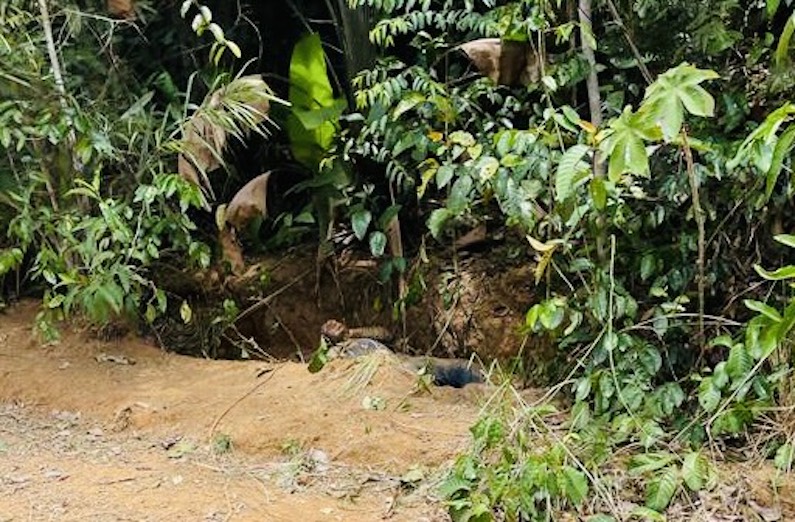
In October 2021, a Washington Post journalist, Terrence McCoy and scientist Lucas Ferrante, set themselves on a journey across the length of BR-319 highway, showing the path of destruction and devastation caused by illegal deforestation, land grabbing, mining, fires, violence and even killings. The burnt body of a dead man was found along the way after he had reported land-grabbing activities in the area to the federal police.

Photo of a burnt dead body around BR-319. Photo by scientist Lucas Ferrante.

In 2017, buildings belonging to IBAMA (Institute for the Environment and Renewable Natural Resources) and the Chico Mendes Institute for Biodiversity Conservation (ICMBio) in Humaitá were set on fire by miners and remain inoperative.

It is estimated that BR-319 and planned side roads will generate an increase of the deforested area by more than 1,200% between the highway and Brazil’s border with Peru. This projection relates to central Amazon alone, if extended to Peru, the numbers would increase significantly.

According to a scientific article published in the journal Land Use Policy by both Ferrante and Fearnside, despite environmental legislation requiring an environmental impact assessment (EIA) for one of the stretches of the highway, the project was given the green light from a judge, who authorised it without an EIA.

Additionally, the reconstruction of the highway lacks an economic viability study, EVTEA, required by law 5917/1973, as well as consultation with indigenous people required by International Labour Organisation (ILO) Convention 169 and by Brazilian law 10,088/2019.

The main transport route used in the region has always been via the Madeira River, making it a cheaper, cleaner and safer way to transport goods.

Fernanda Meirelles, executive secretary of the BR-319 Observatory, commented during our interview earlier this month:

“The LP, Preliminary License, was issued without consultations with the indigenous people and traditional communities, an important stage of the process that was not respected. We do not know whether consultations will be carried out in this current government or whether an intervention by the MPF (Federal Public Ministry) will be necessary to fullfil the obligation of consultation”,

“Public hearings were held during the pandemic, but in an inadequate way. There was no logistical support to guarantee the presence of traditional communities and indigenous people, in additional to having been held at a very inhospitable moment for any time of contrary opinion or manifestation. We even witnessed attacks suffered by researcher and scientist, Phillip Fearnside, during these public hearings”, added Meirelles.

According to data released by SEEG, the Greenhouse Gas Emissions Estimation System, between 2018 and 2019, the municipalities surrounding BR-319 highway had a staggering 16% increase in greenhouse gas emissions from land use and agriculture.

The reopening of this highway would also give agribusiness access to more land for expansion, including cattle farming, soy and palm oil plantations, monoculture expansion for large-scale biofuel production, as well as fossil fuel companies, hydroelectric dams, mining, etc.

As various studies indicate, including the ones published at Land Use Policy, and Environmental Conservation, these practices are already happening with the maintenance works of the road and would increase exponentially with the reconstruction of the BR-319 highway.

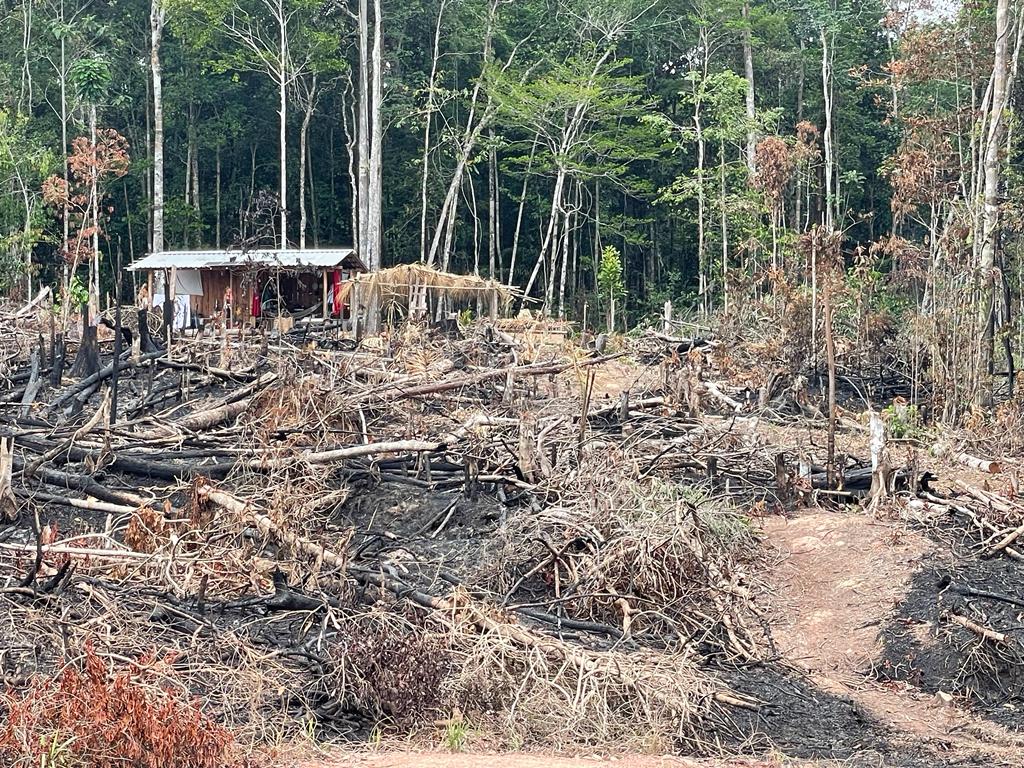
Deforested and burned area along the middle stretch of BR-319 highway. Photo by scientist Lucas Ferrante.

There’s still no information about the costs and sources of funds for this gigantic project. The same applies to a very essential monitoring system project, which was never presented.

Profiteers – All Eyes Focused on the Amazon

There are countless politicians, corporations, governmental agencies and organisations with either a hidden or visible interest in the reconstruction of BR-319 and hoping it succeeds. This project is a gateway to a heaven of natural resources waiting to be exploited and the highway will make their journey a much smoother process.

According to Fearnside, Rosneft, a giant Russian oil and gas company, with drilling rights to 16 extraction blocks located west of BR-319, approximately 35 km from the Purus River, by the Solimões Basin, would be one of the beneficiaries of the project.

Another very concerning sector is biofuel production in the Amazon. Biofuels are produced based on agricultural products, including sugar cane, corn, castor bean, palm oil and raw materials of animal origin.

According to a Global Witness report, BBF Group (Brasil Biofuels) and Agrapalma, two Brazilian palm oil (azeite de dendê) giants, are accused of various violations in the Amazon, including conflict with local communities, violent campaigns to silence indigenous communities and fraudulent land grabs.

BBF is the largest producer of palm oil in Latin America, also active in thermoelectric generation and biodiesel in the Amazon region (Acre, Amazonas, Rondônia, Roraima and Pará). The company announced that it‘s going to invest R$5 billion over the next three years in the production of biofuels, including corn ethanol. The BR-319 project would certainly facilitate their business developments in the region.

Studies coordinated by Ferrante point out that the expansion of plantations for the production of biofuels in the Amazon tends to encourage deforestation and collapse the forest, in addition to providing zoonotic jumps of viruses stored in the forest, generating a new global pandemic.

Based on scientific research, Ferrante managed to overthrow a presidential decree that released sugarcane to the Amazon, but according to him, corn and palm oil are still crops that have an enormous potential for environmental damage and to generate deforestation, demanding economic ecological zoning mainly for the BR-319 highway area.

Politicians, infrastructure companies, national and international corporations, all show great interest in this ambitious project, as the highway would be key to their business expansion.

The voice of a public figure and politician, the governor of Amazonas, Wilson Lima, would have been a great opportunity for us to understand more about this challenging project. Unfortunately, Lima did not respond to a request for an interview.

The only NGO in the region that agreed to be interviewed about the BR-319 project was IDESAM/BR-319 Observatory.

The Gordon and Betty Moore Foundation failed to respond a request for an interview.  Funbio responded, but failed to answer questions about the project.

Fundo JBS pela Amazônia mentioned that they we were unable to contribute to this matter, because the reconstruction of BR-319 had nothing to do with the fund and that this is not something that directly impacts their projects.

WWF Brasil did not have a spokesperson available to answer questions related to the project and asked that any questions be directed to BR-319 Observatory.

National and international media, politicians, corporations, governmental agencies, as well as some NGOs, seem to be reluctant to talk about the reconstruction of the BR-319 highway.

All studies so far show that this project lacks environmental governance and would be detrimental to the local communities as well as the rainforest. It also lacks an economic viability study, a monitoring system plan and consultation with the traditional and indigenous communities.

This appears to be a politically motivated plan with every president elected repeatedly making the same promise, selling the idea that the reconstruction of BR-319 highway would bring prosperity to the region, without considering that it may also bring pollution, illegal activities, violence, diseases, rampant and irreversible deforestation and destruction to the rainforest with catastrophic consequences to Brazil and the rest of the world.

If completed, this project may put in jeopardy the future and survival of the Amazon rainforest, all in the name of what they call “progress”!

Article available in Portuguese at A Escola Legal.