Brazilian Scientists’ Hopes and Expectations for the Future

Monica Piccinini

10 May 2023

The election of Brazil’s president Luiz Inácio Lula da Silva, ‘Lula’, in October 2022, brought a sense of relief and hope to the Brazilian scientific community.

Just over three months into his administration, Lula’s challenging task to fulfill all the promises he made before he came into power became apparent. The populous of Brazil, along with the rest of the world, is watching what happens next. 

In the past four years, the country has faced considerable challenges, including budget cuts in science and technology, the spread of misinformation leading to the denial of climate change, anti-vaccine movements, and the use of ineffective drugs against COVID-19, amongst many others.

“Brazil is once again reconciling economic growth with social inclusion. Rebuilding what was destroyed and moving forward. Brazil is once again a country without hunger. While preparing the ground for infrastructure work that was abandoned or ignored by the previous government, Brazil is again taking care of health, education, science and technology, culture, housing and public safety”, declared Lula during the meeting at Brasilia’s Planalto Palace in April.

A group of five renowned scientists share their views and expectations about scientific policies in Brazil, published at Nature Human Behaviour this month.

Mercedes Maria da Cunha Bustamante, biologist, Pedro Gabriel Godinho Delgado, doctor and psychiatrist, Lucas Ferrante, ecologist and researcher, Juliana Hipólito, biologist, and Mariana M. Vale, ecologist, highlight key areas of concern to be addressed by the current government.

Public Health & the Environment

Illustration 144851985 / Brazil Public Health © Gunay Aliyevs | Dreamstime.com


According to Lucas Ferrante, the past government was notable for the prominent role of scientific denialism. Ministers were chosen for their ideology, rather than their technical ability, and scientific advice was simply ignored.

The second catastrophic COVID-19 wave in the Amazon, making Brazil one of the global epicentres for the disease, could have been prevented if the past government had listened to scientific advice.

The absence of a technically oriented government under Jair Bolsonaro’s administration also increased deforestation in the Amazon rainforest at an alarming rate, threatening the environment, traditional and indigenous communities, as well as climate change goals, wrote Ferrante.

He also mentioned that despite the change in government, there’s the need to remember past events.

During Lula’s two previous terms as president (2003-2010), he showed worrying denialistic tendencies, ignoring scientific reports and scientists’ advice. An example of this was the Belo Monte hydroelectric dam disaster, which affected the Xingu River and traditional communities, causing a catastrophic socio environmental impact.

Essential plans should include blocking major infrastructure projects in the Amazon rainforest, such as the reconstruction of BR-319 highway linking Manaus to Porto Velho, which will affect traditional and indigenous communities, biodiversity and increase deforestation in the region, as well as agriculture production chains that could give rise to a new pandemic. 

Brazil’s biodiversity is extremely rich, but lacks surveys of viruses circulating in its fauna, therefore a well established surveillance programme is required in order to reduce the risk of new pandemics emerging through viral spillover, declared Mariana M. Vale.

Nísia Trindade, Brazil’s health minister, mentioned during a lower house hearing last month that the country should be gearing up for future pandemics by investing in science, technology and Brazil’s national healthcare system, SUS (Sistema Único de Saúde).

Illustration 98533932 / Brazil Environment © Cienpies Design / Illustrations | Dreamstime.com


Juliana Hipólito highlighted another significant issue of concern, society’s lost value and interest of science in their daily lives. As a consequence, this lead to an increase in deforestation rates, climate change denialism, anti-vaccine movements and the use of ineffective unproven drugs against COVID-19.

The past government’s dismantling of environmental policies increasing deforestation and the approval of a large number of toxic pesticides is also something the science community expects to be reversed, she added.

According to experts, Brazil’s use of pesticides increased exponentially in the last few years, growing 300,000 tonnes since 2010. Approximately 80% of the pesticides authorised for commercialization in Brazil are prohibited in at least three countries of the Organization for Economic Cooperation and Development (OECD) of the European community.

In the field of mental health, Pedro Gabriel Godinho Delgado expects to see development of long-term projects to better understand the interfaces between mental health suffering and the profound social inequality and precariousness of life in Brazil.

According to him, urban violence, racism, stigma, gender prejudice, loss of childhood and adolescence and their relationship with human suffering, should no longer be marginal and must be included amongst the priorities of research. The long-term consequences of COVID-19 on mental and physical health also deserve special attention from researchers.

Investments, Social Justice & Equity
Illustration 34989348 © David Castillo Dominici | Dreamstime.com


Divestment is an issue of concern, as Brazil’s previous government cut considerably investment in scientific and educational organisations. There was a huge drop in investments in INPE (National Institute for Space Research), INPA (National Institute of Amazonian Research), CNPq (National Council for Scientific and Technological Development), and federal universities.

According to Hipólito, budget cuts skyrocket during the past government. Research funding and the budget of leading science and technology funding agencies were reduced by 60% from 2014 to 2022.

Socio-economic conditions have been sacrificed as a result of the cuts, therefore affecting the country’s capacity for the innovation and economic diversification.

Mercedes Maria da Cunha Bustamante mentioned the urgent need to support vulnerable groups (women, the youth and the poorest – most of them people of colour) in Brazil with the demand for public policies that would put the country back on track towards social justice and equity.

Reducing poverty, combating climate change and biodiversity decline are intrinsically connected.

The current administration also needs to focus on improving education from elementary level, adds Bustamante. A similar scenario is seen at public universities, which were affected by budget reductions under the last government. Brazilian public universities account for most of the national scientific production and are major drivers of social inclusion.

It’s essential to increase diversity, she added, as it’s vital for addressing societal demands through the generation of new knowledge, making Brazil attractive again for young scientists and allowing science to have a more prominent role in policy making.

Vale pointed out that white male individuals still dominate Brazilian academia and highlighted the need to strengthen and improve existing policies on diversity, equity and inclusion in science, especially regarding black and indigenous people.

Brazil has seen a massive exodus of scientists, leaving their jobs to work abroad, where their skills are most valued. The current government should set up a development and retention plan, encouraging and supporting scientists across the country.

Although the scientific community remains confident and positive, it’s crucial that they continue to defend science, and that the general population are not deceived into thinking that a change in governance alone is sufficient to bring about the needed improvements in public health and the environment, mentioned Ferrante.

The voice of scientists who dedicate their entire lives to protecting and bettering our daily lives couldn’t be louder and should be heard. Perhaps it’s time for Brazilian society, politicians, institutions and corporations to fully support this community that has been undervalued for so long.

Who Controls What We Grow and Eat?

Monica Piccinini

9 May 2023

Similar to our current political & economic systems, the food system is no longer serving us; mainly driven by power, profit and greed, resulting in global food insecurity and impacting directly on our health and the environment.

We’ve seen a sharp increase in food insecurity worldwide, driven not only by climate change and multiple conflicts, but also by an unbalanced food system fuelled by corporate power. 

As the world population is projected to reach 9.8 billion in the next 27 years, there’s an urgent need to address issues related to our food system, or we may be facing a worldwide famine sooner than expected. We’ve already seen signs of this in many parts of the world.

“The right to food is the right to have regular, permanent and unrestricted access—either directly or by means of financial purchases— to quantitatively and qualitatively adequate and sufficient food corresponding to the cultural traditions of the people to which the consumer belongs, and which ensure a physical and mental, individual and collective, fulfilling and dignified life free of fear”, according to the United Nations.

Corporate Power

Photo 77536321 © Daniil Peshkov | Dreamstime.com

Giant agribusiness corporations hold the power and control over our food systems, with the ability to influence governments and decision-makers, through lobbying, with the direct intention of shaping policies in many ways.

Their objectives and tactics are questionable, with the tendency to favour their own interests, focusing on profits and maximising shareholder value, rather than addressing hunger and malnutrition.

According to ‘Who’s Tipping the Scales’, a report published by IPES Food, the international panel of experts on sustainable food systems:

“A bold, structural vision to counter the corporate takeover of food-related global governance – one that support central roles for people, governments, and democratic, public-interest-based decision-making, is urgently needed.”

It’s clear that the voices of the most vulnerable communities across the world, and mostly affected by hunger and environmental impact caused by this industry, must be heard.

These giant and dominant agribusiness corporations influence the global organisations we most trust, which should be there to defend our interests. To the surprise of many, agribusiness associations were sitting directly at the UN governance table at the 2021 UNFSS, UN Food Systems Summit.

One must also question the kind of relationship between the private sector and international governance bodies and institutions about potential conflicts of interest.

According to the IPES Food report, in 2020, a private philanthropic foundation, The Bill and Melinda Gates Foundation, was the second largest donor to the CGIAR, the Consultative Group on International Agricultural Research.

Another partnership that raises some eyebrows is the FAO’s, the Food and Agriculture Organisation of the United Nations, partnership with CropLife International, CLI, an agrochemical lobby organisation, whose members include Syngenta, BASF, FMC and Bayer (acquired Monsanto in 2018).

PAN North America, Pesticide Action Network, mentioned that instead of putting the profit of CropLife International members before farmers and consumers worldwide, the FAO must invest in solutions, including agroecology and take stronger action on ending the usage of highly hazardous pesticides, HHPs. 

We’ve also seen increase in consolidation, a large number of mergers and acquisitions, allowing these corporations to dominate the agribusiness sector. This allows these giants to have a profound influence on governance and the structure of our food system, resulting in anti-competitive market practices.

Our Health & the Environment

Illustration 273587833 / Food Food © Altitudevs | Dreamstime.com

These corporations have significant funding at their disposal to influence policies and regulations, such as pesticides, biosafety, patents, intellectual property, as well as trade and investment agreements.

Bayer AG spent over USD 9 million lobbying the US government in 2019, after it acquired Monsanto. At the time, they were reviewing the re-registration of one of the company’s main products, glyphosate (Roundup), which is considered a toxic herbicide. In the US, Bayer has been contesting billion of dollars in settlement claims to end lawsuits over accusations that glyphosate causes cancer.

They are also responsible for shaping science by sponsoring academic research favouring their corporate interests, influencing governance and policies. This was seen in the agrochemical and processed food sectors.

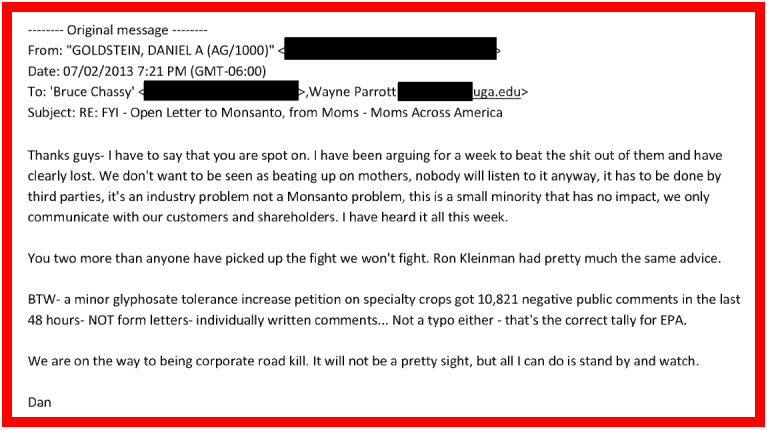
As proof of this, below is an internal email between Monsanto executives obtained by lawyers representing plaintiffs in the Roundup® litigation, where they suggest ‘beating the s**t out of’ a mother’s group expressing concern over the effects of GMOs and Roundup® on their children.

Photograph: Main Street Law Firm PLLC

Monsanto also tried to influence science by sponsoring various ghostwriting academic articles questioning scientific studies that raised concern over its product’s safety, glyphosate.

Another very concerning issue related to the health of our children is the fact that this industry continuously lobbies against mandatory public health measures, including taxes on ultra-processed foods, UPF, sugary drinks and front of package labeling, as well as restrictions on marketing of unhealthy foods to our children. This has a gigantic impact on their health and also creates pressure on our health systems.

A reported example of this was when a children’s cereal manufacturer attempted to sue Mexico after the country tried to amend a food packaging regulation called NOM-5, in order to protect their children from the marketing of unhealthy foods. The regulation established that certain unhealthy products would be prohibited from putting children’s animations and characters on their packages.

The invention of novel foods also raises some red flags. On March, The Defender, a publication defending children’s health, published a piece on Bill Gates’ latest invention, an edible food coating called Apeel, which is an odourless, colourless and tasteless coating for vegetables and fruit, which potentially extends the life span of these products, keeping it fresher for up to two times longer.

Apeel has already received the green light from US regulators, but some questions still remain unanswered surrounding the safety of the product, as the company is relying mainly on existing scientific studies, as no new science has been required to evaluate and test the product.

We seem to be completely exposed and reliant on these corporations to carry out their own safety studies, without the scrutiny of independent regulators and scientific studies.

According to the 2011 UN Guiding Principles on Business and Human Rights, companies are expected to develop their own internal procedures to identify, prevent, mitigate, and account for how they address their impacts on human and environmental rights in global supply chains.

It’s clear that the way we grow our food has a massive impact not only on our physical and mental health, but also on our environment, affecting fauna and flora, the health of our soil, water and air.

Recently, we have seen a sharp increase of fungal disease in crops, affecting 168 crops listed as important in human nutrition, according to FAO of the United Nations. Despite spraying fungicides, farmers are losing between 10-23% of their crops to fungal disease every year, including rice, corn, soybeans and potatoes.

According to a study published at Nature journal, this issue is mainly because of the adaptability of fungi to meet modern agricultural practices. Monocultures entail vast areas of genetically uniform crops, an ideal ground for fast-evolving organisms, such as fungi. Another problem is the increasingly widespread use of antifungal treatments, leading to fungicide resistance.

The use of pesticides and toxic chemicals are increasing exponentially across the world, causing havoc to our health, the soil, polluting water sources, the air, animals and plants.

Industrial agriculture, including cattle farming, soybean, palm oil, sugar cane, corn, wheat, GMOs, monoculture production, is responsible for the deforestation of rainforests, the Cerrado, and many other parts of the world, causing destruction and degradation.

In Brazil, 2.8% of landowners own over 56% of all arable land, and 50% of smallholder farms have access to only 2.5% of the land. Overall, the land is in the hands of a small number of industrial farms.

We must rethink the way we grow our food and we all have the right to access nutritious and healthy food and decide what we eat.

Digital Farming

Photo 225876642 © Andrey Popov | Dreamstime.com

The agribusiness sector spends vast amounts on research and development, making it extremely hard for smaller companies to compete with them, capitalising on patent protection and intellectual property rights.

Why? Because they can!

Patent protection and intellectual property is another issue that should be catching everyone’s attention.

Giant tech companies, such as Amazon and Microsoft, among others, entered the food sector focusing on power, control and profit. Small farmers and local food systems are struggling, as they can’t afford to use this high tech data gathering technology. They are also located in remote areas where these types of services can’t reach.

We can see an increasing movement of powerful integration and control between the companies that are supplying products to farmers, such as tractors, drones, pesticides, etc., and the tech giants. They feed and control farmers with information, and at the same time have direct access to consumers.

The aim is to integrate millions of farmers into a wide centrally controlled network by encouraging and forcing them to buy their products. This digital infrastructure is run by platforms developed by tech companies that run cloud services.

Fujitsu farm workers, located just outside Hanoi, carry smartphones supplied by the company, which monitors their every single movements, productivity, the amount of hours they work, etc., all stored on the company’s cloud. This is extremely worrying, as this practice could easily lead to labour exploitation.

Similar to Fujitsu, other companies investing heavily on this type of digital farming platforms include Microsoft’s Azure FarmBeats, Bayer’s Fieldview, BASF’s Xarvio, Syngenta’s CropWise, Yara’s Yaralrix and Olam’s OFIS, Olam Farmer Information System.

It’s essential to point out the extent of data gathering these platforms are capable of, including real time data and analysis on the farmers soil condition and water, crops growth, pests and diseases monitoring, weather, humidity, climate change, tractor monitoring, etc.

Some of these corporations are also trying to eliminate the “middlemen” by selling directly to consumers, which may be attractive proposition to many, if the idea is mainly to help farmers and small vendors directly, but somehow they may use digital platforms to increase their pricing power over farmers.

An important question we must ask these companies, regulators and our governments: who controls all this data, what do they do with it and who gives the advice?

The influence a few powerful corporations have in food governance must be scrutinised. Governments should be leading in the field of food security and not leaving it in the hands of those that put profit over longevity of life. It may seem a drastic change to the world as we know it, but it may be the only way to bring back a balance in the global food system and secure our quality of life and ultimately our survival.

World’s Addiction to Brazilian Meat Feeding Deforestation and Destruction

Monica Piccinini

28 Oct 2022

How much are we willing to pay for our meat obsession?

As the world population continues to grow and predicted to reach nearly 10 billion by 2050, meat consumption is on the increase. According to a study published by Science, between 90 to 99 percent of all deforestation in the tropics is driven directly or indirectly by agribusiness.

Livestock is the leading driver of deforestation in the Amazon rainforest and a key factor of not just CO2 emissions, roughly 14.5% of all human-induced global GHG emissions, but also of methane.

According to IPAM, the Amazon Environmental Research Institute, cattle pastures occupy 75% of the deforested area on public lands in the Amazon. Deforestation of the Amazon and Cerrado are the main drivers of Brazil’s CO2 emissions.

“Squatting is a risk factor for the planet’s climate balance, and it also poses two problems for the livestock sector: illegality and more greenhouse gas emissions,” says IPAM senior researcher Paulo Moutinho.

“A truly low carbon economy in Brazil needs to undergo a comprehensive analysis of the impact of production chains on the worsening of the greenhouse effect. Leaving these emissions aside makes no sense when we have an ongoing climate emergency,” he warns.

A recent study conducted by WWF found that out of the 486 endangered species in the Amazon and Cerrado regions, 484 of them have lost part of their habitat as a result of deforestation.

It’s fair to say we shouldn’t point the finger at one single direction, when you realise that there’s a significant number of worldwide investors and supporters financing deforestation in the region. Complicity must be shared equally.

With that in mind, some fundamental and essential questions must be answered; as to who is to blame and what effective actions can we expect to be taken from world leaders, financiers, governments, corporations and the general public?

Meat Giants

Photo: 196817068 © Alf Ribeiro | Dreamstime.com


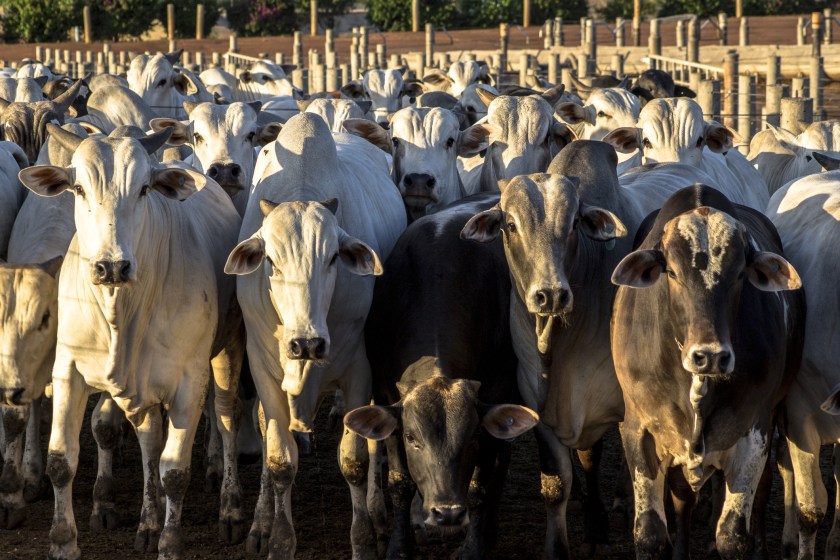
JBS, Marfrig and Minerva are Brazil’s largest meat processors and exporters, supplying food chains and supermarkets in Brazil and across the world.

JBS is the world’s largest meat (beef, pork, lamb and poultry) processing company in the world with the largest climate footprint. It has US$ 76 bi in revenues, employs over 250,000 people globally, and has over 70 brands and customers in 190 countries, including Swift, Pilgrim’s Pride, Moy Park, Certified Angus Beef, Gold Kist, Oak Crown, Moyer, Clear River Farms, Geo, and many more.

In 2021, the majority of the company’s revenues were made in the United States (51%), Asia (15%), Brazil (12%) and Europe (7%), and the majority of its exports in 2020 went to China (27.2%).

The company is associated with suppliers linked to deforestation, pollution, slave labour, fires, bribery, land grabbing and invasion of Indigenous peoples’ land, protected areas and reserves.

According to a Mighty Earth report, The Boys from Brazil, JBS, Marfrig and Minerva maintain that they can’t trace its cattle through its supply chain and eliminate cattle linked to deforestation areas.

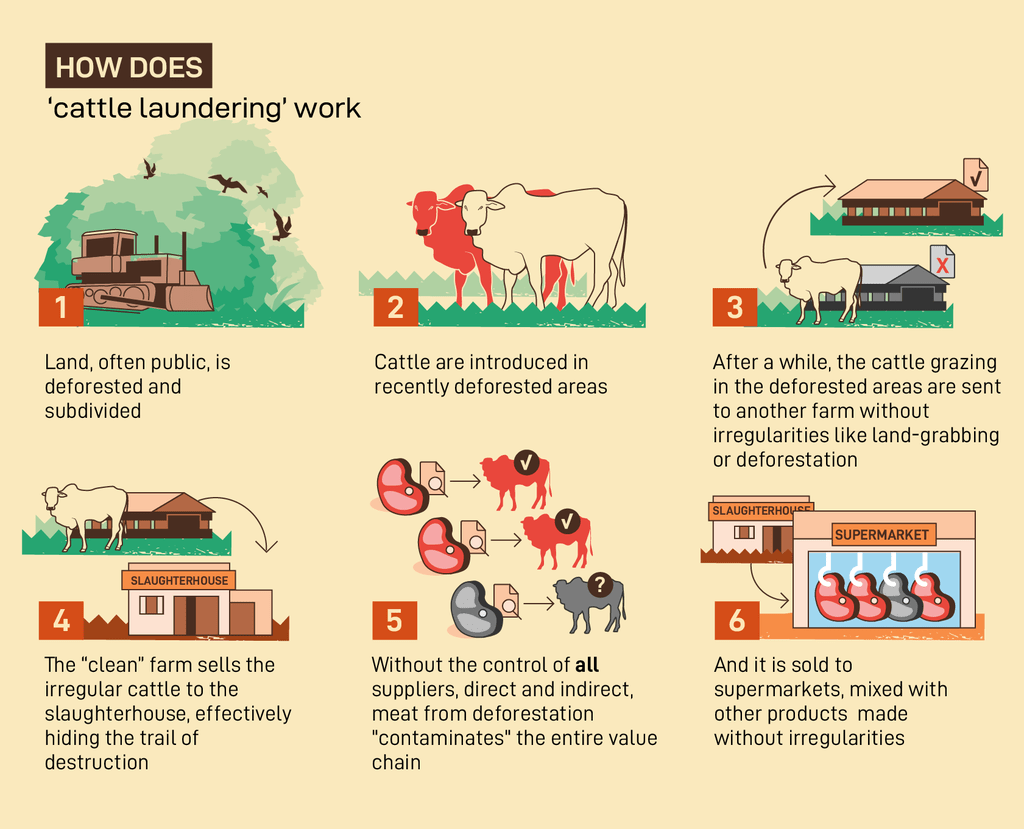
JBS has been accused of “cattle laundering”, the shuffling of cattle from ranch to ranch in order to conceal their illegal origins. The process is tricky and difficult to track. The cattle are bred where deforestation occurs, moved to other properties where it is nurtured through adolescence and then taken to “fattening” farms. The cattle are then transferred to processing plants where they are slaughtered and butchered ready to be shipped/exported.

Source: Greenpeace

“In their emission disclosure and their net-zero target for 2040 JBS fails to take responsibility for an estimated 97% of its emissions footprint, by neglecting emissions from farms and feedlots that are not owned by JBS and emissions related to deforestation. The company plans to continue growth in a GHG emission-intensive industry; we did not find evidence of any planned deep decarbonisation measures”, was reported in the Corporate Climate Responsibility Monitor 2022 assessment (page 84).

“Rather than making noises about being transparent about their supply chains and emissions, why don’t JBS disclose their most recent data? It’s time for JBS to come clean about their global slaughter figures, so we can determine with pinpoint accuracy the scale of their climate footprint”, said Gemma Hoskins, UK director of Mighty Earth.

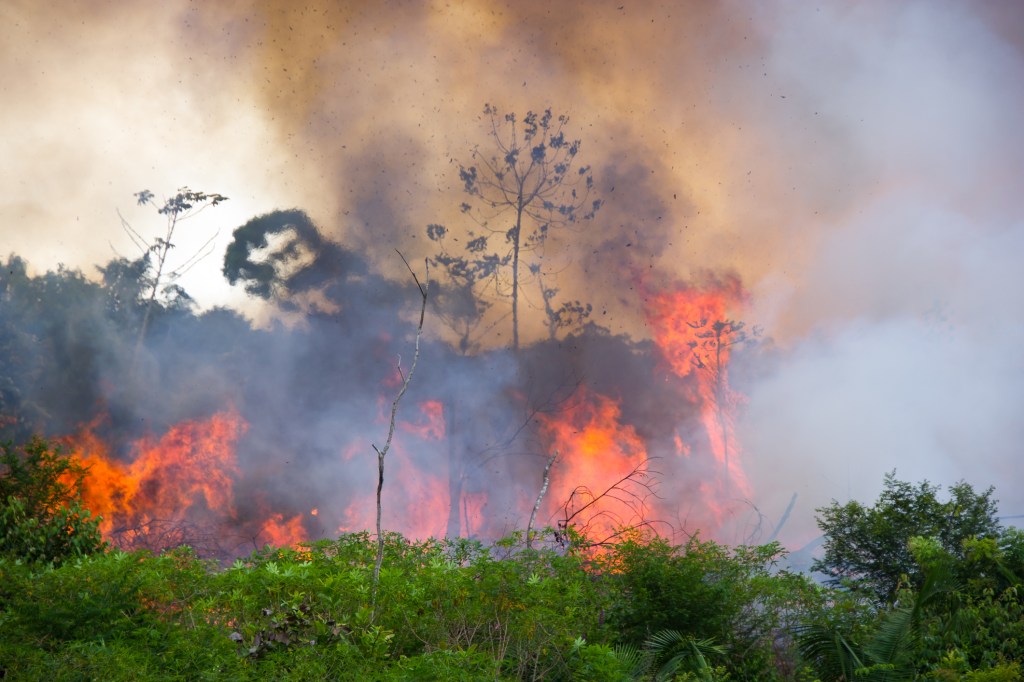
Fires in the Amazon and Cerrado regions are not naturally occurring events; they usually start intentionally, to clear the land for pasture, illegal logging and land grabbers or to grow animal feed. In September, Brazil’s National Space Research Agency, INPE, reported 41,282 fires in the Amazon rainforest, the highest number since 2010.

The Supporter’s Black List

There are a substantial large number of investors and supporters involved in financing, directly or indirectly, the deforestation of the Amazon rainforest and the Cerrado regions.

An investigation released in June by Global Witness revealed that one of JBS’s supplier, the Seronni dynasty, was allegedly involved in a series of human rights abuses, including the use of slave labour, deforestation, land grabbing and cattle laundering for over a decade. The Seronni’s wealth was gained at the expense of the Amazon deforestation, as well as the exploitation of slave labour.

Grupo Mastrotto, a large Italian producer of leather and upholstery to the clothing, footwear, automotive and boat industries, was also identified as an importer of JBS’s leather linked to the deforestation of the Amazon. Mastrotto supplies the Volkswagen Group, owner of Audi, Bentley, Bugatti, Lamborghini, Porsche, Seat and Skoda. Other customers include Toyota and Ikea.

The meat industry wouldn’t be able to operate without the support of international finance. The UK, EU and US based-financiers continue to funnel billions to JBS, Marfrig and Minerva, including Barclays, BNP Paribas, Deutsche Bank, Dimensional Fund Advisors Group, Fidelity Management, HSBC, JP Morgan, BlackRock, Santander, Vanguard Group, and many more.

French bank, BNP Paribas, was given a formal notice by NGOs for financing Brazilian beef giant Marfrig, implicated in illegal deforestation, indigenous land rights violations and slave labour.

“Banks can no longer pretend they don’t know that their financing and investments fuel deforestation and climate chaos”, said Jérémie Suissa, director of the French organization Notre Affaire à Tous.

Trade data accessed by Global Witness also revealed that in 2020 alone, JBS exported beef products to 160 companies in Europe, 30% went to the UK.

Supermarkets in Europe, the US and the UK are responsible for selling products linked to the Amazon and Cerrado deforestation, including Aldi, Asda, Carrefour, Costco, Iceland, Morrisons, M&S, Tesco and Walmart, amongst others.

Food service companies are also accountable for selling branded and unbranded products sourced from deforested areas in the Amazon and Cerrado regions. They include Burger King, KFC, McDonald’s, Nando’s, Outback Steakhouse, Pizza Hut, Subway, Wendy’s and many more.

According to a damming report by Repórter Brasil, McDonald’s: The Footprint of a Giant, McDonald’s supply chain is exposed to several risks of violations related to Brazil’s rural reality. Deforestation, slave labour, violations of labour laws, and damage to traditional communities are part of the risks directly or indirectly linked to the network that supplies their restaurants.

A Final Appeal

Photo 90934032 © Wanida Prapan | Dreamstime.com

The reality is that we can’t continue doing business as usual and must take immediate action, as the consequences are far too great to our planet and the next generations, some of them already irreversible.

NGOs, researchers, scientists and specialists have proposed various recommendations and solutions to the problem, but the ones accountable for the deforestation and degradation of the Amazon rainforest and Cerrado regions constantly ignore them.

Some of the recommendations by various NGOs, including Mighty Earth and Global Witness outlined below:

• Governments should introduce legislation requiring businesses to identify, prevent, mitigate and report on deforestation and human rights risks, tackling the role of imported products driving deforestation globally.

• Investors, banks and financiers must divest from JBS, Marfrig and Minerva and its subsidiaries excluding them from their investment funds and bond portfolios.

• Supermarkets, retailers and food service companies must drop these companies as a meat supplier.

• The Brazilian government must divest all financing for these companies via BNDES development bank, must introduce enforceable rules against deforestation and introduce strict regulatory limits on mega and factory farm methane emissions.

• JBS, Marfrig and Minerva must disclose its direct and indirect emissions fully, including carbon dioxide and methane, and allow an independent third party to verify their company’s emissions claims.

Carlos Nobre, renowned Brazilian earth scientist, who spent the last four decades dedicated to research studying the Amazon rainforest and its impacts on the earth system and 2007 Nobel Peace Prize winner, has a message to the international community:

“Responsible consumption is key. The international community must continue to play an important role on sustainable consumption and not purchase any products that come from deforested areas.”

A final message from Lucas Ferrante, Brazilian ecologist and researcher, who published several studies on the Amazon rainforest and Cerrado:

“Countries that import commodities from Brazil need to review their trade agreements, mainly for meat, soy, ores, biofuels and now oil and its derivatives that come from the Amazon. Brazilian agribusiness has become a threat to the Amazon, to traditional peoples and to the global climate.”

We are facing multiple challenges ahead of us, none of them simple to solve, requiring total transparency, good will and power to make the essential and effective changes that will create a positive meaningful impact on the future of our planet and humanity.

We can no longer afford to turn a blind eye to these issues, as the result of our inaction will profoundly impact the future of our children!

Photo 69667961 © André Costa | Dreamstime.com

Toxic Side Effects of a UK-Brazil Free Trade Agreement

Monica Piccinini

23 Feb 2022

A recently released report from Pesticide Action Network (PAN-UK), reveals that a potential trade deal between the UK and Brazil is being considered. If a trade deal between both countries goes ahead, the UK population could be consuming products containing higher level of pesticides, which could have a direct impact not only on public health, but also on the environment.

“The UK Trade Secretary is promoting trade with Brazil as providing ‘real opportunities to go further on green trade’. Meanwhile, Brazil’s overuse of highly toxic pesticides is contributing to the destruction of the Amazon and other crucially important ecosystems, contaminating water and poisoning farmworkers and communities. And yet the government has provided no detail on how it will ensure that Brazilian food sold on UK shelves is not contributing to the global climate and nature crises”, said Josie Cohen, Head of Policy and Campaigns at Pesticide Action Network, PAN UK.

Brazil is the world’s third largest user of pesticides, only behind China and the US, allowing almost double the amount of highly hazardous pesticides, HHP’s, to be used (131), compared to the UK (73). For instance, lemons grown in Brazil have 200 times the amount of insecticide dimethoate than in the UK. Dimethoate has been linked to cancer and is banned in the UK.

The UK already imports large amounts of food (meat, fruit and vegetables) and soya for animal feed from Brazil. Food imports are subject to UK safety limits for the amount of pesticides residues allowed to a particular item, but no limits are placed on feed.

Soya beans are Brazil’s largest export to the UK, worth approximately 220 million USD in 2020. The majority of it is genetically modified (GM), and at least 90 per cent of it is fed to animals.

A large amount of the meat British people buy, including beef, dairy and chicken reared in the UK, have been fed on soya grown on deforested land using toxic pesticides.

“Most UK consumers have no idea that some of the meat they are eating has been fed on soya grown using highly toxic chemicals. Right now, the UK government is talking a good game on reducing pesticide harms in the UK, but appears to have no problem with exporting our environmental and human health footprints to Brazil”, mentioned Vicky Hird, Sustainable Farming Campaign Coordinator at Sustain.

In February 2021, Defra signed a “memorandum of understanding” with the Brazilian government with the intention to facilitate trade in agribusiness between Brazil and the UK. The Brazilian agriculture minister, Tereza Cristina Corrêa da Costa Dias, nicknamed by Brazilians as “poison muse”, said that the UK would eventually become more aligned with international rules on food safety.

“The UK government continues to pursue increased agricultural trade with Brazil, but the intensification of agricultural production there has been linked with deforestation and highly hazardous pesticides which harm wildlife and ecosystems. The UK should ensure that it is not contributing to the problem”, said Dr. Emily Lydgate, specialist in environmental law at the University of Sussex.

Brazil’s president, Jair Bolsonaro, has continuously developed a close and special relationship with pesticides. He recently incorporated a presidential decree (10.833/2021), amending the 1989 pesticides law, by making the approval process of pesticides even more flexible, including the approval of chemicals that have already been banned in the US and Europe.

With the new amendment, chemicals that cause cancer, genetic mutations and fetal malformation, will be given approval to be used as well as manufactured, if a “safe exposure limit” is determined.

Additionally, the current Brazilian legislation does not provide for a minimum period for the renewal of pesticides licensing. Pesticides that have been in the Brazilian market for more than 4 decades are still being used today, without ever undergoing an assessment of environmental and health issues.

The approval process of pesticides in Brazil has never been made easier, as more power has been given to the Ministry of Agriculture on the decision making process, leaving ANVISA (National Health Surveillance Agency) and IBAMA (Brazilian Institute of Environment and Renewable Natural Resources) excluded from the final decision.


An increase in agriculture exports from Brazil to the UK may also pose a threat to British agriculture, increasing the pressure on farmers to escalate the use of pesticides to compete with cheaper products grown on a larger scale.

Beef and soya production in Brazil plays a major role in the deforestation of the Amazon rainforest, as well as devastation of the Cerrado region, the home of 5% of the world’s plant and animal species.

Pesticides have also contaminated Brazilian water. According to a 2021 study, freshwater bodies in 80% of Brazilian states are now contaminated with herbicides such as glyphosate, posing a direct threat to aquatic species and ecosystems.

Drinking water in Brazil can contain glyphosate levels of up to 500 micrograms per litre. In the UK, the current for drinking water is 0.1 microgram per litre, 5000 times lower than the level in Brazil.

Another catastrophe reported on a regular basis is the countless poisoning incidents in Brazil caused by pesticides aerial spraying. A report published by Publica estimated that between 2007 and 2017, pesticides poisoned approximately 6,500 children, all under the age of 14.

In September 2020, Science Direct reported adverse effects of pesticides on the function of our immune system, which could affect how we fight Covid-19. Additionally, a new study performed in human lung airway cells is one of the first to show a potential link between exposure to organophosphate pesticides and increased susceptibility to COVID-19 infection.

“We have identified a basic mechanism linked with inflammation that could increase susceptibility to COVID-19 infection among people exposed to organophosphates,” said Saurabh Chatterjee, PhD, from the University of South Carolina and a research health specialist at the Columbia VA Medical Center and leader of the research team.

Pesticide Action Network UK has made some key recommendations to the UK government, including putting additional measures in place to ensure that Brazilian agricultural imports are not driven pesticide-related harms to either human health or the environment in Brazil.

Another proposal would be not allowing any weakening of UK pesticide standards as a result of an increase in trade with Brazil and preventing UK farmers from being disadvantaged by cheap food imports produced to weaker pesticide standards in Brazil.

The impact pesticides cause to our health and the environment is undeniable. It doesn’t only affect human life, but also the Amazon rainforest, the Cerrado, the soil, the air, wildlife and the water, speeding up the destruction of the world’s most precious ecosystems.

We only have one life and one planet. It is our duty to protect them both in order to guarantee our survival!

COP26: another Cop Out?

Monica Piccinini

21 Oct 2021

The climate scientists drum beat of concerning data continues with an increased rhythm and it is becoming clear to all but the global leaders that we are running out of time for material action.

As COP26 approaches, national leaders across the world should be galvanising and both individually and collectively evidencing real action to deliver on prior promises and commitments. Sadly, what might be expected appears to be far from the real situation.

It is very apparent that climate change can’t be addressed by a small number of nations. Global pollution and its effects have no respect for man-made sovereign borders. Possibly, for the first time in history, the world needs to truly work together for the greater good and ultimate survival. 

It’s complicated. The world needs full cooperation and commitment from the biggest polluters and the richest and most powerful nations, leaving their greed, egos and empty promises behind. In the short term, it’s those same countries that have the most to lose and need to spend the most in an altruistic manner.

It’s no coincidence that the largest economies have established themselves as powerhouses at the expense of the climate. Much of their industry depends on carbon fuels to function and importantly their infrastructure is from a time when carbon fuels were seen as the future.

So with that background and political short-termism combined, it’s no surprise that the question of climate and sustainability becomes deeply mired in protectionism, nationalism and global politics.

Brazil’s Jair Bolsonaro, China’s Xi Jiping, Russia’s Vladimir Putin and Mexico’s Andrés Manuel López Obrador are not expected to attend COP26. Japan’s Fumio Kishida may also be absent from the Summit, which is about to start in Glasglow, Scotland, at the end of this month.

According to an analysis by Carbon Brief on CO2 emissions from land use and forestry, as well as those from fossil fuels, it showed the US as the largest CO2 emitter in history, accounting to 20% of the global total, followed by China with 11%. In third place came Russia (7%), Brazil (5%) and Indonesia (4%).

There is a real sense of urgency, as the world has already used 85% of the CO2 budget that would give a 50% chance of limiting heating to 1.5C, according to Carbon Brief’s data.

According to the OECD, CO2 from the combustion of fossil fuels and biomass accounts for about 90% of total CO2 emissions and two thirds of total GHG emissions.

The top most powerful nations in the world, China and the US, are the top polluters, followed by India, Russia and Japan. China produces 28% of global emissions, more CO2 than all nations put together.

Will geopolitical competition between China and the US help the world tackle climate change?

China and the US should be leaving their differences aside and be focusing on setting up plans in order to tackle one of, if not the most challenging projects of our time, climate change.

The recent defense deal, the Aukus trilateral security partnership between the US, the UK and Australia, added to existing regional military tensions has not helped to soothe relations between the US and China, creating a stand-off which has the potential to evolve into a new cold war.

Additionally, issues like trade, the South China Sea, human rights, the threat of Chinese invasion in Taiwan and intellectual property theft, have contributed to more tensions and disagreement between both nations. This may impact heavily on their commitment to climate change.

President Xi Jinping has pledged to cut down emissions by 2030 and become carbon neutral by 2060, given its economic development is highly reliant on the fossil fuel industry.

More than half of all power in China is generated from coal, using 3 billion tonnes of thermal coal each year. Coal is the biggest contributor to climate change, accounting to 46% of carbon dioxide emissions across the world.

Coal is not the only concern. China produced around one billion tonnes of steel last year, which is the second most polluting industry after coal.

We can easily notice a pattern here. Chinese demand for coal is expected to increase until 2026, therefore increasing carbon emissions until 2030, contradicting the country’s emission goals. Chinese banks and corporations continue to finance and build coal-fired power plants across many countries.

Supply and demand – is it all China’s fault?

Since opening up to foreign trade and investment and implementing free-market reforms in 1979, China has become one of the world’s fastest-growing economies.

The world has actively supported China becoming its industrial heartland. Built upon cheap labour, available raw materials and a welcoming government policy, a huge percentage of commodity product manufacturing has moved to China from other historic manufacturing nations, including the US, the UK, the EU, and other nations.  Servicing the demand has created pressure to build manufacturing infrastructure at the lowest cost possible, and that leads to low tech solutions like carbon based energy production.

It’s no surprise that China has rapidly become one of the biggest global polluters. Other nations have essentially pushed into China their polluting industries.

The denialistic approach

The Production Gap report released by the UN, states that governments across the world still plan to produce more than double the amount of fossil fuels in 2030 and that the majority of gas and oil producers plan on increasing production beyond 2030. 

G20 countries have directed nearly USD 300 billion in new funds towards fossil fuel activities since the beginning of the COVID-19 pandemic — more than they have toward clean energy, which contradicts entirely to the message they have been giving us all along.

According to a leak of tens of thousands of comments by governments, corporations, academics and others on the draft report of the IPCC’s ‘Working Group III’, recently published by Unearthed, fossil fuel producers including Australia, Saudi Arabia and the Organization of Petroleum Exporting Countries (OPEC), are lobbying the IPCC – the world’s leading authority on climate change – to remove or weaken a key conclusion that the world needs to rapidly phase out fossil fuels.

These scandalous and irresponsible actions go on. Australia asks the IPCC to delete analysis explaining how lobbying by fossil fuel companies has weakened action on climate change in Australia and the US. Saudi Arabia repeatedly seeks to have the report’s authors delete references to the need to phase out fossil fuels.

Brazil and Argentina, two of the world’s biggest producers of beef and animal feed crops like soya beans, have also been pressing the IPCC to water down and delete messages about the climate benefits of promoting ‘plant-based’ diets and of curbing meat and dairy consumption. 

There is no slowing down. According to the OECD-FAO Agricultural Outlook 2021-2030, global GHG emissions from agriculture are projected to increase by 4% over the next ten years, with livestock accounting for more than 80% of this increase.

Meat production requires significant use of resources such as land, feed and water and is also a great contributor to climate change. By 2030, 34% of the agricultural production in Latin American and the Caribbean, is projected to be exported.

Brazil, the US and Europe are the three largest meat exporting countries. China is the world’s largest meat importer. According to the Brazilian Meat Exporting Industry Association, between January and July this year, shipments of beef from Brazil to China reached 490,000 tons and generated sales of US$2.5bn, an increase of 8.6 per cent and 13.8 per cent, respectively, compared with the same period last year.

In China, per capita beef consumption is projected to rise a further 8% by 2030, after having risen 35% in the last decade.

Brazil has been the main destination for Chinese investments in South America, having received US$ 66.1 billion, equivalent to 47% of the total invested, in the last decade until 2020.

Between 2007 and 2020, Chinese companies made large investments in Brazil, mainly in the electricity sector, which attracted 48% of the total value, followed by oil extraction, with a 28% share, and mining, with 7%. 

A recently published report, The Lancet Countdown, mentioned that over a 6- month period in 2020, over 51 million people were affected by at least 84 disasters from storms, droughts and floods across the world.

The fact is that there is no going around the subject of climate change. Unless the situation we put ourselves is taken seriously and faced head on with immediate action, all of humanity faces a tragic future, or no future at all.  None of the world leaders, who continuously deny the situation, will be here to tell the story.

Nature has already shown its clear message to the world with extreme weather events like floods, wild fires, volcano eruptions, death and horrific devastation across the world, including in Argentina, Australia, Brazil, China, across Europe, India, Russia and the US. Turning a blind eye to these events and the certainty of a much worse scenario shows total irresponsibility and disregard to life, to each one of us, as well as to every single living being on this planet.

The world is calling for global leadership on a scale never seen before, at the very time when nations are sadly turning inwardly and political factions are more concerned with domestic rivalry and individual gains. 

Climate Change – Inaction May Prove Fatal to Humanity

Monica Piccinini

22 Aug 2021

Humanity has been in denial for decades, avoiding the truth about the implications of its complex relationship with nature. A toxic, turbulent and abusive liaison based on constant exploitation. Eventually, a break up is imminent!

As human population numbers have grown and with it consumption, we have seen the correlated demand in areas of food, living space as well as demand for luxury items created by commerce. At the heart, there is a very basic human desire for ‘more’.  Populations across the world are now interconnected in a way few would imagine, therefore creating an environmental impact most choose to conveniently ignore. 

An individual in the Western Northern Hemisphere seeking a never ending supply of fresh exotic vegetables, fruit and meat from half way around the globe at an ever decreasing price. For all those products to be on the consumer’s plate, it will have passed through an incredibly efficient, yet troublesome system.

From high production farming techniques driving the destruction of natural flora, fauna and land exploitation, to the use of pesticides, distribution from one country to another by lorries, planes and ships with huge carbon footprints, all managed by profit oriented distribution companies operating on a global scale.  The simple desire of a consumer wanting more products at bargain costs has created a significant ecological footprint with dramatic consequences. 

The interconnections between our global systems and social fabrics are very sensitive and easily interrupted. The world has had a taste of such disruption with the Covid-19 pandemic. However, the even bigger issues of climate change and biodiversity loss are upon us and we can’t afford to turn a blind eye to, nor try to separate them, as they are all interconnected.

The reality is that the pace of destruction is faster than we had ever predicted. Unless we address the critical situation we have created, and put our house in order, we may be homeless and face a grim future.

“2021 must be the year to reconcile humanity with nature”, said António Guterres, the UN secretary general, in an address to the One Planet Summit of global leaders in Paris last January.

We have seen how much the emergence of a pandemic can cost us and how quickly it can affect businesses, the global economy, and our physical and mental health. Climate change is one of the primary drivers of biodiversity loss, which is a key driver of emerging infectious diseases. Investing in ecological measures that can help future pandemics is much lower than the cost of a pandemic.

One-fifth of the world’s countries are at risk of their natural ecosystems collapsing because of the destruction of their habitats and wildlife, according to Swiss Re. Food, air, clean water, and flood protection have already been damaged by human activity.

According to the OECD, the total economic value to society of biodiversity and ecosystem services is estimated to be as much as USD 140 trillion per year and over half of the world’s GDP (USD 44 trillion) is moderately or highly dependent on nature and its services.

The recently released 2021 Intergovernmental Panel on Climate Change report, IPCC, is a stark warning that humanity will not be able to limit global warming, unless we take rapid and large-scale reductions in greenhouse gas emissions.

The top major green house gas emitters in the world are China, United States, India and Russia. China, Brazil, Australia and Russia’s current energy policies will prompt to an astonishing 5C temperature rise.

At 1.5C of global warming, we will see significant and unprecedented changes to the weather across all regions, but at 2C of global warming, the results could be catastrophic and irreversible, with heat extremes, heavy precipitation, marine heat waves, reductions in Arctic sea ice, snow cover and permafrost, agricultural and ecological droughts.  

We have already seen the impact of climate change across the globe with fires, floods, draughts, hurricanes, etc. In Brazil, the worst drought in nearly a century, followed by extreme cold temperatures, has been reported, affecting heavily Brazil’s farming. Deforestation is considered as one of the main causes.  

As world population is predicted to increase to 9.7 billion by 2050, food demand will intensify, putting pressure on the land. We have already exploited more than a third of the world’s land area to crop and livestock production, affecting the lives of thousands of species as well as the land. At least 60% of the world’s agricultural area is dedicated to cattle ranching, making up to only 24% of the world’s meat consumption.

According to a projection by the Netherlands Environmental Assessment Agency, PBL, the area of land under agriculture could increase from 35% to 39% by 2050. Industrial agriculture is one such villain responsible for degradation of the land, water, and ecosystems, high green house gas emissions, biodiversity loss, hunger and nutrition deficiencies, as well as obesity and diet-related diseases.

“We are facing acute, interconnected crises – hunger, malnutrition, biodiversity loss, the climate crisis, growing inequality and poverty. What we need are real solutions, not more greenwashing from agribusiness. Real solutions – public regulation for agroecology and Food Sovereignty – require dismantling corporate power, redistributing resources, re-localising food systems and ensuring small scale producers have control. Food is a human right not a commodity”, said Kirtana Chandrasekaran, from Friends of the Earth International.

Global agribusiness giants not only control the market price farmers get, but also what we eat, not to mention their contribution to poor health, food waste, soil erosion and soil acidification due to the use of chemical fertilisers and pesticides, wildlife destruction, ground water pollution, disease outbreaks, death, hunger and food insecurity, deforestation and climate change. According to the Climate Land Use Alliance, commercial agriculture drives 71% of tropical deforestation, posing serious risks to our global forests and climate.

According to the Intergovernmental Science Policy Platform on Biodiversity and Ecosystems Services, IPBES, half a million terrestrial species of animals and plants may already be doomed into extinction. Up to one fifth of wild species are at risk of extinction this century due to climate change. Over 25% of forests have been permanently cleared. Since 1970, the global abundance of vertebrates has declined by 68% and since 1700, 90% of global wetlands have been lost.

The degradation of our oceans, soil, rivers, corals, can take decades, if not centuries to recover, and in some cases this destruction may already be irreversible.

Governments across the globe have made many commitments with the intent to tackle climate change. The commitments included the 2011 deadline to decrease emissions by 4%, the 2015 deadline to decrease it by 5%, and the 2020 deadline with the promise to decrease emissions by 10% each year. It has been a total failure and they have missed every single deadline. In the meantime, global emissions keep increasing.

“We have to reduce emissions far more rapidly than we are today. We have to leave fossil fuels in the ground, we have to remove the green house gases we have already put into the atmosphere that are creating this crisis today and into the future, and then to buy time while we manage those two processes. Then we also need to refreeze the Arctic. I don’t think it’s ridiculous, we have at least half a dozen of processes we’ve been looking at (Marine Cloud Brightening Technique)…. We don’t have the time we need to reduce emissions…buying time becomes essential”, said Sir David King, Chair of the Climate Crisis Advisory Group (CCAG) at a Chanel 4 interview last July.

Humanity has to urgently re-think its relationship with nature. Not only we have the responsibility to address the current ecological crises we face, but also try to understand how we got here.

Will science and technology be able to solve the climate change and biodiversity loss crises?

“What people do about their ecology depends on what they think about themselves in relation to things around them. Human ecology is deeply conditioned by beliefs about our nature and destiny – that is, by religion…  More science and more technology are not going to get us out of the present ecologic crisis until we find a new religion, or rethink our old one.” – Lynn White’s 1967 article.

This is the time of serious commitment not only from our world leaders, but also from each one of us. It’s our responsibility to get involved and put pressure on our governments, businesses and policy makers across the world and demand total transparency and urgent action!

Global Food Crisis

Monica Piccinini

26 Jan 2021

A radical and collective rethink is required to re-engineer many of humanities core living systems, if we are to sustain our existence on the planet.  With the global population having grown from 6.1 billion to 7.7 billion in 20 years, demand on the world’s resources is at breaking point. 

Two powerful forces are magnifying each other’s effects, creating a hurricane, which will leave devastation in its path.  These forces are not military or subversive in nature, they are basic human instincts; to feed ourselves and our families with healthy nutritious food, and the human desire for easy access to more food, more clothes, more products and more money.

The voracious demand of the worlds growing consumer base is fuelling and incentivising commercial greed, which in turn is feeding the demand within the world’s population.  A tornado that is spinning faster and faster and getting bigger, as our population gets larger and older.

Less scrupulous organisations and individuals knowingly cut corners and standards to deliver more to more, at less and less.  Often camouflaged in the respectable delivery of corporate profit and shareholder value.  This is a race to the bottom, a race in which humanity will lose.

Industrial agriculture is one such villain responsible for degradation of the land, water, and ecosystems, high green house gas emissions, biodiversity loss, hunger and nutrition deficiencies, as well as obesity and diet-related diseases.

The world’s population is set to reach nearly 10 billion by 2050, with huge concern on the need to ensure universal access to healthy food, but at the same time making sure food is produced in a sustainable way. Hunger and malnutrition is a result of the oligopoly control of the agrifood business supply chain. A high percentage of food is often lost along this supply chain before it even reaches the consumer.

According to the Food and Agriculture Organisation, FAO, an estimated 2 billion people in the world did not have regular access to safe, nutritious and sufficient food in 2019, putting them at greater risk of various forms of malnutrition and poor health. This forecast grew worse early on in the COVID-19 pandemic, with the World Food Programme (2020) warning on 21 April 2020 that the planet was facing a famine of “biblical proportions”.

More than 30 countries in the developing world, the UN agency cautioned, could experience widespread hunger, and 10 of those countries each already have more than 1 million people on the brink of starvation. 

“We are facing acute, interconnected crises – hunger, malnutrition, biodiversity loss, the climate crisis, growing inequality and poverty. What we need are real solutions, not more greenwashing from agribusiness. Real solutions – public regulation for agroecology and Food Sovereignty – require dismantling corporate power, redistributing resources, re-localising food systems and ensuring small scale producers have control. Food is a human right not a commodity”, said Kirtana Chandrasekaran, from Friends of the Earth International.

Countries need to realise the urgent need to support small-scale food producers, such as family farming and agroecology, adopt measures to address food price volatility, better market linkages and shorter supply chain, improving coordination between producers and consumers. Agroecology contributes to reduction of greenhouse emissions and builds farming that is more resilient to climate change.

Family farming represents 90 per cent of all farms globally, and produce 80 per cent of the world’s food in value terms, according to the Food and Agriculture Organisation, FAO. Family farmers combined with the practice of agroecology could be key to addressing global food security, as well as the conservation of ecosystems, considering they have full government support through adequate policy, resources, services, programs and regulations and their production methods comply with environmental standards. The Food and Agriculture Organisation of the United Nations has produced a document, “The 10 Elements of Agroecology”, a guide to transition to sustainable food and agricultural systems, offering a unique approach to meeting significant increases in our food needs of the future.

It is evident the dominance exercised by mega-corporations over food systems. A few corporate food empires control the majority of the food we consume and their practices have caused a serious impact on our health, environment, and farming communities. Their production is carried out on mass scales, based on intensive use of agrochemicals, hormones and antibiotics. They prioritise profit above all else.

These global agribusiness giants not only control the market price farmers get, but also what we eat, not to mention their contribution to poor health, food waste, soil erosion and soil acidification due to the use of chemical fertilisers and pesticides, wildlife destruction, ground water pollution, disease outbreaks, death, hunger and food insecurity, deforestation and climate change. According to the Climate Land Use Alliance, commercial agriculture drives 71% of tropical deforestation, posing serious risks to our global forests and climate.

On a report of Mighty Earth, more than one million square kilometers of the planet have been cleared of their natural vegetation to grow soy, one of the primary ingredients of animal feed used to raise meat. More than three quarters of the world’s soy is used to feed livestock.

Cargill, Bunge, JBS, ADM – Archer Daniels Midland and Tyson are the World’s largest agribusiness companies. Cargill is a US privately held company, found in 1865 by William Wallace Cargill. It was named the “worse company in the world”, according to an astonishing Mighty Earth Report. The company has been involved in scandals that go from fatal food poisonings, agricultural pollution, deforestation, contamination, to allegations of child enslaved labour. This large corporation still manages to keep a very low profile.

“The people who have been sickened or died from eating contaminated Cargill meat, the child laborers who grow the cocoa Cargill sells for the world’s chocolate, the Midwesterners who drink water polluted by Cargill, the Indigenous People displaced by vast deforestation to make way for Cargill’s animal feed, and the ordinary consumers who’ve paid more to put food on the dinner table because of Cargill’s financial malfeasance — all have felt the impact of this agribusiness giant.” These are the words of former Member of Congress and Chairman of Mighty Earth, Henry A. Waxman.

Cargill, the UK’s largest soybean importer, has been linked to the deforestation of 61,260 hectares of forests in the Brazilian Amazon and the Cerrado since March 2019. Cargill provides chicken to the UK market via Avara, the company’s joint enterprise with Faccenda foods. They supply chicken to Tesco, Nando’s and McDonald’s.

“British consumers have been talking loud and clear – they don’t want to be complicit in destroying Brazil’s precious forests. However, supermarkets are failing to protect them from eating meat fed with forest-destroying soy, ”says Robin Willoughby, director of Mighty Earth UK. “We are urging the CEOs of Tesco PLC, J.Sainsbury’s, ASDA, Morrisons and Aldi UK to take immediate steps to stop the destruction of Brazil and abandon Cargill.”

Brazil’s Cerrado and the Amazon rainforest are not the only regions that have been affected by the exploitation of Cargill. The Gran Chaco region, 110 million hectare ecosystem, spanning Argentina, Bolivia and Paraguay, faced burning of their fields to make way to genetically modified soy. Home to communities of Indigenous Peoples, including the Ayoreo, Chamacoco, Enxet, Guarayo, Maka’a, Manjuy, Mocoví, Nandeva, Nivakle, Toba Qom, and Wichi.

Cargill also helped drive destruction of Ghana and Côte d’Ivoire’s forests to grow cheap cocoa, buying cocoa grown through the illegal clearing of protected forests and national parks as a standard practice. Ghana and Côte d’Ivoire are the world’s two largest cocoa-producing countries. Many other countries across the world have also been affected by the greedy practices of Cargill.

“The agricultural sectors and livestock farming in particular must shift towards sustainability to enhance their contribution to food security, nutrition and healthy diets and build back better to overcome the COVID-19 pandemic and other challenges”, FAO Director-General QU Dongyu said on September 28, 2020,  in his opening remarks to the 27th session of the Committee on Agriculture (COAG).

Many other factors affect the way our food is grown, such as the use of pesticides, which cause a huge impact on our health, soil, water and animal life. Chemicals considered harmful to our health, and also to the environment, have been sold by the world’s largest agrochemical companies: Bayer, BASF, Syngenta, and Corteva – members of Croplife International lobby group. These chemicals have been linked to increased cancer, liver disease, DNA damage, reproductive failure, endocrine disruption and also groundwater contamination, microbiome disruption, poisoning of birds, mammals, fish and bees. Although in European markets some of these dangerous products have already been banned, European companies can still produce and sell them to regions with lesser regulations. 

Recently, the UK government has allowed farmers to use a poisonous bee-killing pesticide neonicotinoid thiamethoxam on beet crops, a chemical that has already been banned in the EU. Pesticides should be replaced with safer, agro-ecological and other appropriate non-chemical alternatives.

Another great concern is the fact that the largest technology companies, such as Amazon and Microsoft, are now entering the food sector, where we have seen a strong relationship being formed between companies that supply farmers with pesticides, expensive machinery, drones, etc., and those who are in control of food distribution and collecting and storing data.  Farmers are being pushed to use their mobile phone apps, which feeds them with data as well as monitors their every movement. It is worth pointing out that small farmers can’t afford this high tech data gathering technology.

The largest agribusiness companies all have apps that cover millions of hectares of farmland, supplying farmers with information in exchange for a discount on their products. One example is Bayer, the world’s largest pesticide and seed company, where its app is being used in the US, Europe, Canada, Brazil and Argentina. This digital infrastructure is run by platforms developed by tech companies that run cloud services, such as Amazon Web Services (AWS).

The aim is to integrate millions of small farmers into a wide centrally controlled network, making it easier for corporations investing in agribusiness to control and profit by encouraging and forcing them to buy their products. Profit is definitely the main and only purpose of these global technology companies like Microsoft, Apple, Google, Amazon, Facebook, Alibaba, as well as agrochemical corporations, such as Sygenta/Chem China, Basf, Bayer/Monsanto, Corteva, including the involvement of international institutions supporting digital agriculture such as AGRA, CGIAR, FAO and the World Bank.

There is no question that something needs to be done in order to ensure the protection of biodiversity by developing sustainable agricultural practices. By dismantling the power of large agribusiness corporations and reconstructing sustainable agri-food systems, a more reliable, secure and healthy world will be the place where we will be able to live in harmony with the environment, and where it will provide us with our very basic human right: food. We are facing an urgent call from Nature!