Brazil’s Yanomami and the Rise of Ultra-Processed Foods

Monica Piccinini

11 October 2023

The Yanomami live in the rainforests of northern Brazil and southern Venezuela and are considered the largest isolated tribe in South America. The Brazilian state, corporations and illegal activities have for decades violated their rights and caused the deaths of countless Yanomami. However, they now face a growing new threat – from ultra-processed foods.

In the far northern region of Brazil, the Yanomami population consists of approximately 27,000 individuals, spread across more than 300 villages within the Yanomami indigenous territory, in an area of 9,664,975 hectares.

The health conditions afflicting the Yanonami community, including malnutrition and chronic diseases, are a result of the violation of their rights, unstable socio-economic conditions, and ongoing invasions of their territory. These circumstances have led to a social-environmental vulnerability within their population, placing their families, particularly children, at risk of consuming ultra-processed foods.

A study conducted by Brazil’s Oswaldo Cruz Foundation, Fiocruz, offers groundbreaking insights into the dietary patterns of Yanomami indigenous youth. It reveals that more than 90% of Yanomami aged 6 to 59 months exhibit short stature (linear growth stunting).

“Without a doubt, the Yanomami increased consumption of carbohydrates, sugar, salt, fat, food additives, and low-nutrient highly processed foods, contributes to nutritional and metabolic health concerns, specifically among their children,” explained Jesem Douglas Yamall Orellana, Fiocruz researcher of public health and epidemiologist at Fiocruz, and one of the authors of the study.

According to Orellana, the heightened consumption of ultra-processed foods among the Yanomami children not only significantly exacerbates their pre-existing health issues, but also gives rise to new ones.

Numerous research findings have established associations between ultra-processed foods and various health concerns, such as obesity, type 2 diabetes, cancer, depression, multiple sclerosis (MS), cardiovascular disease, and even mortality.

Last month, Brazil’s national health council president, Fernando Zasso Pigatto, issued a recommendation with following note:

“Considering that, in the scenario of poverty and hunger, the Yanomami people are hostage to the supply of processed and ultra-processed products, in many cases expired, satisfying external interests, which worsens the scenario of infectious disease, malnutrition, deficiencies, nutritional and chronic diseases, such as the onset of diabetes, hypertension and obesity.”

Study Data

The study group reported that the minimally processed ‘regional’ foods consumed by the Yanomami consisted primarily of fruits (69%), followed by corn, roots, or tubers (45%), peach palm or palm heart (33%), fish or crab (33%), and couscous (32%), according to the most frequently mentioned items.

The ultra-processed foods most commonly mentioned were cakes or cookies (25%) and chocolate or chocolate powder (6%). Some also consume soft drinks, soda, candy, artificial juice and yogurt, canned foods, instant noodles, among other items.

The Fiocruz study was designed as a comprehensive survey for children residing in villages within three remote regions of the Brazilian Amazon, offering valuable data for this particularly under represented group.

The research group consisted of Yanomami children ranging from six months to five years old, and the investigation took place within three Yanomami communities located in the Brazilian Amazon: Maturaca, Ariabu, and Auaris.

Map of the Yanomami Indigenous Territory, Brazilian Amazon. Image provided by Jesem Orellana.

The residents of Maturaca and Ariabu villages usually have more regular interactions with non-indigenous communities, which include military personnel, healthcare workers, illegal miners, loggers and criminal groups.

In contrast, the Ariabu population is relatively isolated, having limited contact with urban communities. Consequently, they enjoy greater territorial mobility, affording them the freedom to practice their traditional way of life.

The research findings indicated that the consumption of ultra-processed foods was significantly more prevalent in children from Maturaca (11.6 times higher) and Ariabu (9.2 times higher) in comparison to the children from Auaris.

This observation emphasises the importance of social contact with non-indigenous communities as a critical factor influencing the consumption of ultra-processed foods.

Another intriguing finding from the study was a 31% reduction in ultra-processed food consumption among children whose mothers had shorter stature when compared to those whose mothers had a proper height.

Orellana explained, “Typically, the most economically disadvantaged mothers in the community can be identified as those with higher short stature rates, limited or no income, a background of enduring poverty, and a history of hardships that have stunted their growth into ‘short adults.’ These mothers lack the means to purchase and access ultra-processed foods, which, in turn, works to their advantage.”

The general occurrence of ultra-processed foods stood at 32%, and this was linked to both the location of residence and the height of the mothers.

The Culprits

The Yanomami are traditionally categorised as hunter-gatherers, but the frequent invasions of illegal miners, loggers, and criminal organisations into their territory have a direct influence on the areas from which they gather their food, consequently affecting their dietary patterns.

Their families are compelled to interact with non-indigenous communities, resulting in their exposure to urban centers and the consumption of ultra-processed foods with poor nutritional content, high energy density, low fibre and micronutrient content, and an abundance of preservatives and industrial additives.

According to Orellana, what caught the interest of the group of scientists was the correlation between the increased consumption of ultra-processed foods by the Yanomami and a higher likelihood of them abandoning their agricultural practices.

“The Yanomami were historically known for their semi-nomadic lyfestyle, moving to new areas every two years to allow their previously occupied lands to regenerate. Nowadays, they are reluctant to leave their territory due to the invasion of illegal miners, loggers and drug traffickers, which has instilled fear in them about the possibility of violent attacks,” explained Orellana.

Orellana added, “The Yanomami traditionally relied on their understanding of sun and lunar cycles, as well as rain and drought patterns, to observe and manage soil and land dynamics. However, recent shifts in weather patterns, including extreme climate conditions, have disrupted their ability to accurately determine the optimal planting times for crops like corn and cassava.

“Furthermore, they now face concerns about fishing due to the contamination of their rivers by illegal mining activities, particularly the presence of mercury. These environmental challenges have led the Yanomami to increasingly rely on ultra-processed foods, as they find themselves struggling to maintain their traditional practices.”

The developments observed among the Yanomami over the past two decades is similar to the experiences of nearly all indigenous populations in Brazil that have been in direct contact with non-indigenous communities for over 50 years.

“In the last nine months, we’ve observed specific actions undertaken by the federal government to address issues in areas previously identified as housing various invaders, and these actions have received considerable media coverage,” mentioned Orellana.

He detailed how certain national issues are manipulated and exploited by both the government and the media to further their interests:

“Extensive operations were conducted in these areas (Yanonami territory), featuring visits by the president and ministers. Once these matters were no longer the focal point, attention shifted to a different region. These undertakings are often referred to as ‘political spectacles’ rather than genuinely impactful operations.”

Climate change and frequent invasions into the Yanomami land by illegal miners, loggers, and criminal groups are the primary factors that impact their diet, well-being, and traditional lifestyle, making them crucial determinants of their survival.

Orellana pointed out several potential measures that could effectively address some of the problems impacting the Yanonami community:

“Immediate action is essential to establish control over the territory and impose severe and efficient penalties on intruders. Without these measures in place, the issues affecting the Yanomami, such as increased consumption of high-processed foods due to the disruptions in their traditional agricultural practices, which is detrimental to their well-being and cultural heritage, will persist without resolution.”


Article published in The Ecologist: https://theecologist.org/2023/oct/12/indigenous-tribes-made-ill-processed-foods

Article published in The Canary: https://www.thecanary.co/global/2023/10/10/yanomami-people-brazil-ultra-processed-food/

Article published in Portuguese in A Escola Legal: https://aescolalegal.com.br/blog/2023/10/11/yanomami-envenenados/
BR-319: Amazon’s Route to Deforestation

Monica Piccinini

27 September 2023

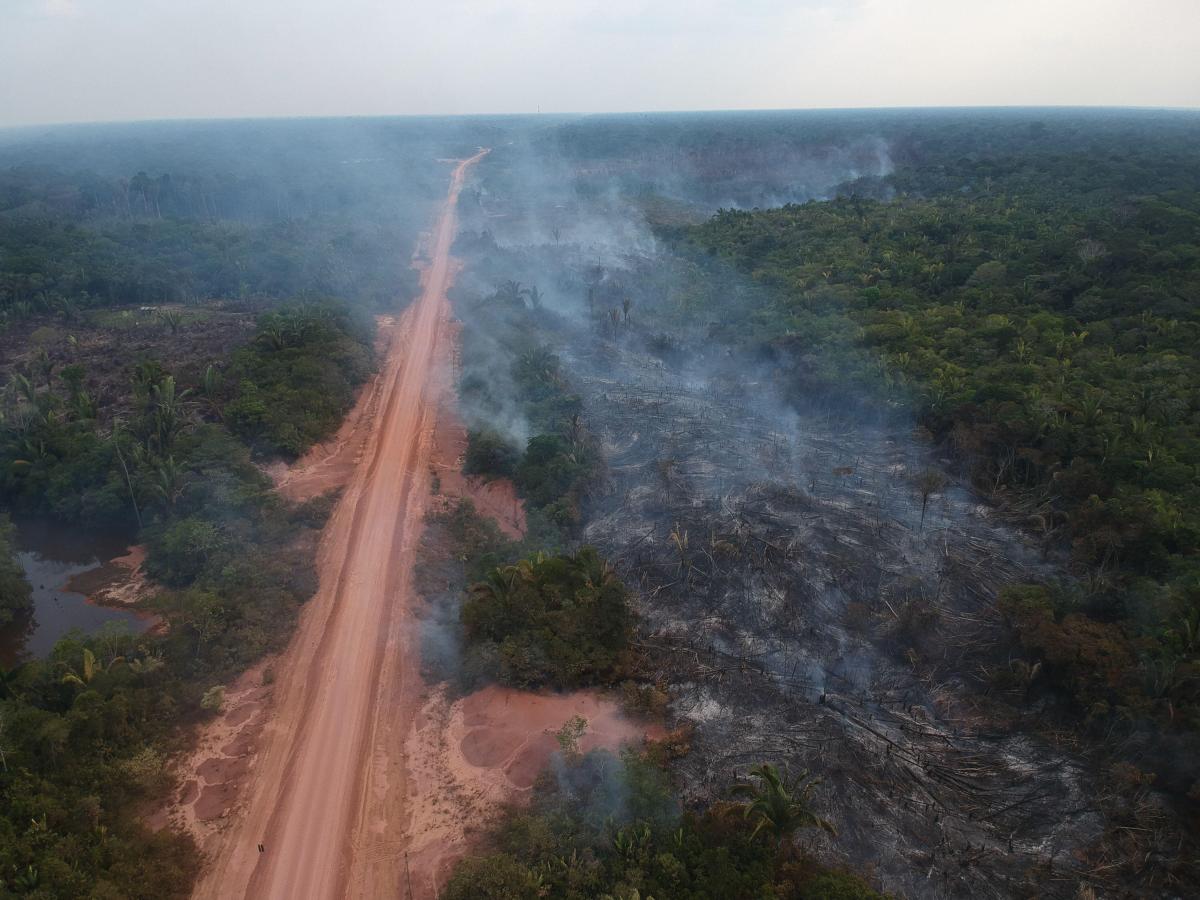
The reconstruction of Amazon’s BR-319 highway in Brazil, connecting the capital Manaus in central Amazonia to the southern edge of the forest, Porto Velho, is an ambitious and controversial infrastructure project, supported by many politicians and organisations, and a possible catalyst to further social and environmental degradation in the region.

The BR-319 highway project could result in increased illegal logging, violence, violations of indigenous rights, and catastrophic consequences to local communities and the environment, including irreversible deforestation, warn scientists.

Officially inaugurated in March 1976 during the era of the military dictatorship led by General Ernesto Geisel, BR-319 fell into a state of disrepair by 1980. In 2015, during Dilma Roussef’s administration, a proposal to revitalize BR-319 was put forth.

BR-319 highway, linking Manaus, Amazonas, to Porto Velho, Rondônia. Image: Google Maps

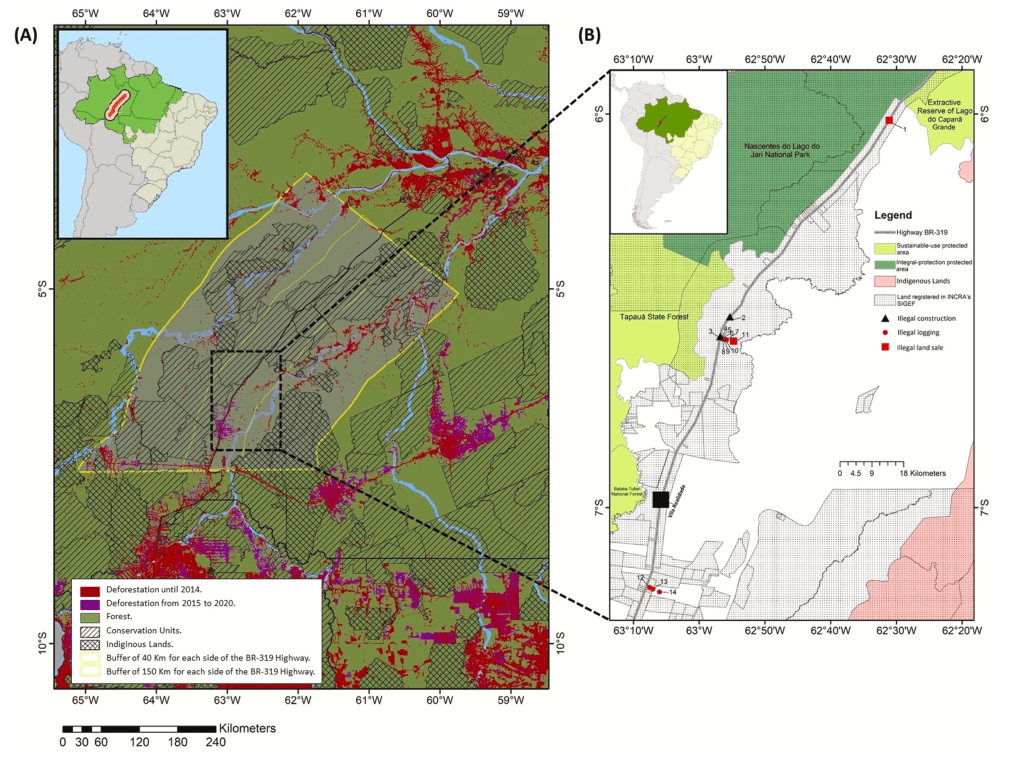
BR-319 highway, a stretch of 885.9 km, serves as an unguarded gateway to illicit side roads in areas with a high density of indigenous territories, legally designated reserves, and protected conservation areas. This accessibility grants illegal miners, loggers, settlers, and land invaders entry into untouched forest.

According to a study by scientists, Lucas Ferrante and Philip Fearnside, the reconstruction of BR-319 and the building of planned connecting roads would act as spearheads for deforestation and forest degradation in the western portion of the Brazilian Amazon.

“BR-319 highway cuts through one of the most preserved blocks of the forest, where it contains an enormous stock of carbon. This project is a threat to 63 indigenous lands and 18,000 indigenous people, not to mention the environment and biodiversity”, mentioned Ferrante.

(A) Deforestation along BR-319 highway from 1988 to 2020 (PRODES data). Deforestation in red represents cumulative deforestation from 1988 to 2014 before the highway “maintenance” program began. Deforestation in purple represents cumulative deforestation from 2015 to 2020 (i.e., during the “maintenance” program). (B) Points with land grabbing, illegal logging, illegal mineral prospecting and illegal land sales observed on BR-319 highway. The inset map of South America shows Brazil’s “Amazon Biome” region in green, Highway BR319 as a black line, and the area of the larger map as a red rectangle. Image provided by researcher Lucas Ferrante.

In the Brazilian Amazon, a staggering 94% of deforestation happened in the vicinity of both official and native roads, vividly illustrating how highways are significant catalysts of deforestation.

A study by Ferrante and Fearnside suggests that BR-319 and its proposed planned side-roads will lead to a deforestation surge of over 1,200% in the region spanning from the highway to Brazil’s border with Peru, primarily in the central Amazon.

The Amazon rainforest plays a vital role in the regional and global climate system, acting as a carbon reservoir, aids in the dispersion of trace gases and aerosols, and is a crucial part of the water cycle. Its contribution of moisture to other regions is instrumental for maintaining hydrological stability on both regional and global scales.

Justifications

The primary justifications presented by the current government for repaving BR-319 highway involve improving access to healthcare and education in the region, in addition to addressing national security concerns.

“The highway actually increases disparities in public health, which also demystifies the justification for bringing healthcare to municipalities,” explained Ferrante.

According to Ferrante and Fearnside, the road is not a priority for “national security” because it is far from Brazil’s borders. This information was announced in 2012 by the Brazilian Army’s commander for Amazonia and not mentioned anywhere in the Brazilian military’s 2008 National Strategy for Defense.

While scientists have issued warnings about the potential adverse outcomes this project could have on the region, Brazil’s president, Luiz Inácio Lula da Silva, continues to view it as a top priority.

In June 2022, prior to his presidential election, Lula emphasised the significance of the highway for the economies of both Amazonas and Rondônia.

Last month, Brazil’s transport minister, Renan Filho, went as far as proposing the utilisation of the ‘Fundo Amazonia’ to finance the reconstruction of BR-319, which he dubbed as “the most environmentally friendly roadway on the planet.”

Scientists Expose Negative Impact

Unpaved illegal side road branching off BR-319. Photograph: The Mura Indigenous People

The potential consequences of reconstructing the BR-319 highway, including the risk of deforestation, could affect an area exceeding 300,000 square km within the Amazon, surpassing the size of São Paulo state, according to the result of a study conducted jointly by the CPI (Climate Policy Initiative)/PUC-Rio and the Amazônia 2030 project.

The researchers concluded that BR-319 highway’s impact is anticipated to affect a population of approximately 320,000 individuals in nine municipalities. Within the area of influence of BR-319 are also 49 indigenous territories, 49 conservation zones, and 140,000 square kilometers of publicly owned forests without designated purposes.

In his latest study, Fearnside revealed that by 2100, the reconstruction of BR-319 highway would increase deforestation not only around the highway, but also in the regions with roads directly connected to BR-319, by a staggering 60% in relation to deforestation in the projected scenario without reconstruction.

Amazonas road network connecting to BR-319 includes federal highways BR-174, BR-230, BR-174 and state highways AM-254 and AM-354.

There are additional planned projects to build highways connecting to BR-319, including AM-366, AM-360, AM-343 and AM-356. Some of these highways will reach one the most preserved areas in the Amazon, known as the “Trans-Purus” region.

The BR-319 highway reconstruction project is deficient in two essential aspects mandated by the law: firstly, it lacks an economic feasibility study, known as the EVTEA, as stipulated by Law 5917/1973. Secondly, it has failed to conduct the necessary consultations with indigenous communities, as required both by International Labour Organisation (ILO) Convention 169 and Brazilian law 10,088/2019.

Based on Ferrante’s assertion, supported by his research highlighted in the Journal of Racial and Ethnic Health Disparities,

“The deforestation occurring along the central stretch of the BR-319 highway has resulted in a rise in malaria cases by 400%. This serves as an indicator, underscoring the potential for environmental degradation driven by the BR-319 highway to contribute to the emergence of a new pandemic.”

The reopening of this highway would also enable agribusiness expansion into new territories, including activities such as cattle farming, soybean and palm oil cultivation, the expansion of monoculture for large-scale biofuel production, as well as meeting the needs of fossil fuel companies, hydroelectric dams, mining operations, and other industries.

Unpaved illegal side road and improvised bridge, branching off BR-319. Photograph: The Mura Indigenous People

Ferrante calls attention to the latest attempt in dismantling Brazil’s environmental agenda and how it may affect the area surrounding BR-319 highway:

“The recent changes made by the National Congress during Lula’s administration, which involved the reduction of environmental protection laws and the relocation of CAR (Brazil’s National Environmental Registry of Rural Properties) from the environment ministry, could lead to a further surge in deforestation within the BR-319 highway area. This initiative lacks the essential governance and environmental and economic viability required for the project.”

Ferrante delivers a final message to Lula’s government:

“Lula’s administration has consistently lacked a positive environmental track record and has more recently indicated its backing for the BR-319 highway reconstruction initiative. It is essential that the government reevaluates this unviable project and takes into consideration the advice of experts and the findings of scientific research.”

Article published in The Ecologist: https://theecologist.org/2023/sep/27/amazons-route-deforestation

Article published in The Canary: https://www.thecanary.co/global/world-analysis/2023/09/27/br-319-amazon-deforestation/

Brazil: The Land of Impunity

Monica Piccinini

3 June 2021

“Impunity is safe when complicity is general”, once said Mariano José Pereira da Fonseca, Marquis of Maricá (1773-1848).

Visiting my family in the south of Brazil in my early teenage years was always an eventful trip, as I had the opportunity to spend time with my cousins and at the same time I had the freedom to go out with them without being questioned and monitored by my parents. My cousins had a very well established circle of friends; the children of families with influence, power and wealth.

One day, I was told that one of their friends had committed a terrible crime; killing his mother! I was in a state of shock and horror. His parents had been recently separated and his mother was known to be parading town with younger boyfriends, which made him extremely embarrassed. We were then told he had left town, only to return a few months later as if nothing had happened. No one ever questioned him nor mentioned the event. This is the very first time I realised that there were two different set of rules in Brazil, one for the powerful and wealthy, the other one for the remainder of the population. I soon learned the name for it: impunity!

Brazil is known for being a friendly and hospitable country.  That aspect of the culture also extends to idolising and accommodating criminals from all over the world, no exception, including former Nazis like the “Angel of Death”, Josef Mengele and Franz Stangl; the infamous English criminal who helped plan and carry out the Great Train Robbery of 1963, Ronnie Biggs; a convicted fugitive Italian drug lord, Rocco Morabito, recently arrested in Brazil; one of the most important members of “Cosa Nostra”, Tommaso Buscetta; amongst many others.

It is worth pointing out that international criminals are a minority in Brazil, as the country is best known to be the land of impunity, a “safe heaven” for all types of local criminal activities committed by “businessmen”, politicians, the police, terrorists and drug lords.

“Corruption is not a Brazilian invention, but impunity is something very much ours”, once said TV presenter Jô Soares.

Corruption, violence and impunity are interconnected and run through every part of Brazilian society. Corruption leads to violence and impunity, an infectious disease affecting the most powerful in the country.

Published at Portal Brasil Empresarial, there are a few examples of violence, the fight for power, money, and impunity that has run through Brazilian politics for a very long time.

In June 1967, deputies Nelson Carneiro and Estácio Souto Maior, father of pilot Nelson Piquet, drew their weapons and exchanged fire in the Chamber of Deputies. With a .38 caliber revolver, Nelson Carneiro shot Estácio Souto Maior, who despite being wounded, managed to retaliate.

Four years earlier, on December 4, 1963, senator Arnon de Mello, father of the current senator and former president Fernando Collor de Mello, shot at senator Silvestre Péricles, who laid down on the ground and dodged the shots. One of the shots hit senator José Kairala, who died hours later. Fernando Collor’s father reacted to the threats, and during a speech in the Senate, he shot Péricles Silvestre.

In 1929, when the Federal Chamber was still headquartered in Rio de Janeiro, a discussion between deputies Sousa Filho and Simões Lopes resulted in death. Simões Lopes, who was armed, fired two shots at Sousa Filho, who died on the spot.

In all three occasions, all those involved were acquitted and were never held to account for their actions.

Crime-solving rates in Brazil are one of the lowest in the world. The country has loose criminal laws with soft penalties being applied to serious crimes, including incongruous criminal procedural legislation, which allows criminals to go free unpunished. Seven out of ten homicides are not punished in Brazil.

“An absolutely inefficient criminal law, unable to reach anyone who earns more than five minimum wages, has led us to build a country of rich offenders, a country in which people live on bid rigging, active corruption, passive corruption, embezzlement, money laundering. This was no accident. It spreads across the country”, said Luís Roberto Barroso, a Brazilian law professor, jurist and current Justice of the Supreme Federal Court of Brazil.

Currently there are about 500 criminal cases in the Supreme Court, criminal proceedings as well as investigations, most of them against parliamentarians, mentioned Barroso at Jornal do Comércio.

Corruption and impunity work from top down in Brazil. The current president, Jair Bolsonaro, and his family have been involved in various criminal and corruption scandals, accused of money laundering, running a paramilitary death squad, and stealing from the population. These scandals often lack scrutiny and go unpunished.

Authorities in Brazil have always been a fortunate class. The privileged forum favours certain public authorities, unlike the majority of the population, encouraging white-collar crimes, corruption, and impunity to take place.

Developed countries usually have a few positions with privileged jurisdiction, but in Brazil over 45,000 authorities have this privilege. The factors that contribute to an individual or organisation to commit a crime is highly influenced by the possibility of it being tried and convicted by a justice system.

Impunity is also present in the police force in Brazil. The recent events of Jacarezinho in Rio de Janeiro, where an operation by the Civil Police that resulted in the deaths of 25 people, including one police officer, was news across the world. The victims were suspected of criminal activities, but no proof yet has been presented.

“It’s completely unacceptable that security forces keep committing grave human rights violations such as those that occurred in Jacarezinho today against residents of the favelas, who are mostly Black and live in poverty “, said Jurema Werneck, executive director of Amnesty International Brazil.

A study called “Labyrinthine Investigations”, published by Conectas, reveals that reports of violations committed by police officers tend to be ignored and shelved. A complex bureaucratic mechanism capable of silencing victims and protecting crimes committed by police officers was identified.

“The institutions work to justify the conduct of the police officers, to avoid investigation and punishment”, said Adilson Paes de Souza, a retired Military Police Lieutenant Colonel who has a PhD from the Institute of Psychology of USP (University of São Paulo).

“The existing doctrine in the Military Police is one of militarisation and war against the enemy, and this also spills over into the Civil Police, the Public Prosecutor’s Office and the Judiciary. When the judge clear signs of torture that a detainee has suffered, the message is the following: this is the enemy, damn it, no standards and guarantees for him”, added Souza.

Brazil is like an orphan lacking protection and direction; a country being constantly fooled, beaten, controlled and exploited by ruthless greedy individuals and organisations. It has been left to fend for itself. It is bruised and traumatised. The criminals responsible are left unpunished, exempted of their heinous crimes.

Brazil’s Relationship With Violence

Monica Piccinini

19 May 2021

It was late 1970’s in the beautiful and peaceful coastal town of Praia da Costa, Southeastern Brazil, and I was on my way back home from school. I couldn’t fail to notice frantic shouting coming from a mini shopping mall about 200 meters away from where I was standing. I suddenly realised what was unfolding right in front of me, a distressed man firing his gun innumerous times at someone. In my entire life, I honestly can’t remember running as fast as I did then. This vivid memory of violence has stayed with me up to today.

Brazil is one of the most violent societies in the world!

Violence runs through Brazil’s entire history. It has become deeply engrained in the psyche of the population. A society has evolved where fear is an accepted part of every day life.

In order to understand this evolution you have to look back through time and the origins of Brazil. A culture of violence can first be seen in the young colonial period of Brazil (1540-1822), when the Portuguese Crown used violence against the indigenous people taking over their lands and imposing their white European culture and later during the period of enslavement of African peoples. This was followed by the Old Republic (1889-1930), in which the colonels used force and violence against rural populations in order to maintain political centrality and territorial unity.

Sadly the trail doesn’t stop there. A culture of violence continued in Brazil during the military dictatorship (1964-1985) with the legitimisation of state violence through persecutions, end of individual freedom, political repression, torture, exile, etc.

The troubled past has created a Brazil that has the 9th highest homicide rate in the world. Recently, the WHO published data revealing that Brazil has five times the world average of homicides.

According to data from the UN agency, deaths in Brazil reached 31.1 people per 100,000 habitants, compared to worldwide rate of 6.4 homicides for every 100,000 people. In Africa the rate is 10 deaths per 100,000, compared to just 3.3 per 100,000 in Europe.

In 2020, Brazil had the highest number of violent deaths in the world, 70,200 deaths, 12% of the total worldwide, surpassing violence in India, Syria, Nigeria and Venezuela.

This incredible headline number hides the suffering of many social groups within Brazil that face violence on an incredible scale. According to the Small Arms Survey, Brazil has the third highest number of deaths of women in the world. In 2018, a woman was murdered every two hours in the country.

A staggering 71.5% of people murdered in Brazil are black or brown, which evidences the correlation between violent death and high levels of social, race and economic inequality.

Children are also victims of violence. Between 2010 and 2020, at least 103,149 children and adolescent aged up to 19 years old died in Brazil, victims of aggression, according to a survey released by SBP, the Brazilian Society of Pediatrics. 2,000 of them were under 4 years old.

The list of affected groups within society goes on and on.  Probably the longest suffering group being the indigenous population of Brazil, who have faced violence from the very first day of colonial settlers landing on Brazil’s shores.

“In cities like Rio de Janeiro, gang violence, the excessive use of force by the State, a system of Justice corrupt criminality, the militarisation of certain areas and the social accumulation of violence – where violence generates more violence – is what marks the extremely high homicide rates”, according to Small Arms Survey.

We can’t deny the fact that violence in Brazil is chronic, a legacy that has become a systemic problem. One has to question the reasons for so much violence in one single country. But they are countless, complex and interconnected. 

Overall, the country has a flawed education system, a health system in desperate need of investment, serious issues of social exclusion, extreme racism, inequality, corrupt institutions, a failed judiciary system unable to maintain a rigorous protocol of punishment for violent crimes and unscrupulous and corrupt governance.

It has ineffective drug-fighting policies, serious arms and human trafficking issues and high circulation of weapons. Firearms accounted to 71% of crimes committed against the lives of Brazilians. From 1980 to 2016, nearly one million Brazilians died by gunshot wounds, according to Atlas of Violence.

With the levels of violence seen annually, it comes as no surprise that Brazil has one of the largest prison populations in the world, where more than 40% of prisoners have not yet been put on trial.

Sadly, there’s no quick fix to the issue of violence in Brazil. Violence is simply the symptom of so many deep problems. It will likely take generations of committed Brazilians to heal the patient. The support of the populist president, Jair Bolsonaro, with his radical and divisive policies, suggests this generation will not be one to start the healing process.