BR-319: Amazon’s Route to Deforestation

Monica Piccinini

27 September 2023

The reconstruction of Amazon’s BR-319 highway in Brazil, connecting the capital Manaus in central Amazonia to the southern edge of the forest, Porto Velho, is an ambitious and controversial infrastructure project, supported by many politicians and organisations, and a possible catalyst to further social and environmental degradation in the region.

The BR-319 highway project could result in increased illegal logging, violence, violations of indigenous rights, and catastrophic consequences to local communities and the environment, including irreversible deforestation, warn scientists.

Officially inaugurated in March 1976 during the era of the military dictatorship led by General Ernesto Geisel, BR-319 fell into a state of disrepair by 1980. In 2015, during Dilma Roussef’s administration, a proposal to revitalize BR-319 was put forth.

BR-319 highway, linking Manaus, Amazonas, to Porto Velho, Rondônia. Image: Google Maps

BR-319 highway, a stretch of 885.9 km, serves as an unguarded gateway to illicit side roads in areas with a high density of indigenous territories, legally designated reserves, and protected conservation areas. This accessibility grants illegal miners, loggers, settlers, and land invaders entry into untouched forest.

According to a study by scientists, Lucas Ferrante and Philip Fearnside, the reconstruction of BR-319 and the building of planned connecting roads would act as spearheads for deforestation and forest degradation in the western portion of the Brazilian Amazon.

“BR-319 highway cuts through one of the most preserved blocks of the forest, where it contains an enormous stock of carbon. This project is a threat to 63 indigenous lands and 18,000 indigenous people, not to mention the environment and biodiversity”, mentioned Ferrante.
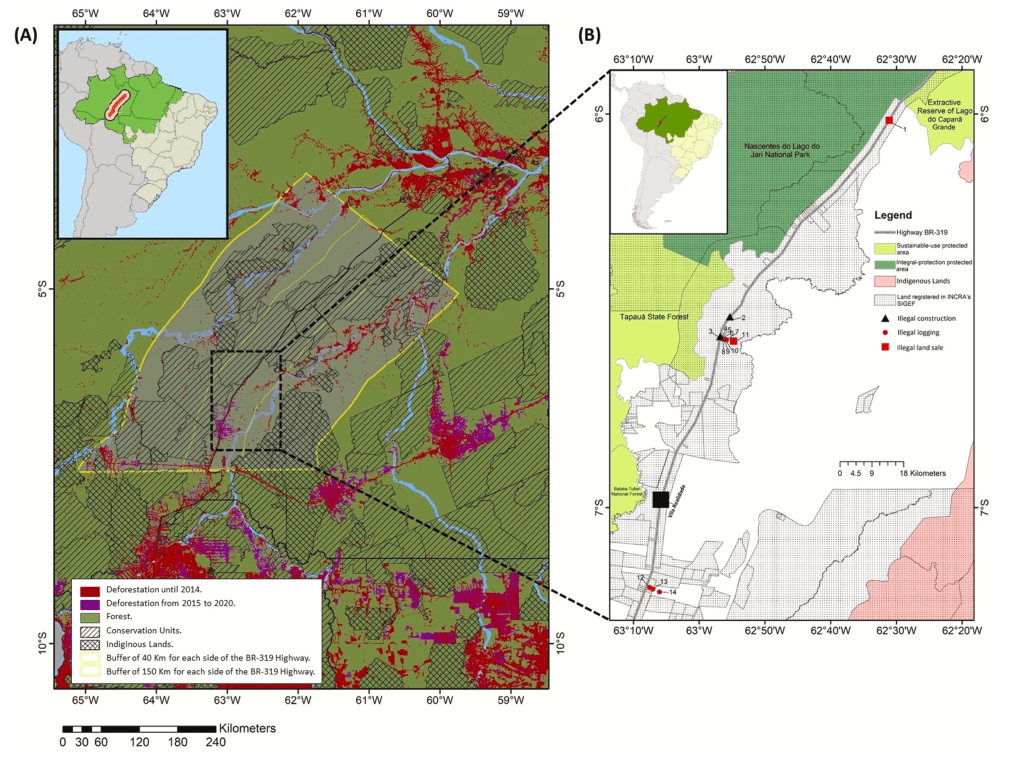
(A) Deforestation along BR-319 highway from 1988 to 2020 (PRODES data). Deforestation in red represents cumulative deforestation from 1988 to 2014 before the highway “maintenance” program began. Deforestation in purple represents cumulative deforestation from 2015 to 2020 (i.e., during the “maintenance” program). (B) Points with land grabbing, illegal logging, illegal mineral prospecting and illegal land sales observed on BR-319 highway. The inset map of South America shows Brazil’s “Amazon Biome” region in green, Highway BR319 as a black line, and the area of the larger map as a red rectangle. Image provided by researcher Lucas Ferrante.

In the Brazilian Amazon, a staggering 94% of deforestation happened in the vicinity of both official and native roads, vividly illustrating how highways are significant catalysts of deforestation.

A study by Ferrante and Fearnside suggests that BR-319 and its proposed planned side-roads will lead to a deforestation surge of over 1,200% in the region spanning from the highway to Brazil’s border with Peru, primarily in the central Amazon.

The Amazon rainforest plays a vital role in the regional and global climate system, acting as a carbon reservoir, aids in the dispersion of trace gases and aerosols, and is a crucial part of the water cycle. Its contribution of moisture to other regions is instrumental for maintaining hydrological stability on both regional and global scales.

Justifications

The primary justifications presented by the current government for repaving BR-319 highway involve improving access to healthcare and education in the region, in addition to addressing national security concerns.

“The highway actually increases disparities in public health, which also demystifies the justification for bringing healthcare to municipalities,” explained Ferrante.

According to Ferrante and Fearnside, the road is not a priority for “national security” because it is far from Brazil’s borders. This information was announced in 2012 by the Brazilian Army’s commander for Amazonia and not mentioned anywhere in the Brazilian military’s 2008 National Strategy for Defense.

While scientists have issued warnings about the potential adverse outcomes this project could have on the region, Brazil’s president, Luiz Inácio Lula da Silva, continues to view it as a top priority.

In June 2022, prior to his presidential election, Lula emphasised the significance of the highway for the economies of both Amazonas and Rondônia.

Last month, Brazil’s transport minister, Renan Filho, went as far as proposing the utilisation of the ‘Fundo Amazonia’ to finance the reconstruction of BR-319, which he dubbed as “the most environmentally friendly roadway on the planet.”

Scientists Expose Negative Impact

Unpaved illegal side road branching off BR-319. Photograph: The Mura Indigenous People

The potential consequences of reconstructing the BR-319 highway, including the risk of deforestation, could affect an area exceeding 300,000 square km within the Amazon, surpassing the size of São Paulo state, according to the result of a study conducted jointly by the CPI (Climate Policy Initiative)/PUC-Rio and the Amazônia 2030 project.

The researchers concluded that BR-319 highway’s impact is anticipated to affect a population of approximately 320,000 individuals in nine municipalities. Within the area of influence of BR-319 are also 49 indigenous territories, 49 conservation zones, and 140,000 square kilometers of publicly owned forests without designated purposes.

In his latest study, Fearnside revealed that by 2100, the reconstruction of BR-319 highway would increase deforestation not only around the highway, but also in the regions with roads directly connected to BR-319, by a staggering 60% in relation to deforestation in the projected scenario without reconstruction.

Amazonas road network connecting to BR-319 includes federal highways BR-174, BR-230, BR-174 and state highways AM-254 and AM-354.

There are additional planned projects to build highways connecting to BR-319, including AM-366, AM-360, AM-343 and AM-356. Some of these highways will reach one the most preserved areas in the Amazon, known as the “Trans-Purus” region.

The BR-319 highway reconstruction project is deficient in two essential aspects mandated by the law: firstly, it lacks an economic feasibility study, known as the EVTEA, as stipulated by Law 5917/1973. Secondly, it has failed to conduct the necessary consultations with indigenous communities, as required both by International Labour Organisation (ILO) Convention 169 and Brazilian law 10,088/2019.

Based on Ferrante’s assertion, supported by his research highlighted in the Journal of Racial and Ethnic Health Disparities,

“The deforestation occurring along the central stretch of the BR-319 highway has resulted in a rise in malaria cases by 400%. This serves as an indicator, underscoring the potential for environmental degradation driven by the BR-319 highway to contribute to the emergence of a new pandemic.”

The reopening of this highway would also enable agribusiness expansion into new territories, including activities such as cattle farming, soybean and palm oil cultivation, the expansion of monoculture for large-scale biofuel production, as well as meeting the needs of fossil fuel companies, hydroelectric dams, mining operations, and other industries.

Unpaved illegal side road and improvised bridge, branching off BR-319. Photograph: The Mura Indigenous People

Ferrante calls attention to the latest attempt in dismantling Brazil’s environmental agenda and how it may affect the area surrounding BR-319 highway:

“The recent changes made by the National Congress during Lula’s administration, which involved the reduction of environmental protection laws and the relocation of CAR (Brazil’s National Environmental Registry of Rural Properties) from the environment ministry, could lead to a further surge in deforestation within the BR-319 highway area. This initiative lacks the essential governance and environmental and economic viability required for the project.”

Ferrante delivers a final message to Lula’s government:

“Lula’s administration has consistently lacked a positive environmental track record and has more recently indicated its backing for the BR-319 highway reconstruction initiative. It is essential that the government reevaluates this unviable project and takes into consideration the advice of experts and the findings of scientific research.”

Article published in The Ecologist: https://theecologist.org/2023/sep/27/amazons-route-deforestation

Article published in The Canary: https://www.thecanary.co/global/world-analysis/2023/09/27/br-319-amazon-deforestation/


Pesticides and the Climate Crisis: Fossil Fuel Dependency Exacerbates Impact

Monica Piccinini

5 July 2023

In the quest to understand and combat climate change, our attention is often drawn to the colossal emissions produced by fossil fuels. However, beneath the surface lies another insidious contributor to our warming planet: pesticides.

While these chemicals have long been associated with their harmful effects on ecosystems and human health, a lesser-known truth is their direct link to the fossil fuel industry.

As we delve into the hidden world of greenhouse emissions, a startling revelation emerges – the use of pesticides has become an accomplice in perpetuating the climate crisis, casting a shadow over our efforts to create a sustainable future.

Globally, food systems account for over one third of all greenhouse gas emissions, which includes agriculture and pesticide use.

Scientific evidence suggests that the use of pesticides not only plays a significant role in the generation of greenhouse gas emissions, but also heightens the susceptibility of our agricultural systems to the impacts of climate change. However, the potential of pesticide reduction as a viable solution to the climate crisis has been widely overlooked.

Doug Parr, chief scientist and policy director at Greenpeace UK said:

“Public understanding of the role that fossil fuel companies have played in driving the climate emergency has increased hugely in the last few years, and now we know that we need to add the pesticide industry to the list of climate polluters. Reducing the use of pesticides would be at least a double in addressing nature decline and climate crisis.”

According to a report by PAN UK, Pesticide Action Network, and The Pesticide Collaboration, titled “Pesticides and The Climate Crisis: A Vicious Cycle”, 99% of all synthetic chemicals, including pesticides, are derived from fossil fuels.

The world’s largest oil and gas companies, including ExxonMobil, Shell and ChevronPhillips Chemical, produce pesticides or their chemical ingredients.

Some pesticides, such as sulfuryl fluoride, are powerful greenhouse gases, having nearly 5,000 times the potency of carbon dioxide.

Photo: ID 46018102 © Ig0rzDreamstime.com

Pesticides have a significant impact on the climate emergency throughout their lifecycle, involving various stages from manufacturing to disposal. Here are some ways pesticides exacerbate the climate crisis:

Manufacturing: The production of pesticides involves energy-intensive processes that often rely on fossil fuels. From the extraction of raw materials to the synthesis of active ingredients, greenhouse gas emissions are generated, contributing to climate change.

Packaging: Pesticides are typically packaged in materials derived from fossil fuels, such as plastic containers. The production and disposal of these packaging materials further contribute to carbon emissions and environmental pollution.

Transportation: Pesticides are often transported over long distances from manufacturing facilities to distribution centres and end-users. The use of fossil fuel-powered vehicles for transportation adds to the carbon footprint associated with pesticides.

Application: During pesticide application, emissions occur due to the use of mechanised equipment and vehicles. Additionally, some pesticide formulations release volatile organic compounds (VOCs) into the atmosphere, contributing to air pollution, climate change and impacting our health by damaging the central nervous system and other organs, some causing cancer.

Environmental Degradation: Pesticides can have detrimental effects on ecosystems, leading to biodiversity loss and disruptions in natural processes. This ecological damage can further impact the climate crisis by destabilising ecosystems that help regulate the planet’s climate, such as forests and wetlands.

Disposal: Improper disposal of pesticides, such as through incineration or landfilling, can release harmful chemicals into the environment. Inefficient disposal methods can contribute to soil and water pollution, affecting ecosystems and potentially releasing greenhouse gases like methane.

Overall, the entire lifecycle of pesticides, from manufacturing and packaging to transportation, application, and disposal, contributes to the climate emergency through various emissions, environmental degradation, and pollution. Understanding these impacts is crucial for developing sustainable alternatives and practices in agriculture and pest management.

Agriculture

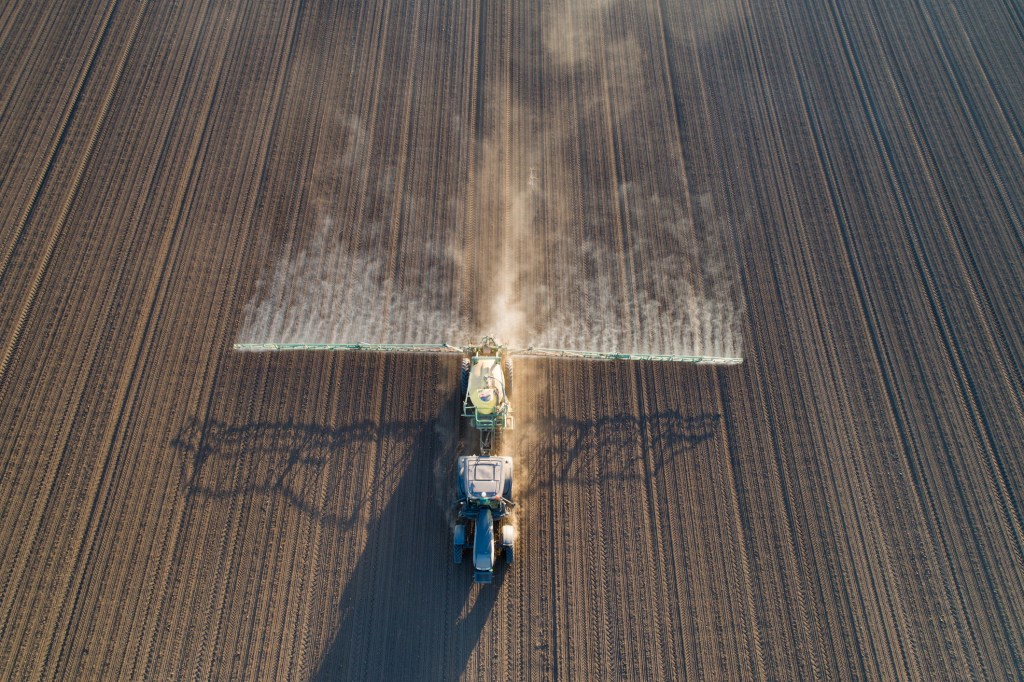
Aerial image of tractor working in field
Photo: ID 172643586 © Jevtic | Dreamstime.com

With increasing temperatures, there is a corresponding surge in pest populations, leading to decreased crop resilience. Consequently, a greater quantity of pesticides becomes necessary.

The heightened reliance on pesticides subsequently fosters the proliferation of resistance among insects and weeds towards herbicides and insecticides. Moreover, it perpetuates the detrimental impact on human health and the environment.

The study conducted by PAN UK, Pesticide Action Network, and The Pesticide Collaboration, “Pesticides and the Climate Crisis: A Vicious Cycle”, highlights the anticipated outcome of climate change on farming practices.

It suggests that farmers may resort to intensifying the use of synthetic pesticides, unless we initiate a shift towards more sustainable forms of agriculture, embracing smaller-scale and diversified agroecological methods.

The study also outlines how agricultural pests will respond to climate change, including crop resilience decline, the shifting of pest populations and reach, impacts on pests’ natural enemies, the increase in weeds and the rise in regionalism and unpredictability.

Commodity crops, such as maize, soybeans, rice, cotton and wheat, are among those with the greatest use of pesticides and fertilisers globally.

Between 2005 and 2020, the global use of pesticides witnessed a notable upswing of 17%. However, the application of herbicides experienced an even more substantial surge of 34%.

China, the United States, Argentina, Thailand and Brazil emerged as the leading consumers of pesticides, contributing to these escalating figures.

Nevertheless, it’s important to note that these statistics likely underestimate the true extent of pesticide use due to various factors, such as underreporting and unrecorded applications. For instance, the inclusion of pesticides used as seed treatments is lacking in the UN Food and Agriculture database, thereby contributing to the underestimation.

In 2020, the UK used over 13,018 tonnes of pesticide active ingredients. One of the most widely used active substances was the herbicide glyphosate.

A total of 2,602 tonnes of glyphosate was sprayed on all UK crops during 2020, a 16% rise over four years, generating 81,410 tonnes of CO2, equivalent to more than 75,000 flights from London to Sydney. This figure does not include the large amount that is used in other areas, such as towns, cities and private gardens.

Josie Cohen, head of policy and campaigns at PAN UK, said:

“The government urgently needs to take a joined-up approach to tackling the climate and nature crisis, as they go hand-in-hand. The solutions to these emergencies must not undermine each other. The UK’s net zero target cannot be achieved without transforming agriculture including a major reduction in pesticide use, which will also bring huge benefits to nature and biodiversity.”

Farming methods that avoid synthetic pesticides, such as agroecological systems or diversified organic farming, offer multiple benefits in terms of reducing greenhouse gas emissions and enhancing carbon sequestration.

Moreover, these approaches improve the ability of farms to withstand climate change and combat pests by bolstering various ecosystem services. These services include improving water quality and availability for crops, enhancing soil health, boosting crop resilience against pests and diseases, and fostering increased populations of pollinators and natural pest control agents.

In light of the climate crisis and its far-reaching consequences on various aspects of our lives and the environment, it has become increasingly imperative to shift away from the prevalent chemical-intensive agricultural practices and embrace a biological approach.

This transition is crucial to safeguard our wellbeing and survival, as it directly influences our health, soil quality, air and water purity, food production, and the delicate balance of biodiversity.

Using Science to Block a Road to Ruin – The Amazon BR-319

Monica Piccinini

23 Feb 2023

According to two prominent scientists, Lucas Ferrante and Philip Fearnside, and the result of their studies, the ambitious reconstruction of the BR-319 highway, linking the capital Manaus in central Amazonia to the southern edge of the forest, Porto Velho, might be a catalyst to rampant deforestation with irreversible and catastrophic consequences to the rainforest.

BR-319, a stretch of 830 km, connecting the ‘arc of deforestation’, was inaugurated in March 1976, during the military dictatorship, under the government of General Ernesto Geisel, and abandoned in 1988. In 2015, Dilma Roussef’s government proposed reopening BR-319.

“The BR-319 highway cuts through one of the most preserved blocks of the forest, where it contains an enormous stock of carbon. This project is a threat to 63 indigenous lands and 18,000 indigenous people, not to mention the environment and biodiversity”, mentioned Lucas Ferrante, environmental scientist.

Brazilian Amazonia and Highway BR-319 (Manaus-Porto Velho). Source: map produced by scientist Lucas Ferrante in the ArcGIS software, deforestation data from INPE 2021.

Despite the warnings from scientists about the negative consequences this project may bring to the region, it’s considered a priority for Brazil’s new president, Luiz Inácio Lula da Silva. During an interview with a radio station in Manaus last September, he mentioned:

“We do not want to transform the state of Amazonas into a sanctuary for humanity. Millions of people live in the state of Amazonas. We have to give these people the right to civility, the right to live well, the right to come and go. It is entirely possible for you to work the climate issue correctly, work the environmental issue correctly and provide the necessary security so that you can build good roads that can connect the state of Amazonas with the rest of the country.”

However, according to Lucas Ferrante, the newly elected president of Brazil, Luiz Inácio Lula da Silva, only replicates a political boast that it is possible to establish territorial governance.

“We need to make some things clear, this is just political rhetoric, a bravado that does not consolidate. According to a study we published at Land Use Policy, the BR-319 highway area had a deforestation rate of up to 2.6 times higher than the deforestation rates observed in other parts of the Amazon, i.e., the state of Amazonas is no longer a isolated sanctuary, yet another area increasingly occupied by criminal organisations that encourage land grabbing and deforestation”, argues Ferrante.

“In addition, people have always had the right to come and go by other modes of transport, but they do not have the right to collapse one of the most biodiverse blocks of the rainforest, which is home to a wide variety of native peoples and which consequently, if deforested, could collapse the global climate,” added Ferrante.

Scientific Studies Raising Red Flags

Lucas Ferrante, environmental scientist, and Philip Fearnside, a biologist at Brazil’s National Institute of Amazonian Research (INPA) and Nobel Peace Prize winner for climate research (2007), both published various scientific studies highlighting the negative effects of this project on the Amazon rainforest.

The highway is a free path to illegal side roads in areas of large concentration of indigenous land, legal reserves and conservation units, giving illegal miners, loggers, squatters and land grabbers access to untouched forest and public lands.

Illegal timber seized by IBAMA agents along the BR-319 highway. Photo by scientist Lucas Ferrante.

As a consequence, these invaders are bringing a wave of destruction, instability, pollution, violence, disease, decay and death to the traditional communities, indigenous people and the environment around them.

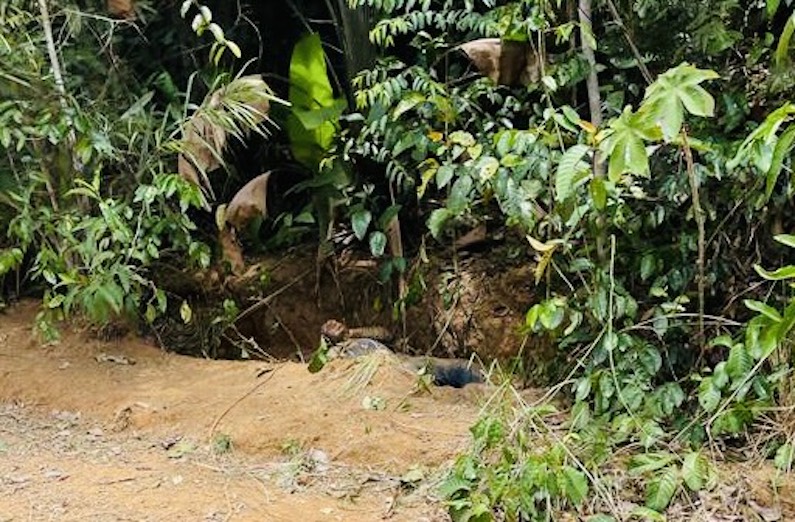
In October 2021, a Washington Post journalist, Terrence McCoy and scientist Lucas Ferrante, set themselves on a journey across the length of BR-319 highway, showing the path of destruction and devastation caused by illegal deforestation, land grabbing, mining, fires, violence and even killings. The burnt body of a dead man was found along the way after he had reported land-grabbing activities in the area to the federal police.

Photo of a burnt dead body around BR-319. Photo by scientist Lucas Ferrante.

In 2017, buildings belonging to IBAMA (Institute for the Environment and Renewable Natural Resources) and the Chico Mendes Institute for Biodiversity Conservation (ICMBio) in Humaitá were set on fire by miners and remain inoperative.

It is estimated that BR-319 and planned side roads will generate an increase of the deforested area by more than 1,200% between the highway and Brazil’s border with Peru. This projection relates to central Amazon alone, if extended to Peru, the numbers would increase significantly.

According to a scientific article published in the journal Land Use Policy by both Ferrante and Fearnside, despite environmental legislation requiring an environmental impact assessment (EIA) for one of the stretches of the highway, the project was given the green light from a judge, who authorised it without an EIA.

Additionally, the reconstruction of the highway lacks an economic viability study, EVTEA, required by law 5917/1973, as well as consultation with indigenous people required by International Labour Organisation (ILO) Convention 169 and by Brazilian law 10,088/2019.

The main transport route used in the region has always been via the Madeira River, making it a cheaper, cleaner and safer way to transport goods.

Fernanda Meirelles, executive secretary of the BR-319 Observatory, commented during our interview earlier this month:

“The LP, Preliminary License, was issued without consultations with the indigenous people and traditional communities, an important stage of the process that was not respected. We do not know whether consultations will be carried out in this current government or whether an intervention by the MPF (Federal Public Ministry) will be necessary to fullfil the obligation of consultation”,

“Public hearings were held during the pandemic, but in an inadequate way. There was no logistical support to guarantee the presence of traditional communities and indigenous people, in additional to having been held at a very inhospitable moment for any time of contrary opinion or manifestation. We even witnessed attacks suffered by researcher and scientist, Phillip Fearnside, during these public hearings”, added Meirelles.

According to data released by SEEG, the Greenhouse Gas Emissions Estimation System, between 2018 and 2019, the municipalities surrounding BR-319 highway had a staggering 16% increase in greenhouse gas emissions from land use and agriculture.

The reopening of this highway would also give agribusiness access to more land for expansion, including cattle farming, soy and palm oil plantations, monoculture expansion for large-scale biofuel production, as well as fossil fuel companies, hydroelectric dams, mining, etc.

As various studies indicate, including the ones published at Land Use Policy, and Environmental Conservation, these practices are already happening with the maintenance works of the road and would increase exponentially with the reconstruction of the BR-319 highway.

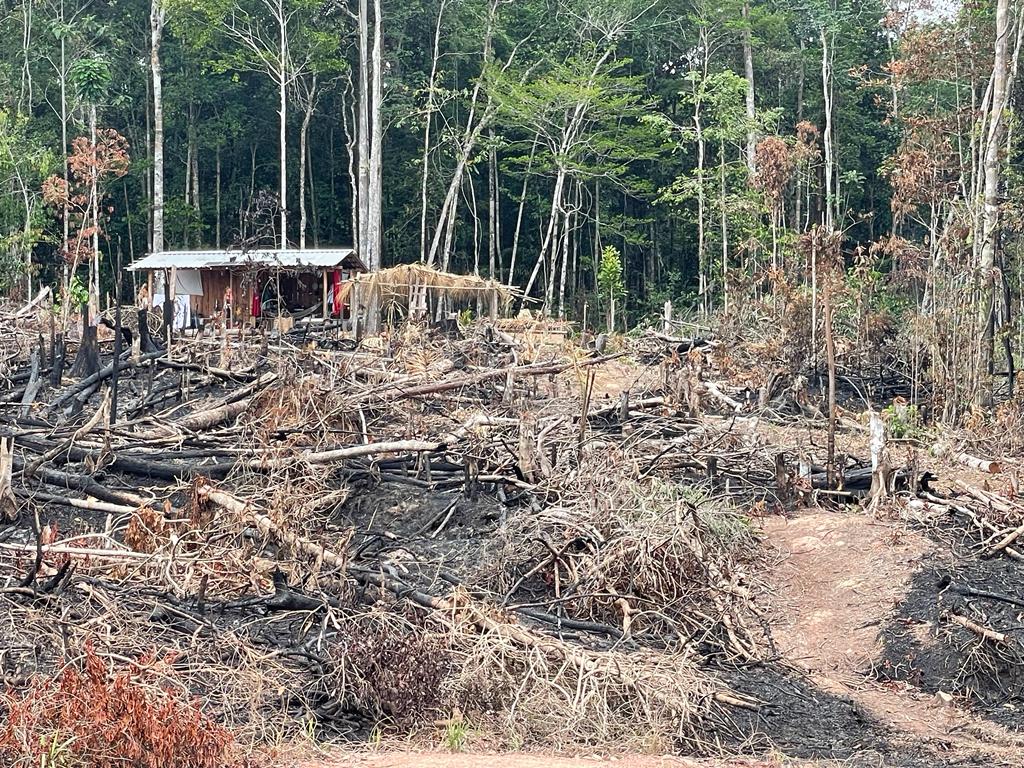
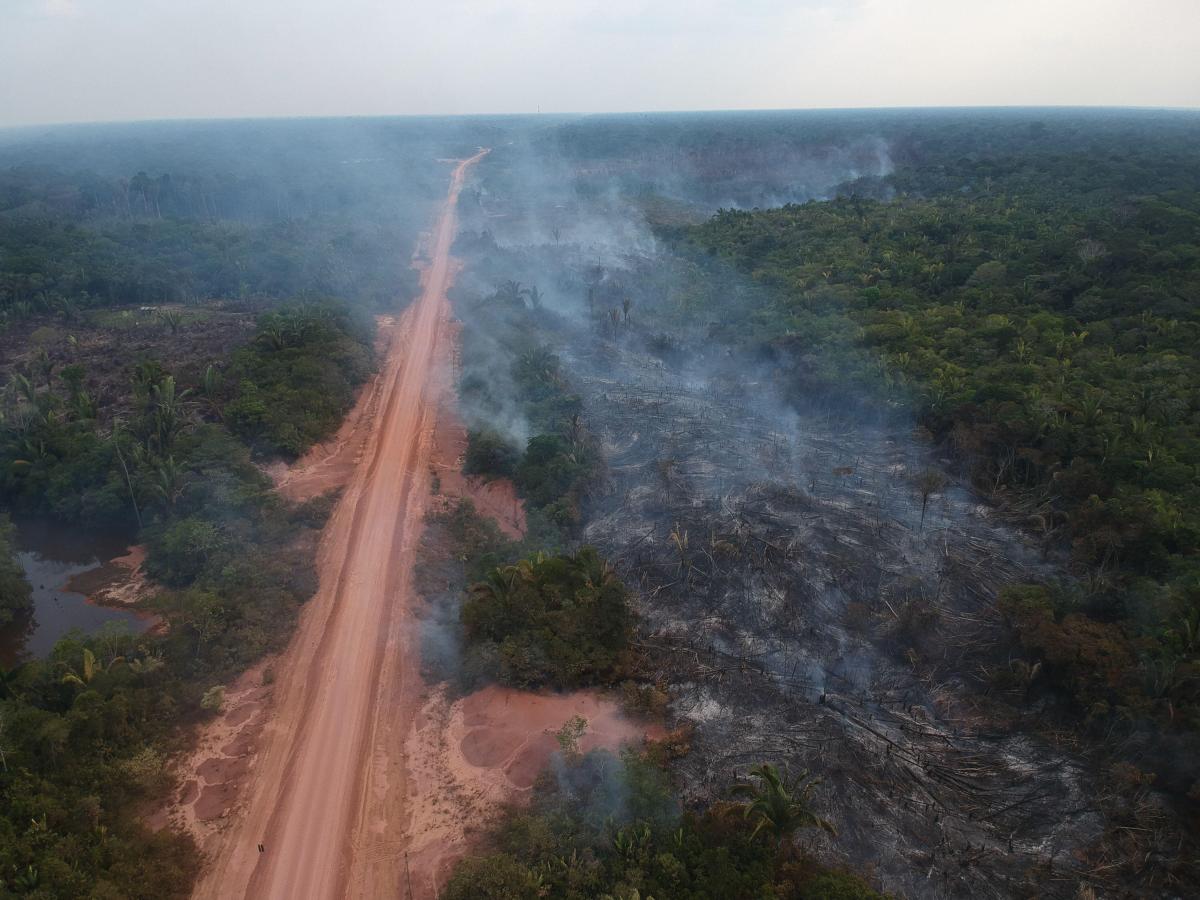
Deforested and burned area along the middle stretch of BR-319 highway. Photo by scientist Lucas Ferrante.

There’s still no information about the costs and sources of funds for this gigantic project. The same applies to a very essential monitoring system project, which was never presented.

Profiteers – All Eyes Focused on the Amazon

There are countless politicians, corporations, governmental agencies and organisations with either a hidden or visible interest in the reconstruction of BR-319 and hoping it succeeds. This project is a gateway to a heaven of natural resources waiting to be exploited and the highway will make their journey a much smoother process.

According to Fearnside, Rosneft, a giant Russian oil and gas company, with drilling rights to 16 extraction blocks located west of BR-319, approximately 35 km from the Purus River, by the Solimões Basin, would be one of the beneficiaries of the project.

Another very concerning sector is biofuel production in the Amazon. Biofuels are produced based on agricultural products, including sugar cane, corn, castor bean, palm oil and raw materials of animal origin.

According to a Global Witness report, BBF Group (Brasil Biofuels) and Agrapalma, two Brazilian palm oil (azeite de dendê) giants, are accused of various violations in the Amazon, including conflict with local communities, violent campaigns to silence indigenous communities and fraudulent land grabs.

BBF is the largest producer of palm oil in Latin America, also active in thermoelectric generation and biodiesel in the Amazon region (Acre, Amazonas, Rondônia, Roraima and Pará). The company announced that it‘s going to invest R$5 billion over the next three years in the production of biofuels, including corn ethanol. The BR-319 project would certainly facilitate their business developments in the region.

Studies coordinated by Ferrante point out that the expansion of plantations for the production of biofuels in the Amazon tends to encourage deforestation and collapse the forest, in addition to providing zoonotic jumps of viruses stored in the forest, generating a new global pandemic.

Based on scientific research, Ferrante managed to overthrow a presidential decree that released sugarcane to the Amazon, but according to him, corn and palm oil are still crops that have an enormous potential for environmental damage and to generate deforestation, demanding economic ecological zoning mainly for the BR-319 highway area.

Politicians, infrastructure companies, national and international corporations, all show great interest in this ambitious project, as the highway would be key to their business expansion.

The voice of a public figure and politician, the governor of Amazonas, Wilson Lima, would have been a great opportunity for us to understand more about this challenging project. Unfortunately, Lima did not respond to a request for an interview.

The only NGO in the region that agreed to be interviewed about the BR-319 project was IDESAM/BR-319 Observatory.

The Gordon and Betty Moore Foundation failed to respond a request for an interview.  Funbio responded, but failed to answer questions about the project.

Fundo JBS pela Amazônia mentioned that they we were unable to contribute to this matter, because the reconstruction of BR-319 had nothing to do with the fund and that this is not something that directly impacts their projects.

WWF Brasil did not have a spokesperson available to answer questions related to the project and asked that any questions be directed to BR-319 Observatory.

National and international media, politicians, corporations, governmental agencies, as well as some NGOs, seem to be reluctant to talk about the reconstruction of the BR-319 highway.

All studies so far show that this project lacks environmental governance and would be detrimental to the local communities as well as the rainforest. It also lacks an economic viability study, a monitoring system plan and consultation with the traditional and indigenous communities.

This appears to be a politically motivated plan with every president elected repeatedly making the same promise, selling the idea that the reconstruction of BR-319 highway would bring prosperity to the region, without considering that it may also bring pollution, illegal activities, violence, diseases, rampant and irreversible deforestation and destruction to the rainforest with catastrophic consequences to Brazil and the rest of the world.

If completed, this project may put in jeopardy the future and survival of the Amazon rainforest, all in the name of what they call “progress”!

Article available in Portuguese at A Escola Legal.

COP26: another Cop Out?

Monica Piccinini

21 Oct 2021

The climate scientists drum beat of concerning data continues with an increased rhythm and it is becoming clear to all but the global leaders that we are running out of time for material action.

As COP26 approaches, national leaders across the world should be galvanising and both individually and collectively evidencing real action to deliver on prior promises and commitments. Sadly, what might be expected appears to be far from the real situation.

It is very apparent that climate change can’t be addressed by a small number of nations. Global pollution and its effects have no respect for man-made sovereign borders. Possibly, for the first time in history, the world needs to truly work together for the greater good and ultimate survival. 

It’s complicated. The world needs full cooperation and commitment from the biggest polluters and the richest and most powerful nations, leaving their greed, egos and empty promises behind. In the short term, it’s those same countries that have the most to lose and need to spend the most in an altruistic manner.

It’s no coincidence that the largest economies have established themselves as powerhouses at the expense of the climate. Much of their industry depends on carbon fuels to function and importantly their infrastructure is from a time when carbon fuels were seen as the future.

So with that background and political short-termism combined, it’s no surprise that the question of climate and sustainability becomes deeply mired in protectionism, nationalism and global politics.

Brazil’s Jair Bolsonaro, China’s Xi Jiping, Russia’s Vladimir Putin and Mexico’s Andrés Manuel López Obrador are not expected to attend COP26. Japan’s Fumio Kishida may also be absent from the Summit, which is about to start in Glasglow, Scotland, at the end of this month.

According to an analysis by Carbon Brief on CO2 emissions from land use and forestry, as well as those from fossil fuels, it showed the US as the largest CO2 emitter in history, accounting to 20% of the global total, followed by China with 11%. In third place came Russia (7%), Brazil (5%) and Indonesia (4%).

There is a real sense of urgency, as the world has already used 85% of the CO2 budget that would give a 50% chance of limiting heating to 1.5C, according to Carbon Brief’s data.

According to the OECD, CO2 from the combustion of fossil fuels and biomass accounts for about 90% of total CO2 emissions and two thirds of total GHG emissions.

The top most powerful nations in the world, China and the US, are the top polluters, followed by India, Russia and Japan. China produces 28% of global emissions, more CO2 than all nations put together.

Will geopolitical competition between China and the US help the world tackle climate change?

China and the US should be leaving their differences aside and be focusing on setting up plans in order to tackle one of, if not the most challenging projects of our time, climate change.

The recent defense deal, the Aukus trilateral security partnership between the US, the UK and Australia, added to existing regional military tensions has not helped to soothe relations between the US and China, creating a stand-off which has the potential to evolve into a new cold war.

Additionally, issues like trade, the South China Sea, human rights, the threat of Chinese invasion in Taiwan and intellectual property theft, have contributed to more tensions and disagreement between both nations. This may impact heavily on their commitment to climate change.

President Xi Jinping has pledged to cut down emissions by 2030 and become carbon neutral by 2060, given its economic development is highly reliant on the fossil fuel industry.

More than half of all power in China is generated from coal, using 3 billion tonnes of thermal coal each year. Coal is the biggest contributor to climate change, accounting to 46% of carbon dioxide emissions across the world.

Coal is not the only concern. China produced around one billion tonnes of steel last year, which is the second most polluting industry after coal.

We can easily notice a pattern here. Chinese demand for coal is expected to increase until 2026, therefore increasing carbon emissions until 2030, contradicting the country’s emission goals. Chinese banks and corporations continue to finance and build coal-fired power plants across many countries.

Supply and demand – is it all China’s fault?

Since opening up to foreign trade and investment and implementing free-market reforms in 1979, China has become one of the world’s fastest-growing economies.

The world has actively supported China becoming its industrial heartland. Built upon cheap labour, available raw materials and a welcoming government policy, a huge percentage of commodity product manufacturing has moved to China from other historic manufacturing nations, including the US, the UK, the EU, and other nations.  Servicing the demand has created pressure to build manufacturing infrastructure at the lowest cost possible, and that leads to low tech solutions like carbon based energy production.

It’s no surprise that China has rapidly become one of the biggest global polluters. Other nations have essentially pushed into China their polluting industries.

The denialistic approach

The Production Gap report released by the UN, states that governments across the world still plan to produce more than double the amount of fossil fuels in 2030 and that the majority of gas and oil producers plan on increasing production beyond 2030. 

G20 countries have directed nearly USD 300 billion in new funds towards fossil fuel activities since the beginning of the COVID-19 pandemic — more than they have toward clean energy, which contradicts entirely to the message they have been giving us all along.

According to a leak of tens of thousands of comments by governments, corporations, academics and others on the draft report of the IPCC’s ‘Working Group III’, recently published by Unearthed, fossil fuel producers including Australia, Saudi Arabia and the Organization of Petroleum Exporting Countries (OPEC), are lobbying the IPCC – the world’s leading authority on climate change – to remove or weaken a key conclusion that the world needs to rapidly phase out fossil fuels.

These scandalous and irresponsible actions go on. Australia asks the IPCC to delete analysis explaining how lobbying by fossil fuel companies has weakened action on climate change in Australia and the US. Saudi Arabia repeatedly seeks to have the report’s authors delete references to the need to phase out fossil fuels.

Brazil and Argentina, two of the world’s biggest producers of beef and animal feed crops like soya beans, have also been pressing the IPCC to water down and delete messages about the climate benefits of promoting ‘plant-based’ diets and of curbing meat and dairy consumption. 

There is no slowing down. According to the OECD-FAO Agricultural Outlook 2021-2030, global GHG emissions from agriculture are projected to increase by 4% over the next ten years, with livestock accounting for more than 80% of this increase.

Meat production requires significant use of resources such as land, feed and water and is also a great contributor to climate change. By 2030, 34% of the agricultural production in Latin American and the Caribbean, is projected to be exported.

Brazil, the US and Europe are the three largest meat exporting countries. China is the world’s largest meat importer. According to the Brazilian Meat Exporting Industry Association, between January and July this year, shipments of beef from Brazil to China reached 490,000 tons and generated sales of US$2.5bn, an increase of 8.6 per cent and 13.8 per cent, respectively, compared with the same period last year.

In China, per capita beef consumption is projected to rise a further 8% by 2030, after having risen 35% in the last decade.

Brazil has been the main destination for Chinese investments in South America, having received US$ 66.1 billion, equivalent to 47% of the total invested, in the last decade until 2020.

Between 2007 and 2020, Chinese companies made large investments in Brazil, mainly in the electricity sector, which attracted 48% of the total value, followed by oil extraction, with a 28% share, and mining, with 7%. 

A recently published report, The Lancet Countdown, mentioned that over a 6- month period in 2020, over 51 million people were affected by at least 84 disasters from storms, droughts and floods across the world.

The fact is that there is no going around the subject of climate change. Unless the situation we put ourselves is taken seriously and faced head on with immediate action, all of humanity faces a tragic future, or no future at all.  None of the world leaders, who continuously deny the situation, will be here to tell the story.

Nature has already shown its clear message to the world with extreme weather events like floods, wild fires, volcano eruptions, death and horrific devastation across the world, including in Argentina, Australia, Brazil, China, across Europe, India, Russia and the US. Turning a blind eye to these events and the certainty of a much worse scenario shows total irresponsibility and disregard to life, to each one of us, as well as to every single living being on this planet.

The world is calling for global leadership on a scale never seen before, at the very time when nations are sadly turning inwardly and political factions are more concerned with domestic rivalry and individual gains.