Do We Fully Understand the Implications of GMOs?

Monica Piccinini

16 Sept 2021

The subject of genetically modified foods has been debated for many years. In fact, genetically modified produce is freely available in a number of developed countries. The benefits as well as the negative side-effects have polarised opinion in the scientific world, advanced economies and amongst health conscious populations.

Technological advances in key areas of science are now lifting the debate to new concerning levels.

“GMOs appear the focus of a stunning program: to privatize biology itself, turning sovereign soils and the very act of farming, as much as its produce, into commodities”, wrote Rob Wallace in his book “Big Farms Make Big Flu”.

GMOs (genetic modified organisms) describe foods that have been created through genetic engineering. Scientists identify what trait they want a plant, animal or microorganism to have (such as resistance to pesticides, herbicides or insects), they then copy it and insert the gene into the DNA of the plant, animal or microorganism.

In 1866, Gregor Mendel, an Austrian monk, was able to breed two types of peas, identifying the basic process of genetics. In 1922, the first hybrid corn was produced and sold commercially. In 1994, the first genetically modified produce created through genetic engineering becomes available for sale, a genetically modified tomato.

Since then, science has been advancing and progressing rapidly, as we enter a new phase of genetic engineering. NBT’s (new breeding techniques) such as CRISPR and RdDM, as well as synthetic biology, allow more complex changes to the genetic makeup.

What seems like incredible biological acts of ‘science fiction’ are still very early in their development. Moving too fast in order to commercialise these technologies will undoubtedly see the negative side effects with unintended consequences.

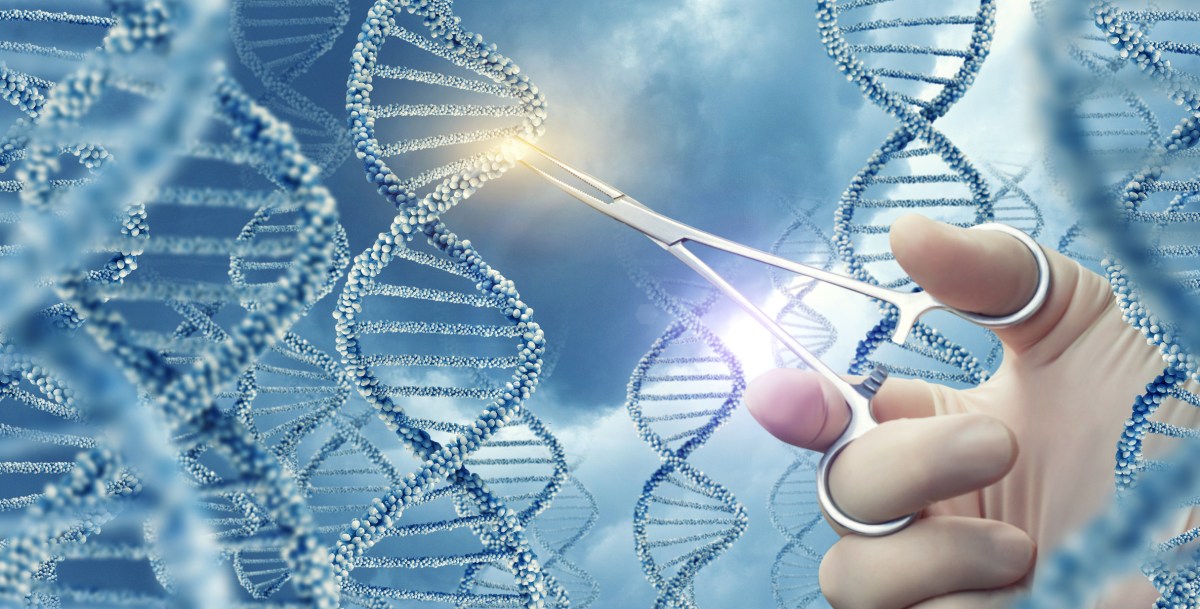
CRISPR cuts the cell’s DNA at a particular site. Like a wound, the cell attempts to heal itself by resealing its break using DNA repair mechanisms. This process can be faulty and not always works perfectly, causing unforeseen problems with unexpected results (new DNA).

In the 1960’s plant scientists in the U.S. bred a new potato variety that was ideal for making into crisps but also contained dangerously high levels of natural toxins. The potato had to be withdrawn from the market in 1970.

There is large concern over GMOs across the world with the sense that gene editing could give rise to dangerous mutations or crops that could be patented by large agribusiness corporations trying to monopolise staple crops.

There are also other factors involved, such as the creation of plants, animals and microorganisms we have not seen before, and by doing so, the impact it may have on our health, the environment as well as evolutionary patterns. Potential risks and biosafety concerns are associated with it. Little is known about the long-term effects and safety associated with GMOs.

According to GMWatch, a number of disadvantages of GMOs foods to humans and the environment have been listed, including allergic reaction by allowing a certain allergen present in the GM crop to enter the body and stimulate an immune response.

Toxicity is also in question. GM foods may increase the production of toxins at levels harmful to humans, as toxins are produced when there is damage in the “gene of interest” during the insertion process. Another concern is reduced nutritional value of GMOs. By making a plant more resistant to pests, the antioxidant phytochemicals are reduced. 

Toxins may also be released into the soil causing environmental damage.  An example of this is soil bacterium, bacillus thuringensis, present in larval caterpillars, which has a gene that produces certain toxins that destroys insects as well as pests. This gene is inserted into the corn to make it resistant to pests, resulting in the release of toxins into the soil, therefore turning the soil less fertile.

In addition to this, there is also the danger of resistance of pests to toxins, antibiotic resistance, genetic hazards, flow of genetic information, generation of super-weeds, and disruption to biodiversity by interfering the natural process of gene flow.

The United States, Canada, Brazil, India and Argentina have been growing GMO products made from modified soya beans and corn for many years. The majority of U.S. corn, canola, soy, cotton and sugar beets crops are GMOs.

“Let’s start now to liberate the UK’s extraordinary bioscience sector from anti-genetic modification rules, and let’s develop the blight-resistant crops that will feed the world”, said Boris Johnson in his first speech as UK’s prime minister.

Michael Antoniou, professor of molecular genetics at King’s College London, mentioned that the answer is to change our food delivery systems in the direction of “agroecology” by reducing the use of synthetic ferlitisers, pesticides and herbicides, and planting a diverse range of plant strains, to build resistance into the system. At the very least, any crops produced by using genetic editing must be labeled as such.

Liz O’Neill, director of GM Freeze, argues that genetic engineering should undergo strict regulation. She said:

“If this group of genetic engineering techniques escape classification as GM, they could be completely unregulated. The crops they produce could find their way into our fields and on to our plates without environmental or food safety risk assessments. They would not be traceable and, without labeling, consumers would have no way to identify and avoid them should they wish to do so”.

Since the UK left the EU, it has the power to authorise new GMOs. Brexit legislation gave Defra (Department for Environment, Food and Rural Affairs) more power to amend existing GMO laws without going to Parliament.

“Gene editing is a sticking plaster, diverting vital investment and attention from farmer-driven action and research which could be yielding results, right now”, said Gareth Morgan, SA’s (Soil Association) head of farming and land use policy.

“Consumers and farmers who do not want to eat or grow genetically modified crops or animals need to be offered adequate protection from this. The focus needs to be on how to restore exhausted soils, improve diversity in cropping, integrate livestock into rotations and reduced the dependence on synthetic nitrogen and pesticides”, added Morgan.

Recently, GMWatch reported that a U.S. based fake meat maker, Impossible Foods, that uses genetically engineered ingredients, have gone past regulators, mainly in the U.S. and Canada, and are looking into expanding its products into the New Zealand and Australian markets.

Impossible Foods adds GM soy leghemoglobin (SLH), 0.8% and not labeled, in order to make its product look and feel as if it’s bleeding, just like real meat. The issue is that SLH does not have a history of safe use in food.

A rat feeding study that Impossible Foods commissioned on SLH showed worrying effects in the rats, including signs of inflammation, decreased blood clotting ability, changes in blood chemistry, kidney disease and possible signs of anemia.

Would you swop a vegetable burger that tastes of vegetables to a burger that tastes and bleeds like real meat but has been genetically modified with SLH, a product that has not been tested extensively? Are we going too far and too fast without calculated risks? What is the limit to greedy corporations?

Reported by GMWatch this month, five hundred tons of unauthorized GMO rice flour that had been illegally imported by India and sold in the European Union had to be recalled, but authorities could not guarantee that all products would be removed from the market. These batches of white rice were imported into Europe, transformed into rice flour, and sold on the market as an ingredient, including chocolate sweets from the Mars company.

Do we have the assurances and guarantee that genetic engineering will not be responsible for the creation of new disease organisms with no natural resistance and no available cure? Do we have the confidence that these “novel foods” will not harm our environment and our health? Will our scientists, world leaders and corporations assure the world GMOs are 100% safe?

Many questions are yet to be answered. Discussion and debate over the benefits and risks of genetic engineering as well as the ethical questions raised by this technology is essential. We must ask for total transparency and full participation in the decision making process. There is too much at stake, as this may lead us to a path of no return.
Humanity’s Historical Ties with Eugenics

Monica Piccinini

10 Aug 2021

In recent years, the world and its leading nation states, appear to have experienced a fundamental change in social thinking. Evidenced by the reversal of globalisation towards isolationism, the move away from political leadership towards populism, and the move away from truth towards the mass use of mis-information for political gain, control and power.

With these changes in social thinking, major democracies have seen the worrying rise of a series of consequential symptoms:  the far-right movement, white supremacy, widespread use of misinformation, discrimination, xenophobia, inequality, misogyny, homophobia, extremism, racism, denialism, and violence.

Is this fundamental change something new in society, or is it itself the result of actions and belief systems that originated in the distant past? An outstanding 2019 documentary on BBC4, “Eugenics: Science’s Greatest Scandal”, presented by science journalist and author, Angela Saini, and actor, presenter and activist, Adam Pearson, inspired my to write this piece.

Socially good intentions or not?

Eugenics (the word originated from the Greek for ‘good stock’ or ‘well born’), the term first used to describe a movement by Francis Galton, the British explorer and natural scientist, around the 1870’s, is the practice or advocacy of controlled selective breeding of human populations to improve the population’s genetic composition. It encouraged the most valuable people in society to procreate and discouraged it in those it considered less fit.

The world has perhaps unwittingly experienced ‘Eugenic’ ideals throughout its past 150-year history, with Eugenics featuring in some of the world’s most horrific historic events.

It appears that Eugenics continues to have an influence on policies being created by governments today and even more concerning is its resurgence within certain aspects of the scientific community.  Combined with recent technological advances in genetic science, the effects on the future of mankind could be both dramatic and irreversible.

Francis Galton, a cousin of Charles Darwin, was a superb statistician (he discovered correlation and regression to the mean), also having contributed in the fields of meteorology, anthropology, geology, biology, psychology and psychometrics. He was highly inspired by Darwin’s “The Origin of Species” (1859) and dedicated his work into the study of inherited traits in human society. In Galton’s view, the best babies came from the intelligent and good-looking people.

It’s hard to know whether Galton’s work was malevolent at its core, however, eugenics laid the foundation for one of the world’s most horrific historic chapters, the Nazi genocidal project and sterilization programs across the world, as well as euthanasia programs and Aktion T4, colonialism, mass murder and racial oppression.

Recently, University College London (UCL) apologised publicly for having had a role in promoting eugenics in the past by having links to eugenicists like Galton. Francis Galton funded a professorship in eugenics at the university, the Francis Galton’s Laboratory for National Eugenics, where the focus was not only on disability, but also on race.

According to a recent Reuters report, the state of California has agreed to compensate all the citizens who were forcibly sterilized under old laws, aimed at people who were deemed unfit to have children between 1909 and 1979.

Atrocities influenced by eugenicists like Galton were committed around the world. In the early 1900’s, Germany’s imperial forces, called Schutztruppe, murdered around 80,000 indigenous people (Herero and Nama) in Southwest Africa (Namibia today), one of the first genocides of the 20th century. Medical experiments were performed where people were injected with tuberculosis and smallpox, and decapitated skulls were measured.

Galton’s protégé, Professor Karl Pearson, was an English mathematician and biostatistician and the first chair of national eugenics after Galton died. He was an anti-Semite and considered the Jewish population as physically and mentally inferior, and that the solution to the decay of the British population was to stop the Jewish immigration.

“If you want to know whether the lower races of man can evolve a higher type, I fear the only course is to leave them to fight it out among themselves, and even then the struggle for existence between individual and individual, between tribe and tribe, may not be supported by that physical selection due to a particular climate on which probably so much of the Aryan’s success depended.” – Karl Pearson (1901).

In 1910, Winston Churchill became Britain’s secretary of state and was also considered a strong eugenics advocate.

“I do not admit for instance, that a great wrong has been done to the Red Indians of America or the black people of Australia. I do not admit that a wrong has been done to these people by the fact that a stronger race, a higher-grade race, a more worldly wise race to put it that way, has come in and taken their place”, Churchill’s words in 1937 to the Palestine Royal Commission.

It’s interesting to point out that eugenics is still reflected in some parts of society today. One example of this is the 11-plus exams still being used in some English schools and a product of Cyril Burt’s work. Burt was an educational psychologist and professor at UCL, worked very closely with the British government. He believed that intelligence was innate and that children from rich parents scored better than poor children was mainly because their parents were more intelligent.

To this day, some schools in the UK still perform the 11-plus testing regime, a harsh and unfair experience for students aged as young as 11 and 12, and the results can be traumatic, as some of the students who do not perform well are asked to move schools.

Another famous name to enter the eugenics list was the well-known Marie Stopes, a feminist, author, women’s rights campaigner and trained paleobotonist. She opened Britain’s first birth control clinic. Stopes was also a eugenicist and advocate for controlled selective breeding, calling for the “hopelessly rotten and racially diseased” to be sterilised and opposed inter-racial marriage.

Stopes was married to Reginald Ruggles Gates, a Canadian anthropologist, botanist, geneticist and eugenicist, obsessed with skin colour. Gates believed African-Americans to be a mentally inferior race and that racial intermarriage was the cause of some disabilities.

Eugenics also influenced many sterilisation programs across the world. After WWII, sterilisation policies were carried out in many countries in order to improve racial purity. In 1975, pressured by the American government (Lyndon B. Johnson), Indian prime minister Indira Gandhi, with the help of her son Sanjay, embarked on a mass sterilisation program, considered as one of the most troubling human rights violation the country has ever experienced. As a result, by 1977, over 8 million people in India were sterilised.

Some politicians, scientists and academics across the world continue to value and support the eugenics thinking. In 1974, British senior conservative politician, Keith Joseph, said in a speech, “the balance of our population, our human stock is threatened”, meaning the poor were breeding too fast, and the danger was they were going to swamp everyone else.

“If we are not prepared to predict and intervene far more early then there are children who are growing up, in families which we know are dysfunctional, then the kids a few years down the line are going to be a menace to society”, said Tony Blair, Britain’s former prime minister.

In the UK, there are growing fears about new legislation being put in place after Brexit. An example of this is the recently introduced bill that would allow authorities to criminally prosecute and jail asylum seekers who are intercepted trying to enter the United Kingdom without permission for up to five years.

Many other countries across the world have supported and adopted the eugenics thinking, including Brazil. In the first half of the 20th century, Brazil debated on sterilisation of the “undesirables” to improve the race. Brazil did not pass any sterilisation law, however, in the 1920’s and 1030’s discussions on the subject were amongst doctors, intellectuals, politicians and eugenicists. During Getúlio Vargas government, new immigration policies were approved, preventing the entry of immigrants considered racially inferior. A sterilisation program was never implemented in Brazil, as it was considered a violation of the strong catholic tradition in the country.

Recently, in an audio broadcast, a professor at the faculty of medicine at Federal University of São Paulo, Unifesp, mentioned that blacks and indigenous people were “culturally backward”, trying to explain the notion of pure race.

The GM Designer Babies…

As genetic science technology advances, doors may be open to new forms of high tech eugenics through human genome editing, like CRISPR (the technique that enables precise DNA editing developed by scientists Emmanuelle Charpentier and Jennifer A Doudna in 2012). This would create a non-accepting and more discriminatory society. The 1997 movie “Gattaca” exposed glimpses of what our world could look like if we take the wrong steps towards genetic modification, which will divide humanity against itself.

Nowadays, one has the option to select embryos without a faulty gene and implant it in the mother’s womb. Pre-implantation Genetic Diagnosis, PGD, is a technique that involves testing cell(s) from embryos created outside the body by IVF for a genetic disorder. Tests are carried out for the specific disorder that the embryos are known to be at significant risk of inheriting.

CRISPR pioneer and Nobel laureate Jennifer Doudna said in her book on the subject of genome editing, “the power to control our species genetic future is awesome and terrifying. Deciding how to handle it may be the biggest challenge we have ever faced”Doudna carried on saying, “we don’t have the ability to control the editing outcomes in a way that would be safe in embryos right now… It is very difficult to know how those edits will in fact affect the health outcomes of these kids“.

The World Health Organisation has recently released two new reports providing recommendations to help establish human genome editing as a tool for public health, with emphasis on safety, effectiveness and ethics.

“Human genome editing has the potential to advance our ability to treat and cure disease, but the full impact will only be realised if we deploy it for the benefit of all people, instead of fueling more health inequity between and within countries”, mentioned Dr. Tedros Adhanom Ghebreyesus, WHO Director-General.

According to Stop Designer Babies, WHO’s reports on human genome editing spend many words to say nothing concrete and fail to recommend the obvious solution to the risks of unregulated creation of GM designer babies. The obvious solution, according to SDB, would be to ban on human germline genetic engineering altogether. Editing the human genome can lead to unintended consequences and can lead to an even more divided and unfair society.

In 2018, one specific event shocked the world when Chinese scientist He Jiankui announced he had altered the DNA of twin babies with the intent to prevent them from catching HIV. The result was Lulu and Nana, born not immune to HIV. Instead, they were both accidently given versions of CCR5 that are made up and do not exist in any other human genome in the world. Their genetic changes are still heritable and could be passed on to their children. Jiankui also broke the law by forging documents and misleading the babies’ parents about the risks involved. He Jiankui was sentenced to three years in jail for conducting “illegal medical practices”.

Clear signs of worldwide social, economic and political instability and division show that, as a society, we are swimming into very dangerous waters. The Covid-19 pandemic has only exacerbated existing issues in our society. Countries have retracted, adopting protectionist views and a colonial mentality, therefore creating more walls and discrimination.

It is essential for our society to embrace a compassionate, fair and ethical approach to decisions being made on how we are born as well as how we live our lives. There is an urgent need for a legislative framework to be set up by world leaders, with the objective to protect the most vulnerable ones in our society. We must make sure we do not commit the terrible crimes and mistakes made in the past. This will define the future of humanity.