Pesticides and the Climate Crisis: Fossil Fuel Dependency Exacerbates Impact

Monica Piccinini

5 July 2023

In the quest to understand and combat climate change, our attention is often drawn to the colossal emissions produced by fossil fuels. However, beneath the surface lies another insidious contributor to our warming planet: pesticides.

While these chemicals have long been associated with their harmful effects on ecosystems and human health, a lesser-known truth is their direct link to the fossil fuel industry.

As we delve into the hidden world of greenhouse emissions, a startling revelation emerges – the use of pesticides has become an accomplice in perpetuating the climate crisis, casting a shadow over our efforts to create a sustainable future.

Globally, food systems account for over one third of all greenhouse gas emissions, which includes agriculture and pesticide use.

Scientific evidence suggests that the use of pesticides not only plays a significant role in the generation of greenhouse gas emissions, but also heightens the susceptibility of our agricultural systems to the impacts of climate change. However, the potential of pesticide reduction as a viable solution to the climate crisis has been widely overlooked.

Doug Parr, chief scientist and policy director at Greenpeace UK said:

“Public understanding of the role that fossil fuel companies have played in driving the climate emergency has increased hugely in the last few years, and now we know that we need to add the pesticide industry to the list of climate polluters. Reducing the use of pesticides would be at least a double in addressing nature decline and climate crisis.”

According to a report by PAN UK, Pesticide Action Network, and The Pesticide Collaboration, titled “Pesticides and The Climate Crisis: A Vicious Cycle”, 99% of all synthetic chemicals, including pesticides, are derived from fossil fuels.

The world’s largest oil and gas companies, including ExxonMobil, Shell and ChevronPhillips Chemical, produce pesticides or their chemical ingredients.

Some pesticides, such as sulfuryl fluoride, are powerful greenhouse gases, having nearly 5,000 times the potency of carbon dioxide.

Photo: ID 46018102 © Ig0rzDreamstime.com

Pesticides have a significant impact on the climate emergency throughout their lifecycle, involving various stages from manufacturing to disposal. Here are some ways pesticides exacerbate the climate crisis:

Manufacturing: The production of pesticides involves energy-intensive processes that often rely on fossil fuels. From the extraction of raw materials to the synthesis of active ingredients, greenhouse gas emissions are generated, contributing to climate change.

Packaging: Pesticides are typically packaged in materials derived from fossil fuels, such as plastic containers. The production and disposal of these packaging materials further contribute to carbon emissions and environmental pollution.

Transportation: Pesticides are often transported over long distances from manufacturing facilities to distribution centres and end-users. The use of fossil fuel-powered vehicles for transportation adds to the carbon footprint associated with pesticides.

Application: During pesticide application, emissions occur due to the use of mechanised equipment and vehicles. Additionally, some pesticide formulations release volatile organic compounds (VOCs) into the atmosphere, contributing to air pollution, climate change and impacting our health by damaging the central nervous system and other organs, some causing cancer.

Environmental Degradation: Pesticides can have detrimental effects on ecosystems, leading to biodiversity loss and disruptions in natural processes. This ecological damage can further impact the climate crisis by destabilising ecosystems that help regulate the planet’s climate, such as forests and wetlands.

Disposal: Improper disposal of pesticides, such as through incineration or landfilling, can release harmful chemicals into the environment. Inefficient disposal methods can contribute to soil and water pollution, affecting ecosystems and potentially releasing greenhouse gases like methane.

Overall, the entire lifecycle of pesticides, from manufacturing and packaging to transportation, application, and disposal, contributes to the climate emergency through various emissions, environmental degradation, and pollution. Understanding these impacts is crucial for developing sustainable alternatives and practices in agriculture and pest management.

Agriculture
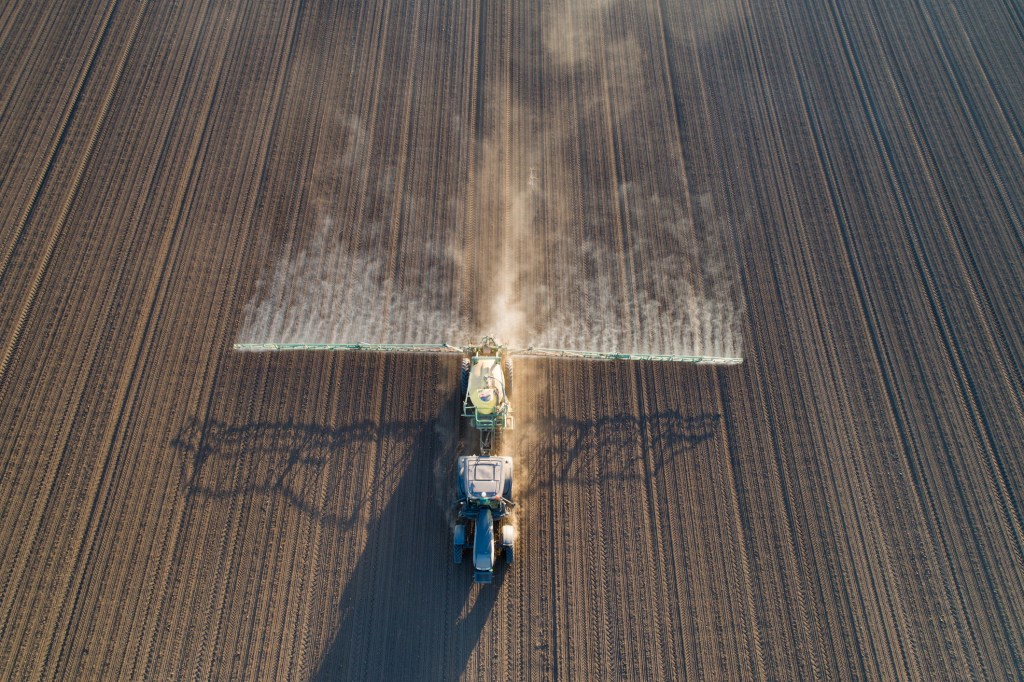
Aerial image of tractor working in field
Photo: ID 172643586 © Jevtic | Dreamstime.com

With increasing temperatures, there is a corresponding surge in pest populations, leading to decreased crop resilience. Consequently, a greater quantity of pesticides becomes necessary.

The heightened reliance on pesticides subsequently fosters the proliferation of resistance among insects and weeds towards herbicides and insecticides. Moreover, it perpetuates the detrimental impact on human health and the environment.

The study conducted by PAN UK, Pesticide Action Network, and The Pesticide Collaboration, “Pesticides and the Climate Crisis: A Vicious Cycle”, highlights the anticipated outcome of climate change on farming practices.

It suggests that farmers may resort to intensifying the use of synthetic pesticides, unless we initiate a shift towards more sustainable forms of agriculture, embracing smaller-scale and diversified agroecological methods.

The study also outlines how agricultural pests will respond to climate change, including crop resilience decline, the shifting of pest populations and reach, impacts on pests’ natural enemies, the increase in weeds and the rise in regionalism and unpredictability.

Commodity crops, such as maize, soybeans, rice, cotton and wheat, are among those with the greatest use of pesticides and fertilisers globally.

Between 2005 and 2020, the global use of pesticides witnessed a notable upswing of 17%. However, the application of herbicides experienced an even more substantial surge of 34%.

China, the United States, Argentina, Thailand and Brazil emerged as the leading consumers of pesticides, contributing to these escalating figures.

Nevertheless, it’s important to note that these statistics likely underestimate the true extent of pesticide use due to various factors, such as underreporting and unrecorded applications. For instance, the inclusion of pesticides used as seed treatments is lacking in the UN Food and Agriculture database, thereby contributing to the underestimation.

In 2020, the UK used over 13,018 tonnes of pesticide active ingredients. One of the most widely used active substances was the herbicide glyphosate.

A total of 2,602 tonnes of glyphosate was sprayed on all UK crops during 2020, a 16% rise over four years, generating 81,410 tonnes of CO2, equivalent to more than 75,000 flights from London to Sydney. This figure does not include the large amount that is used in other areas, such as towns, cities and private gardens.

Josie Cohen, head of policy and campaigns at PAN UK, said:

“The government urgently needs to take a joined-up approach to tackling the climate and nature crisis, as they go hand-in-hand. The solutions to these emergencies must not undermine each other. The UK’s net zero target cannot be achieved without transforming agriculture including a major reduction in pesticide use, which will also bring huge benefits to nature and biodiversity.”

Farming methods that avoid synthetic pesticides, such as agroecological systems or diversified organic farming, offer multiple benefits in terms of reducing greenhouse gas emissions and enhancing carbon sequestration.

Moreover, these approaches improve the ability of farms to withstand climate change and combat pests by bolstering various ecosystem services. These services include improving water quality and availability for crops, enhancing soil health, boosting crop resilience against pests and diseases, and fostering increased populations of pollinators and natural pest control agents.

In light of the climate crisis and its far-reaching consequences on various aspects of our lives and the environment, it has become increasingly imperative to shift away from the prevalent chemical-intensive agricultural practices and embrace a biological approach.

This transition is crucial to safeguard our wellbeing and survival, as it directly influences our health, soil quality, air and water purity, food production, and the delicate balance of biodiversity.
Pesticide-Induced Cancer and Nature’s Silent Demise – Latest UK Government Figures Expose Alarming Trends

Monica Piccinini

14 June 2023

Official UK government pesticide usage data reveals that the use of glyphosate in UK farming is increasing, despite a recent government promise to “reduce reliance on the use of conventional chemical pesticides.”

According to analysis by Pesticide Action Network UK (PAN UK) and the latest figures, the amount of glyphosate used in UK agriculture grew by more than 360 tonnes (16%) between 2016 and 2020, while the area of land sprayed with the pesticide increased by 9%, amounting to 230,000 hectares, three times the size of Greater Manchester.

Nick Mole, PAN UK’s policy officer, mentioned:

These latest figures, while shocking, are actually a huge underestimation of our exposure to glyphosate since they only relate to farming. Meanwhile, glyphosate is also sprayed liberally in most UK towns and cities.

The negative impacts of glyphosate on human health and the environment are well-documented. With cancer rates and biodiversity loss both rising, it’s crazy that we continue to endanger the health of rural residents, farmworkers and wildlife when there are plenty of safer and more sustainable alternatives available.

One of the primary concerns associated with glyphosate is its potential impact on human health. Several studies have suggested a possible link between glyphosate exposure and various health issues, such as an increased risk of cancer, particularly non-Hodgkin’s lymphoma.

In 2015, the International Agency for Research on Cancer (IARC), a specialised agency of the World Health Organization (WHO), classified glyphosate as a probable human carcinogen. However, other regulatory agencies, including the European Food Safety Authority (EFSA) and the United States Environmental Protection Agency (EPA), have concluded that glyphosate is unlikely to pose a significant risk to human health when used according to approved guidelines.

Environmental concerns are another area of contention surrounding glyphosate use. The herbicide’s widespread application can lead to its presence in soil, water bodies, and food crops, potentially impacting ecosystems and non-target organisms.

Photo: ID 204609809© Ricochet69 | Dreamstime.com

Glyphosate has been linked to adverse effects on aquatic organisms, including fish and amphibians, and there are concerns about its potential impact on pollinators, such as bees, which are crucial for agricultural productivity and biodiversity.

Additionally, the long-term use of glyphosate can lead to the development of herbicide-resistant weeds, commonly known as “super-weeds.” Continuous exposure to glyphosate can exert selection pressure on weed populations, promoting the growth of resistant individuals that are no longer susceptible to the herbicide. This phenomenon necessitates the increased use of glyphosate or other herbicides, leading to potential environmental harm and higher costs for farmers.

PAN UK’s report also reveals that the use of a number of other highly hazardous pesticides (HHPs), a UN concept used to identify particularly harmful pesticides, is also on the rise, including:

  • 2,4D, a herbicide highly toxic to bees and possible carcinogen and suspected endocrine disruptor, which can interfere with hormone systems;
  • Imazalil, a fungicide linked to cancer and classified as a ‘developmental or reproductive toxin’, which can negatively affect sexual function and fertility;
  • Cyantraniliprole and lambda-cyhalothrin, insecticides highly toxic to bees.

With the clock ticking on the biodiversity crisis, and the UK already one of the most nature-depleted countries in the world, we must move further and faster. Absolutely key is supporting farmers to transition away from chemical dependence and towards more nature-friendly methods of production, warned Mole.

Whilst conducting their analysis, PAN UK’s noted some major problems with the government’s pesticide usage figures, including numbers being changed retroactively and discrepancies between data sets that are supposed to be identical. 

The organisation is calling on the UK government to urgently improve pesticide usage monitoring and data, increase support for farmers to reduce pesticide use and introduce non-chemical alternatives, establish reduction targets to drive a decrease in both use and toxicity, end use of pesticides that are harmful to bees and other pollinators, and finally publish the long-awaited National Action Plan on Sustainable Use of Pesticides that was promised for 2018.

The debate surrounding glyphosate and HHPs’ health risks, environmental impact, and the need for alternative weed control methods continues to evolve.

It is essential for the government, regulatory agencies, scientists, farmers, and the public to remain vigilant, informed, and engaged to ensure toxic chemicals are urgently replaced with non-chemical alternatives.

Public Health Warning in the UK: 50% of Bread Containing Potentially Hazardous Pesticide Cocktails

“We are choosing to play Russian roulette with people’s health”

Monica Piccinini

2 Nov 2022

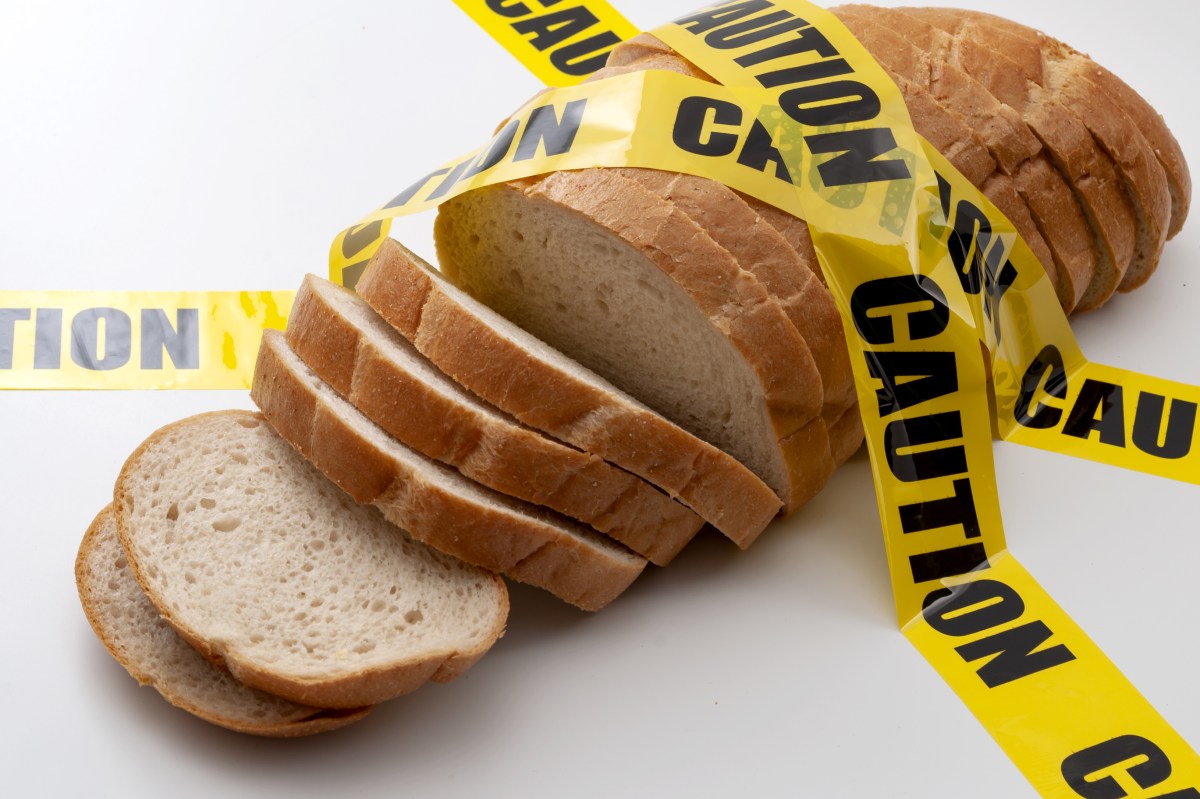
Official figures reveal that the proportion of bread in the UK containing two or more pesticides has doubled to more than 50% in the past year.

The UK government tests are carried out by an expert committee on pesticide residues in food (Prif) and a total of 11 different pesticides, including five with links to cancer (glyphosate, fosetyl, cypermethrin, deltamethrin and flonicamid), were found in a range of bread products – from standard white, brown, to crumpets, scones and muffins.

Bread products containing traces of one or multiple pesticides were found in supermarket own-brands including Aldi, Asda, Co-op, Iceland, Lidl, Marks & Spencer, Morrisons, Ocado, Sainsbury’s, Tesco and Waitrose. They were also found in some top brands: Hovis, Kingsmill, Jacksons, La Boulangerie, New York Bakery, Warburtons, and many more.

Nick Mole, Pesticide Action Network UK (PAN UK) policy officer, said:

“With the cost of living crisis forcing people to spend less on food, it’s vital that consumers can trust that relatively cheap products like bread won’t expose them to dangerous mixtures of chemicals.

The government claims that it’s committed to tackling pesticides, so why have pesticide cocktails been allowed to double in a staple food that most of us eat at least once every day?”

Pesticides used in agriculture can leave traces of chemicals in our food known as residues. Pesticide residues detected on a specific food item will depend on which pesticides are used and how persistent they are. Some food may contain one single residue or multiple ones (‘cocktail effect’).

“There is a growing body of evidence showing that pesticides can become more harmful when they’re combined with each other. And yet we continue to set safety limits for just one chemical at a time.

We actually have no idea of the long-term impacts of consuming tiny amounts of hundreds of different chemicals. We are choosing to play Russian roulette with people’s health”, mentioned Mole.

We should be aware of the implications caused by ingesting food containing not only one but also multiple pesticides, especially if consumed over a long period of time, during our childhood, adult life and especially during pregnancy.

Some pesticides, known as endocrine disrupting chemicals (EDCs), have the potential to disrupt our hormone systems, and can play a role in the development of cancers, including colorectal and breast cancers. Pregnant and breastfeeding women, as well as young children, are particularly vulnerable.

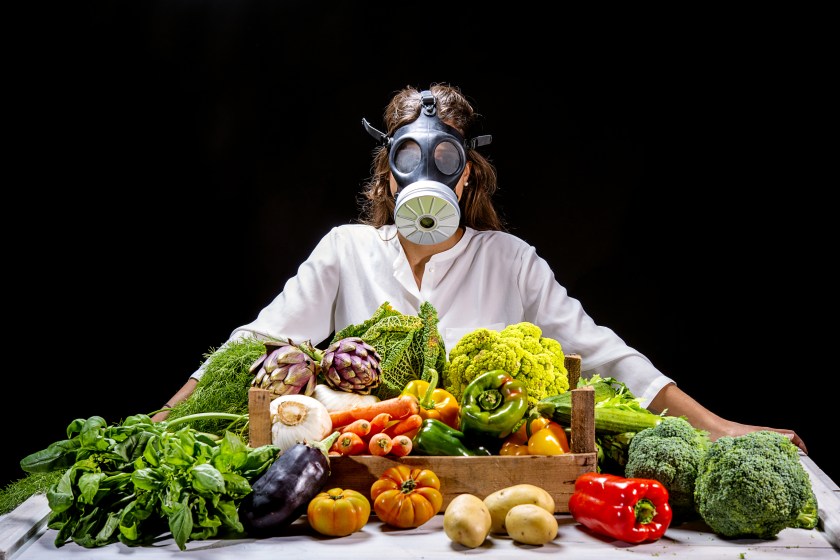
Photo 211558990 © Bruno D Andrea | Dreamstime.com

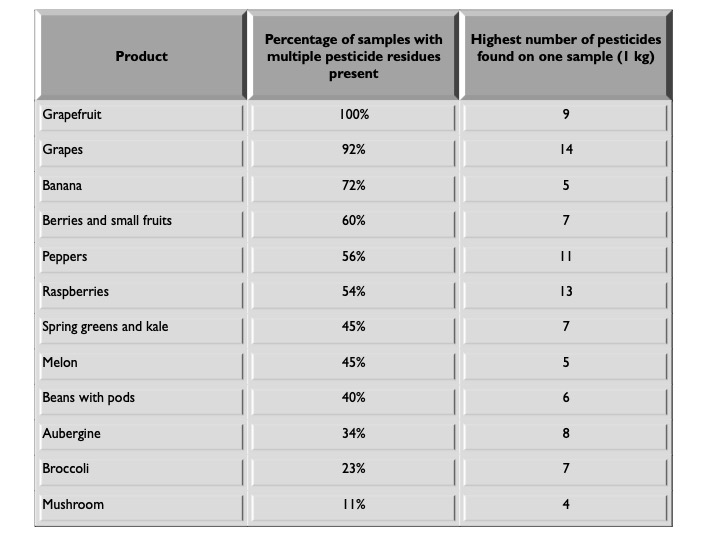
The most recent data published by the UK government, which relates to testing conducted in 2021, reveals that pesticide cocktails are also a significant problem for fruit and vegetables, with 30% of vegetables and more than 60% of fruit found to contain residues of more than one chemical.

Based on government data, PAN UK launched its annual “Dirty Dozen”, a list of fruit and vegetables most likely to be contaminated with multiple pesticides:


PAN UK analysis of the most recent results from the government’s testing programme found a total of 137 different pesticide residues across all produce, including many linked to serious chronic health effects. Specifically, the produce tested contained:

46 carcinogens, which are capable of causing different types of cancer.

27 endocrine disruptors (EDCs), which can interfere with hormone systems and cause birth defects, developmental and reproductive disorders (infertility).

11 ‘developmental or reproductive toxins’, which can have adverse effects on sexual function and fertility, causing miscarriages.

14 cholinesterase inhibitors that reduce the ability of nerve cells to pass information to each other and can impair the respiratory system and cause confusion, headaches and weakness.

Over a third of the total pesticides found are not approved in the UK, meaning that the British farmers aren’t permitted to use them.

“These pesticides residues should not be making onto the plate of UK consumers.

They are either slipping past our shoddy border checks unnoticed, or foreign producers are being handed a competitive advantage by being allowed to use pesticides banned in the UK.

At a time when we are asking our own farmers to produce more sustainably, we should not be making it harder for them to earn a living”, said Mole.

The most effective way to tackle pesticide cocktail in our food is to ensure that the new trade agreements don’t lead to an influx of pesticide-laden imports and to reduce dramatically the chemical use in domestic farming.

Weakening of pesticide standards via trade deals with countries where pesticide regulation is less rigorous, means the population in the UK may be consuming products with higher level of pesticides that are already banned in the country.

“To protect the health of their customers, some UK supermarkets are beginning to sit up and take notice of pesticide cocktails. Meanwhile, the government’s key strategy on pesticide reduction is already five years late.

Our new environment secretary, Dr. Thérèse Coffey, must take urgent action to reduce pesticide-related harms. How much longer should consumers and farmers have to wait?” added Mole.

This is a significant ongoing issue that requires immediate attention and action from the government, regulators, corporations, supermarkets and also the British population, who may be paying a hefty price for these senseless actions, with their own health!

London’s Alarming ‘Cocktail’ of Toxic Pesticides

Monica Piccinini

5 Apr 2022

London councils are risking the health of residents and wildlife by spraying ‘cocktail’ of toxic pesticides.

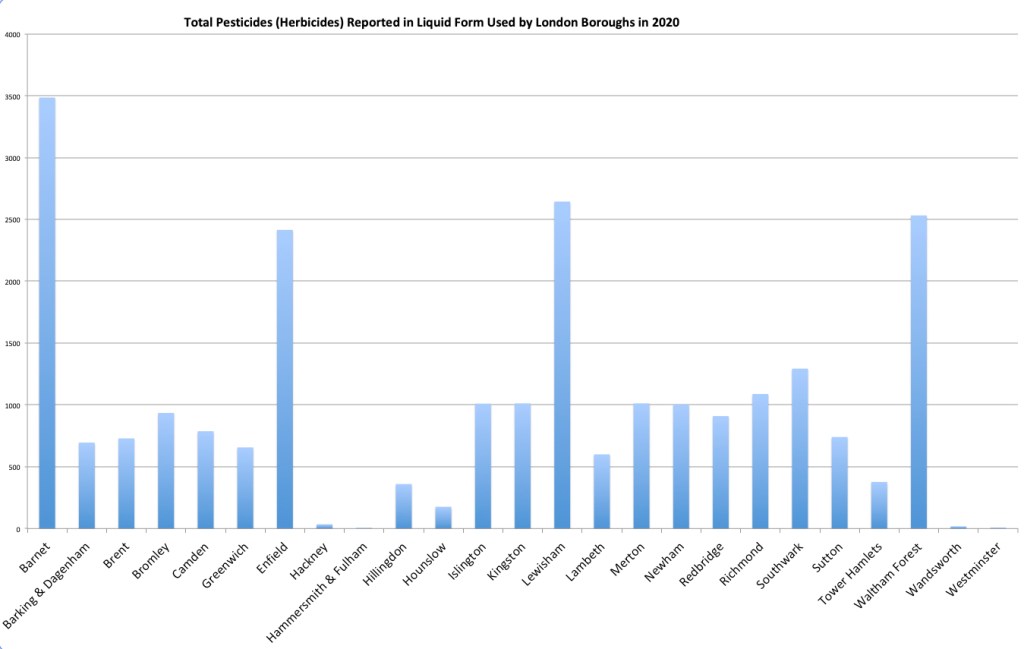
According to Pesticide Action Network UK, recently released information reveals that London’s local authorities are using a staggering 22 potentially harmful chemicals to remove weeds on London’s streets, parks and playgrounds.

The list includes seven pesticides linked to cancer and nine groundwater contaminants threatening aquatic wildlife.

Glyphosate, a synthetic herbicide, was found to be the most commonly used pesticide with over 26,000 litres, equivalent to 130 bath tubs – sprayed in London’s public spaces over the past three years.

In 2017, the World Health Organisation labelled glyphosate a ‘probable human carcinogen’. Since then, the manufacturer, Bayer/Monsanto, has been battling with billion dollar lawsuits from thousands of plaintiffs alleging that exposure to the company’s glyphosate-based products caused non-Hodgkin’s lymphoma.

“It is absolutely clear that glyphosate can cause cancers in experimental animals”, affirmed former Director of the US Agency for Toxic Substances and Disease Registry, Chris Portier, who worked on the IARC, International Agency for Research and Cancer review on glyphosate.

“And the human evidence for an association between glyphosate and cancer is also there, predominantly for non-Hodgkin’s lymphoma”, added Portier.

Pesticides can impact our health; they are capable of causing different types of cancer, including leukaemia and non-Hodgkin’s lymphoma, are endocrine disruptors, which interferes with hormone systems, therefore causing birth defects, developmental disorders, infertility and sexual function.

In addition, they are considered a neurotoxin affecting nerve tissues and the nervous system. Children and expectant mothers are the most susceptible to the effects of pesticides.

A recent study published in Environmental Research demonstrates that exposure to glyphosate and its breakdown product reduces pregnancy length, increasing the risk of preterm birth. Preterm births occur when a fetus is born early or before 37 weeks of complete gestation.

“We are in the midst of a biodiversity crisis with species such as bees declining rapidly and pesticides named as a key driver. We also know that children are more vulnerable to the impacts of pesticides because their bodies are still developing. But despite these serious public health and environmental concerns, most London councils are routinely using chemical weed-killers for no other reason than keeping places looking ‘neat and tidy’”, said Nick Mole from PAN UK.

YouGov polling released alongside PAN UK’s research reveals that half (49%) of Londoners would support a ban on the use of weed-killers in their local area, with just 18% opposing. Approximately one third (32%) didn’t know whether they would support a ban, highlighting there’s still lack of information on the subject, as councils are not obliged to notify residents when spraying is taking place.

Source: Data presented based on PAN UK collation and analysis of the Freedom of Information requests to thirty-two London borough councils in September and October 2021. 31 councils responded (all but Ealing Council).

The good news is that there are already more than 40 UK councils which have gone pesticide-free, including the London Boroughs of Hammersmith and Fulham in 2016, and most recently Lambeth.

“While it’s encouraging to see so many councils take steps to make parks safer for people and wildlife alike, there is a real lack of joined-up thinking. Our capital’s pavements remain largely forgotten and continue to be sprayed often, just meters away from people’s doorsteps and designated ‘wildlife-friendly’ spaces. Councils are letting residents down and undermining their own positive efforts to support nature”, mentioned Emma Pavans de Ceccatty from PAN UK.

In the run-up to the 2021 London Mayoral elections, candidates from all political parties publicly agreed that ending pesticide use was a vital steep to meeting challenges linked to climate, nature restoration and the health and well-being of people using green spaces.

Sadly, PAN UK’s research reveals that more than two-thirds of councils have no plans to stop spraying the streets with toxic pesticides.

Dr. Marcos Orellana, the United Nations Special Rapporteur on toxics and human rights, identifies a non-toxic environment as one of the substantive elements of the right to a safe, clean, healthy and sustainable environment where people can live, work, study and play.

Orellana highlights State obligations, business responsibilities and good practices related to ensuring a non-toxic environment by preventing pollution, eliminating the use of toxic substances and rehabilitating contaminated sites.

With one month to go until London local elections, Londoners should secure commitments from candidates to phase out pesticide use. PAN UK is urging voters to attend borough events to call on their prospective councillors to support going pesticide-free.

As we continue to face the effects of multiple crises, including the Covid-19 pandemic, a conflict in the Ukraine, an economic, energy and climate crisis, we must make every effort to remain focused on our right to live in a clean and safe environment.