Do We Fully Understand the Implications of GMOs?

Monica Piccinini

16 Sept 2021

The subject of genetically modified foods has been debated for many years. In fact, genetically modified produce is freely available in a number of developed countries. The benefits as well as the negative side-effects have polarised opinion in the scientific world, advanced economies and amongst health conscious populations.

Technological advances in key areas of science are now lifting the debate to new concerning levels.

“GMOs appear the focus of a stunning program: to privatize biology itself, turning sovereign soils and the very act of farming, as much as its produce, into commodities”, wrote Rob Wallace in his book “Big Farms Make Big Flu”.

GMOs (genetic modified organisms) describe foods that have been created through genetic engineering. Scientists identify what trait they want a plant, animal or microorganism to have (such as resistance to pesticides, herbicides or insects), they then copy it and insert the gene into the DNA of the plant, animal or microorganism.

In 1866, Gregor Mendel, an Austrian monk, was able to breed two types of peas, identifying the basic process of genetics. In 1922, the first hybrid corn was produced and sold commercially. In 1994, the first genetically modified produce created through genetic engineering becomes available for sale, a genetically modified tomato.

Since then, science has been advancing and progressing rapidly, as we enter a new phase of genetic engineering. NBT’s (new breeding techniques) such as CRISPR and RdDM, as well as synthetic biology, allow more complex changes to the genetic makeup.

What seems like incredible biological acts of ‘science fiction’ are still very early in their development. Moving too fast in order to commercialise these technologies will undoubtedly see the negative side effects with unintended consequences.

CRISPR cuts the cell’s DNA at a particular site. Like a wound, the cell attempts to heal itself by resealing its break using DNA repair mechanisms. This process can be faulty and not always works perfectly, causing unforeseen problems with unexpected results (new DNA).

In the 1960’s plant scientists in the U.S. bred a new potato variety that was ideal for making into crisps but also contained dangerously high levels of natural toxins. The potato had to be withdrawn from the market in 1970.

There is large concern over GMOs across the world with the sense that gene editing could give rise to dangerous mutations or crops that could be patented by large agribusiness corporations trying to monopolise staple crops.

There are also other factors involved, such as the creation of plants, animals and microorganisms we have not seen before, and by doing so, the impact it may have on our health, the environment as well as evolutionary patterns. Potential risks and biosafety concerns are associated with it. Little is known about the long-term effects and safety associated with GMOs.

According to GMWatch, a number of disadvantages of GMOs foods to humans and the environment have been listed, including allergic reaction by allowing a certain allergen present in the GM crop to enter the body and stimulate an immune response.

Toxicity is also in question. GM foods may increase the production of toxins at levels harmful to humans, as toxins are produced when there is damage in the “gene of interest” during the insertion process. Another concern is reduced nutritional value of GMOs. By making a plant more resistant to pests, the antioxidant phytochemicals are reduced. 

Toxins may also be released into the soil causing environmental damage.  An example of this is soil bacterium, bacillus thuringensis, present in larval caterpillars, which has a gene that produces certain toxins that destroys insects as well as pests. This gene is inserted into the corn to make it resistant to pests, resulting in the release of toxins into the soil, therefore turning the soil less fertile.

In addition to this, there is also the danger of resistance of pests to toxins, antibiotic resistance, genetic hazards, flow of genetic information, generation of super-weeds, and disruption to biodiversity by interfering the natural process of gene flow.

The United States, Canada, Brazil, India and Argentina have been growing GMO products made from modified soya beans and corn for many years. The majority of U.S. corn, canola, soy, cotton and sugar beets crops are GMOs.

“Let’s start now to liberate the UK’s extraordinary bioscience sector from anti-genetic modification rules, and let’s develop the blight-resistant crops that will feed the world”, said Boris Johnson in his first speech as UK’s prime minister.

Michael Antoniou, professor of molecular genetics at King’s College London, mentioned that the answer is to change our food delivery systems in the direction of “agroecology” by reducing the use of synthetic ferlitisers, pesticides and herbicides, and planting a diverse range of plant strains, to build resistance into the system. At the very least, any crops produced by using genetic editing must be labeled as such.

Liz O’Neill, director of GM Freeze, argues that genetic engineering should undergo strict regulation. She said:

“If this group of genetic engineering techniques escape classification as GM, they could be completely unregulated. The crops they produce could find their way into our fields and on to our plates without environmental or food safety risk assessments. They would not be traceable and, without labeling, consumers would have no way to identify and avoid them should they wish to do so”.

Since the UK left the EU, it has the power to authorise new GMOs. Brexit legislation gave Defra (Department for Environment, Food and Rural Affairs) more power to amend existing GMO laws without going to Parliament.

“Gene editing is a sticking plaster, diverting vital investment and attention from farmer-driven action and research which could be yielding results, right now”, said Gareth Morgan, SA’s (Soil Association) head of farming and land use policy.

“Consumers and farmers who do not want to eat or grow genetically modified crops or animals need to be offered adequate protection from this. The focus needs to be on how to restore exhausted soils, improve diversity in cropping, integrate livestock into rotations and reduced the dependence on synthetic nitrogen and pesticides”, added Morgan.

Recently, GMWatch reported that a U.S. based fake meat maker, Impossible Foods, that uses genetically engineered ingredients, have gone past regulators, mainly in the U.S. and Canada, and are looking into expanding its products into the New Zealand and Australian markets.

Impossible Foods adds GM soy leghemoglobin (SLH), 0.8% and not labeled, in order to make its product look and feel as if it’s bleeding, just like real meat. The issue is that SLH does not have a history of safe use in food.

A rat feeding study that Impossible Foods commissioned on SLH showed worrying effects in the rats, including signs of inflammation, decreased blood clotting ability, changes in blood chemistry, kidney disease and possible signs of anemia.

Would you swop a vegetable burger that tastes of vegetables to a burger that tastes and bleeds like real meat but has been genetically modified with SLH, a product that has not been tested extensively? Are we going too far and too fast without calculated risks? What is the limit to greedy corporations?

Reported by GMWatch this month, five hundred tons of unauthorized GMO rice flour that had been illegally imported by India and sold in the European Union had to be recalled, but authorities could not guarantee that all products would be removed from the market. These batches of white rice were imported into Europe, transformed into rice flour, and sold on the market as an ingredient, including chocolate sweets from the Mars company.

Do we have the assurances and guarantee that genetic engineering will not be responsible for the creation of new disease organisms with no natural resistance and no available cure? Do we have the confidence that these “novel foods” will not harm our environment and our health? Will our scientists, world leaders and corporations assure the world GMOs are 100% safe?

Many questions are yet to be answered. Discussion and debate over the benefits and risks of genetic engineering as well as the ethical questions raised by this technology is essential. We must ask for total transparency and full participation in the decision making process. There is too much at stake, as this may lead us to a path of no return.
Climate Change – Inaction May Prove Fatal to Humanity

Monica Piccinini

22 Aug 2021

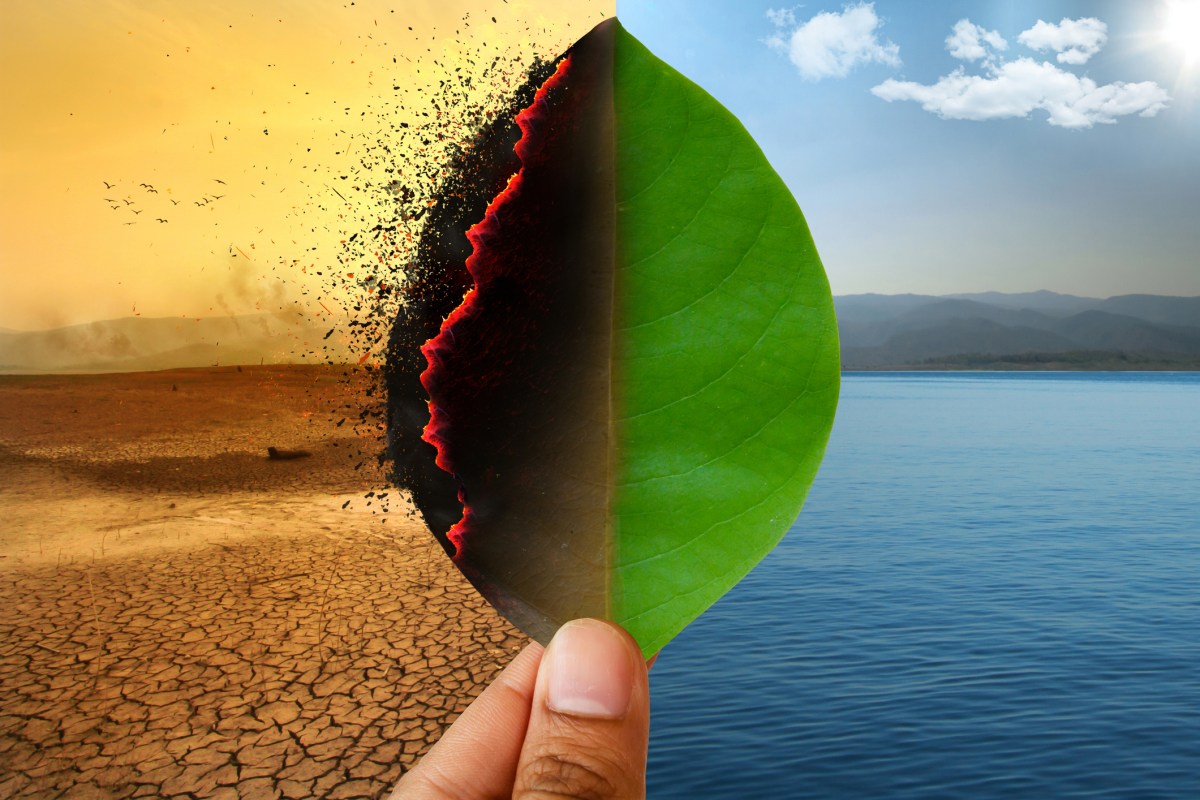
Humanity has been in denial for decades, avoiding the truth about the implications of its complex relationship with nature. A toxic, turbulent and abusive liaison based on constant exploitation. Eventually, a break up is imminent!

As human population numbers have grown and with it consumption, we have seen the correlated demand in areas of food, living space as well as demand for luxury items created by commerce. At the heart, there is a very basic human desire for ‘more’.  Populations across the world are now interconnected in a way few would imagine, therefore creating an environmental impact most choose to conveniently ignore. 

An individual in the Western Northern Hemisphere seeking a never ending supply of fresh exotic vegetables, fruit and meat from half way around the globe at an ever decreasing price. For all those products to be on the consumer’s plate, it will have passed through an incredibly efficient, yet troublesome system.

From high production farming techniques driving the destruction of natural flora, fauna and land exploitation, to the use of pesticides, distribution from one country to another by lorries, planes and ships with huge carbon footprints, all managed by profit oriented distribution companies operating on a global scale.  The simple desire of a consumer wanting more products at bargain costs has created a significant ecological footprint with dramatic consequences. 

The interconnections between our global systems and social fabrics are very sensitive and easily interrupted. The world has had a taste of such disruption with the Covid-19 pandemic. However, the even bigger issues of climate change and biodiversity loss are upon us and we can’t afford to turn a blind eye to, nor try to separate them, as they are all interconnected.

The reality is that the pace of destruction is faster than we had ever predicted. Unless we address the critical situation we have created, and put our house in order, we may be homeless and face a grim future.

“2021 must be the year to reconcile humanity with nature”, said António Guterres, the UN secretary general, in an address to the One Planet Summit of global leaders in Paris last January.

We have seen how much the emergence of a pandemic can cost us and how quickly it can affect businesses, the global economy, and our physical and mental health. Climate change is one of the primary drivers of biodiversity loss, which is a key driver of emerging infectious diseases. Investing in ecological measures that can help future pandemics is much lower than the cost of a pandemic.

One-fifth of the world’s countries are at risk of their natural ecosystems collapsing because of the destruction of their habitats and wildlife, according to Swiss Re. Food, air, clean water, and flood protection have already been damaged by human activity.

According to the OECD, the total economic value to society of biodiversity and ecosystem services is estimated to be as much as USD 140 trillion per year and over half of the world’s GDP (USD 44 trillion) is moderately or highly dependent on nature and its services.

The recently released 2021 Intergovernmental Panel on Climate Change report, IPCC, is a stark warning that humanity will not be able to limit global warming, unless we take rapid and large-scale reductions in greenhouse gas emissions.

The top major green house gas emitters in the world are China, United States, India and Russia. China, Brazil, Australia and Russia’s current energy policies will prompt to an astonishing 5C temperature rise.

At 1.5C of global warming, we will see significant and unprecedented changes to the weather across all regions, but at 2C of global warming, the results could be catastrophic and irreversible, with heat extremes, heavy precipitation, marine heat waves, reductions in Arctic sea ice, snow cover and permafrost, agricultural and ecological droughts.  

We have already seen the impact of climate change across the globe with fires, floods, draughts, hurricanes, etc. In Brazil, the worst drought in nearly a century, followed by extreme cold temperatures, has been reported, affecting heavily Brazil’s farming. Deforestation is considered as one of the main causes.  

As world population is predicted to increase to 9.7 billion by 2050, food demand will intensify, putting pressure on the land. We have already exploited more than a third of the world’s land area to crop and livestock production, affecting the lives of thousands of species as well as the land. At least 60% of the world’s agricultural area is dedicated to cattle ranching, making up to only 24% of the world’s meat consumption.

According to a projection by the Netherlands Environmental Assessment Agency, PBL, the area of land under agriculture could increase from 35% to 39% by 2050. Industrial agriculture is one such villain responsible for degradation of the land, water, and ecosystems, high green house gas emissions, biodiversity loss, hunger and nutrition deficiencies, as well as obesity and diet-related diseases.

“We are facing acute, interconnected crises – hunger, malnutrition, biodiversity loss, the climate crisis, growing inequality and poverty. What we need are real solutions, not more greenwashing from agribusiness. Real solutions – public regulation for agroecology and Food Sovereignty – require dismantling corporate power, redistributing resources, re-localising food systems and ensuring small scale producers have control. Food is a human right not a commodity”, said Kirtana Chandrasekaran, from Friends of the Earth International.

Global agribusiness giants not only control the market price farmers get, but also what we eat, not to mention their contribution to poor health, food waste, soil erosion and soil acidification due to the use of chemical fertilisers and pesticides, wildlife destruction, ground water pollution, disease outbreaks, death, hunger and food insecurity, deforestation and climate change. According to the Climate Land Use Alliance, commercial agriculture drives 71% of tropical deforestation, posing serious risks to our global forests and climate.

According to the Intergovernmental Science Policy Platform on Biodiversity and Ecosystems Services, IPBES, half a million terrestrial species of animals and plants may already be doomed into extinction. Up to one fifth of wild species are at risk of extinction this century due to climate change. Over 25% of forests have been permanently cleared. Since 1970, the global abundance of vertebrates has declined by 68% and since 1700, 90% of global wetlands have been lost.

The degradation of our oceans, soil, rivers, corals, can take decades, if not centuries to recover, and in some cases this destruction may already be irreversible.

Governments across the globe have made many commitments with the intent to tackle climate change. The commitments included the 2011 deadline to decrease emissions by 4%, the 2015 deadline to decrease it by 5%, and the 2020 deadline with the promise to decrease emissions by 10% each year. It has been a total failure and they have missed every single deadline. In the meantime, global emissions keep increasing.

“We have to reduce emissions far more rapidly than we are today. We have to leave fossil fuels in the ground, we have to remove the green house gases we have already put into the atmosphere that are creating this crisis today and into the future, and then to buy time while we manage those two processes. Then we also need to refreeze the Arctic. I don’t think it’s ridiculous, we have at least half a dozen of processes we’ve been looking at (Marine Cloud Brightening Technique)…. We don’t have the time we need to reduce emissions…buying time becomes essential”, said Sir David King, Chair of the Climate Crisis Advisory Group (CCAG) at a Chanel 4 interview last July.

Humanity has to urgently re-think its relationship with nature. Not only we have the responsibility to address the current ecological crises we face, but also try to understand how we got here.

Will science and technology be able to solve the climate change and biodiversity loss crises?

“What people do about their ecology depends on what they think about themselves in relation to things around them. Human ecology is deeply conditioned by beliefs about our nature and destiny – that is, by religion…  More science and more technology are not going to get us out of the present ecologic crisis until we find a new religion, or rethink our old one.” – Lynn White’s 1967 article.

This is the time of serious commitment not only from our world leaders, but also from each one of us. It’s our responsibility to get involved and put pressure on our governments, businesses and policy makers across the world and demand total transparency and urgent action!

Populist Virus

Monica Piccinini

6 Feb 2021

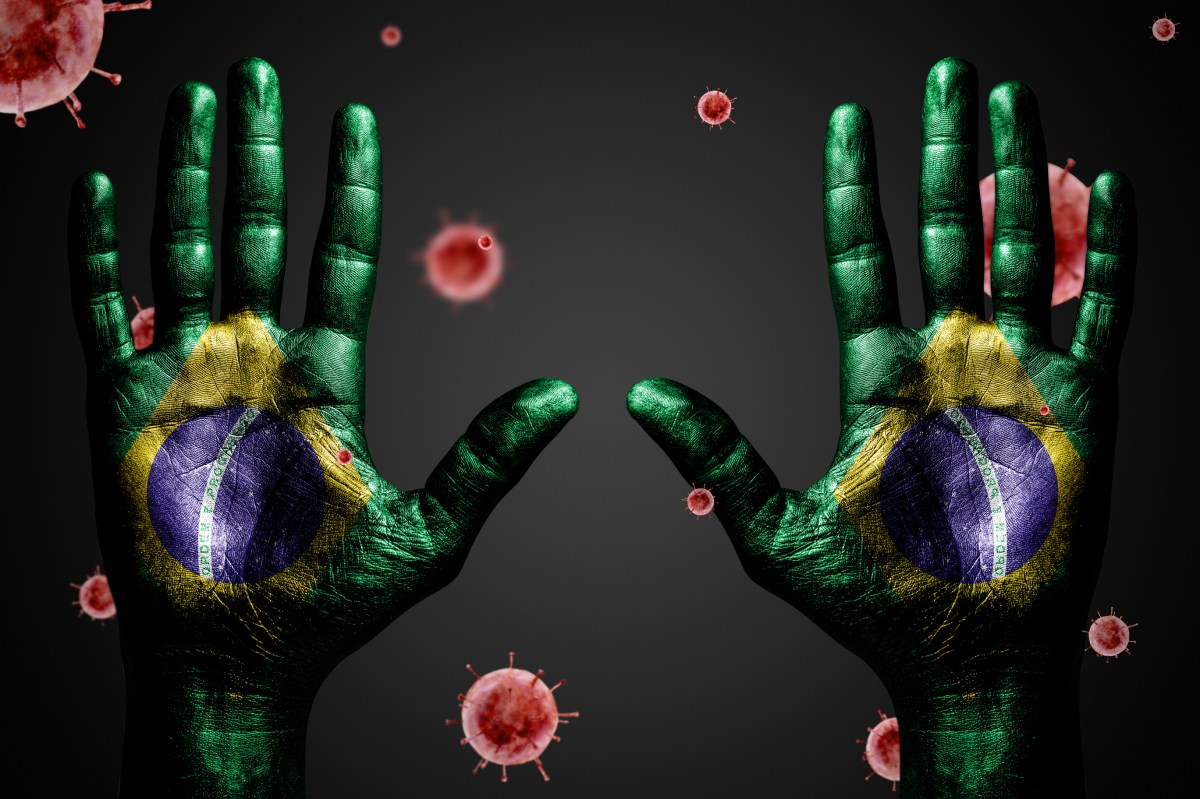
Is President Jair Bolsonaro’s inadequate response to the COVID19 pandemic, with its resulting horrendous loss of Brazilian lives, a symptom of a much bigger Brazilian virus? 

A virus that has been contaminating Brazilian politics and its social fabric for decades.  The result being an erosion of trust, a belief that everyone is out for themselves, a breakdown of social cohesion, the net effect being the rise of populism.  A wave that Bolsonaro has ridden.

How did an ex-military, far right populist politician with extremist views manage to win the 2018 election in Brazil?

Since his election, Bolsonaro has seemingly actioned a strategy to create a culture of ‘denialism’ across all levels of Brazilian politics and society, a similar approach used by his friend and apparent role model, former US President, Donald J. Trump.  This denialism giving license to deny and set a ‘false truth’, which suits a politician’s own agenda.  In the early 2000’s, the term ‘spin doctor’ was common.  Politicians like Bolsonaro, Trump and many of their followers have taken that term to a new level.  No longer spinning a truth to reflect a different viewpoint, but now actively denying the truth and instead instilling a falsehood.

The start of the social and political virus can be seen in earlier times.  Matias Spektor, Associate Professor and Founder of the School of International Relations at FGV, Fundação Getulio Vargas, believes that perhaps, due to the high incidence of violence that started to rapidly increase in Brazil in 2017, reaching 64,000 homicides that year alone, combined with the lack of belief in a political system that continuously failed to provide good governance, incessant corruption scandals, high degree of inequality, as well as the fact that a newcomer who spoke a language that was reminiscent to a language spoken during the dictatorship (1964-1985) claiming he would end endemic corruption, loosen gun laws, give police force autonomy in order to fight violence, made him an ideal candidate for president at the time. He also mentioned that Bolsonaro may not be the cause of democracy decay in Brazil, but rather a symptom.

Perhaps the very populism that put Bolsonaro in to office in 2018, will be the force that removes him.  The very visible and real effects of the COVID 19 virus may actually cause the end of one strain of the social and political virus that has permeated Brazil for decades.

We can’t forget that 225,000 (as of February 2) Brazilians have lost their lives to Covid-19 so far, the second highest number of deaths in the world, and the numbers keep rising.

Brazil has been facing many crises due to the pandemic and a new covid-19 variant, initially detected in Manaus, and spreading ferociously across the country. Brazilians have a negligent president as a leader, who has constantly refused to take adequate measures in order to contain the spread of covid-19 and protect its population from further unnecessary deaths.

In the past few weeks, across many Brazilian states and across the world, Brazilians have gone out in the streets protesting against Bolsonaro’s leadership and requesting for his impeachment. Bolsonaro and his government may also face charges of genocide and crimes against humanity at the International Criminal Court for the way they handled the pandemic.

Recently, 63 requests for impeachment of the president were presented to Rodrigo Maia, speaker of the Chamber of Deputies, but unfortunately, on February 1, Maia’s last day in office, he took the decision and refused to open an impeachment case against Jair Bolsonaro. Maia was replaced by Arthur Lira, who is one of Bolsonaro’s allies. Lira faces charges of taking bribes in the Car Wash scandal and other probes.

“Jair Bolsonaro has gone beyond all limits and is in no condition to continue governing the destiny of more than 200 million Brazilians. In addition to committing crimes of responsibility since the first day he stepped in the Planalto Palace, the president acts irresponsibly and criminally during the coronavirus crisis “, explains Congresswoman Fernanda Melchionna on her official website and who was present in the impeachment request protocol in the Chamber.

A recent study and investigation by NGO Conectas Derechos Humanos and São Paulo University (USP), obtained by Spanish newspaper EL PAÍS, accuse Jair Bolsonaro of allowing Covid-19 to spread freely across Brazil.

“Our research has revealed the existence of an institutional strategy to spread the virus, promoted by the Brazilian government under the leadership of the President of the Republic.”

According to Luiz Henrique Mandetta, doctor and former health minister, who was dismissed by Bolsonaro in March last year due to a disagreement over the use of chloroquine and action guided by the World Health Organisation’s advice, this new variant could trigger a mega-pandemic in Brazil over the next two months.

“We had a new disease and a system with old problems. I had to protect this system and reorganise within a government environment extremely hostile to any reorganisation initiative,” said Mandetta, recalling that he chose to have direct communication with the population. “As there was no government campaign and the president did the opposite, I started to communicate with society so that it could build a line of defense”, he commented on his disagreements with Jair Bolsonaro.

During an interview at Manhattan Connection in January 27, Mandetta spoke about the five critical crises Brazil has been going through in the last year.

Mandetta mentioned that the first crisis took place when Bolsonaro decided to sabotage the prevention system. He dismissed the danger of covid-19 and called it “the sniffles”. Bolsonaro was firmly against the use of masks and social distancing measures. His refusal to act in order to contain the spread of the virus was an indication of his advocacy to herd immunity. “This is a neurosis. 70% of the population will catch the virus. There is nothing I can do. It’s madness”. Bolsonaro said in May last year.

The second crisis arose when Bolsonaro decided to ally with former US President, Donald Trump, and together they created a narrative with the exact same speech, defending the use of chloroquine, contaminating the treatment policy and undermining preventative measures. Bolsonaro mentions the use of hydroxychloroquine as a treatment for covid-19. His government was betting on the use of this drug to diminish the pandemic in the country, instead of establishing an adequate vaccination strategy.

“I have been talking about the use of hydroxychloroquine in the treatment of covid-19 for 40 days. The use of chloroquine is increasingly found to be effective”, said Bolsonaro outside Planalto Palace last April. Last October, he insisted on the issue saying “In Brazil, if you take chloroquine at the onset of the symptoms, you have 100% cure”.

Mandetta articulated that the lack of a testing system was Brazil’s third crisis. At the end of November, the newspaper “O Estado de S. Paulo” revealed that 7.1 million tests are in the ministry’s warehouse, that is, they were not sent to SUS (Brazil’s health care system) in the middle of a pandemic. Of the total stockpiled, 96% (about 6.86 million units) expired between December 2020 and January 2021.

The fourth crisis hit Brazil when Bolsonaro decided to turn his back on a key solution, a vaccination strategy, joining the anti-vaccine movement. Brazil’s vaccination program has not been short of mishaps and confusion, leaving its population lost and in despair.

Bolsonaro’s government failed to set up an efficient vaccination program, even with the fact that Brazil has a long history of successful vaccination campaigns and its state funded facilities are able to produce and distribute vaccines on a large scale.

According to Pfizer, Bolsonaro’s government missed the opportunity to order 70 million doses of the vaccine back in August with delivery in December 2020.

Astra Zeneca was Brazil’s main choice for its vaccination program. On June 27 2020, Brazil signed and agreement to start manufacturing the 30 million doses of the vaccine locally, by Fiocruz Institute. On August 31, Bolsonaro’s government signed another agreement with Astra Zeneca, this time to produce 100 million doses of the vaccine. On January 22, 2021, Astra Zeneca sent Brazil 2 million doses of the vaccine, sourced in India, as an emergency use.

Fiocruz and Butantan Institutes were expected to manufacture the Pfizer and Sinovac vaccines respectively, but due to lack of the active ingredients needed to make the vaccines, the project has been delayed until February/March 2021. This delay may have been the result of Bolsonaro’s open criticism to China.

On January 17, the National Health Surveillance Agency, Anvisa, authorised the emergency use of both the CoronaVac (developed by Chinese Sinovac in partnership with Butantan Institute) and the Astra Zeneca vaccines in Brazil. CoronaVac was the first covid vaccine shot administered in Brazil in January 17.

In less than one year, Brazil had three health ministers. Luiz Henrique Mandetta, doctor and politician, who trusted WHO guidelines and against the use of chloroquine, was dismissed by Bolsonaro. Nelson Teich, oncologist and health consultant, was appointed to Health Minister soon after his Mandetta’s departure. Teich was in power for less than one month and resigned in May 2020 due to a disagreement with Bolsonaro on topics such as the use of chloroquine and isolation measures.

Eduardo Pazuello, former Army General and no previous health experience, was appointed to health minister. At this point, it was clear that Bolsonaro’s government switched their vaccination strategy, betting on the use of hydroxychloroquine alone to fight Covid-19.

Bolsonaro announced publicly he would not take the vaccine himself and started a misinformation campaign about the vaccine’s terrible side effects.

“At Pfizer, it is very clear in the contract: we are not responsible for any side effects. If you become a chipanz … if you become an alligator, it’s your problem. I’m not going to talk about another animal here, not to mention bullshit. If you become Superman, if a beard is born in a woman or a man starts talking thinly, they have nothing to do with it. Or even worse, tampering with people’s immune systems. How can you compel someone to get a vaccine that has not completed its third trials yet?, said Bolsonaro in December last year.

As of February 1, Brazil vaccinated 2,051.29 million people, approximately 0.5% of the population.

According to Manddetta, the fifth crisis may be about to explode with the new covid variant from Manaus spreading across all states, which may create a “mega-epidemic”.

The recent events of Manaus, where people died asphyxiated due to lack of oxygen supplies and the collapse of the health system, could be replicated across the entire country.  The Ministry of Health pressured the Health Secretariat of Manaus to use anti-viral medications early in the treatment of Covid-19, such as chloroquine, hydroxychloroquine, ivermectin, azithromycin, nitazoxanide, corticoid, zinc, vitamins, anticoagulant, rectal ozone and chlorine dioxide.

“Ladies, gentlemen, there is no other way out: we are no longer discussing whether this professional agrees or not. The federal and regional councils have already positioned themselves, the councils are in favor of early treatment, of clinical diagnosis”, said Pazuello during an interview in Manaus on January 11.

“The treatment must be immediate and the drugs must be made available immediately. The patient needs to take the medication and be accompanied by a doctor, no doubt about it ”, added Pazuello.

There is no question and it is clear that Bolsonaro and his government have failed Brazilians at so many levels, by lack of planning and action, as well as employing a denialism approach to a lethal and highly transmissible virus, which was left to spread freely through the entire population. Bolsonaro and his administration should carry the burden and consequences already visible and felt by most Brazilians. Unfortunately, the man hangs on to his position as fiercely as he can, without any signs of remorse. His decision to sacrifice life over the economy is unacceptable for most and may haunt him for many years to come.