World’s Addiction to Brazilian Meat Feeding Deforestation and Destruction

Monica Piccinini

28 Oct 2022

How much are we willing to pay for our meat obsession?

As the world population continues to grow and predicted to reach nearly 10 billion by 2050, meat consumption is on the increase. According to a study published by Science, between 90 to 99 percent of all deforestation in the tropics is driven directly or indirectly by agribusiness.

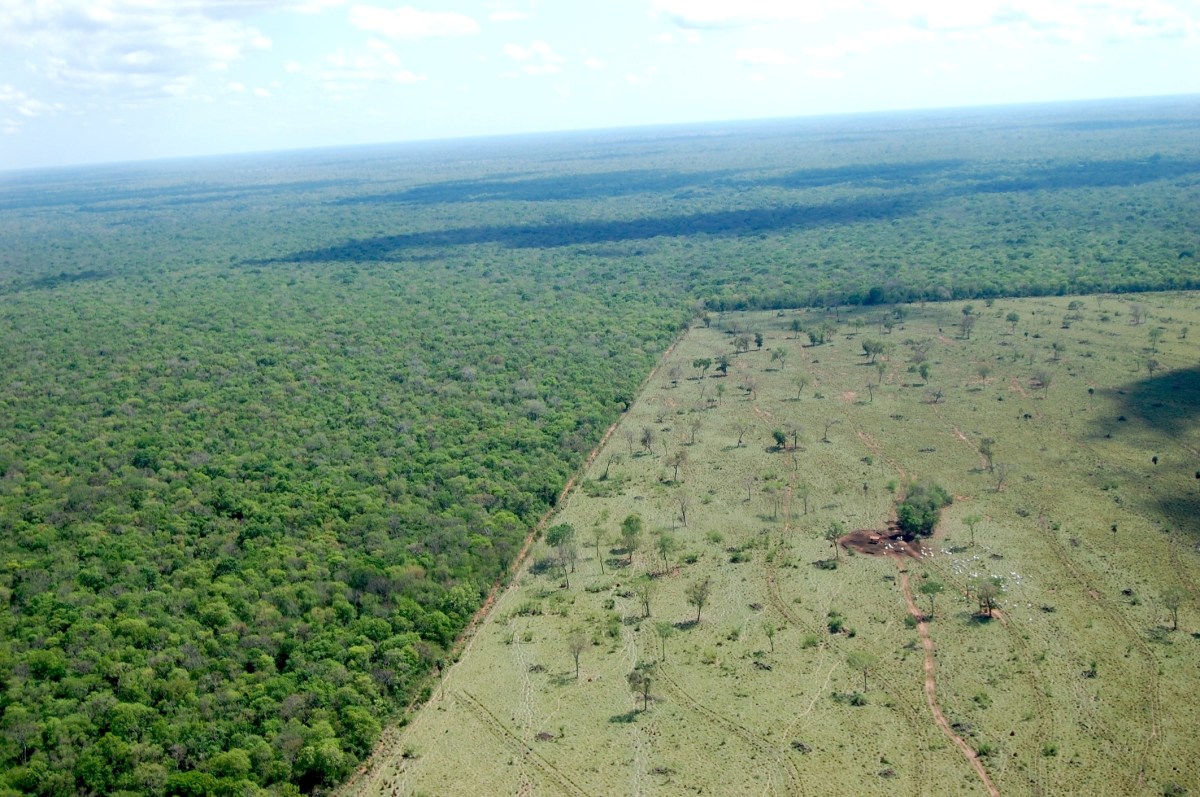
Livestock is the leading driver of deforestation in the Amazon rainforest and a key factor of not just CO2 emissions, roughly 14.5% of all human-induced global GHG emissions, but also of methane.

According to IPAM, the Amazon Environmental Research Institute, cattle pastures occupy 75% of the deforested area on public lands in the Amazon. Deforestation of the Amazon and Cerrado are the main drivers of Brazil’s CO2 emissions.

“Squatting is a risk factor for the planet’s climate balance, and it also poses two problems for the livestock sector: illegality and more greenhouse gas emissions,” says IPAM senior researcher Paulo Moutinho.

“A truly low carbon economy in Brazil needs to undergo a comprehensive analysis of the impact of production chains on the worsening of the greenhouse effect. Leaving these emissions aside makes no sense when we have an ongoing climate emergency,” he warns.

A recent study conducted by WWF found that out of the 486 endangered species in the Amazon and Cerrado regions, 484 of them have lost part of their habitat as a result of deforestation.

It’s fair to say we shouldn’t point the finger at one single direction, when you realise that there’s a significant number of worldwide investors and supporters financing deforestation in the region. Complicity must be shared equally.

With that in mind, some fundamental and essential questions must be answered; as to who is to blame and what effective actions can we expect to be taken from world leaders, financiers, governments, corporations and the general public?

Meat Giants
Photo: 196817068 © Alf Ribeiro | Dreamstime.com


JBS, Marfrig and Minerva are Brazil’s largest meat processors and exporters, supplying food chains and supermarkets in Brazil and across the world.

JBS is the world’s largest meat (beef, pork, lamb and poultry) processing company in the world with the largest climate footprint. It has US$ 76 bi in revenues, employs over 250,000 people globally, and has over 70 brands and customers in 190 countries, including Swift, Pilgrim’s Pride, Moy Park, Certified Angus Beef, Gold Kist, Oak Crown, Moyer, Clear River Farms, Geo, and many more.

In 2021, the majority of the company’s revenues were made in the United States (51%), Asia (15%), Brazil (12%) and Europe (7%), and the majority of its exports in 2020 went to China (27.2%).

The company is associated with suppliers linked to deforestation, pollution, slave labour, fires, bribery, land grabbing and invasion of Indigenous peoples’ land, protected areas and reserves.

According to a Mighty Earth report, The Boys from Brazil, JBS, Marfrig and Minerva maintain that they can’t trace its cattle through its supply chain and eliminate cattle linked to deforestation areas.

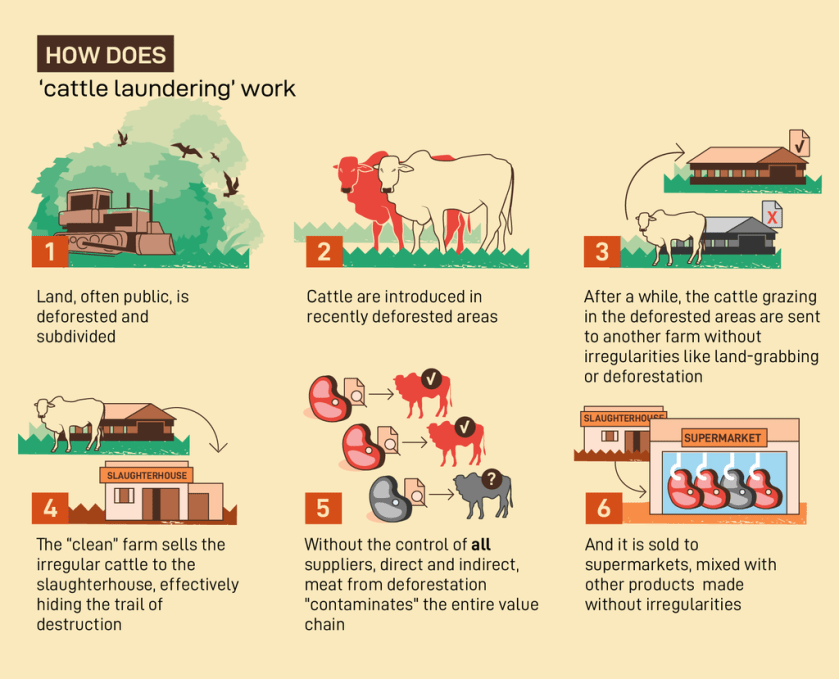
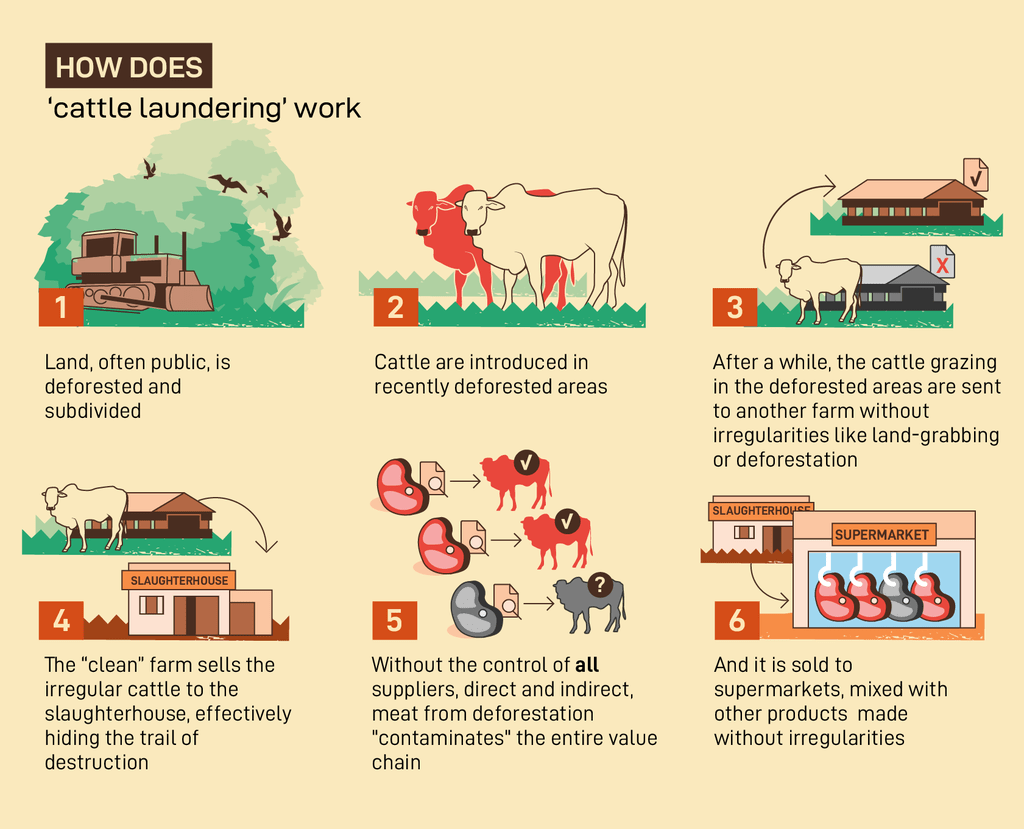
JBS has been accused of “cattle laundering”, the shuffling of cattle from ranch to ranch in order to conceal their illegal origins. The process is tricky and difficult to track. The cattle are bred where deforestation occurs, moved to other properties where it is nurtured through adolescence and then taken to “fattening” farms. The cattle are then transferred to processing plants where they are slaughtered and butchered ready to be shipped/exported.
Source: Greenpeace

“In their emission disclosure and their net-zero target for 2040 JBS fails to take responsibility for an estimated 97% of its emissions footprint, by neglecting emissions from farms and feedlots that are not owned by JBS and emissions related to deforestation. The company plans to continue growth in a GHG emission-intensive industry; we did not find evidence of any planned deep decarbonisation measures”, was reported in the Corporate Climate Responsibility Monitor 2022 assessment (page 84).

“Rather than making noises about being transparent about their supply chains and emissions, why don’t JBS disclose their most recent data? It’s time for JBS to come clean about their global slaughter figures, so we can determine with pinpoint accuracy the scale of their climate footprint”, said Gemma Hoskins, UK director of Mighty Earth.

Fires in the Amazon and Cerrado regions are not naturally occurring events; they usually start intentionally, to clear the land for pasture, illegal logging and land grabbers or to grow animal feed. In September, Brazil’s National Space Research Agency, INPE, reported 41,282 fires in the Amazon rainforest, the highest number since 2010.

The Supporter’s Black List

There are a substantial large number of investors and supporters involved in financing, directly or indirectly, the deforestation of the Amazon rainforest and the Cerrado regions.

An investigation released in June by Global Witness revealed that one of JBS’s supplier, the Seronni dynasty, was allegedly involved in a series of human rights abuses, including the use of slave labour, deforestation, land grabbing and cattle laundering for over a decade. The Seronni’s wealth was gained at the expense of the Amazon deforestation, as well as the exploitation of slave labour.

Grupo Mastrotto, a large Italian producer of leather and upholstery to the clothing, footwear, automotive and boat industries, was also identified as an importer of JBS’s leather linked to the deforestation of the Amazon. Mastrotto supplies the Volkswagen Group, owner of Audi, Bentley, Bugatti, Lamborghini, Porsche, Seat and Skoda. Other customers include Toyota and Ikea.

The meat industry wouldn’t be able to operate without the support of international finance. The UK, EU and US based-financiers continue to funnel billions to JBS, Marfrig and Minerva, including Barclays, BNP Paribas, Deutsche Bank, Dimensional Fund Advisors Group, Fidelity Management, HSBC, JP Morgan, BlackRock, Santander, Vanguard Group, and many more.

French bank, BNP Paribas, was given a formal notice by NGOs for financing Brazilian beef giant Marfrig, implicated in illegal deforestation, indigenous land rights violations and slave labour.

“Banks can no longer pretend they don’t know that their financing and investments fuel deforestation and climate chaos”, said Jérémie Suissa, director of the French organization Notre Affaire à Tous.

Trade data accessed by Global Witness also revealed that in 2020 alone, JBS exported beef products to 160 companies in Europe, 30% went to the UK.

Supermarkets in Europe, the US and the UK are responsible for selling products linked to the Amazon and Cerrado deforestation, including Aldi, Asda, Carrefour, Costco, Iceland, Morrisons, M&S, Tesco and Walmart, amongst others.

Food service companies are also accountable for selling branded and unbranded products sourced from deforested areas in the Amazon and Cerrado regions. They include Burger King, KFC, McDonald’s, Nando’s, Outback Steakhouse, Pizza Hut, Subway, Wendy’s and many more.

According to a damming report by Repórter Brasil, McDonald’s: The Footprint of a Giant, McDonald’s supply chain is exposed to several risks of violations related to Brazil’s rural reality. Deforestation, slave labour, violations of labour laws, and damage to traditional communities are part of the risks directly or indirectly linked to the network that supplies their restaurants.

A Final Appeal

Photo 90934032 © Wanida Prapan | Dreamstime.com

The reality is that we can’t continue doing business as usual and must take immediate action, as the consequences are far too great to our planet and the next generations, some of them already irreversible.

NGOs, researchers, scientists and specialists have proposed various recommendations and solutions to the problem, but the ones accountable for the deforestation and degradation of the Amazon rainforest and Cerrado regions constantly ignore them.

Some of the recommendations by various NGOs, including Mighty Earth and Global Witness outlined below:

• Governments should introduce legislation requiring businesses to identify, prevent, mitigate and report on deforestation and human rights risks, tackling the role of imported products driving deforestation globally.

• Investors, banks and financiers must divest from JBS, Marfrig and Minerva and its subsidiaries excluding them from their investment funds and bond portfolios.

• Supermarkets, retailers and food service companies must drop these companies as a meat supplier.

• The Brazilian government must divest all financing for these companies via BNDES development bank, must introduce enforceable rules against deforestation and introduce strict regulatory limits on mega and factory farm methane emissions.

• JBS, Marfrig and Minerva must disclose its direct and indirect emissions fully, including carbon dioxide and methane, and allow an independent third party to verify their company’s emissions claims.

Carlos Nobre, renowned Brazilian earth scientist, who spent the last four decades dedicated to research studying the Amazon rainforest and its impacts on the earth system and 2007 Nobel Peace Prize winner, has a message to the international community:

“Responsible consumption is key. The international community must continue to play an important role on sustainable consumption and not purchase any products that come from deforested areas.”

A final message from Lucas Ferrante, Brazilian ecologist and researcher, who published several studies on the Amazon rainforest and Cerrado:

“Countries that import commodities from Brazil need to review their trade agreements, mainly for meat, soy, ores, biofuels and now oil and its derivatives that come from the Amazon. Brazilian agribusiness has become a threat to the Amazon, to traditional peoples and to the global climate.”

We are facing multiple challenges ahead of us, none of them simple to solve, requiring total transparency, good will and power to make the essential and effective changes that will create a positive meaningful impact on the future of our planet and humanity.

We can no longer afford to turn a blind eye to these issues, as the result of our inaction will profoundly impact the future of our children!
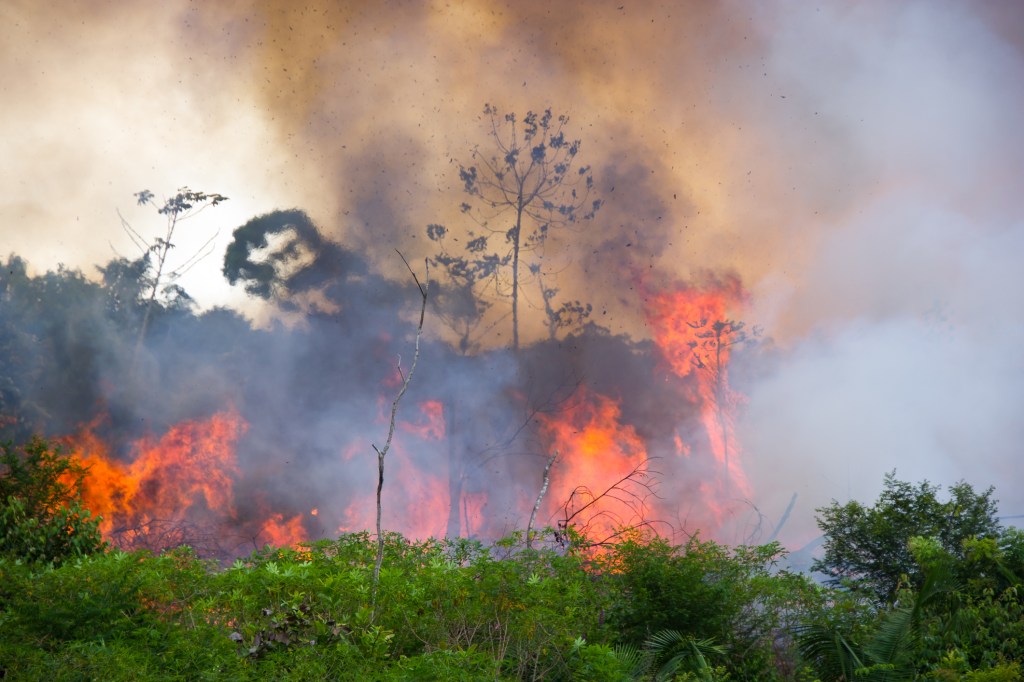
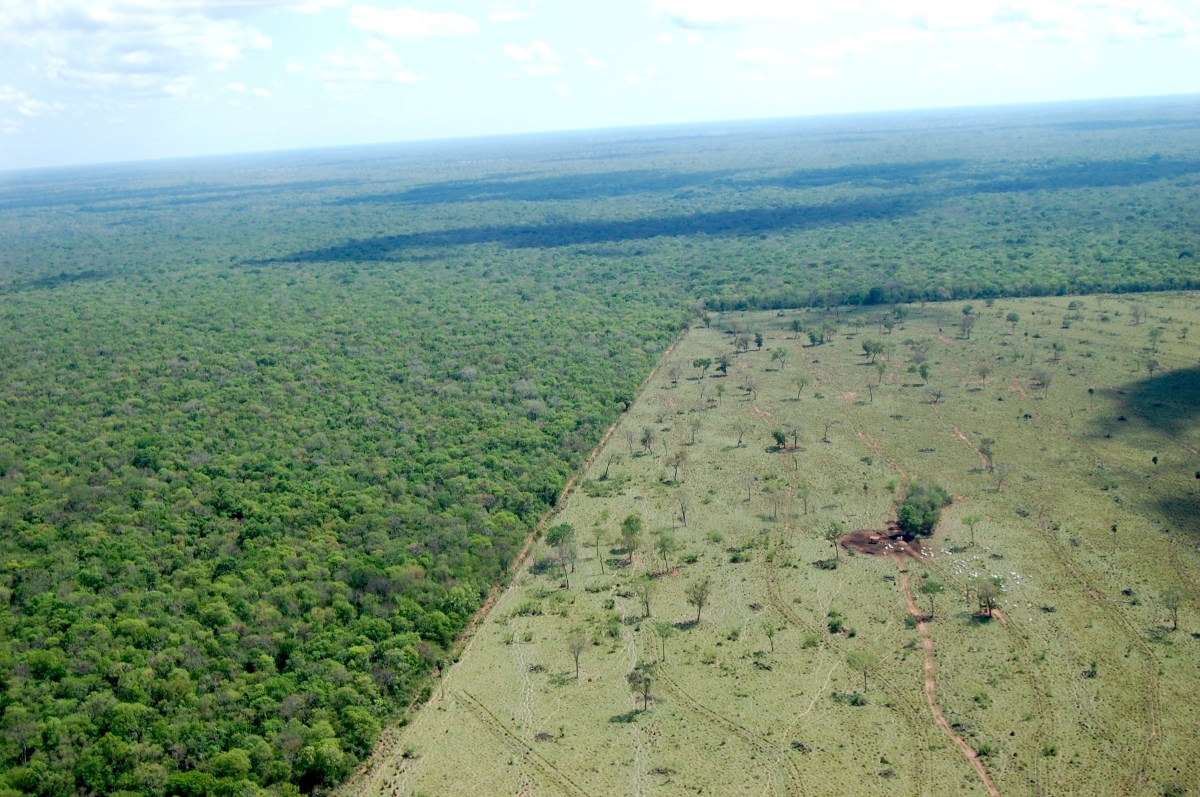
Photo 69667961 © André Costa | Dreamstime.com

BR-319: A Threat to the Survival of the Amazon Rainforest

Monica Piccinini

10 Oct 2022

Environmental and human rights violations may have been committed as a result of one of the Amazon rainforest most gigantic and ambitious infrastructure projects, the reconstruction of BR-319 highway, a stretch of 830 km, connecting the ‘arc of deforestation’ in the southern Amazon to the capital, Manaus.

There are many national and international supporters and financiers with hidden interests behind the reconstruction of this extensive highway project, including a Russian state-owned oil and gas company, a bioenergy company, ‘ruralistas’ (large land-holders and their representatives), illegal miners and loggers, investors, politicians, the government, and many more. Their motivation is driven by profit and power, no matter how much it costs.

The Amazon rainforest plays a key role in controlling both South America’s rainfall and global climate. In addition, the rainforest is home to a third of the world’s biodiversity and a wide variety of indigenous people.

The rainforest has lost more than 830,000 sq km, corresponding to 21% of the forest and roughly 17% is already degraded.

According to Carlos Nobre, renowned earth system scientist, the Amazon rainforest, one of the most biodiverse places on earth, is on the edge of the precipice, showing clear signs of destruction and perilously close to a tipping point of irreversible collapse, triggered by deforestation, degradation, forest fires, logging, illegal cattle ranching, mining, and oil and gas developments.

BR-319 connects Manaus, in central Amazon, to Porto Velho, in the “arc of deforestation”, on the southern edge of the forest. The highway is a free path to illegal side roads in areas of large concentration of indigenous land, legal reserves and conservation units, giving illegal miners, loggers, squatters and land grabbers access to untouched forest.

As a consequence, these invaders are bringing a wave of destruction, instability, pollution, violence, disease, decay and death to the communities and the environment around them.

The highway was inaugurated in March 1976, during the military dictatorship and under the government of General Ernesto Geisel, and abandoned in 1988. In 2015, Dilma Roussef’s (Labour party) government proposed reopening BR-319.

“BR-319 cuts through one of the most conserved blocks of the forest where it contains an enormous stock of carbon. This project is a threat to 63 indigenous lands and 18,000 indigenous people, not to mention the environment and biodiversity”, said ecologist and researcher, Lucas Ferrante, during our interview this month.

According to Ferrante, who took part of a study published at the Die Erde – Journal of the Geographic Society of Berlin, neither environmental studies nor consultation with indigenous peoples were carried out for some sections of the highway, as established by ILO Convention 169.

Ferrante published various academic studies independently and conjointly with Philip Martin Fearnside, a researcher at the National Institute for Research in the Amazon (Inpa) and Nobel Peace Prize winner (2007), on the impacts the BR-319 project will bring to the Amazon, the environment, indigenous communities and the world.

The reconstruction of BR-319 does not have an economic feasibility study (EVTEA). Independent studies show that for every R$1,00 spent on the highway, the ROI is only R$0,33, mentioned Ferrante.

The main transport route used has always been via the Madeira River, making it a cheaper and safer way to transport goods. In his view, the highway project would be a huge social, economic and ecological disaster.

A study published at the Environmental Conservation, indicates that Brazil could lose more than US$1 billion a year in agricultural production if deforestation in the Amazon region is not contained.

“We have already identified that the Amazon rainforest has passed its tolerated limit of deforestation. The flying rivers that supply the south and southeastern regions of Brazil are already compromised, including an area of the arc of deforestation, corroborating changes and climate events within the country, even affecting agribusiness”, said Ferrante.

According to Ferrante and various studies, one additional topic of great concern, as exploitation of indigenous lands increases, is the risk of new pandemics. The Amazon rainforest is considered a possible source of the next pandemic, as deforestation offers opportunities for disease agents from the region’s large reservoir of different types of coronavirus and various other pathogens to jump into the human population.

The Amazon interior has a precarious healthcare system, making the surge of a new pandemic originating in this region extremely difficult to identify and contain.

Supporters

Photo 120282222 © Arseniy Rogov | Dreamstime.com


A company with many interests in supporting the reconstruction of BR-319 is Russian state-owned Rosneft, one of the largest oil and gas companies in the world.

Rosneft’s CEO, Igor Sechin, is considered to be the second most powerful man in Russia after Putin. In February 2022, just before Russia invaded Ukraine, Bolsonaro travelled to Russia to meet with Putin to discuss a possible energy partnership.

BR-319 highway gives access to AM-366, a planned state highway that passes through the first drilling blocks of “Solimoes Sedimentary Basin” project for oil and gas extraction, an area larger than the state of California. Rosfnet bought 16 blocks in this area.

This is a project of huge concern, as questions are raised about how much influence Rosneft may have on the government’s policies and decisions on the reconstruction of this highway, as well as the impact it may have on the local communities and the environment.

Millenium Bioenergia is another strong supporter of BR-319 reconstruction project. A bioenergy company formed in 2014 by mill owners from São Paulo and grain producers from the Midwest, the company’s initial focus was the production of biofuels. However, the company decided to partner with the indigenous communities to produce corn, chicken, fish and pigs in a confined system. This is the perfect recipe to trigger new pandemics as a result of zoonotic leaps due to environmental degradation.

In the states of Amazonas and Roraima, their goal is to produce biofuels from monocultures in indigenous lands and other communities. According to their plan, indigenous people and communities would carry out these activities with unpaid work or, as one would openly describe it, slave labour. These products would then be exported to Asia, Europe and the United States.

According to a study published by Springer, Millenium has not honoured its obligation to carry out environmental studies that are legally required for the installation of an industry. Instead, they have proposed the building of a hospital for the indigenous people as a form of compensation.

The government’s ‘death agenda’ includes abolishing the legal reserves and opening conservation units and indigenous lands to mining, agriculture and ranching.

Jair Bolsonaro’s government, with the full support of ‘ruralistas’, has intentionally weakened the country’s environmental agencies and forest code, also denying the existence of climate change.

They have reduced protected areas, cut government funds for environmental protection, weakened the systems for monitoring and combating environmental crimes, approved 1682 new pesticides, leaving an open door to pollution, deforestation, violence, crime and devastation across the region and communities in the Amazon and the rest of the country.  

Politicians in Manaus and across the country claim that BR-319 would be a “model of sustainability for the world”, but indications and studies carried out so far suggest otherwise. They follow the same rhetoric, stating the highway is a symbol of progress and sovereignty, and that the Amazon rainforest belongs to Brazil, no foreign interference should be allowed.

Violence & Crime

Photo 245527759 / Amazon Indian Brazil © J Brarymi | Dreamstime.com


BR-319 has brought crime and violence to this region by illegal miners, loggers, squatters and land grabbers, threatening to kill anyone who refuses to comply with their rules.

According to Ferrante, the highway also attracted criminal gangs and organised crime to the area, with the full participation of high scale politicians.

There are countless national and international organisations financing illegal mining associated with drug and illegal arms trafficking. Organised crime has exploded and taken over the Amazon rainforest.

Bolsonaro’s gun law, the CAC (Collectors, Snipers and Hunters) license, allows Brazilians to purchase a wide variety of guns if they have no criminal record, are registered with a shooting club, and can demonstrate proficiency with a firearm.

The loosening of firearms restrictions law is creating new mechanisms for criminal groups to purchase weapons legally, consequently increasing violence in the Amazon and Brazil.

Another issue of concern is the maintenance of clandestine airstrips, mainly for mining and also serving organised crime.

According to information obtained by The Intercept, the Pulitzer Center and Earthrise Media, there are 362 clandestine airstrips, without registration with Anac, the National Aviation Agency, in the Legal Amazon. But this number almost triples, if you consider the runways open without authorisation and registration, amounting to at least 1,269 landing and takeoff lanes.

Indigenous and traditional communities are also victims of constant violent verbal and physical threats, sometimes ending in fatalities, but they are not the only ones.

Ferrante, a scientist who has spent many years exposing the situation in the region by publishing his studies in academic journals, was faced with various threats and violence against his own life.

He received countless death threats by anonymous calls and text. A “fake” Uber driver told Ferrante he should keep quiet because he was interfering in national security matters. Chemicals thrown into his home’s water system also poisoned him. Ferrante was terrified and withdrawn, unable to go out for a few months.

There is not doubt the BR-319 reconstruction project will impact local traditional and indigenous communities, as well as the environment, biodiversity and climate change, with very serious consequences to Brazil the rest of the world.

National and International Players

Photo 12998338 © Alain Lacroix | Dreamstime.com

Brazil is the world’s largest exporter of beef and soy, which are the two commodities responsible for 90% the Amazon rainforest deforestation. Research shows that 70% of the chopped down Amazon is populated by cattle.

It’s essential to understand that the reconstruction of BR-319 highway has a national as well as an international long list of powerful supporters defending their own interests.

Agribusiness Watch report reveals that international banks and funds are financing Brazil’s agribusiness lobby in the country, including JP Morgan Chase, BlackRock, and Bank of America, each having invested US$1 billion in livestock. American International Group, AIG and Citigroup are also provider of funds to Brazilian agribusiness companies.

European investors include Allianz and Deutsche Bank, Barclays, Standard Chartered, BBVA, Santander, BNP Paribas, ABN-Amro and Rabobank, among others, have invested $4.5 billion in IPA companies, part of Instituto Pensar Agro, supporting FPA (Agricultural Parliamentary Front) and responsible for a package of anti-environmental measures being considered in the Brazilian Congress.

The report also lists various companies, including JBS, Suzano, Marfrig, ADM and Cargill that use their influence in Brazilian politics against the interests of environmental policies and indigenous groups.

Brazilian banks financing the agribusiness sector include BTG Pactual, Safra, Verde Asset Management, Vinci Partners, and XP Investimentos, maintaining bonds estimated at US$ 9.3 billion.

According to De Olho nos Ruralistas, in 2019, Agribusiness Watch revealed some of the multinationals that were affiliated by associations that maintain the IPA (Instituto Pensar Agro): Bayer, Basf and Syngenta, Cargill, Bunge, ADM and Louis Dreyfus; JBS, Marfrig, Nestlé and Danone.

During Bolsonaro’s administration, agribusiness companies met 278 times with government officials of MAPA, the Ministry of Agriculture, Livestock and Supply. Part of the agenda was the relaxation of rules for pesticides.

There’s no doubt that the reconstruction of BR-319 will benefit most of the above mentioned players, who continuously support and invest in the agribusiness sector in Brazil, including banks, agrochemical companies, governments, politicians and corporations, in Brazil and abroad.

The same can’t be said about the environment, climate change, local traditional and indigenous communities and the entire world population, who will pay a hefty price for these callous actions.

The Road Ahead

Photo 179525881
 © Mariusz Prusaczyk | Dreamstime.com


This is a decisive political moment for Brazil and the world, as the second term of the presidential elections draws to a close at the end of October and Brazilians will be choosing their next president, Jair Bolsonaro or Luiz Inácio Lula da Silva (Lula), both battling for the pole position.

Ferrante mentioned what may happen if Lula is elected Brazil’s next president:

“I was present during Lula’s statement during his visit to Manaus in September 2022, when he mentioned that he will choose three major infrastructure projects for each state in Brazil, mainly roads, which means the BR-319 highway project may be on the top of his list. He explicitly said that he isn’t against the highway, but the environmental rites and the consultation of indigenous peoples must be followed”,

“The BR-319 highway project is at a very advanced stage. We urgently need the suspension of the maintenance license, pending appropriate studies and consultations with indigenous peoples. It is necessary to create a task force to supervise the actions of INCRA, the National Institute for Colonisation and Agrarian Reform and the Ministry of the Economy, as they continuously try to legalise these lands”, added Ferrante.

When asked about the message he has to the international community, Ferrante replied:

“Countries that import commodities from Brazil need to review their trade agreements, mainly for meat, soy, ores, biofuels and now oil and its derivatives that come from the Amazon, extracted by Rosfnet. Brazilian agribusiness has become a threat to the Amazon, to traditional peoples and to the global climate”,

He added:

“All countries in the world need to turn their eyes to what is happening in the Amazon now, especially on the BR-319 highway. This is a matter for the world to discuss because the consequences of this highway are global, including new pandemic outbreaks and accelerating climate change that is already causing waves of heat leading to mortality in Europe. The environmental damage caused here exceeds the borders of Brazil and should be monitored by the whole world”.

Photo 106303117 / Amazon Rainforest Indigenous © Vkilikov | Dreamstime.com

Beef Obsession and the Rampant Deforestation of the Amazon Rainforest

Monica Piccinini

13 May 2022

Despite the deforestation of the Amazon rainforest being constant news headline across the world, no effective actions have been taken to prevent total devastation of the region.

Scientists, activists and the general population across the world are tirelessly asking the ones in the position of power to take this matter seriously and stop this situation escalating further, as it could cause irreversible consequences for the Amazon, our planet and future generations.

According to recent data from INPE, Brazil’s national space research agency, deforestation in the region hit a record high, totaling 1,012 square km (390 square miles) in the month of April 2022, doubling the area compared to the same month in the previous year.

In the first four months of 2022, deforestation of the Amazon increased 69% compared to the same period in 2021. Brazil’s president, Jair Bolsonaro, has weakened environmental protection since he took office and firmly believes that more farming and mining will solve poverty affecting the region.

“Some government and business leaders are saying one thing – but doing another. Simply put, they are lying – and the results will be catastrophic”, said UN Secretary-General António Guterres.

Who’s the culprit?


The livestock industry is responsible for as much as 19% of global greenhouse gases emissions, contributing to deforestation and climate change. No doubt, cattle ranching is responsible for the majority of the Amazon deforestation.

In January 2022, a Bloomberg investigation concluded that JBS, the world’s largest meat processor, was “one of the biggest drivers of Amazon deforestation”.

JBS is the largest meat processor in the world, producing factory-processed beef, chicken and pork, and also selling by-products from the processing of these meats.

Brazilian Jose Batista Sobrinho founded JBS in 1953 and its expansion has come under the leadership of his three sons: Jose Batista Junior (known as Junior Friboi), Wesley Batista and Joesley Batista.

The company employs 250,000 people globally, is listed on the Brazilian stock exchange and desperately seeking an IPO in the United States. Top investors include the state-owned Brazilian development bank BNDES, asset manager Black Rock, Vanguard, Santander and Barclays banks.

In March 2022, JBS announced its fourth quarter and full 2021 results, achieving net revenue of US$72.25 billion in 2021, a year-on-year increase of 29.8%.

The company owns a portfolio of brands globally, including Swift, Pilgrim’s, Moy Park, Tulip, Kerry Meats, Randall Parker Foods, Aberdeen Black, Country Pride, Primo, Great Southern, Danepak, Dalehead, Aspen Ridge, 5Star, Canadian Diamond Beef, Beehive, Blue Ribbon Beef, Clear River Farms, Vivera, Huon, Seara, Friboi, Rivalea, King’s Group, amongst many others.

In 2021, JBS processed 26.8 million cattle, 4.9 billion chickens and 46.7 million pigs, but this is a conservative number, given the lack of transparency in the industry.

JBS’s commitment to be ‘Net Zero’ by 2040 does not seem realistic or achievable, as JBS increased its annual greenhouse gas emissions by 51% between 2016 and 2021, based on the Institute for Agriculture and Trade Policy, IATP’s latest calculations.

Source: IATP 2022*Million Metric Tonnes CO2 equivalent

In order to stop deforestation, a key factor is being able to identify the origin of the meat in the supply chain. This is one of the biggest issues for JBS, as the company has been accused of “cattle laundering”, the shuffling of cattle from ranch to ranch in order to conceal their illegal origins.

The process is tricky and difficult to track. The cattle are bred where deforestation occurs, moved to other properties where it is nurtured through adolescence and then taken to “fattening” farms. The cattle are then transferred to processing plants where they are slaughtered and butchered ready to be shipped/exported.

Source: Greenpeace

In October 2021, Brazilian federal prosecutors concluded that JBS had purchased over 300,000 cattle from ranches with “irregularities” in the previous year, including illegal deforestation in the Amazon region.

The biggest consumers

China/Hong Kong is the largest buyer of Brazilian beef, the United States becoming its second biggest buyer. The US is home to 4% of the world’s population and eats approximately 20% of its beef.

“We should be paying the Brazilians not to cut down their forest. We got to cut ours down.  We got to cut ours down.  We got the benefit of it.  Because we’ve got these third-world countries — not third world; some are — in Africa and in — and in South America — we got to — the industrial countries have to help”, said US president Joe Biden at a speech on Earth Day.

On the same day, Biden signed an executive order to combat commodity-driven deforestation globally, including in forest clearing to produce agricultural commodities like beef, soy, and palm oil.

According to the White House, the department of state would lead development of a report on whole-of-government approaches to reduce or eliminate U.S. purchases of agricultural commodities grown on illegally or recently deforested lands, including through public-private partnerships to incentivize sustainable sourcing.

A recent investigation by The Washington Post reports that the US government is unable to track the beef that has been imported into the country. Once they pass through the inspection process, all labels are removed, making it impossible to identify their origin. Federal agencies don’t track the domestic sale of imported beef and retailers have no obligation to inform consumers about the origin of the beef.

Additionally, US agency that authorises Brazil’s meatpacking plants to export to the US says it doesn’t try to determine whether operations cause environmental damage. The American consumer is unable to identify the source of the beef they are consuming.

JBS and the UK

“JBS is one of the world’s worst climate offenders and that’s why we’re urging its key customers like giant supermarkets Carrefour, Costco and Tesco to drop JBS urgently,” said Alex Wijeratna, campaign director at Mighty Earth. “No company that buys meat from JBS can claim to be serious about climate change”, added Wijeratna.

Paul Morozzo, forests campaigner for Greenpeace UK, said: “Here’s yet more evidence of the fact that JBS – a major meat supplier to many UK supermarkets – shows absolutely no intention of ending its climate wrecking activities”.

“Tesco recently claimed that remaining a customer of JBS was the best way to influence it. But the only way to show JBS that destroying the planet for meat production won’t be tolerated is to stop doing business with it immediately”, added Morozzo.

UK supermarkets say they don’t buy directly from JBS, but buy meat from Tulip and Moy Park, both owned by JBS.

Moy Park is one of Europe’s leading poultry producers and Northern Ireland’s largest private sector business. Dalehead is a division of Tulip, supplying Waitrose with over 400 products, including fresh pork, bacon, sausage, cooked meats and lamb.

In 2021, Pilgrim’s Pride, a JBS brand, acquired Kerry Consumer Foods in the UK and Ireland for GB680 million. JBS also acquired Randall Parker Foods (Wales).

“JBS is using the same greenwashing tactics employed by oil and gas majors for decades. It presents itself as a company with genuine climate ambition but fails to disclose its full emissions so they can be compared with the company’s public communications. And as this research shows, JBS’s emissions are increasing substantially, not decreasing”, said Hazel Healy, UK Editor of climate investigative news outlet DeSmog.

Source: IATP 2022*Million Metric Tonnes CO2 equivalent

There are a large number of players, including governments, corporations, PR and media companies, politicians, all trying to distract us from the fact that this is an extremely serious issue requiring total transparency and urgent attention in order to be resolved. Their “greenwashing babbling” won’t help us fight climate change.

In an attempt to stop the relentless and rampant deforestation of the Amazon rainforest, retailers, supermarkets and the food service across the world must drop JBS and its subsidiaries as a meat supplier.

Additionally, financiers, banks and investors must also stop investing in JBS and its subsidiaries. Without these actions, the deforestation will most certainly continue. We are running out of time!