Using Science to Block a Road to Ruin – The Amazon BR-319

Monica Piccinini

23 Feb 2023

According to two prominent scientists, Lucas Ferrante and Philip Fearnside, and the result of their studies, the ambitious reconstruction of the BR-319 highway, linking the capital Manaus in central Amazonia to the southern edge of the forest, Porto Velho, might be a catalyst to rampant deforestation with irreversible and catastrophic consequences to the rainforest.

BR-319, a stretch of 830 km, connecting the ‘arc of deforestation’, was inaugurated in March 1976, during the military dictatorship, under the government of General Ernesto Geisel, and abandoned in 1988. In 2015, Dilma Roussef’s government proposed reopening BR-319.

“The BR-319 highway cuts through one of the most preserved blocks of the forest, where it contains an enormous stock of carbon. This project is a threat to 63 indigenous lands and 18,000 indigenous people, not to mention the environment and biodiversity”, mentioned Lucas Ferrante, environmental scientist.

Brazilian Amazonia and Highway BR-319 (Manaus-Porto Velho). Source: map produced by scientist Lucas Ferrante in the ArcGIS software, deforestation data from INPE 2021.

Despite the warnings from scientists about the negative consequences this project may bring to the region, it’s considered a priority for Brazil’s new president, Luiz Inácio Lula da Silva. During an interview with a radio station in Manaus last September, he mentioned:

“We do not want to transform the state of Amazonas into a sanctuary for humanity. Millions of people live in the state of Amazonas. We have to give these people the right to civility, the right to live well, the right to come and go. It is entirely possible for you to work the climate issue correctly, work the environmental issue correctly and provide the necessary security so that you can build good roads that can connect the state of Amazonas with the rest of the country.”

However, according to Lucas Ferrante, the newly elected president of Brazil, Luiz Inácio Lula da Silva, only replicates a political boast that it is possible to establish territorial governance.

“We need to make some things clear, this is just political rhetoric, a bravado that does not consolidate. According to a study we published at Land Use Policy, the BR-319 highway area had a deforestation rate of up to 2.6 times higher than the deforestation rates observed in other parts of the Amazon, i.e., the state of Amazonas is no longer a isolated sanctuary, yet another area increasingly occupied by criminal organisations that encourage land grabbing and deforestation”, argues Ferrante.

“In addition, people have always had the right to come and go by other modes of transport, but they do not have the right to collapse one of the most biodiverse blocks of the rainforest, which is home to a wide variety of native peoples and which consequently, if deforested, could collapse the global climate,” added Ferrante.

Scientific Studies Raising Red Flags

Lucas Ferrante, environmental scientist, and Philip Fearnside, a biologist at Brazil’s National Institute of Amazonian Research (INPA) and Nobel Peace Prize winner for climate research (2007), both published various scientific studies highlighting the negative effects of this project on the Amazon rainforest.

The highway is a free path to illegal side roads in areas of large concentration of indigenous land, legal reserves and conservation units, giving illegal miners, loggers, squatters and land grabbers access to untouched forest and public lands.

Illegal timber seized by IBAMA agents along the BR-319 highway. Photo by scientist Lucas Ferrante.

As a consequence, these invaders are bringing a wave of destruction, instability, pollution, violence, disease, decay and death to the traditional communities, indigenous people and the environment around them.

In October 2021, a Washington Post journalist, Terrence McCoy and scientist Lucas Ferrante, set themselves on a journey across the length of BR-319 highway, showing the path of destruction and devastation caused by illegal deforestation, land grabbing, mining, fires, violence and even killings. The burnt body of a dead man was found along the way after he had reported land-grabbing activities in the area to the federal police.

Photo of a burnt dead body around BR-319. Photo by scientist Lucas Ferrante.

In 2017, buildings belonging to IBAMA (Institute for the Environment and Renewable Natural Resources) and the Chico Mendes Institute for Biodiversity Conservation (ICMBio) in Humaitá were set on fire by miners and remain inoperative.

It is estimated that BR-319 and planned side roads will generate an increase of the deforested area by more than 1,200% between the highway and Brazil’s border with Peru. This projection relates to central Amazon alone, if extended to Peru, the numbers would increase significantly.

According to a scientific article published in the journal Land Use Policy by both Ferrante and Fearnside, despite environmental legislation requiring an environmental impact assessment (EIA) for one of the stretches of the highway, the project was given the green light from a judge, who authorised it without an EIA.

Additionally, the reconstruction of the highway lacks an economic viability study, EVTEA, required by law 5917/1973, as well as consultation with indigenous people required by International Labour Organisation (ILO) Convention 169 and by Brazilian law 10,088/2019.

The main transport route used in the region has always been via the Madeira River, making it a cheaper, cleaner and safer way to transport goods.

Fernanda Meirelles, executive secretary of the BR-319 Observatory, commented during our interview earlier this month:

“The LP, Preliminary License, was issued without consultations with the indigenous people and traditional communities, an important stage of the process that was not respected. We do not know whether consultations will be carried out in this current government or whether an intervention by the MPF (Federal Public Ministry) will be necessary to fullfil the obligation of consultation”,

“Public hearings were held during the pandemic, but in an inadequate way. There was no logistical support to guarantee the presence of traditional communities and indigenous people, in additional to having been held at a very inhospitable moment for any time of contrary opinion or manifestation. We even witnessed attacks suffered by researcher and scientist, Phillip Fearnside, during these public hearings”, added Meirelles.

According to data released by SEEG, the Greenhouse Gas Emissions Estimation System, between 2018 and 2019, the municipalities surrounding BR-319 highway had a staggering 16% increase in greenhouse gas emissions from land use and agriculture.

The reopening of this highway would also give agribusiness access to more land for expansion, including cattle farming, soy and palm oil plantations, monoculture expansion for large-scale biofuel production, as well as fossil fuel companies, hydroelectric dams, mining, etc.

As various studies indicate, including the ones published at Land Use Policy, and Environmental Conservation, these practices are already happening with the maintenance works of the road and would increase exponentially with the reconstruction of the BR-319 highway.

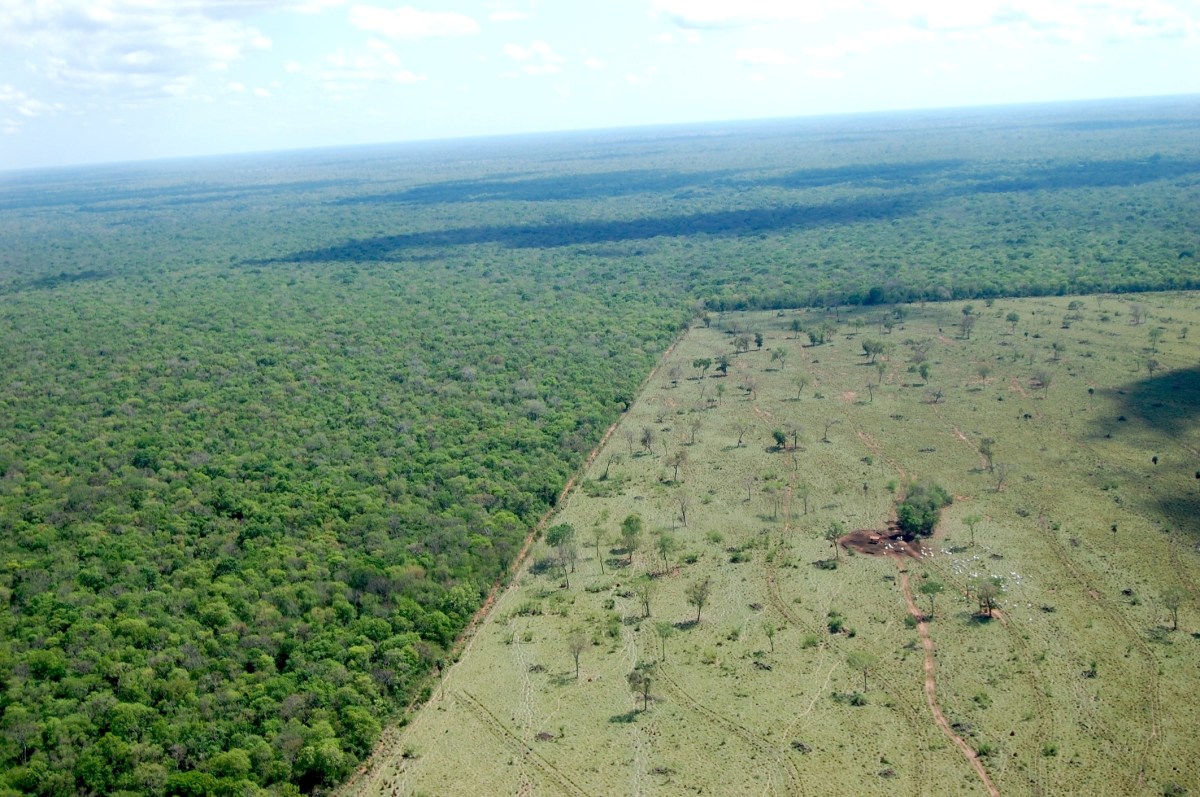
Deforested and burned area along the middle stretch of BR-319 highway. Photo by scientist Lucas Ferrante.

There’s still no information about the costs and sources of funds for this gigantic project. The same applies to a very essential monitoring system project, which was never presented.

Profiteers – All Eyes Focused on the Amazon

There are countless politicians, corporations, governmental agencies and organisations with either a hidden or visible interest in the reconstruction of BR-319 and hoping it succeeds. This project is a gateway to a heaven of natural resources waiting to be exploited and the highway will make their journey a much smoother process.

According to Fearnside, Rosneft, a giant Russian oil and gas company, with drilling rights to 16 extraction blocks located west of BR-319, approximately 35 km from the Purus River, by the Solimões Basin, would be one of the beneficiaries of the project.

Another very concerning sector is biofuel production in the Amazon. Biofuels are produced based on agricultural products, including sugar cane, corn, castor bean, palm oil and raw materials of animal origin.

According to a Global Witness report, BBF Group (Brasil Biofuels) and Agrapalma, two Brazilian palm oil (azeite de dendê) giants, are accused of various violations in the Amazon, including conflict with local communities, violent campaigns to silence indigenous communities and fraudulent land grabs.

BBF is the largest producer of palm oil in Latin America, also active in thermoelectric generation and biodiesel in the Amazon region (Acre, Amazonas, Rondônia, Roraima and Pará). The company announced that it‘s going to invest R$5 billion over the next three years in the production of biofuels, including corn ethanol. The BR-319 project would certainly facilitate their business developments in the region.

Studies coordinated by Ferrante point out that the expansion of plantations for the production of biofuels in the Amazon tends to encourage deforestation and collapse the forest, in addition to providing zoonotic jumps of viruses stored in the forest, generating a new global pandemic.

Based on scientific research, Ferrante managed to overthrow a presidential decree that released sugarcane to the Amazon, but according to him, corn and palm oil are still crops that have an enormous potential for environmental damage and to generate deforestation, demanding economic ecological zoning mainly for the BR-319 highway area.

Politicians, infrastructure companies, national and international corporations, all show great interest in this ambitious project, as the highway would be key to their business expansion.

The voice of a public figure and politician, the governor of Amazonas, Wilson Lima, would have been a great opportunity for us to understand more about this challenging project. Unfortunately, Lima did not respond to a request for an interview.

The only NGO in the region that agreed to be interviewed about the BR-319 project was IDESAM/BR-319 Observatory.

The Gordon and Betty Moore Foundation failed to respond a request for an interview.  Funbio responded, but failed to answer questions about the project.

Fundo JBS pela Amazônia mentioned that they we were unable to contribute to this matter, because the reconstruction of BR-319 had nothing to do with the fund and that this is not something that directly impacts their projects.

WWF Brasil did not have a spokesperson available to answer questions related to the project and asked that any questions be directed to BR-319 Observatory.

National and international media, politicians, corporations, governmental agencies, as well as some NGOs, seem to be reluctant to talk about the reconstruction of the BR-319 highway.

All studies so far show that this project lacks environmental governance and would be detrimental to the local communities as well as the rainforest. It also lacks an economic viability study, a monitoring system plan and consultation with the traditional and indigenous communities.

This appears to be a politically motivated plan with every president elected repeatedly making the same promise, selling the idea that the reconstruction of BR-319 highway would bring prosperity to the region, without considering that it may also bring pollution, illegal activities, violence, diseases, rampant and irreversible deforestation and destruction to the rainforest with catastrophic consequences to Brazil and the rest of the world.

If completed, this project may put in jeopardy the future and survival of the Amazon rainforest, all in the name of what they call “progress”!

Article available in Portuguese at A Escola Legal.

The ‘Billionaires’ Club’ with a Mission to Change the Weather

Monica Piccinini

5 Dec 2022

Solar geoengineering, SG, is the latest billionaires’ techno-utopian dream to reverse the impact of climate change.

As we have shown little progress in coming to an agreement to use conventional and sensible measures of climate change mitigation and adaptation, a ‘privileged club’ appears to be pursuing a worrying and ambitious plan to change our global weather.

Politicians and fossil fuel giants may also use SG as a way to buy time and as an excuse to delay the switch to a neutral carbon economy.

What’s Geoengineering?

Goengineering is a set of technologies used with the purpose to manipulate the weather and the environment to counterbalance the impacts of climate change.

This technology is divided in two categories. The first one is carbon geoengineering or carbon dioxide removal (CDR), which seeks to remove carbon dioxide from the atmosphere.

The second and most important one is solar geoengineering, solar radiation management (SRM), stratospheric aerosol injection (SAI) or stratospheric albedo hacking (SAH), which seeks to reflect fraction of sunlight back into space to cool the planet.

This technology mimics a volcano eruption, where sulfate aerosol (or calcium carbonate, aluminum or diamond dust) is released into the atmosphere creating particles reflecting sunlight back into space, therefore cooling the earth. One of the ideas is to send high-flying aircrafts to inject sulfate dioxide particles into the atmosphere.

There are a considerate growing number of parties interested and invested in deploying this technology for a variety of reasons.

Investors

Photo 37710625 © Syda Productions | Dreamstime.com


Billionaires, financial and technology institutions within Silicon Valley and Wall Street are funding and supporting the research and governance of geoengineering technology. They consist of a group of individuals and organisations with strong ties to corporate power.

According to Solar Geoengineering Non-Use Agreement, a group of seven organisations in the US have funded at least a couple of SG research projects in the last few years.

FICER is Bill Gates’ fund for geoengineering research, managed by Harvard Solar Geoengineering researchers David Keith and Ken Caldeira. Silver Lining is another firm funded by LowerCarbon Capital and First Round Capital with Goldman Sachs and JP Morgan executives on the board.

Billionaire and co-founder of Facebook, Dustin Moskovitz, and partners Cari Tuna and Holden Karnofsky, formerly Bridgewater Associates, also fund a geoengineering project by Open Philanthropy Project.

Additional players funding such projects include EDF, Environmental Defense Fund, which have partnerships with Citigroup, GE, McDonald’s Shell, Tyson and Walmart. Others include Alfred P. Sloan Foundation of General Motors, Pritzker Innovation Fund, founders of the Hyatt Hotels, and VK Rasmussen Foundation, founded by the Swedish inventor and businessman Villum Kann Rasmussen.

As the fossil fuel industry refuse to commit and scale down production worldwide and transition to renewables, denying and ignoring the negative impact they are causing to climate change and continue to do business as usual, governments, investors and researchers see an extraordinary opportunity to push for geoengineering technology to be deployed sooner rather than later.

The Good, the Bad, and the Very Ugly

Photo 46018102 / Earth Fire © Ig0rzh | Dreamstime.com


What are the advantages of SG?

According to a few scientific studies, this technology would result in an immediate cooling effect worldwide, with a possibility of reducing the rise of sea level, extreme weather and heat waves.

Additionally, other studies also suggest that SG would be a financially attractive solution to climate change. Obviously, cost efficiency is extremely appealing to governments and corporations.

The Aspen Institute Climate Policy Enters Four Dimensions paper by David Keith and John Deutch, suggests that the direct costs of implementing SG appear to be “quite small, with the global annualised costs perhaps under $20 billion per year well into the latter half of the century. By comparison, the damage-reduction benefits could be 100 times this amount”. SG is a fairly inexpensive technology and politically practical.

“Solar geoengineering is not necessary. Neither is it desirable, ethical, or politically governable. The normalisation of solar geoengineering as a research topic and as a speculative policy option must be stopped”, said Frank Biermann, professor of global sustainability governance, Copernicus Institute of Sustainable Development, Utrecht University.

In January, a coalition of over 370 academics, 30 organisations in 54 countries, signed a letter in calling for an international non-use agreement on SG. They argue that this technology poses an unacceptable risk if deployed as a future climate policy option. Signatories include professor Frank Biemann, Utrecht University, professor Melissa Leach, CBE, FBA, Institute of Development Studies, amongst many others.

To some, the proposal of spraying the stratosphere with aerosols to block incoming sunlight in order to cool the planet is allegedly a frightening and dangerous idea. Besides, this technology, which has not yet proven to be successful, could discourage the urgent need to reduce green house gas emissions and put a pause to climate action.

Various concerning negative impacts from SG have been discussed within the scientific community, including the disruption of the climate system, affecting rain fall patterns and increasing droughts. Agriculture would be hit hard and the world would experience extreme famine.

Sulfates injected into the atmosphere eventually come down as acid rain, which affects soil, water reservoirs, and local ecosystems. The spraying of this chemical into the atmosphere forms very fine particles that can cause respiratory illness.

This technology is not entirely understood and not proven to be successful, as research is entirely based on modeling and not on external experiments.

Once SG is deployed, we may be locked into it forever, without a reverse gear. It’s called “termination shock”. Furthermore, once SG is stopped, the natural cycle will take over once again and we will see a rapid rise in temperatures, therefore we would see a disruption of every major system on earth, without time for adaptation and resulting in the destruction of ecosystems.

Who gets to decide on the climate?

Perhaps another frightening aspect of SG relates to geopolitical risks and issues around governance. A single or combination of powerful nations may “lead the pack” and decide to deploy this technology, which will impact and cause immediate and direct harm to other regions.

This technology may be used as a war tool and a form of weaponisation, causing inequality, ramping up disputes and conflicts across the globe. We already live in a political system that has no ability to make collective, serious and fair agreements.

The White House Office of Science and Technology Policy announced that they are coordinating a five-year research plan to SG technology. Their focus is to develop a cross-agency group to coordinate research on such climate interventions, in partnership with NASA, the National Oceanic and Atmospheric Administration (NOAA), and the Department of Energy.

“ You cannot judge what the country does on solar-radiation modification without looking at what it is doing in emission reductions, because the priority is emission reductions”, mentioned Janos Pasztor, executive director of the Carnegie Climate Governance Initiative.

“Solar-radiation modification will never be a solution to the climate crisis”, Pasztor added.

Political control over SG would affect and impact the poorest and most vulnerable countries. The poorer nations are extremely vulnerable to any changes in their environment and would be threatened the most by side effects that might result from the deployment of SG at a global scale.

We are working against the clock and can’t afford to make even bigger mistakes than we already have. We know what to do about climate change, and yet, the biggest polluters and fossil fuel giants refuse to accept the blame and make the necessary changes in order to reverse the effects of climate change.

For every crisis the world faces, window of opportunities unlock for the ones who have their eyes focused on power, control and profit. The hungry “visionaries”, a group comprising of politicians, capitalists, corporate power, billionaires and scientists, are trying to push for the deployment of an untested technology that my drive us into a steep dive towards a catastrophic and irreversible chaos.

Are we going to continue doing business as usual?

Public Health Warning in the UK: 50% of Bread Containing Potentially Hazardous Pesticide Cocktails

“We are choosing to play Russian roulette with people’s health”

Monica Piccinini

2 Nov 2022

Official figures reveal that the proportion of bread in the UK containing two or more pesticides has doubled to more than 50% in the past year.

The UK government tests are carried out by an expert committee on pesticide residues in food (Prif) and a total of 11 different pesticides, including five with links to cancer (glyphosate, fosetyl, cypermethrin, deltamethrin and flonicamid), were found in a range of bread products – from standard white, brown, to crumpets, scones and muffins.

Bread products containing traces of one or multiple pesticides were found in supermarket own-brands including Aldi, Asda, Co-op, Iceland, Lidl, Marks & Spencer, Morrisons, Ocado, Sainsbury’s, Tesco and Waitrose. They were also found in some top brands: Hovis, Kingsmill, Jacksons, La Boulangerie, New York Bakery, Warburtons, and many more.

Nick Mole, Pesticide Action Network UK (PAN UK) policy officer, said:

“With the cost of living crisis forcing people to spend less on food, it’s vital that consumers can trust that relatively cheap products like bread won’t expose them to dangerous mixtures of chemicals.

The government claims that it’s committed to tackling pesticides, so why have pesticide cocktails been allowed to double in a staple food that most of us eat at least once every day?”

Pesticides used in agriculture can leave traces of chemicals in our food known as residues. Pesticide residues detected on a specific food item will depend on which pesticides are used and how persistent they are. Some food may contain one single residue or multiple ones (‘cocktail effect’).

“There is a growing body of evidence showing that pesticides can become more harmful when they’re combined with each other. And yet we continue to set safety limits for just one chemical at a time.

We actually have no idea of the long-term impacts of consuming tiny amounts of hundreds of different chemicals. We are choosing to play Russian roulette with people’s health”, mentioned Mole.

We should be aware of the implications caused by ingesting food containing not only one but also multiple pesticides, especially if consumed over a long period of time, during our childhood, adult life and especially during pregnancy.

Some pesticides, known as endocrine disrupting chemicals (EDCs), have the potential to disrupt our hormone systems, and can play a role in the development of cancers, including colorectal and breast cancers. Pregnant and breastfeeding women, as well as young children, are particularly vulnerable.

Photo 211558990 © Bruno D Andrea | Dreamstime.com

The most recent data published by the UK government, which relates to testing conducted in 2021, reveals that pesticide cocktails are also a significant problem for fruit and vegetables, with 30% of vegetables and more than 60% of fruit found to contain residues of more than one chemical.

Based on government data, PAN UK launched its annual “Dirty Dozen”, a list of fruit and vegetables most likely to be contaminated with multiple pesticides:


PAN UK analysis of the most recent results from the government’s testing programme found a total of 137 different pesticide residues across all produce, including many linked to serious chronic health effects. Specifically, the produce tested contained:

46 carcinogens, which are capable of causing different types of cancer.

27 endocrine disruptors (EDCs), which can interfere with hormone systems and cause birth defects, developmental and reproductive disorders (infertility).

11 ‘developmental or reproductive toxins’, which can have adverse effects on sexual function and fertility, causing miscarriages.

14 cholinesterase inhibitors that reduce the ability of nerve cells to pass information to each other and can impair the respiratory system and cause confusion, headaches and weakness.

Over a third of the total pesticides found are not approved in the UK, meaning that the British farmers aren’t permitted to use them.

“These pesticides residues should not be making onto the plate of UK consumers.

They are either slipping past our shoddy border checks unnoticed, or foreign producers are being handed a competitive advantage by being allowed to use pesticides banned in the UK.

At a time when we are asking our own farmers to produce more sustainably, we should not be making it harder for them to earn a living”, said Mole.

The most effective way to tackle pesticide cocktail in our food is to ensure that the new trade agreements don’t lead to an influx of pesticide-laden imports and to reduce dramatically the chemical use in domestic farming.

Weakening of pesticide standards via trade deals with countries where pesticide regulation is less rigorous, means the population in the UK may be consuming products with higher level of pesticides that are already banned in the country.

“To protect the health of their customers, some UK supermarkets are beginning to sit up and take notice of pesticide cocktails. Meanwhile, the government’s key strategy on pesticide reduction is already five years late.

Our new environment secretary, Dr. Thérèse Coffey, must take urgent action to reduce pesticide-related harms. How much longer should consumers and farmers have to wait?” added Mole.

This is a significant ongoing issue that requires immediate attention and action from the government, regulators, corporations, supermarkets and also the British population, who may be paying a hefty price for these senseless actions, with their own health!

World’s Addiction to Brazilian Meat Feeding Deforestation and Destruction

Monica Piccinini

28 Oct 2022

How much are we willing to pay for our meat obsession?

As the world population continues to grow and predicted to reach nearly 10 billion by 2050, meat consumption is on the increase. According to a study published by Science, between 90 to 99 percent of all deforestation in the tropics is driven directly or indirectly by agribusiness.

Livestock is the leading driver of deforestation in the Amazon rainforest and a key factor of not just CO2 emissions, roughly 14.5% of all human-induced global GHG emissions, but also of methane.

According to IPAM, the Amazon Environmental Research Institute, cattle pastures occupy 75% of the deforested area on public lands in the Amazon. Deforestation of the Amazon and Cerrado are the main drivers of Brazil’s CO2 emissions.

“Squatting is a risk factor for the planet’s climate balance, and it also poses two problems for the livestock sector: illegality and more greenhouse gas emissions,” says IPAM senior researcher Paulo Moutinho.

“A truly low carbon economy in Brazil needs to undergo a comprehensive analysis of the impact of production chains on the worsening of the greenhouse effect. Leaving these emissions aside makes no sense when we have an ongoing climate emergency,” he warns.

A recent study conducted by WWF found that out of the 486 endangered species in the Amazon and Cerrado regions, 484 of them have lost part of their habitat as a result of deforestation.

It’s fair to say we shouldn’t point the finger at one single direction, when you realise that there’s a significant number of worldwide investors and supporters financing deforestation in the region. Complicity must be shared equally.

With that in mind, some fundamental and essential questions must be answered; as to who is to blame and what effective actions can we expect to be taken from world leaders, financiers, governments, corporations and the general public?

Meat Giants
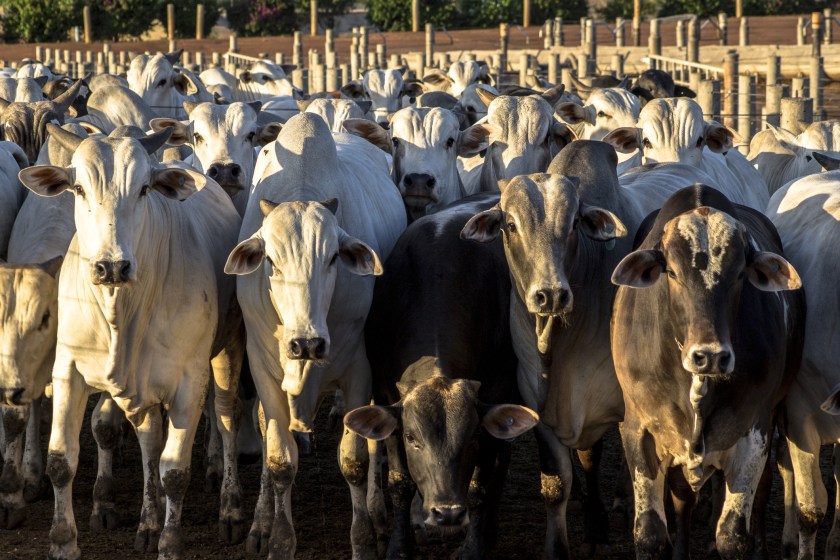
Photo: 196817068 © Alf Ribeiro | Dreamstime.com


JBS, Marfrig and Minerva are Brazil’s largest meat processors and exporters, supplying food chains and supermarkets in Brazil and across the world.

JBS is the world’s largest meat (beef, pork, lamb and poultry) processing company in the world with the largest climate footprint. It has US$ 76 bi in revenues, employs over 250,000 people globally, and has over 70 brands and customers in 190 countries, including Swift, Pilgrim’s Pride, Moy Park, Certified Angus Beef, Gold Kist, Oak Crown, Moyer, Clear River Farms, Geo, and many more.

In 2021, the majority of the company’s revenues were made in the United States (51%), Asia (15%), Brazil (12%) and Europe (7%), and the majority of its exports in 2020 went to China (27.2%).

The company is associated with suppliers linked to deforestation, pollution, slave labour, fires, bribery, land grabbing and invasion of Indigenous peoples’ land, protected areas and reserves.

According to a Mighty Earth report, The Boys from Brazil, JBS, Marfrig and Minerva maintain that they can’t trace its cattle through its supply chain and eliminate cattle linked to deforestation areas.

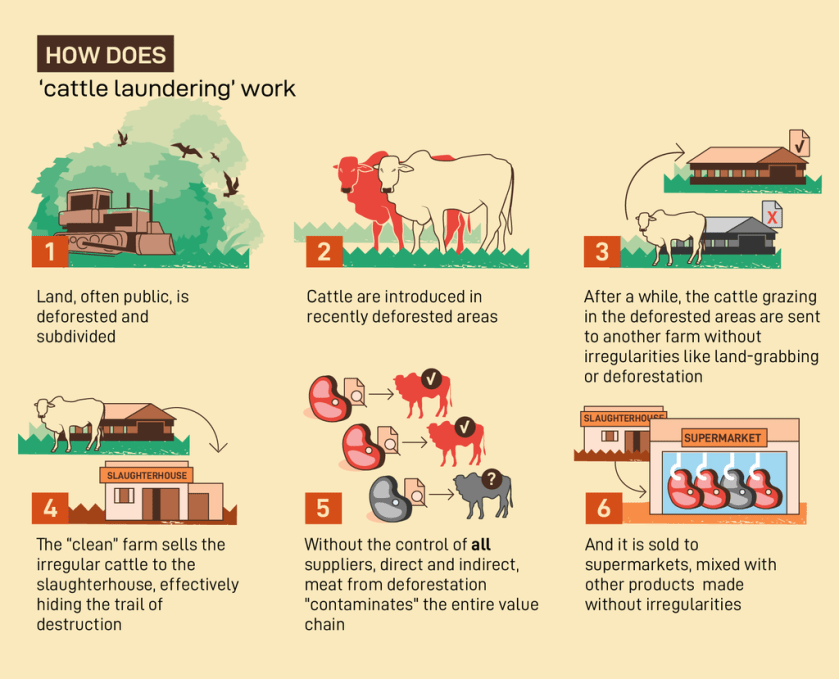
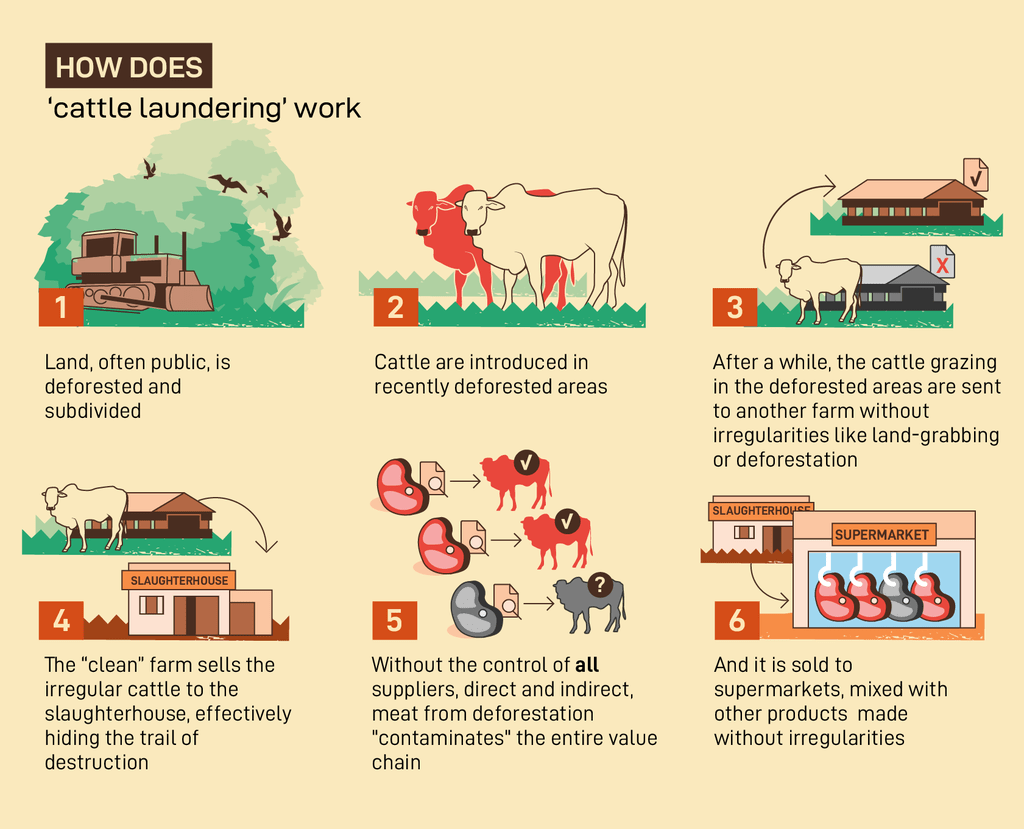
JBS has been accused of “cattle laundering”, the shuffling of cattle from ranch to ranch in order to conceal their illegal origins. The process is tricky and difficult to track. The cattle are bred where deforestation occurs, moved to other properties where it is nurtured through adolescence and then taken to “fattening” farms. The cattle are then transferred to processing plants where they are slaughtered and butchered ready to be shipped/exported.
Source: Greenpeace

“In their emission disclosure and their net-zero target for 2040 JBS fails to take responsibility for an estimated 97% of its emissions footprint, by neglecting emissions from farms and feedlots that are not owned by JBS and emissions related to deforestation. The company plans to continue growth in a GHG emission-intensive industry; we did not find evidence of any planned deep decarbonisation measures”, was reported in the Corporate Climate Responsibility Monitor 2022 assessment (page 84).

“Rather than making noises about being transparent about their supply chains and emissions, why don’t JBS disclose their most recent data? It’s time for JBS to come clean about their global slaughter figures, so we can determine with pinpoint accuracy the scale of their climate footprint”, said Gemma Hoskins, UK director of Mighty Earth.

Fires in the Amazon and Cerrado regions are not naturally occurring events; they usually start intentionally, to clear the land for pasture, illegal logging and land grabbers or to grow animal feed. In September, Brazil’s National Space Research Agency, INPE, reported 41,282 fires in the Amazon rainforest, the highest number since 2010.

The Supporter’s Black List

There are a substantial large number of investors and supporters involved in financing, directly or indirectly, the deforestation of the Amazon rainforest and the Cerrado regions.

An investigation released in June by Global Witness revealed that one of JBS’s supplier, the Seronni dynasty, was allegedly involved in a series of human rights abuses, including the use of slave labour, deforestation, land grabbing and cattle laundering for over a decade. The Seronni’s wealth was gained at the expense of the Amazon deforestation, as well as the exploitation of slave labour.

Grupo Mastrotto, a large Italian producer of leather and upholstery to the clothing, footwear, automotive and boat industries, was also identified as an importer of JBS’s leather linked to the deforestation of the Amazon. Mastrotto supplies the Volkswagen Group, owner of Audi, Bentley, Bugatti, Lamborghini, Porsche, Seat and Skoda. Other customers include Toyota and Ikea.

The meat industry wouldn’t be able to operate without the support of international finance. The UK, EU and US based-financiers continue to funnel billions to JBS, Marfrig and Minerva, including Barclays, BNP Paribas, Deutsche Bank, Dimensional Fund Advisors Group, Fidelity Management, HSBC, JP Morgan, BlackRock, Santander, Vanguard Group, and many more.

French bank, BNP Paribas, was given a formal notice by NGOs for financing Brazilian beef giant Marfrig, implicated in illegal deforestation, indigenous land rights violations and slave labour.

“Banks can no longer pretend they don’t know that their financing and investments fuel deforestation and climate chaos”, said Jérémie Suissa, director of the French organization Notre Affaire à Tous.

Trade data accessed by Global Witness also revealed that in 2020 alone, JBS exported beef products to 160 companies in Europe, 30% went to the UK.

Supermarkets in Europe, the US and the UK are responsible for selling products linked to the Amazon and Cerrado deforestation, including Aldi, Asda, Carrefour, Costco, Iceland, Morrisons, M&S, Tesco and Walmart, amongst others.

Food service companies are also accountable for selling branded and unbranded products sourced from deforested areas in the Amazon and Cerrado regions. They include Burger King, KFC, McDonald’s, Nando’s, Outback Steakhouse, Pizza Hut, Subway, Wendy’s and many more.

According to a damming report by Repórter Brasil, McDonald’s: The Footprint of a Giant, McDonald’s supply chain is exposed to several risks of violations related to Brazil’s rural reality. Deforestation, slave labour, violations of labour laws, and damage to traditional communities are part of the risks directly or indirectly linked to the network that supplies their restaurants.

A Final Appeal

Photo 90934032 © Wanida Prapan | Dreamstime.com

The reality is that we can’t continue doing business as usual and must take immediate action, as the consequences are far too great to our planet and the next generations, some of them already irreversible.

NGOs, researchers, scientists and specialists have proposed various recommendations and solutions to the problem, but the ones accountable for the deforestation and degradation of the Amazon rainforest and Cerrado regions constantly ignore them.

Some of the recommendations by various NGOs, including Mighty Earth and Global Witness outlined below:

• Governments should introduce legislation requiring businesses to identify, prevent, mitigate and report on deforestation and human rights risks, tackling the role of imported products driving deforestation globally.

• Investors, banks and financiers must divest from JBS, Marfrig and Minerva and its subsidiaries excluding them from their investment funds and bond portfolios.

• Supermarkets, retailers and food service companies must drop these companies as a meat supplier.

• The Brazilian government must divest all financing for these companies via BNDES development bank, must introduce enforceable rules against deforestation and introduce strict regulatory limits on mega and factory farm methane emissions.

• JBS, Marfrig and Minerva must disclose its direct and indirect emissions fully, including carbon dioxide and methane, and allow an independent third party to verify their company’s emissions claims.

Carlos Nobre, renowned Brazilian earth scientist, who spent the last four decades dedicated to research studying the Amazon rainforest and its impacts on the earth system and 2007 Nobel Peace Prize winner, has a message to the international community:

“Responsible consumption is key. The international community must continue to play an important role on sustainable consumption and not purchase any products that come from deforested areas.”

A final message from Lucas Ferrante, Brazilian ecologist and researcher, who published several studies on the Amazon rainforest and Cerrado:

“Countries that import commodities from Brazil need to review their trade agreements, mainly for meat, soy, ores, biofuels and now oil and its derivatives that come from the Amazon. Brazilian agribusiness has become a threat to the Amazon, to traditional peoples and to the global climate.”

We are facing multiple challenges ahead of us, none of them simple to solve, requiring total transparency, good will and power to make the essential and effective changes that will create a positive meaningful impact on the future of our planet and humanity.

We can no longer afford to turn a blind eye to these issues, as the result of our inaction will profoundly impact the future of our children!
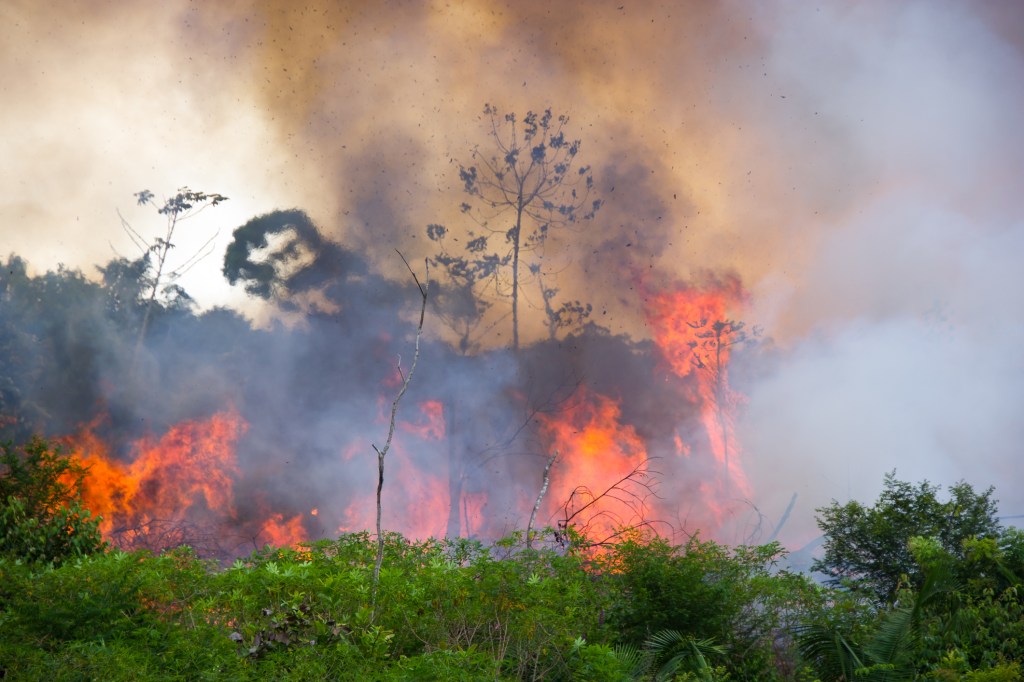
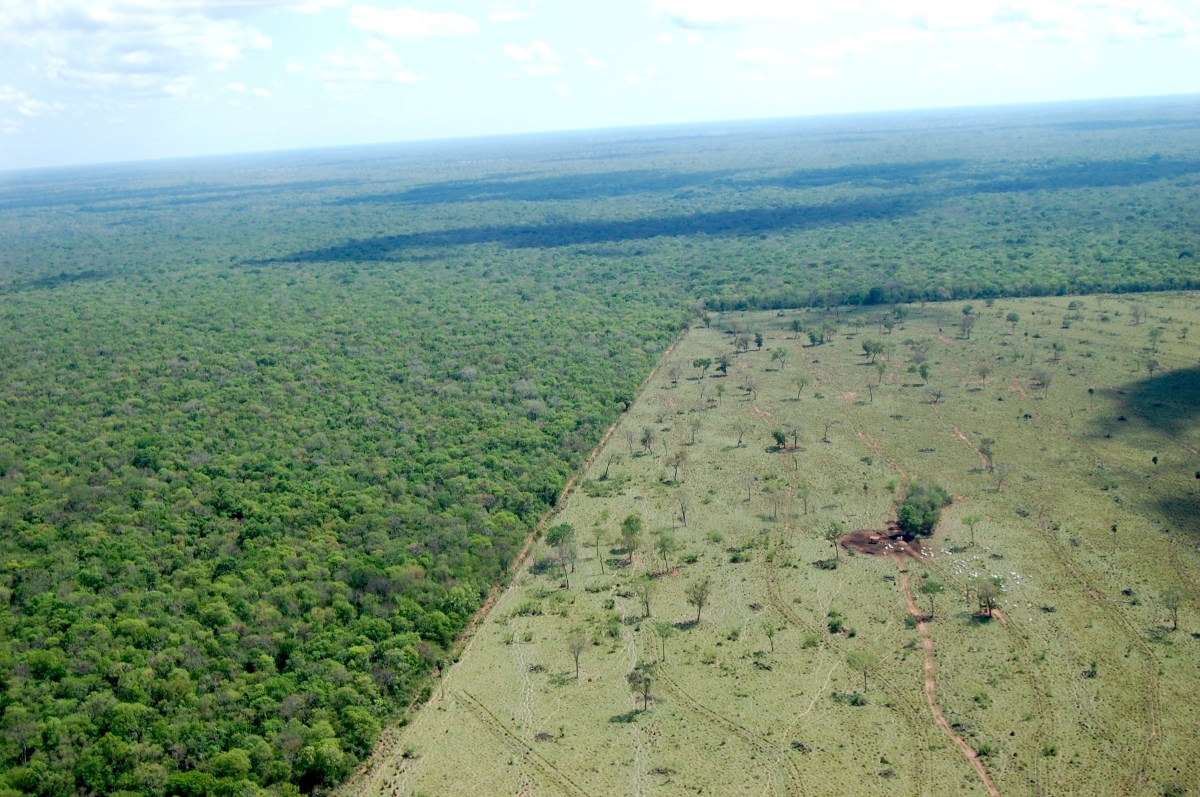
Photo 69667961 © André Costa | Dreamstime.com

BR-319: A Threat to the Survival of the Amazon Rainforest

Monica Piccinini

10 Oct 2022

Environmental and human rights violations may have been committed as a result of one of the Amazon rainforest most gigantic and ambitious infrastructure projects, the reconstruction of BR-319 highway, a stretch of 830 km, connecting the ‘arc of deforestation’ in the southern Amazon to the capital, Manaus.

There are many national and international supporters and financiers with hidden interests behind the reconstruction of this extensive highway project, including a Russian state-owned oil and gas company, a bioenergy company, ‘ruralistas’ (large land-holders and their representatives), illegal miners and loggers, investors, politicians, the government, and many more. Their motivation is driven by profit and power, no matter how much it costs.

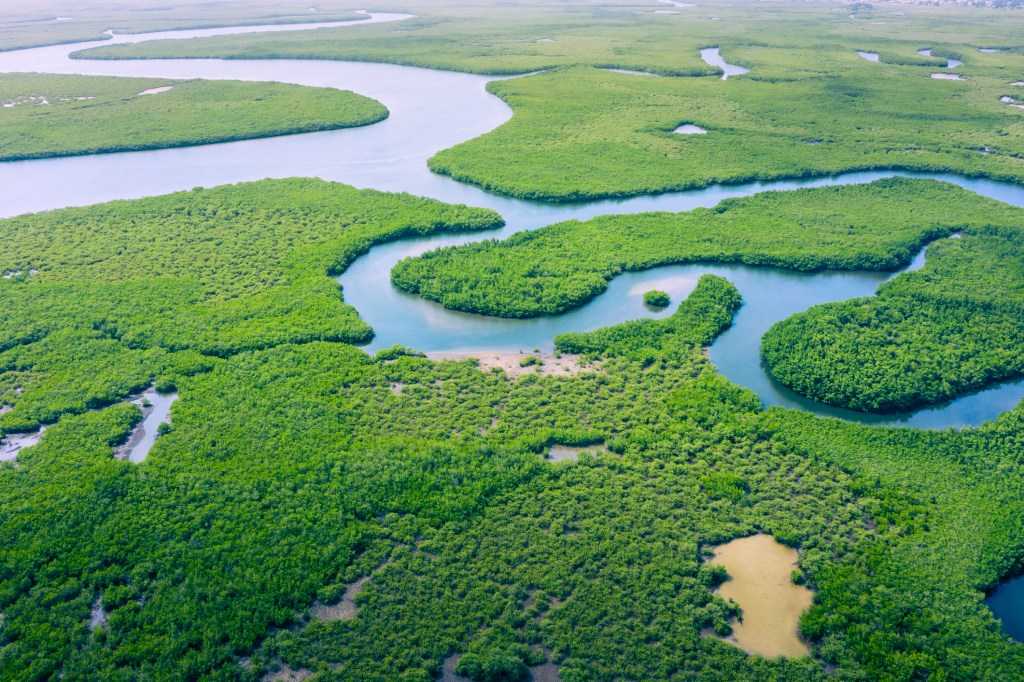
The Amazon rainforest plays a key role in controlling both South America’s rainfall and global climate. In addition, the rainforest is home to a third of the world’s biodiversity and a wide variety of indigenous people.

The rainforest has lost more than 830,000 sq km, corresponding to 21% of the forest and roughly 17% is already degraded.

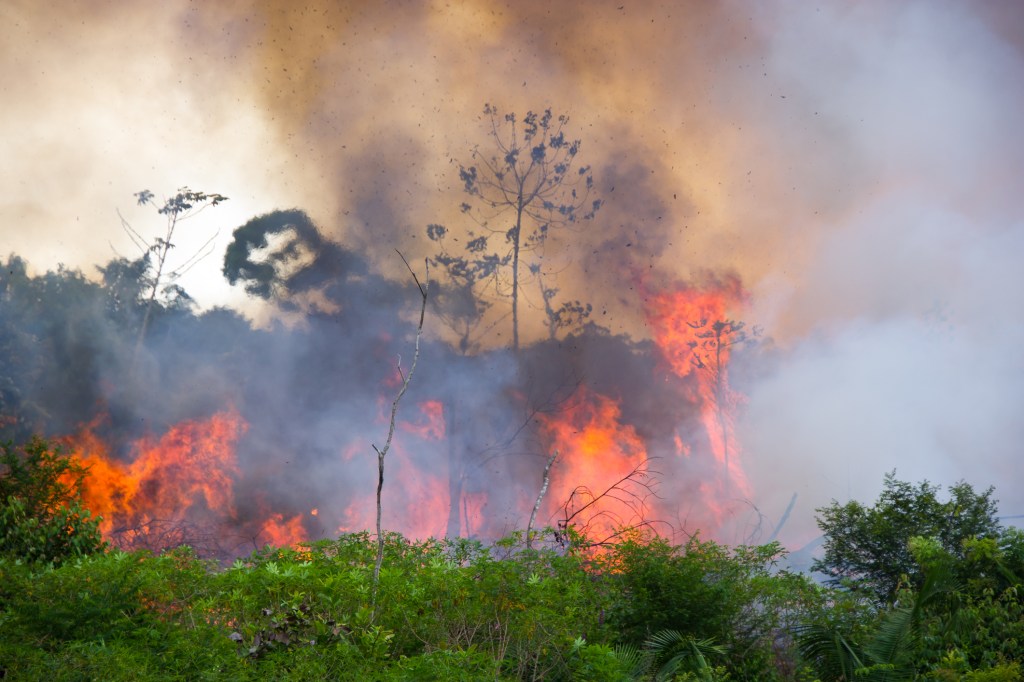
According to Carlos Nobre, renowned earth system scientist, the Amazon rainforest, one of the most biodiverse places on earth, is on the edge of the precipice, showing clear signs of destruction and perilously close to a tipping point of irreversible collapse, triggered by deforestation, degradation, forest fires, logging, illegal cattle ranching, mining, and oil and gas developments.

BR-319 connects Manaus, in central Amazon, to Porto Velho, in the “arc of deforestation”, on the southern edge of the forest. The highway is a free path to illegal side roads in areas of large concentration of indigenous land, legal reserves and conservation units, giving illegal miners, loggers, squatters and land grabbers access to untouched forest.

As a consequence, these invaders are bringing a wave of destruction, instability, pollution, violence, disease, decay and death to the communities and the environment around them.

The highway was inaugurated in March 1976, during the military dictatorship and under the government of General Ernesto Geisel, and abandoned in 1988. In 2015, Dilma Roussef’s (Labour party) government proposed reopening BR-319.

“BR-319 cuts through one of the most conserved blocks of the forest where it contains an enormous stock of carbon. This project is a threat to 63 indigenous lands and 18,000 indigenous people, not to mention the environment and biodiversity”, said ecologist and researcher, Lucas Ferrante, during our interview this month.

According to Ferrante, who took part of a study published at the Die Erde – Journal of the Geographic Society of Berlin, neither environmental studies nor consultation with indigenous peoples were carried out for some sections of the highway, as established by ILO Convention 169.

Ferrante published various academic studies independently and conjointly with Philip Martin Fearnside, a researcher at the National Institute for Research in the Amazon (Inpa) and Nobel Peace Prize winner (2007), on the impacts the BR-319 project will bring to the Amazon, the environment, indigenous communities and the world.

The reconstruction of BR-319 does not have an economic feasibility study (EVTEA). Independent studies show that for every R$1,00 spent on the highway, the ROI is only R$0,33, mentioned Ferrante.

The main transport route used has always been via the Madeira River, making it a cheaper and safer way to transport goods. In his view, the highway project would be a huge social, economic and ecological disaster.

A study published at the Environmental Conservation, indicates that Brazil could lose more than US$1 billion a year in agricultural production if deforestation in the Amazon region is not contained.

“We have already identified that the Amazon rainforest has passed its tolerated limit of deforestation. The flying rivers that supply the south and southeastern regions of Brazil are already compromised, including an area of the arc of deforestation, corroborating changes and climate events within the country, even affecting agribusiness”, said Ferrante.

According to Ferrante and various studies, one additional topic of great concern, as exploitation of indigenous lands increases, is the risk of new pandemics. The Amazon rainforest is considered a possible source of the next pandemic, as deforestation offers opportunities for disease agents from the region’s large reservoir of different types of coronavirus and various other pathogens to jump into the human population.

The Amazon interior has a precarious healthcare system, making the surge of a new pandemic originating in this region extremely difficult to identify and contain.

Supporters

Photo 120282222 © Arseniy Rogov | Dreamstime.com


A company with many interests in supporting the reconstruction of BR-319 is Russian state-owned Rosneft, one of the largest oil and gas companies in the world.

Rosneft’s CEO, Igor Sechin, is considered to be the second most powerful man in Russia after Putin. In February 2022, just before Russia invaded Ukraine, Bolsonaro travelled to Russia to meet with Putin to discuss a possible energy partnership.

BR-319 highway gives access to AM-366, a planned state highway that passes through the first drilling blocks of “Solimoes Sedimentary Basin” project for oil and gas extraction, an area larger than the state of California. Rosfnet bought 16 blocks in this area.

This is a project of huge concern, as questions are raised about how much influence Rosneft may have on the government’s policies and decisions on the reconstruction of this highway, as well as the impact it may have on the local communities and the environment.

Millenium Bioenergia is another strong supporter of BR-319 reconstruction project. A bioenergy company formed in 2014 by mill owners from São Paulo and grain producers from the Midwest, the company’s initial focus was the production of biofuels. However, the company decided to partner with the indigenous communities to produce corn, chicken, fish and pigs in a confined system. This is the perfect recipe to trigger new pandemics as a result of zoonotic leaps due to environmental degradation.

In the states of Amazonas and Roraima, their goal is to produce biofuels from monocultures in indigenous lands and other communities. According to their plan, indigenous people and communities would carry out these activities with unpaid work or, as one would openly describe it, slave labour. These products would then be exported to Asia, Europe and the United States.

According to a study published by Springer, Millenium has not honoured its obligation to carry out environmental studies that are legally required for the installation of an industry. Instead, they have proposed the building of a hospital for the indigenous people as a form of compensation.

The government’s ‘death agenda’ includes abolishing the legal reserves and opening conservation units and indigenous lands to mining, agriculture and ranching.

Jair Bolsonaro’s government, with the full support of ‘ruralistas’, has intentionally weakened the country’s environmental agencies and forest code, also denying the existence of climate change.

They have reduced protected areas, cut government funds for environmental protection, weakened the systems for monitoring and combating environmental crimes, approved 1682 new pesticides, leaving an open door to pollution, deforestation, violence, crime and devastation across the region and communities in the Amazon and the rest of the country.  

Politicians in Manaus and across the country claim that BR-319 would be a “model of sustainability for the world”, but indications and studies carried out so far suggest otherwise. They follow the same rhetoric, stating the highway is a symbol of progress and sovereignty, and that the Amazon rainforest belongs to Brazil, no foreign interference should be allowed.

Violence & Crime

Photo 245527759 / Amazon Indian Brazil © J Brarymi | Dreamstime.com


BR-319 has brought crime and violence to this region by illegal miners, loggers, squatters and land grabbers, threatening to kill anyone who refuses to comply with their rules.

According to Ferrante, the highway also attracted criminal gangs and organised crime to the area, with the full participation of high scale politicians.

There are countless national and international organisations financing illegal mining associated with drug and illegal arms trafficking. Organised crime has exploded and taken over the Amazon rainforest.

Bolsonaro’s gun law, the CAC (Collectors, Snipers and Hunters) license, allows Brazilians to purchase a wide variety of guns if they have no criminal record, are registered with a shooting club, and can demonstrate proficiency with a firearm.

The loosening of firearms restrictions law is creating new mechanisms for criminal groups to purchase weapons legally, consequently increasing violence in the Amazon and Brazil.

Another issue of concern is the maintenance of clandestine airstrips, mainly for mining and also serving organised crime.

According to information obtained by The Intercept, the Pulitzer Center and Earthrise Media, there are 362 clandestine airstrips, without registration with Anac, the National Aviation Agency, in the Legal Amazon. But this number almost triples, if you consider the runways open without authorisation and registration, amounting to at least 1,269 landing and takeoff lanes.

Indigenous and traditional communities are also victims of constant violent verbal and physical threats, sometimes ending in fatalities, but they are not the only ones.

Ferrante, a scientist who has spent many years exposing the situation in the region by publishing his studies in academic journals, was faced with various threats and violence against his own life.

He received countless death threats by anonymous calls and text. A “fake” Uber driver told Ferrante he should keep quiet because he was interfering in national security matters. Chemicals thrown into his home’s water system also poisoned him. Ferrante was terrified and withdrawn, unable to go out for a few months.

There is not doubt the BR-319 reconstruction project will impact local traditional and indigenous communities, as well as the environment, biodiversity and climate change, with very serious consequences to Brazil the rest of the world.

National and International Players

Photo 12998338 © Alain Lacroix | Dreamstime.com

Brazil is the world’s largest exporter of beef and soy, which are the two commodities responsible for 90% the Amazon rainforest deforestation. Research shows that 70% of the chopped down Amazon is populated by cattle.

It’s essential to understand that the reconstruction of BR-319 highway has a national as well as an international long list of powerful supporters defending their own interests.

Agribusiness Watch report reveals that international banks and funds are financing Brazil’s agribusiness lobby in the country, including JP Morgan Chase, BlackRock, and Bank of America, each having invested US$1 billion in livestock. American International Group, AIG and Citigroup are also provider of funds to Brazilian agribusiness companies.

European investors include Allianz and Deutsche Bank, Barclays, Standard Chartered, BBVA, Santander, BNP Paribas, ABN-Amro and Rabobank, among others, have invested $4.5 billion in IPA companies, part of Instituto Pensar Agro, supporting FPA (Agricultural Parliamentary Front) and responsible for a package of anti-environmental measures being considered in the Brazilian Congress.

The report also lists various companies, including JBS, Suzano, Marfrig, ADM and Cargill that use their influence in Brazilian politics against the interests of environmental policies and indigenous groups.

Brazilian banks financing the agribusiness sector include BTG Pactual, Safra, Verde Asset Management, Vinci Partners, and XP Investimentos, maintaining bonds estimated at US$ 9.3 billion.

According to De Olho nos Ruralistas, in 2019, Agribusiness Watch revealed some of the multinationals that were affiliated by associations that maintain the IPA (Instituto Pensar Agro): Bayer, Basf and Syngenta, Cargill, Bunge, ADM and Louis Dreyfus; JBS, Marfrig, Nestlé and Danone.

During Bolsonaro’s administration, agribusiness companies met 278 times with government officials of MAPA, the Ministry of Agriculture, Livestock and Supply. Part of the agenda was the relaxation of rules for pesticides.

There’s no doubt that the reconstruction of BR-319 will benefit most of the above mentioned players, who continuously support and invest in the agribusiness sector in Brazil, including banks, agrochemical companies, governments, politicians and corporations, in Brazil and abroad.

The same can’t be said about the environment, climate change, local traditional and indigenous communities and the entire world population, who will pay a hefty price for these callous actions.

The Road Ahead

Photo 179525881
 © Mariusz Prusaczyk | Dreamstime.com


This is a decisive political moment for Brazil and the world, as the second term of the presidential elections draws to a close at the end of October and Brazilians will be choosing their next president, Jair Bolsonaro or Luiz Inácio Lula da Silva (Lula), both battling for the pole position.

Ferrante mentioned what may happen if Lula is elected Brazil’s next president:

“I was present during Lula’s statement during his visit to Manaus in September 2022, when he mentioned that he will choose three major infrastructure projects for each state in Brazil, mainly roads, which means the BR-319 highway project may be on the top of his list. He explicitly said that he isn’t against the highway, but the environmental rites and the consultation of indigenous peoples must be followed”,

“The BR-319 highway project is at a very advanced stage. We urgently need the suspension of the maintenance license, pending appropriate studies and consultations with indigenous peoples. It is necessary to create a task force to supervise the actions of INCRA, the National Institute for Colonisation and Agrarian Reform and the Ministry of the Economy, as they continuously try to legalise these lands”, added Ferrante.

When asked about the message he has to the international community, Ferrante replied:

“Countries that import commodities from Brazil need to review their trade agreements, mainly for meat, soy, ores, biofuels and now oil and its derivatives that come from the Amazon, extracted by Rosfnet. Brazilian agribusiness has become a threat to the Amazon, to traditional peoples and to the global climate”,

He added:

“All countries in the world need to turn their eyes to what is happening in the Amazon now, especially on the BR-319 highway. This is a matter for the world to discuss because the consequences of this highway are global, including new pandemic outbreaks and accelerating climate change that is already causing waves of heat leading to mortality in Europe. The environmental damage caused here exceeds the borders of Brazil and should be monitored by the whole world”.

Photo 106303117 / Amazon Rainforest Indigenous © Vkilikov | Dreamstime.com

Rachel Carson’s ‘Silent Spring’ Turns 60, as UK Government Turns Cold on Pesticides

Monica Piccinini

27 Sept 2022

Sixty years ago, Rachel Carson’s book, Silent Spring, alerted the world to the dangers of chemical pesticides to the environment and our health. The environmental degradation predicted by Carson, who warned of a future “silent spring” unless pesticides were tackled, continues to unfold.

Since records began in 1990, the UK has covered over 700 million hectares in pesticides – enough to dose every inch of the country 14 times over. Meanwhile, local councils, up and down the country, still routinely use pesticides linked to cancer in parks and playgrounds.

The UK Government’s “dither and delay” approach to pesticide policy is failing to adequately protect human health and the environment from pesticides.

Despite its promises to publish a national action plan on pesticides, the Government is now talking about deregulation, with UK’s prime minister, Liz Truss, promising a “red tape bonfire”, which is likely to put human health and wildlife at further risk.

Synthetic pesticides are some of the most toxic substances in use today, persisting in the environment for weeks, months or even years.

Polar Bears have been found to have pesticides residues in their system, despite those chemicals never having been used in the Arctic. Ice sheets and glaciers melting as a result of climate change, are thought to be releasing pesticide residues that have been accumulating since the 1940s.

“How could intelligent beings seek to control a few unwanted species by a method that contaminated the entire environment and brought the threat of disease and death even to their own kind? Yet, this is precisely what we have done.”- Rachel Carson, Silent Spring.

Food & Farming

Photo 57373630 © Walter Arce | Dreamstime.com


“Rachel Carson would turn in her grave if she could see how pesticide use has proliferated since she wrote Silent Spring. Most crops are now treated with a blizzard of insecticides, molluscicides, fungicides and herbicides, which damage soils, pollute streams, and chronically expose wildlife and people to complicated mixture of toxins. We urgently need to transition to more sustainable farming methods.” – said Dave Goulson, Professor of Biology, University of Sussex and author of Silent Earth.

According to the United Nations, the world’s population is set to reach nearly 10 billion by 2050, with huge concern on the need to ensure universal access to healthy food, but at the same time making sure food is produced in a sustainable way.

Pesticides are putting long-term food security at risk by damaging our soils and the creatures that help plants to grow. Despite industry claims, pesticides are not necessary for food security, and there are other ways to farm with nature.

Approximately 75% of global crop types rely on animal pollination. The UK government decided to authorise, for “emergency use”, the poisonous bee-killing pesticide neonicotinoid on beet crops. A single teaspoon of neonicotinoid is enough to deliver a lethal dose to 1.25 billion bees.

Josie Cohen, Head of Policy & Campaigns, Pesticide Action Network UK (PAN UK), mentioned:

“The agrochemical industry continues to tout the long discredited myth that we cannot feed the world without pesticides. But three quarters of the world’s food crops depend, at least in part, on pollinators. We now know that the recent crashes in populations of bees and other pollinators that are being driven by pesticide, pose a much greater and more existential threat to global food security.”

In the meantime, the UK farmland biodiversity continues to decline, with bird populations more than halving since 1970 and arable wildflowers becoming one of the most threatened groups of plants in the UK. The use of pesticides is the leading cause of this decline.

Martin Lines, an arable farmer and UK chair of the Nature Friendly Farming Network, explains:

“Government policy has taken farmers down a path that doesn’t view or reward nature as integral to sustainable food production. The government has not acted with the necessary urgency to address the biodiversity crisis, and it continues to drag its feet in delivering a new pesticide National Action Plan. We are concerned that this new government will turn a blind eye to importing products that use pesticides, which are illegal in this country and will contribute to the decline of nature.”

Human Health

Photo 154316559 / Health Pesticide © Monikabaumbach | Dreamstime.com


“We are very concerned about the effects of certain pesticides still in current use. Some may act as carcinogens by inducing gene mutations. Others can act as endocrine (hormone) disrupting chemicals that may affect hormones – including oestrogen – which may also increase breast cancer risk”, mentioned Thalie Martini, CEO of Breast Cancer UK.

Pesticides used in agriculture can leave traces of chemicals in our food known as residues. Residues detected on a specific food item will depend which pesticides are used and how persistent they are. Some food may contain one single residue or multiple ones (‘cocktail effect’).

We should all be aware of the implications caused by exposure to pesticides by spraying throughout towns, parks and playgrounds, and ingesting food containing not only one but also multiple pesticides, especially if consumed over a long period of time, during our childhood, adult life and especially during pregnancy.

Carey Gillam, investigative journalist and author of Whitewash – The Story of a Weed Killer, Cancer and the Corruption of Science and The Monsanto Papers – Deadly Secrets, Corporate Corruption, and One Man’s Search for Justice, mentioned during our last communication:

“There is abundant scientific evidence dating back decades that clearly establishes the serious health risks pesticide exposures create for people, especially children. It is simply irresponsible to ignore those risks, which include cancers, neurodevelopmental harms, reproductive problems, Parkinson’s disease and other adverse health effects.”

It’s worth highlighting some facts about the effects caused by pesticide exposure to our health:

• Long term pesticide exposure has been linked to the development of Parkinson’s disease; asthma; depression and anxiety; attention deficit and hyperactivity disorder (ADHD); and cancer, including leukaemia and non-Hodgkin’s lymphoma.

• Some pesticides, known as endocrine disrupting chemicals (EDCs), have the potential to disrupt our hormone systems, and can play a role in the development of cancers, including colorectal and breast cancers. Pregnant and breastfeeding women, as well as young children, are particularly vulnerable.

• Neurologists are warning of an impending Parkinson’s pandemic, linked to widespread exposure to herbicides, solvents, and other toxic chemicals used in agriculture and manufacturing. There is currently a class action lawsuit in the US over the link between lethal weed-killer paraquat and Parkinson’s disease.

• UCLA-led research published in the International Journal of Hygiene and Environmental Health, found that children prenatally exposed to the chemicals acephate and bromacil had an increased risk of developing retinoblastoma, or cancer in one eye, and exposure to pymetrozine and kresoxim-methyl increased the risk of all types of retinoblastoma.

Helen Browning, CEO, Soil Association, mentioned:

“Switching to foods that support healthy and sustainable diets, produced on agroecological farms, is crucial to stabilising our climate, reversing the catastrophic decline in wildlife and preventing public health emergencies. The countryside is still silent. Future generations deserve and need to live in a fertile, productive and naturally noisy world.”

Corporate Power

Photo 142214303 © motortion | Dreamstime.com


“It is also an era dominated by industry, in which the right to make a dollar at whatever cost is seldom challenged.” – Rachel Carson, Silent Spring.

Rachel Carson was met with fierce resistance from agrochemical companies, dismissing and undermining her scientific studies as nonsense – a tactic that the industry still uses today.

According to Allied Market Research, the global agrochemicals market is projected to reach $315.3 billion by 2030, compared to $231.0 billion in 2020.

Syngenta, one of the top four pesticide manufacturers, reported a 26% increase in profits for the first three months of 2022, a staggering $8.9 billion.

According to US scholars Howard and Hendrickson, up to 66% of the world sales of agrochemicals are in the hand of just four multinationals (Syngenta-ChemChina, Bayer-Monsanto, Basf and Corteva), whereas three of the same companies control half of global trade in seeds.

The UK continues to allow Syngenta manufacturing facility in Huddersfield to produce and export deadly pesticide paraquat to developing countries. Paraquat has been banned for use in the UK and the EU since 2007.

There’s clear evidence that the agrochemical industry is making substantial profits at the expense of people’s health and lives, as well as contributing to damage to environmental degradation and biodiversity loss.

Corporate lobby groups continue to deploy “science” to manipulate the public and pour money into the political system to get policy and regulation that tips in their favour and increases their profits.

Pesticide companies have been known to adopt tactics similar to the tobacco industry, including reportedly ghostwriting safety studies, going after scientists who publish unfavourable research, and putting out misinformation designed to undermine evidence that their products cause harm and that effective non-chemical alternatives exist.

Brexit & Deregulation

Photo 67440343 © Ayome Watmough | Dreamstime.com


In the UK, pesticide regulation is another issue of concern. If weakened, as a result of Brexit, there is a real danger of massive increase in pesticide harms.

Weakening of pesticide standards via trade deals with countries where pesticide regulation is less rigorous, like Australia, Brazil, India, Mexico and the United States, means the population in the UK may be consuming products with high level of pesticides, which are already banned in the country. The UK should be banning the imports of food produced with banned pesticides.

UK agriculture and farmers will also be directly affected by allowing crops grown more cheaply on a larger scale to be imported. This could lead to UK farmers having no option but to resort to the use of more pesticides domestically.

Hundreds of environmental laws that protect nature and our health in the UK, including chemical contamination, are set to expire in December 2023 and removed from UK law under a new government bill. This decision could have serious implications to our health and the environment; at a moment we should be doing everything we can to stop the damage we have caused to our planet.


According to a report released in January 2022 by the United Nations Human Rights Council, the toxification of planet Earth is intensifying. While a few toxic substances have been banned or are being phased out, the overall production, use and disposal of hazardous chemicals continues to increase rapidly.

“The chemical war is never won, and all life is caught in its violent crossfire.” – Rachel Carson, Silent Spring.

Climate change, the energy and food crises are real issues and currently affecting most of our lives in one way or another. It’s our duty to get involved and push world leaders, politicians, corporations, regulators, the ones in power and able to make concrete changes, to address these issues immediately, including the chemical war on our health and the environment.

Photo 241966755 © Tracy Immordino | Dreamstime.com

Deforestation of the Amazon Rainforest: Possible Solutions, Economic Prospects and the Scientist Behind It, Carlos Nobre

Monica Piccinini

13 June 2022

According to Carlos Nobre, renowned Brazilian earth system scientist, the Amazon rainforest, the most biodiverse places on earth, is on the edge of the precipice, showing clear signs of destruction and perilously close to a tipping point of irreversible collapse, triggered by deforestation, degradation, forest fires, logging, illegal cattle ranching, mining, and oil and gas developments.

“If deforestation and forest degradation of the Amazon rainforest are not halted completely and immediately, in about 30 to 50 years’ time, 60 to 70% of the Amazon, mainly in the central, southern and eastern regions, will be hit by a new drier climate where the dry season will last between five to six months. If deforestation continues at this rate, the rainforest will become a degraded ecosystem with fewer trees, very little biomass and biodiversity”, said Carlos Nobre during our interview this month.

Carlos Nobre spent the last four decades dedicated to research studying the Amazon rainforest and its impacts on the earth system. He’s the first Brazilian to be elected a member of the Royal Society since the 19th century and has made countless contributions towards an understanding of global warming and the impacts of climate change on the Amazon. His pioneering hypothesis on “savannisation” of the Amazon is a worldwide reference of extreme importance.

Nobre graduated in electronics engineering from Aeronautics Institute of Technology (ITA), Brazil, in 1974 and obtained a PhD in meteorology form Massachusetts Institute of Technology (MIT), USA in 1983. He’s a senior researcher for the Institute of Advanced Studies, University of São Paulo (USP), and director of the Amazon Third Way Initiative/Amazonia 4.0 Project, Brazil. He also co-authored the Fourth Assessment Report of the Intergovernmental Panel on Climate Change (IPCC), which received the Nobel Peace Prize in 2007.

Arc of Deforestation


The Amazon rainforest in Brazil has lost more than 830,000 sq km, corresponding to 21% of the forest and roughly 15 to 17% is already degraded.

“In order to halt deforestation, urgent action and measures must be taken, mainly in the region that goes from southern Peru, crossing into the Bolivian Amazon, the state of Acre, Rondônia, southern Amazonas, northern Mato Grosso and southern Pará states, up to the Atlantic, a large area of the rainforest where deforestation rate is the highest, the so-called arc of deforestation”, added Nobre.

According to the Brazil’s National Institute for Space Research, INPE, in the first quarter of 2022, an area of 941 sq km was deforested, a record 64% increase compared to the same period last year.

The Amazon rainforest stores between 150 to 200 billion tons of carbon in vegetation above and below ground, in tree trunks, branches, leaves, roots and organic matter accumulated in the soil. If in 15 to 20 years we cross beyond the point of no return, most trees will start to die and, as a result, their decomposition may release over 300 billion tons of CO2 into the atmosphere In 30 to 50 years. If this happens, the Paris agreement goal to limit global warming to no more than 1.5C will not be met, explained Nobre.

Amazônia 4.0 Project – The Solution

Amazônia 4.0 is an institute that has several goals:

• Developing advanced technologies and methods to transform Amazonian inputs into products of very high added value;
• Developing a powerful bio-industry;
• Empowering local people;
• Creating urgently needed alternatives to deforestation by uniting traditional knowledge with science and industry 4.0 in mobile biofactories, the Creative Laboratories of the Amazon (LCAs);
• Establishing the Amazonia Rainforest Business School; and
• Developing studies for the creation of the Amazonia Institute of Technology

Nobre highlighted the importance of this ambitious project to both the Amazon and the world. The aim is to bring modern technologies, merge the knowledge of traditional and indigenous peoples, all those communities that manage and develop agroforestry systems, combine this knowledge with technological innovation and start to develop a new bioeconomy with aggregation values and industrialisation.

“The economic potential of forest products is much higher than that of pasture and agriculture monocultures. An agroforestry system producing various products such as açaí, cocoa, nuts, cupuaçu (some cooperatives produce over 100 products), profitability is much higher”, explained Nobre.

According to Nobre and various studies, one hectare of forestry system brings US$500 to US$1,000 a year of profit to the economy. One hectare of pasture (the most productive one) in the Amazon brings a maximum of US$100 a year. One hectare of soybeans brings US$200 a year. This shows that an agroforestry system is sustainable, extremely profitable and has enormous potential.

Nobre illustrated how sustainable and profitable this industry can be:

“Let’s talk about the açaí berry. This product brings more than US$1 billion a year to the economy of the Amazon, in addition to improving the lives of more than 350,000 families in the region, who are producers of agroforestry systems. This demonstrates the great potential of this forest bioeconomy”.

A key component of this project is the creation of biolabs. Nobre mentioned that they are currently finalising the construction of a lab, a biofactory in the cacao and cupuaçu chain, and that they will soon be taking it to the Amazon. They will train four producing communities, industrialise this production line, allow them to produce high-quality chocolate, including “cupulate”, which is made from cupuaçu seeds.

This project’s ambition goes further. Their intention is to evolve and create a “Rainforest Business School” focused on this novel bioeconomy. They are currently looking for all the necessary resources, so that they can build an online platform with access to 20 different courses.

Another element of this initiative is the creation of a technology institute, (Amazonia Institute of Technology Institute-AmIT). Five major areas have been identified in which they would develop super advanced labs, including a public/private partnership with MIT, Massachusetts Institute of Technology, so they can assist in designing AmIT, mirroring their model.

The MIT partnership will guarantee a space where the private sector will have an opportunity to invest in applied research that would generate an entire chain of new products from the forest, terrestrial and aquatic ecosystems.

Nobre added: “AmIT’s institute would train young people for the development of this novel bioeconomy, as it would become the world centre for the expansion of new economies with the aim to protect and maintain tropical forests across the planet”.

Regeneration – The Reforestation Belt


Livestock is responsible for approximately 90% of deforestation in the region. When livestock is abandoned, part of the pasture is directed to soy cultivation, the remaining area, corresponding roughly to 20% of the total deforested area is abandoned completely, resulting in a secondary forest growing in its place.

“In places where deforestation is close to the forest, natural regeneration occurs, the seeds are quickly brought to the area by animals and wind dispersal, and the biological restoration process begins”,

“If you stop deforestation and concentrate in agriculture in much small areas with greater productivity, much of the forest will be allowed to regenerate naturally. But if the degenerated area is too large and away from the seed source, the forest regenerates at a very slower pace, therefore requiring a reforestation process, plant seedlings, so that the forest grows and animals rein-habit the region. Reforestation with seedlings is costly and requires funding”, said Nobre.

Nobre also highlighted that the economic benefits of restoring the forest will hopefully increase in value. For instance, one hectare of secondary forest growing in the Amazon, removes 11 to 18 tons of CO2 per year from the atmosphere for about, let’s say, 30 years. The price of such removal in the carbon market, today at about US$ 10/ton CO2, is estimated to rise as much as US$30-50/ton CO2.

In a matter of decades, for every hectare of restoration, you will be generating income far greater than any income from conventional farming. Restoring forests is much more profitable than ranching and monoculture agriculture in the Amazon rainforest.

Challenges & Divestments

Nobre highlighted some of the current challenges facing the Amazon, including the urgent need to combat organised crime in the region. There are countless national and international organisations financing illegal mining associated with drug and illegal arms trafficking. Organised crime has exploded and taken over the Amazon rainforest.

It’s not uncommon to hear about the recruiting of youths living in riverine communities to work on drug trafficking activities, due to the lack of job opportunities for these individuals in the Amazon.

“In 2012, Brazil had its lowest deforestation levels recorded in history, mainly due to effective policies combined with satellite monitoring systems that captured illegal practices. Effective enforcement actions are essential to prevent illegal practices and put an end to organised crime in the region”, said Nobre.

Divestment is another issue of concern, as Brazil’s federal government cut considerably investment in scientific and educational organisations, mainly the ones linked to the environment and technology. There was a huge drop in investments in INPE (National Institute for Space Research), INPA (National Institute of Amazonian Research), CNPq (National Council for Scientific and Technological Development), and federal universities.

Nobre was pleased to say that “even facing a substantial budget drop, INPE continues to carry out all satellite monitoring in the Amazon, as well as distributing all data, as they are public and available on the INPE website. INPE has one of the best and most advanced satellite monitoring systems in the world”.

“Last week, the Brazilian government created a committee to assess deforestation data in Brazil, coordinated by the ministry of the environment, alongside the ministries of agriculture, defense and the economy, leaving INPE, INPA, and the ministry of science and technology out. From now on, all deforestation data will have to be initially approved by this committee. This is an initiative that I hope will not weaken even further the deferral government’s responsibility to act against illegal deforestation and degradation”, said Nobre with a note of real concern.

Message to the International Community


Nobre has a very strong and powerful message to consumers and governments across the world:

“Responsible consumption is key. The international community must continue to play an important role on sustainable consumption and not purchase any products that come from deforested areas. In addition to this, it’s essential for developed countries to start making use and invest in this new standing forest bioeconomy, guarantee the origin of agroforestry products and avoid monoculture practices”,

“We ask international governments to put more pressure on developing countries where deforestation is high, so that they comply and enter a new trajectory of zero deforestation”, added Nobre.

Nobre also sends a strong message to developed countries:

“Likewise, tropical countries also have an obligation to ask and put pressure on developed countries so they can urgently stop burning fossil fuels, which represent 70% of all greenhouse gasses emissions. We must unite and save the planet from the climate emergency, by zeroing all emissions”.

Seeds of Hope for the Global Food Systems and Biodiversity Crises

Monica Piccinini

31 May 2022

According to the United Nations projections, the world population will increase to 8.5 billion by 2030, as humanity faces one of their biggest challenges, food insecurity. Almost 193 million people in 53 countries suffered acute food insecurity in 2021.

Major producers around the world need to turn away from the damaging industrial agrochemicals and pesticides that are magnifying the current issues and explore new innovative techniques to ensure the world’s food security for the future.

Approximately USD 44tn of economic output – more than half of global annual GDP – is moderately or highly reliant on natural capital. Yet, humans have already transformed more than 70% of the Earth’s land area from its natural state, causing unparalleled environmental degradation and contributing significantly to global warming, according to UNCCD Global Land Outlook latest report.

“Our health, our economy, our well-being depends on land. Our food, our water, the air we breathe are all coming from the land, at least partially,” said Ibrahim Thiaw, executive secretary of the UNCCD, in a call with reporters. “Humanity has already altered 70 percent of the land. This is a major, major figure.”

If degradation of the land keeps increasing at this rate, scientists predict that there will be large-scale food supply disruption, increase in biodiversity loss, extinction, more zoonotic diseases and decline human health, giving rise to poverty, hunger and pollution.

“Time is short, and the situation is dire,” said Qu Dongyu, the Direct-General of the Food and Agriculture Organisation (FAO). He added there needed to be a “transformation of agrifood systems to be more efficient, inclusive, resilient and sustainable”.

Agroecology & Biocontrols VS Industrial Agriculture & Pesticides


The world’s industrial food systems haven’t found a solution to the food and biodiversity crises yet, mainly due to the fact that the solution may not appeal to the agribusiness giants, including the agrochemical industry, governments and world development banks, who usually seem to set the agenda and policies for the sector.

According to the International Fund for Agricultural Development, Public Development Banks invest about $1.4tn per year in the agriculture and food sector.

A report by the Action Group on Erosion, Technology and Concentration (ETC Group), ‘Who Will Feed Us?’, mentions that small-scale producers provide food to 70% of the world, while using only 25% of the resources.

After all, there’s a solution to these crises available, a solution that serves people’s interest and the environment, instead of agribusiness corporations, public development banks and governments. We should be supporting agroecology as the solution to the food and biodiversity crises.

According to UNFSS, we don’t need “sustainable intensification”, “climate-smart agriculture” or ‘nature-positive solutions,” which often greenwash corporate agendas. Millions of smallholder farmers, fishermen, pastoralists, agricultural and rural workers, and entire indigenous communities practice agroecology, a way of life and a form of resistance to an unfair economic system that puts profit before life.

Pesticide Action Network UK (PAN-UK) are the only UK charity focused solely on tackling the problems caused by pesticides and promoting safe and sustainable alternatives in agriculture, urban areas, homes and gardens. PAN-UK promotes agroecological practices, guiding and supporting farmers across the world.

Agroecology practices include putting farmers first, promoting soil health, biodiversity and natural ecosystem function, integrating science with knowledge and practice, promoting complexity over simplicity, minimising waste and optimising energy.

According to PAN-UK, less than 0.1% of pesticides applied for pest control reach their target pests (Pimental, 1995). Replacing chemicals that cause harm to our health and biodiversity, including soil degradation, is essential. Agroecology improves farmers’ profitability, yield, health, food security, and better opportunities for women farmers.

Pesticides can damage our health, biodiversity, wildlife, pollute the air we breathe, the water we drink, soil, plants and everything else it touches. It’s also the cause of suicide and accidental deaths mainly in the global south. These toxic chemicals must be replaced with biological control or biopesticides.

Biocontrol

Biological control, or natural control, is a component of an integrated pest management strategy. It’s the reduction of pest populations by natural enemies, biological control of insects, weeds and plant diseases. Biocontrol is safer for the end-user and the environment.

The approval process and authorisation of innovative biocontrol is still slow, complex and differs from country to country. There is an urgent need to rethink data requirements on risk assessments and also create a worldwide integrated and simplified regulatory system, so every country is on the same page. This would also facilitate trade between countries and at the same time help to reverse biodiversity loss globally.

“We need a strong voice lobbying for biocontrols at the highest levels of government”, mentioned Nick Mole, PAN-UK policy officer at the World BioProtection Awards 2022.

Since Brexit, the UK’s deregulation plans on pesticides and GMO food have caused some concern, including possible free trade agreements with countries with lower food standards. The UK population may be consuming products with high level of pesticides, including unlabelled genetically engineered foods that may be available as early as 2023. Are we prepared to accept this?

“The indirect consequence is that people are starving in Africa because we are eating more and more organic products”, said, Erik Fyrwald, the CEO of Chinese-owned agrochemical giant Syngenta, to NZZ. This statement showed his opposition to organic farming.

Syngenta produces pesticides and GM seeds. The company’s Huddersfield factory exported a staggering 12,000 tonnes of the herbicide Paraquat and others in 2020. Paraquat was banned for use in the UK since 2007, as it’s been linked to be lethal to humans causing kidney failure, liver damage, DNA damage, Parkinson’s disease and death.  

A very interesting move from Syngenta Crop Protection AG is their recent acquisition of two products, NemaTrident® and UniSpore®, from UK-based biocontrol technology developer Bionema. Is this a sign that change may be under way?

With the right support from governments, farmers are keen to accept more sustainable solutions to protect their crops, retailers and the public are open and interested in healthier products and protecting the environment, therefore legislators should be on their side facilitating this process, turning this into a win-win situation.

This is time for corporations, scientists, environmentalists, activists, farmers, growers, the public, governments, legislators, regulators, and the entire world to come together and accept that change is essential to our survival and it must happen now!

Beef Obsession and the Rampant Deforestation of the Amazon Rainforest

Monica Piccinini

13 May 2022

Despite the deforestation of the Amazon rainforest being constant news headline across the world, no effective actions have been taken to prevent total devastation of the region.

Scientists, activists and the general population across the world are tirelessly asking the ones in the position of power to take this matter seriously and stop this situation escalating further, as it could cause irreversible consequences for the Amazon, our planet and future generations.

According to recent data from INPE, Brazil’s national space research agency, deforestation in the region hit a record high, totaling 1,012 square km (390 square miles) in the month of April 2022, doubling the area compared to the same month in the previous year.

In the first four months of 2022, deforestation of the Amazon increased 69% compared to the same period in 2021. Brazil’s president, Jair Bolsonaro, has weakened environmental protection since he took office and firmly believes that more farming and mining will solve poverty affecting the region.

“Some government and business leaders are saying one thing – but doing another. Simply put, they are lying – and the results will be catastrophic”, said UN Secretary-General António Guterres.

Who’s the culprit?


The livestock industry is responsible for as much as 19% of global greenhouse gases emissions, contributing to deforestation and climate change. No doubt, cattle ranching is responsible for the majority of the Amazon deforestation.

In January 2022, a Bloomberg investigation concluded that JBS, the world’s largest meat processor, was “one of the biggest drivers of Amazon deforestation”.

JBS is the largest meat processor in the world, producing factory-processed beef, chicken and pork, and also selling by-products from the processing of these meats.

Brazilian Jose Batista Sobrinho founded JBS in 1953 and its expansion has come under the leadership of his three sons: Jose Batista Junior (known as Junior Friboi), Wesley Batista and Joesley Batista.

The company employs 250,000 people globally, is listed on the Brazilian stock exchange and desperately seeking an IPO in the United States. Top investors include the state-owned Brazilian development bank BNDES, asset manager Black Rock, Vanguard, Santander and Barclays banks.

In March 2022, JBS announced its fourth quarter and full 2021 results, achieving net revenue of US$72.25 billion in 2021, a year-on-year increase of 29.8%.

The company owns a portfolio of brands globally, including Swift, Pilgrim’s, Moy Park, Tulip, Kerry Meats, Randall Parker Foods, Aberdeen Black, Country Pride, Primo, Great Southern, Danepak, Dalehead, Aspen Ridge, 5Star, Canadian Diamond Beef, Beehive, Blue Ribbon Beef, Clear River Farms, Vivera, Huon, Seara, Friboi, Rivalea, King’s Group, amongst many others.

In 2021, JBS processed 26.8 million cattle, 4.9 billion chickens and 46.7 million pigs, but this is a conservative number, given the lack of transparency in the industry.

JBS’s commitment to be ‘Net Zero’ by 2040 does not seem realistic or achievable, as JBS increased its annual greenhouse gas emissions by 51% between 2016 and 2021, based on the Institute for Agriculture and Trade Policy, IATP’s latest calculations.

Source: IATP 2022*Million Metric Tonnes CO2 equivalent

In order to stop deforestation, a key factor is being able to identify the origin of the meat in the supply chain. This is one of the biggest issues for JBS, as the company has been accused of “cattle laundering”, the shuffling of cattle from ranch to ranch in order to conceal their illegal origins.

The process is tricky and difficult to track. The cattle are bred where deforestation occurs, moved to other properties where it is nurtured through adolescence and then taken to “fattening” farms. The cattle are then transferred to processing plants where they are slaughtered and butchered ready to be shipped/exported.

Source: Greenpeace

In October 2021, Brazilian federal prosecutors concluded that JBS had purchased over 300,000 cattle from ranches with “irregularities” in the previous year, including illegal deforestation in the Amazon region.

The biggest consumers

China/Hong Kong is the largest buyer of Brazilian beef, the United States becoming its second biggest buyer. The US is home to 4% of the world’s population and eats approximately 20% of its beef.

“We should be paying the Brazilians not to cut down their forest. We got to cut ours down.  We got to cut ours down.  We got the benefit of it.  Because we’ve got these third-world countries — not third world; some are — in Africa and in — and in South America — we got to — the industrial countries have to help”, said US president Joe Biden at a speech on Earth Day.

On the same day, Biden signed an executive order to combat commodity-driven deforestation globally, including in forest clearing to produce agricultural commodities like beef, soy, and palm oil.

According to the White House, the department of state would lead development of a report on whole-of-government approaches to reduce or eliminate U.S. purchases of agricultural commodities grown on illegally or recently deforested lands, including through public-private partnerships to incentivize sustainable sourcing.

A recent investigation by The Washington Post reports that the US government is unable to track the beef that has been imported into the country. Once they pass through the inspection process, all labels are removed, making it impossible to identify their origin. Federal agencies don’t track the domestic sale of imported beef and retailers have no obligation to inform consumers about the origin of the beef.

Additionally, US agency that authorises Brazil’s meatpacking plants to export to the US says it doesn’t try to determine whether operations cause environmental damage. The American consumer is unable to identify the source of the beef they are consuming.

JBS and the UK

“JBS is one of the world’s worst climate offenders and that’s why we’re urging its key customers like giant supermarkets Carrefour, Costco and Tesco to drop JBS urgently,” said Alex Wijeratna, campaign director at Mighty Earth. “No company that buys meat from JBS can claim to be serious about climate change”, added Wijeratna.

Paul Morozzo, forests campaigner for Greenpeace UK, said: “Here’s yet more evidence of the fact that JBS – a major meat supplier to many UK supermarkets – shows absolutely no intention of ending its climate wrecking activities”.

“Tesco recently claimed that remaining a customer of JBS was the best way to influence it. But the only way to show JBS that destroying the planet for meat production won’t be tolerated is to stop doing business with it immediately”, added Morozzo.

UK supermarkets say they don’t buy directly from JBS, but buy meat from Tulip and Moy Park, both owned by JBS.

Moy Park is one of Europe’s leading poultry producers and Northern Ireland’s largest private sector business. Dalehead is a division of Tulip, supplying Waitrose with over 400 products, including fresh pork, bacon, sausage, cooked meats and lamb.

In 2021, Pilgrim’s Pride, a JBS brand, acquired Kerry Consumer Foods in the UK and Ireland for GB680 million. JBS also acquired Randall Parker Foods (Wales).

“JBS is using the same greenwashing tactics employed by oil and gas majors for decades. It presents itself as a company with genuine climate ambition but fails to disclose its full emissions so they can be compared with the company’s public communications. And as this research shows, JBS’s emissions are increasing substantially, not decreasing”, said Hazel Healy, UK Editor of climate investigative news outlet DeSmog.

Source: IATP 2022*Million Metric Tonnes CO2 equivalent

There are a large number of players, including governments, corporations, PR and media companies, politicians, all trying to distract us from the fact that this is an extremely serious issue requiring total transparency and urgent attention in order to be resolved. Their “greenwashing babbling” won’t help us fight climate change.

In an attempt to stop the relentless and rampant deforestation of the Amazon rainforest, retailers, supermarkets and the food service across the world must drop JBS and its subsidiaries as a meat supplier.

Additionally, financiers, banks and investors must also stop investing in JBS and its subsidiaries. Without these actions, the deforestation will most certainly continue. We are running out of time!