
Monica Piccinini
07 April 2026
A complex network of NGOs, corporations, development banks and philanthropic capital is reshaping the Amazon’s “bioeconomy”. But as money flows into the region, new questions are emerging about power, influence and who really determines the rainforest’s future.
Over the past twenty years, the language used to describe the Amazon rainforest has gradually shifted. Once seen mainly as a vulnerable ecosystem in need of protection from deforestation and exploitation, it’s now increasingly described in economic terms as a system with measurable value and growing importance in financial and policy discussions.
Across governments, financial institutions and environmental organisations, a new language has taken hold. The “bioeconomy” frames biodiversity, ecosystems services and traditional knowledge not just things to preserve, but as resources that can generate income while keeping the forest standing.
Major institutions such as the Inter-American Development Bank (IDB), the World Resources Institute (WRI) and global climate funds have been central in promoting this idea, developing frameworks that connect conservation with market-based approaches.
Some of WRI’s donors include Cargill, the Bezos Earth Fund, the Bill and Melinda Gates Foundation, CLUA, Google, the Good Energies Foundation, the Ford Foundation, the Gordon and Betty Moore Foundation, Meta, Rockefeller Philanthropy Advisors, the Skoll Foundation, the Oak Foundation, the World Bank, the US Department of State, Walmart, and many others.
At first glance, the concept is simple and appealing: a living forest can be worth more than a cleared one, if its ecological value is properly recognised and priced.
But this shift comes with consequences. When a forest becomes an economic system, it’s no longer guided by environmental protection or social priorities. Instead, it becomes shaped by financial expectations, by metrics, performance targets and the need to generate returns.
In this context, conservation is no longer just about protection. It becomes tied to ideas of efficiency, productivity and scale.
The Amazon, in other words, isn’t just being preserved, it’s being reorganised.
The hidden architecture
Much of this transformation happens out of sight. Long before projects reach specific territories or communities, their foundations are laid elsewhere, through financial planning, institutional partnerships and investment strategies.
What’s emerging isn’t just funding for conservation, but a system designed to make nature investable.
This system depends on partnerships between public institutions, development banks and private investors. Together, they’re building financial structures that transform conservation into something that can be financed at scale.
Organisations such as the International Finance Corporation, IFC (a member of the World Bank Group), the Brazilian development bank, BNDES, and the German state-owned development bank, KfW, are central to building these frameworks, structuring instruments that allow capital to move into regions historically considered too risky for investment.
But funding doesn’t come without conditions. Projects must be measurable, scalable and aligned with investor expectations.
This creates a subtle filtering effect. Initiatives rooted in local traditions and non-market ways of managing land aren’t explicitly excluded, but they often struggle to fit these frameworks and so often remain on the margins.
Blended finance: the engine of the bioeconomy
At the heart of this system is “blended finance”, a model that combines public money, philanthropic funding and private investment to reduce risk and attract large-scale capital.
The IDB, the IFC, and funds like the Global Environmental Facility (GEF) are instrumental in designing these mechanisms, often working in coordination with national actors like BNDES. The intention is to mobilise large volumes of capital for conservation by making projects financially viable for private investors.
In practice, this model redistributes financial risk in a highly structured way. Public institutions and philanthropic actors, such as the Gordon and Betty Moore Foundation and alliances such as the Climate and Land Use Alliance, typically absorb early losses or provide guarantees, allowing private investors to participate with more predictable returns.
The mechanism is effective in one sense: it brings in levels of funding that conservation has historically struggled to achieve.
But it also raises a deeper question: if risk is shared, who benefits from the rewards?
The influence of blended finance extends beyond funding, it shapes what projects look like. Because investors require predictability, initiatives are often designed around measurable outputs, such as carbon credits, certified commodities, biodiversity-linked revenues.
This can drive innovation, but it can also limit what’s possible. Projects focused on long-term ecological health, cultural continuity or non-commercial forms of stewardship may find it hard to attract support.
Over time, this has a cumulative effect. The system doesn’t just fund the bioeconomy, it defines it. It determines what’s visible, what grows and what’s left behind.
Risk, too, takes on new forms. It appears when sustainability narratives move faster than reality on the ground, or when small successes are amplified despite ongoing environmental pressures.
Concerns about greenwashing don’t always come from outright false claims. Often, they emerge from the structure itself, from a system where financial returns and reputation are closely linked.
In this process, the Amazon isn’t only being protected, it’s being drawn into financial systems that reshape how nature is valued, and how success is measured.
Intermediaries
Within Brazil, certain organisations act as key intermediaries, such as the Brazilian Biodiversity Fund (FUNBIO), sitting at the centre of these financial flows.
Active since 1996, FUNBIO was established with the support from GEF and multilateral partners. It operates as a financial hub, collecting funds from governments, corporations and philanthropies, and redistributing them to projects across the Amazon and Brazil.
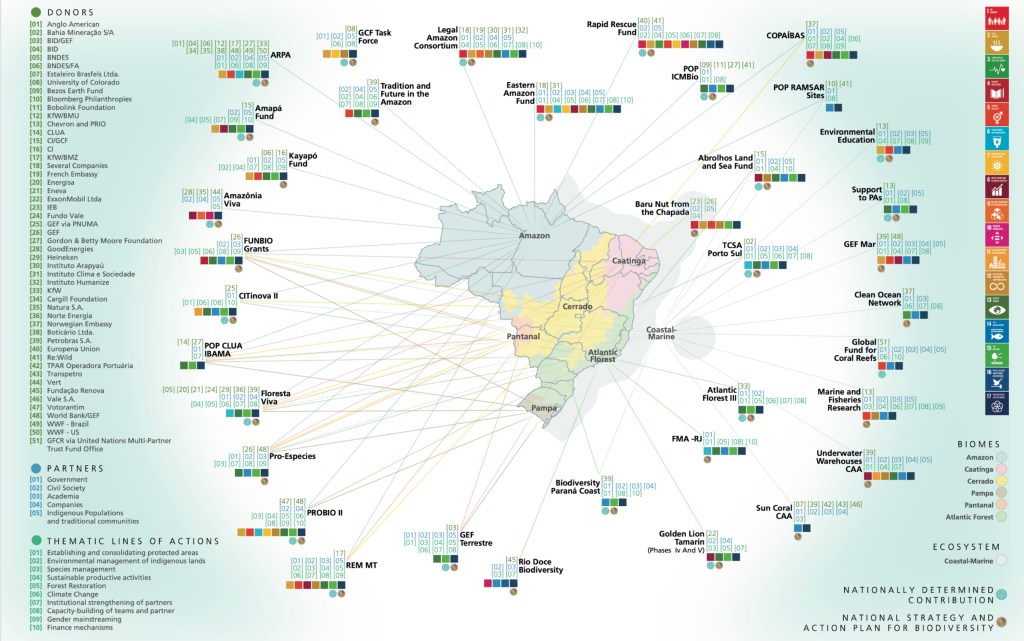
This role gives these institutions significant influence. They don’t just fund initiatives, they help determine which ones succeed, which models are expanded and which approaches are prioritised.
While this concentration can improve efficiency, it also concentrates decision-making power within a relatively small network.
A clear example is the Suruí Forest Carbon Project, launched in 2009 and managed in part by FUNBIO in partnership with the Paiter-Suruí Indigenous people. The project was widely seen as a pioneering effort to link conservation with carbon markets, but it also revealed some of the tensions behind these models.
Over time, some community leaders said payments from carbon credits were slow to arrive and that key decisions were being made by a small group rather than the wider community. At the same time, illegal logging and mining continued in the territory, weakening the project’s impact. For some, this raised difficult questions about who really benefits from these initiatives, and whether the system is as transparent or fair as it appears.
Financial disclosures illustrate the breadth of this network. FUNBIO linked programmes have involved funding and partnerships with entities including BNDES, KfW, IDB, the Gordon and Betty Moore Foundation, WWF, the Good Energies Foundation, CLUA, Bezos Earth, Petrobras, Eneva, ExxonMobil, Chevron, Vale, Anglo American, Natura, JBS, Heineken and others, spanning public, private and philanthropic domains.
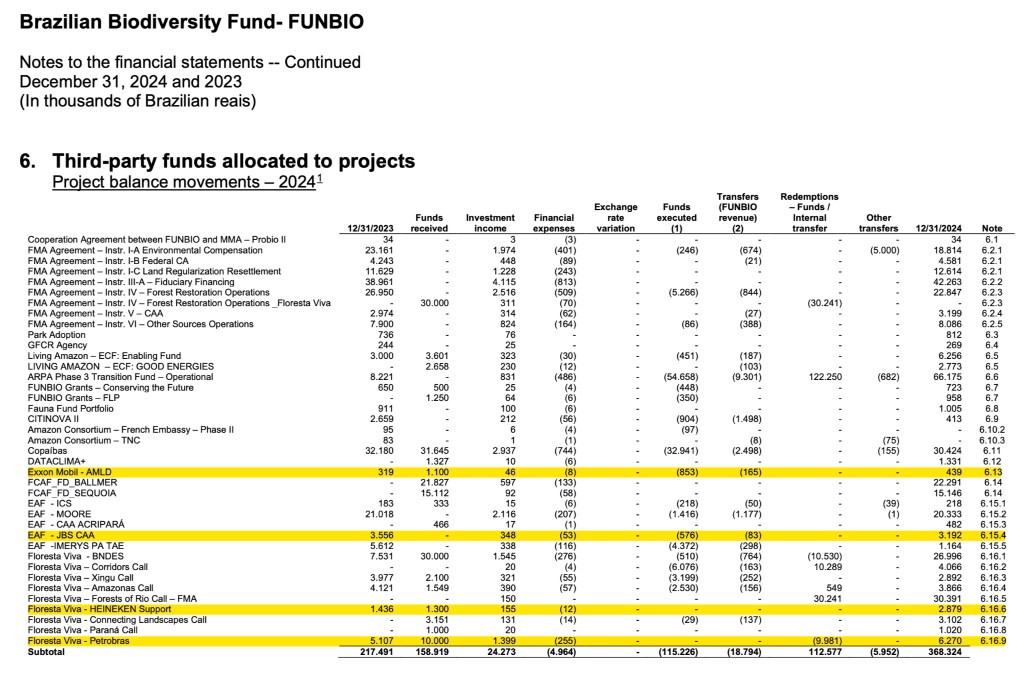
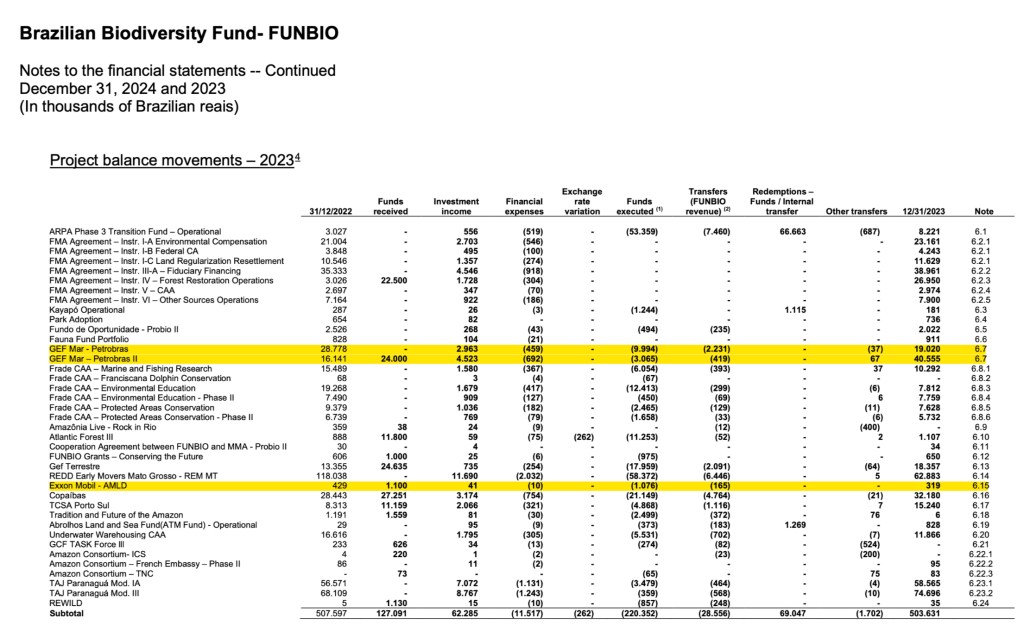
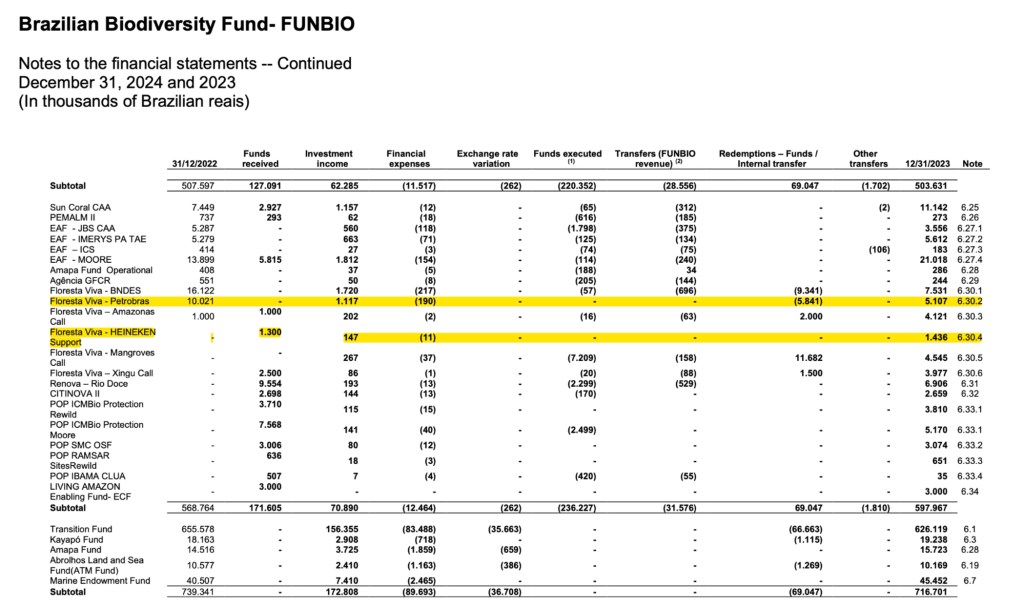
In practice, a single conservation project may involve funding from development banks, oil, mining and agribusiness sectors, philanthropic donors and environmental NGOs all at once. These layered partnerships can mobilise large amounts of money, but they also create complex webs of dependency.
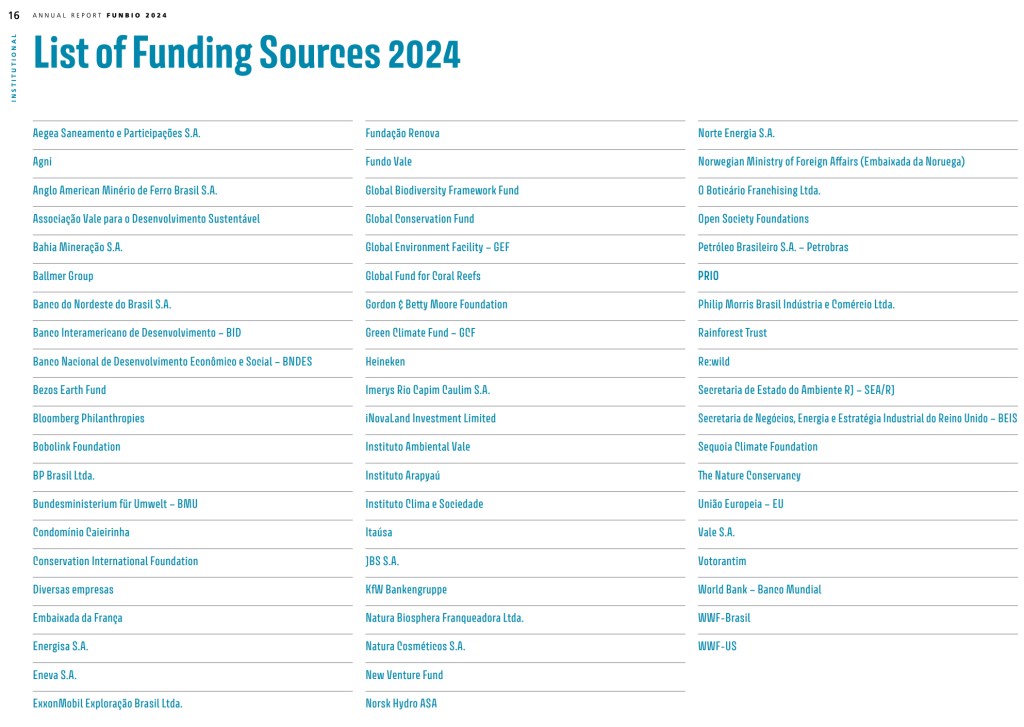
Philanthropy
Philanthropic foundations have become indispensable to this system, often stepping in where others won’t or can’t.
Organisations such as the Gordon and Betty Moore Foundation, the Good Energies Foundation (Porticus) and the Climate and Land Use Alliance (CLUA) provide early-stage funding that allows projects to develop and become attractive to large investors. Without this initial support, many initiatives wouldn’t get off the ground.
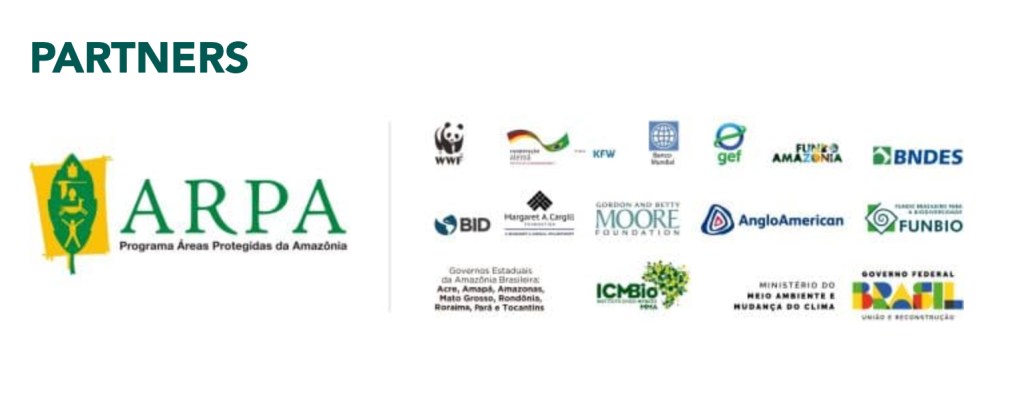
Take the ARPA programme as an example. Created in 2002 and managed by FUNBIO, this alliance has been working to conserve and sustainably manage 60 million hectares of land, an area roughly twice the size of Germany. Its funding comes from a mix of major players, including the Gordon and Betty Moore Foundation, WWF, the German government (through KfW), GEF, Anglo American, the Amazon Fund, IDB, the World Bank, Margaret A. Cargill and BNDES. The project itself is managed and delivered by FUNBIO.
In 2024 alone, the Gordon and Betty Moore Foundation injected over $24 million into projects in Brazil, mainly in the Amazon region.
But philanthropy isn’t neutral. By choosing which initiatives to fund, these organisations influence the direction of the bioeconomy itself.
Projects that promise scale and align with market-driven approaches are more likely to receive backing. Meanwhile, alternatives, especially those focused on land rights or non-market solutions, may struggle to compete.
The Soros Economic Development Fund, backed by George Soros’s Open Society network, has identified Brazil as a key destination for impact investment, particularly in areas such as regenerative agriculture, bio-inputs and nature-based solutions. Its approach emphasises scaling commercially viable models that link environmental preservation with financial returns, reinforcing the broader trend of aligning conservation with market-driven frameworks.
This raises an important question: who’s really shaping the future of the Amazon? Local communities, national governments, or global networks of funders?
Corporate participation
Corporations are now deeply involved in the bioeconomy.
Companies from the oil, mining and agribusiness sectors contribute to environmental funds and participate in conservation initiatives, often as part of broader sustainability strategies.
These efforts can support restoration and local development. At the same time, they operate within a reputational economy, where visible environmental engagement can improve public image and investor confidence.
This creates a clear tension. The same industries historically linked to environmental harm are now helping to finance its repair.
Commercialisation
The expansion of biodiversity-based businesses offers one of the clearest illustrations of how the bioeconomy functions in practice.
Corporations like the Brazilian cosmetics company Natura, are building global markets around products derived from the forest, often in partnership with local communities.
Natura’s involvement in initiatives such as the Amazônia Viva programme, developed alongside the IFC and FUNBIO, illustrates how commercial supply chains can be integrated with conservation finance.
On one level, Natura’s model demonstrates that forest-based economies can generate income without deforestation. On another, it reveals the complexities of scaling such systems.
As demand increases, supply chains must expand and standardise. This can place pressure on local practices, reshaping them to fit global market expectations.
The balance between opportunity and constraint is often fragile.
Sustainable beef narratives
The involvement of major meat producers adds another layer of complexity.
JBS, the world’s largest meat producer, trough the JBS Fund for The Amazon, highlights another dimension of the bioeconomy: participation by sectors historically linked to deforestation, environmental degradation and human rights violations. The fund supports conservation and sustainable development projects, positioning the company as part of the solution of environmental challenges.
However, a substantial body of investigative reporting and watchdog analysis has raised ongoing concerns about JBS’s supply chains transparency and environmental impact.
This highlights a broader contradiction: companies can support sustainability initiatives while continuing practices that contribute to social and environmental damage.
Mining capital
A similar pattern can be seen in the mining sector, particularly in the case of Brazil’s mining giant Vale. The company has invested in biodiversity programmes, restoration projects and bioeconomy partnerships, positioning themselves within the language of environmental responsibility.
But Vale’s environmental track record includes one of the most devastating industrial disasters in Brazil’s history. The Mariana dam disaster in 2015, operated by a joint venture between Vale and BHP, releasing millions of cubic metres of toxic waste, causing widespread destruction and triggering legal claims from hundreds of thousands of affected people.
Against this backdrop, Vale’s involvement in environmental and bioeconomy initiatives takes on added significance. Through entities such as Fundo Vale, the company co-finances conservation and development projects alongside public institutions and NGOs, embedding itself within sustainability frameworks that emphasise restoration and resilience.
These initiatives are often presented as part of a transition towards more sustainable practices. At the same time, they exist alongside ongoing extraction activities that carry significant social and environmental impact.
This reflects a wider trend: sustainability initiatives often accompany, rather than replace, extractive industries.
Institutional web and accelerators
Organisations such as the WWF, IDESAM, Conexsus, and Sitawi, occupy a pivotal position connecting finance and implementation on the ground.
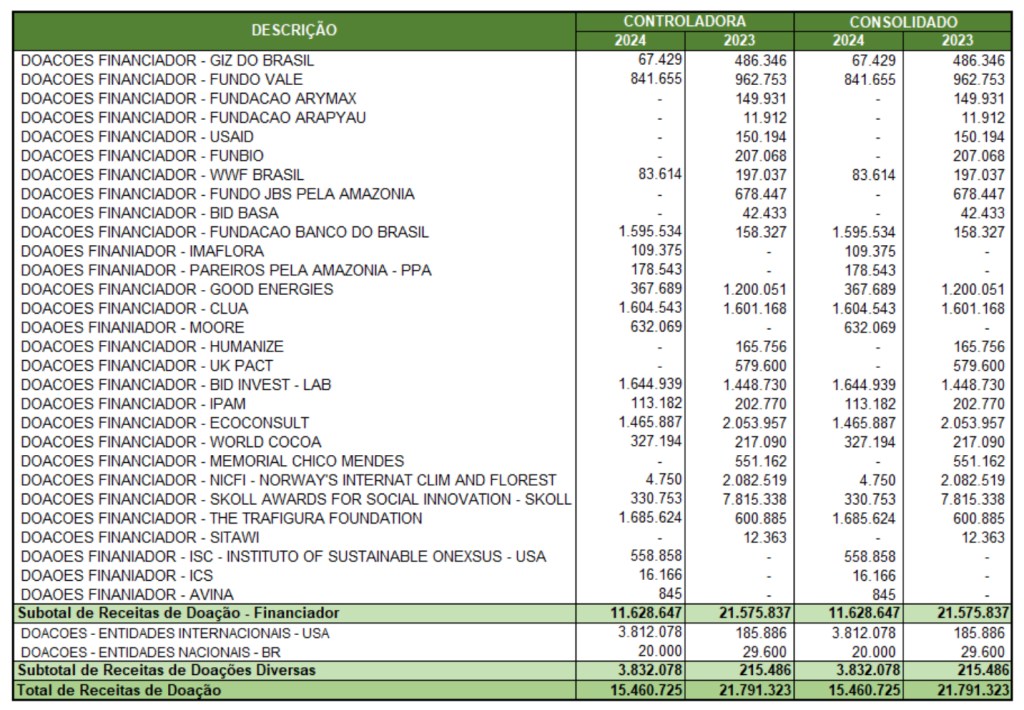
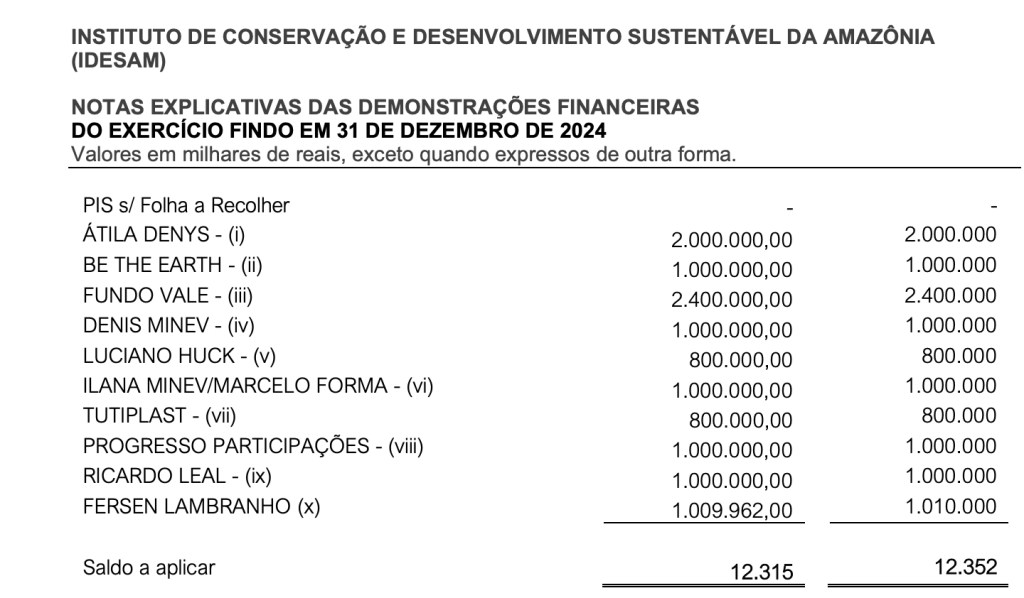
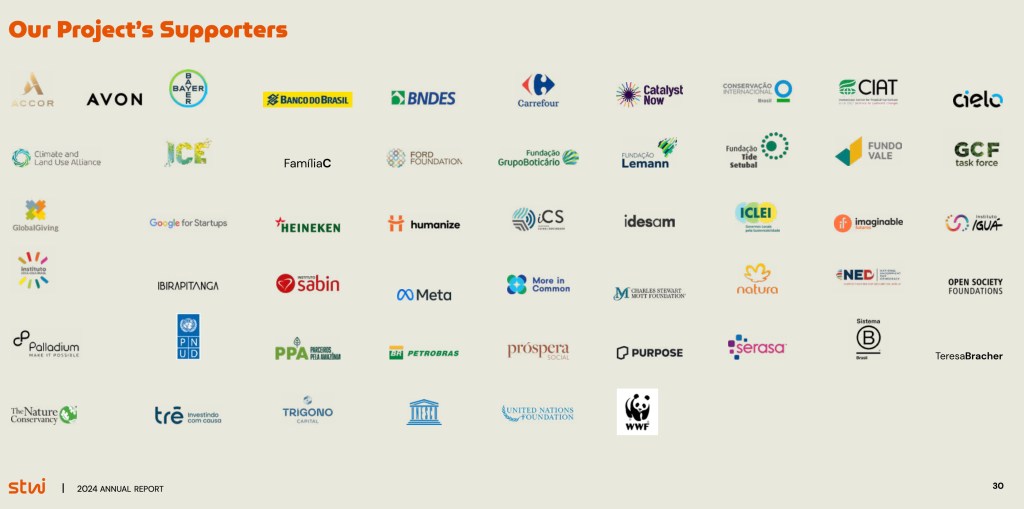
They design projects, manage funding and work directly with communities. This gives them an important bridging role but also places them in a delicate position.
Many depend on funding from the same actors they are expected to hold accountable.
New platforms such as Amaz and networks linked to Instituto Arapyaú aim to scale Amazon-based businesses by connecting them with investors, mentors and markets. These accelerators are often presented as vehicles for empowerment, enabling local entrepreneurs to access opportunities previously out of reach.
These initiatives can expand opportunity, but they also draw local enterprises into global systems, where success is defined by growth and financial return. Participation increasingly comes with conditions.
The Amazon Fund
The Amazon Fund represents one of the largest pools of international funding for forest conservation.
Managed by BNDES, it has received billions in contributions, primarily from the Norwegian government. Brazil’s state-owned energy giant, Petrobras, is also a donor. The fund’s structure channels international climate finance into national programmes, often working through intermediaries such as FUNBIO.
This multi-layered system enables significant investment, but they also introduce layers of complexity. Decision-making is shared across multiple actors, making accountability harder to trace.
It’s important to note that Aloisio Mercadante serves as both president of the Amazon Fund and BNDES.
Who benefits?
At the centre of the bioeconomy are Indigenous peoples and local communities.
Their knowledge, practices and long-standing relationship with the land help shape many projects now drawing global attention, and investment. But the share of financial benefits reaching them often remains limited. In many cases, the responsibility for delivering results rests largely on their shoulders, without matching share in the rewards.
This imbalance lies at the centre of the bioeconomy debate. Is the bioeconomy redistributing value or reinforcing existing inequalities?
There is no single answer. Outcomes vary from one project to another, shaped by local conditions and the way each initiative is designed. But the question itself remains unavoidable, and increasingly urgent.
The Amazon bioeconomy isn’t a simple fix. It’s a complex and evolving system shaped by environmental goals, financial interests, political priorities and social realities.
It offers the possibility of directing investment towards conservation and creating new economic pathways that keep the forest standing.
But it also risks embedding nature more deeply into financial systems that have long been driven by extraction.
The tension remains unresolved.
The defining question remains: will the bioeconomy ultimately serve the forest and the people who depend on it, or the systems that finance it?
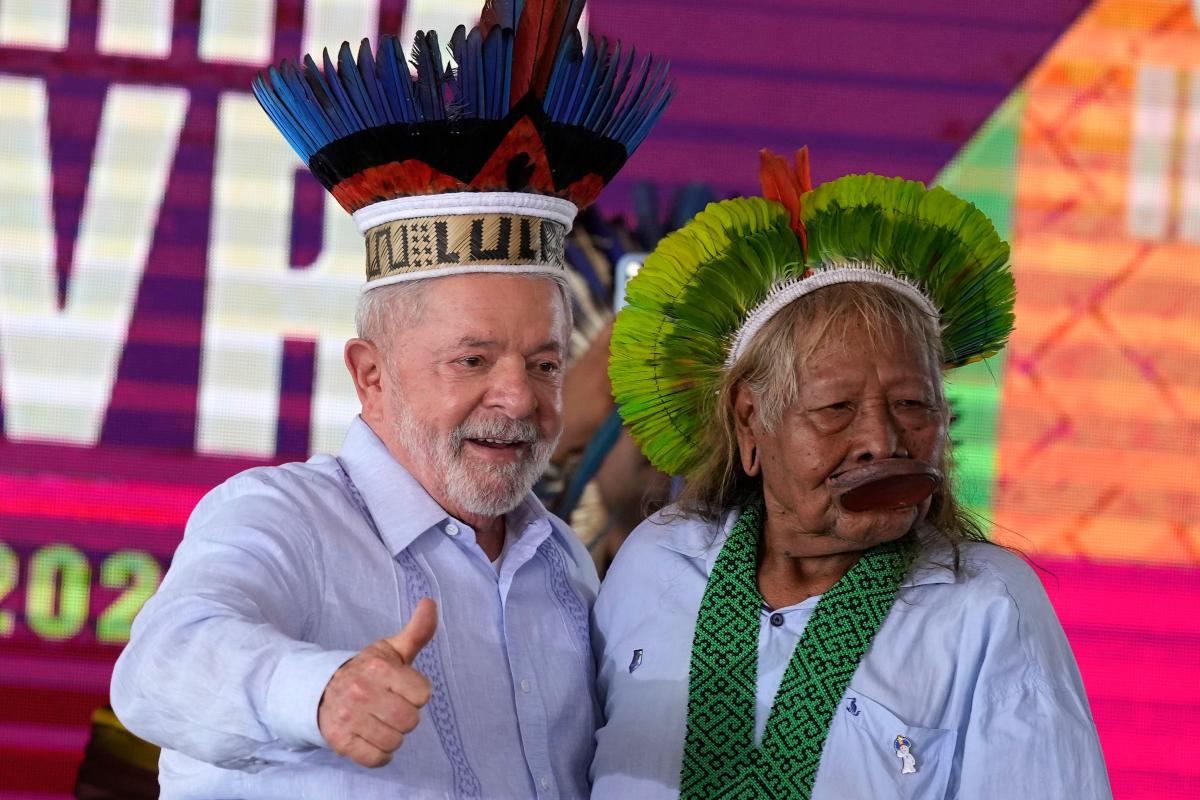
Featured photo: Brazilian President Luiz Inacio Lula da Silva gives a thumbs up after receiving a traditional Indigenous headdress from Cacique Raoni Metuktire, chief of the Kayapo people, during a ceremony in Brasilia, Brazil, April 2023. (AP Photo/Eraldo Peres/Alamy).







 YourVoiz