Brazilian Scientists’ Hopes and Expectations for the Future

Monica Piccinini

10 May 2023

The election of Brazil’s president Luiz Inácio Lula da Silva, ‘Lula’, in October 2022, brought a sense of relief and hope to the Brazilian scientific community.

Just over three months into his administration, Lula’s challenging task to fulfill all the promises he made before he came into power became apparent. The populous of Brazil, along with the rest of the world, is watching what happens next. 

In the past four years, the country has faced considerable challenges, including budget cuts in science and technology, the spread of misinformation leading to the denial of climate change, anti-vaccine movements, and the use of ineffective drugs against COVID-19, amongst many others.

“Brazil is once again reconciling economic growth with social inclusion. Rebuilding what was destroyed and moving forward. Brazil is once again a country without hunger. While preparing the ground for infrastructure work that was abandoned or ignored by the previous government, Brazil is again taking care of health, education, science and technology, culture, housing and public safety”, declared Lula during the meeting at Brasilia’s Planalto Palace in April.

A group of five renowned scientists share their views and expectations about scientific policies in Brazil, published at Nature Human Behaviour this month.

Mercedes Maria da Cunha Bustamante, biologist, Pedro Gabriel Godinho Delgado, doctor and psychiatrist, Lucas Ferrante, ecologist and researcher, Juliana Hipólito, biologist, and Mariana M. Vale, ecologist, highlight key areas of concern to be addressed by the current government.

Public Health & the Environment

Illustration 144851985 / Brazil Public Health © Gunay Aliyevs | Dreamstime.com


According to Lucas Ferrante, the past government was notable for the prominent role of scientific denialism. Ministers were chosen for their ideology, rather than their technical ability, and scientific advice was simply ignored.

The second catastrophic COVID-19 wave in the Amazon, making Brazil one of the global epicentres for the disease, could have been prevented if the past government had listened to scientific advice.

The absence of a technically oriented government under Jair Bolsonaro’s administration also increased deforestation in the Amazon rainforest at an alarming rate, threatening the environment, traditional and indigenous communities, as well as climate change goals, wrote Ferrante.

He also mentioned that despite the change in government, there’s the need to remember past events.

During Lula’s two previous terms as president (2003-2010), he showed worrying denialistic tendencies, ignoring scientific reports and scientists’ advice. An example of this was the Belo Monte hydroelectric dam disaster, which affected the Xingu River and traditional communities, causing a catastrophic socio environmental impact.

Essential plans should include blocking major infrastructure projects in the Amazon rainforest, such as the reconstruction of BR-319 highway linking Manaus to Porto Velho, which will affect traditional and indigenous communities, biodiversity and increase deforestation in the region, as well as agriculture production chains that could give rise to a new pandemic. 

Brazil’s biodiversity is extremely rich, but lacks surveys of viruses circulating in its fauna, therefore a well established surveillance programme is required in order to reduce the risk of new pandemics emerging through viral spillover, declared Mariana M. Vale.

Nísia Trindade, Brazil’s health minister, mentioned during a lower house hearing last month that the country should be gearing up for future pandemics by investing in science, technology and Brazil’s national healthcare system, SUS (Sistema Único de Saúde).

Illustration 98533932 / Brazil Environment © Cienpies Design / Illustrations | Dreamstime.com


Juliana Hipólito highlighted another significant issue of concern, society’s lost value and interest of science in their daily lives. As a consequence, this lead to an increase in deforestation rates, climate change denialism, anti-vaccine movements and the use of ineffective unproven drugs against COVID-19.

The past government’s dismantling of environmental policies increasing deforestation and the approval of a large number of toxic pesticides is also something the science community expects to be reversed, she added.

According to experts, Brazil’s use of pesticides increased exponentially in the last few years, growing 300,000 tonnes since 2010. Approximately 80% of the pesticides authorised for commercialization in Brazil are prohibited in at least three countries of the Organization for Economic Cooperation and Development (OECD) of the European community.

In the field of mental health, Pedro Gabriel Godinho Delgado expects to see development of long-term projects to better understand the interfaces between mental health suffering and the profound social inequality and precariousness of life in Brazil.

According to him, urban violence, racism, stigma, gender prejudice, loss of childhood and adolescence and their relationship with human suffering, should no longer be marginal and must be included amongst the priorities of research. The long-term consequences of COVID-19 on mental and physical health also deserve special attention from researchers.

Investments, Social Justice & Equity
Illustration 34989348 © David Castillo Dominici | Dreamstime.com


Divestment is an issue of concern, as Brazil’s previous government cut considerably investment in scientific and educational organisations. There was a huge drop in investments in INPE (National Institute for Space Research), INPA (National Institute of Amazonian Research), CNPq (National Council for Scientific and Technological Development), and federal universities.

According to Hipólito, budget cuts skyrocket during the past government. Research funding and the budget of leading science and technology funding agencies were reduced by 60% from 2014 to 2022.

Socio-economic conditions have been sacrificed as a result of the cuts, therefore affecting the country’s capacity for the innovation and economic diversification.

Mercedes Maria da Cunha Bustamante mentioned the urgent need to support vulnerable groups (women, the youth and the poorest – most of them people of colour) in Brazil with the demand for public policies that would put the country back on track towards social justice and equity.

Reducing poverty, combating climate change and biodiversity decline are intrinsically connected.

The current administration also needs to focus on improving education from elementary level, adds Bustamante. A similar scenario is seen at public universities, which were affected by budget reductions under the last government. Brazilian public universities account for most of the national scientific production and are major drivers of social inclusion.

It’s essential to increase diversity, she added, as it’s vital for addressing societal demands through the generation of new knowledge, making Brazil attractive again for young scientists and allowing science to have a more prominent role in policy making.

Vale pointed out that white male individuals still dominate Brazilian academia and highlighted the need to strengthen and improve existing policies on diversity, equity and inclusion in science, especially regarding black and indigenous people.

Brazil has seen a massive exodus of scientists, leaving their jobs to work abroad, where their skills are most valued. The current government should set up a development and retention plan, encouraging and supporting scientists across the country.

Although the scientific community remains confident and positive, it’s crucial that they continue to defend science, and that the general population are not deceived into thinking that a change in governance alone is sufficient to bring about the needed improvements in public health and the environment, mentioned Ferrante.

The voice of scientists who dedicate their entire lives to protecting and bettering our daily lives couldn’t be louder and should be heard. Perhaps it’s time for Brazilian society, politicians, institutions and corporations to fully support this community that has been undervalued for so long.

Using Science to Block a Road to Ruin – The Amazon BR-319

Monica Piccinini

23 Feb 2023

According to two prominent scientists, Lucas Ferrante and Philip Fearnside, and the result of their studies, the ambitious reconstruction of the BR-319 highway, linking the capital Manaus in central Amazonia to the southern edge of the forest, Porto Velho, might be a catalyst to rampant deforestation with irreversible and catastrophic consequences to the rainforest.

BR-319, a stretch of 830 km, connecting the ‘arc of deforestation’, was inaugurated in March 1976, during the military dictatorship, under the government of General Ernesto Geisel, and abandoned in 1988. In 2015, Dilma Roussef’s government proposed reopening BR-319.

“The BR-319 highway cuts through one of the most preserved blocks of the forest, where it contains an enormous stock of carbon. This project is a threat to 63 indigenous lands and 18,000 indigenous people, not to mention the environment and biodiversity”, mentioned Lucas Ferrante, environmental scientist.

Brazilian Amazonia and Highway BR-319 (Manaus-Porto Velho). Source: map produced by scientist Lucas Ferrante in the ArcGIS software, deforestation data from INPE 2021.

Despite the warnings from scientists about the negative consequences this project may bring to the region, it’s considered a priority for Brazil’s new president, Luiz Inácio Lula da Silva. During an interview with a radio station in Manaus last September, he mentioned:

“We do not want to transform the state of Amazonas into a sanctuary for humanity. Millions of people live in the state of Amazonas. We have to give these people the right to civility, the right to live well, the right to come and go. It is entirely possible for you to work the climate issue correctly, work the environmental issue correctly and provide the necessary security so that you can build good roads that can connect the state of Amazonas with the rest of the country.”

However, according to Lucas Ferrante, the newly elected president of Brazil, Luiz Inácio Lula da Silva, only replicates a political boast that it is possible to establish territorial governance.

“We need to make some things clear, this is just political rhetoric, a bravado that does not consolidate. According to a study we published at Land Use Policy, the BR-319 highway area had a deforestation rate of up to 2.6 times higher than the deforestation rates observed in other parts of the Amazon, i.e., the state of Amazonas is no longer a isolated sanctuary, yet another area increasingly occupied by criminal organisations that encourage land grabbing and deforestation”, argues Ferrante.

“In addition, people have always had the right to come and go by other modes of transport, but they do not have the right to collapse one of the most biodiverse blocks of the rainforest, which is home to a wide variety of native peoples and which consequently, if deforested, could collapse the global climate,” added Ferrante.

Scientific Studies Raising Red Flags

Lucas Ferrante, environmental scientist, and Philip Fearnside, a biologist at Brazil’s National Institute of Amazonian Research (INPA) and Nobel Peace Prize winner for climate research (2007), both published various scientific studies highlighting the negative effects of this project on the Amazon rainforest.

The highway is a free path to illegal side roads in areas of large concentration of indigenous land, legal reserves and conservation units, giving illegal miners, loggers, squatters and land grabbers access to untouched forest and public lands.

Illegal timber seized by IBAMA agents along the BR-319 highway. Photo by scientist Lucas Ferrante.

As a consequence, these invaders are bringing a wave of destruction, instability, pollution, violence, disease, decay and death to the traditional communities, indigenous people and the environment around them.

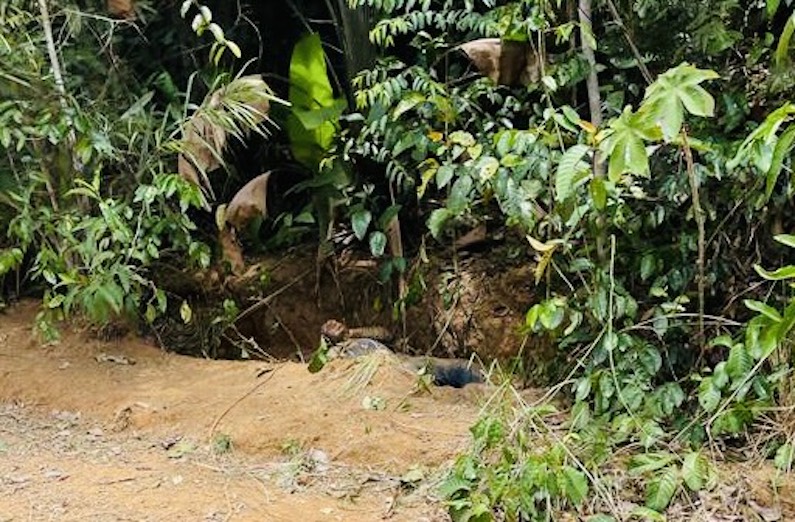
In October 2021, a Washington Post journalist, Terrence McCoy and scientist Lucas Ferrante, set themselves on a journey across the length of BR-319 highway, showing the path of destruction and devastation caused by illegal deforestation, land grabbing, mining, fires, violence and even killings. The burnt body of a dead man was found along the way after he had reported land-grabbing activities in the area to the federal police.

Photo of a burnt dead body around BR-319. Photo by scientist Lucas Ferrante.

In 2017, buildings belonging to IBAMA (Institute for the Environment and Renewable Natural Resources) and the Chico Mendes Institute for Biodiversity Conservation (ICMBio) in Humaitá were set on fire by miners and remain inoperative.

It is estimated that BR-319 and planned side roads will generate an increase of the deforested area by more than 1,200% between the highway and Brazil’s border with Peru. This projection relates to central Amazon alone, if extended to Peru, the numbers would increase significantly.

According to a scientific article published in the journal Land Use Policy by both Ferrante and Fearnside, despite environmental legislation requiring an environmental impact assessment (EIA) for one of the stretches of the highway, the project was given the green light from a judge, who authorised it without an EIA.

Additionally, the reconstruction of the highway lacks an economic viability study, EVTEA, required by law 5917/1973, as well as consultation with indigenous people required by International Labour Organisation (ILO) Convention 169 and by Brazilian law 10,088/2019.

The main transport route used in the region has always been via the Madeira River, making it a cheaper, cleaner and safer way to transport goods.

Fernanda Meirelles, executive secretary of the BR-319 Observatory, commented during our interview earlier this month:

“The LP, Preliminary License, was issued without consultations with the indigenous people and traditional communities, an important stage of the process that was not respected. We do not know whether consultations will be carried out in this current government or whether an intervention by the MPF (Federal Public Ministry) will be necessary to fullfil the obligation of consultation”,

“Public hearings were held during the pandemic, but in an inadequate way. There was no logistical support to guarantee the presence of traditional communities and indigenous people, in additional to having been held at a very inhospitable moment for any time of contrary opinion or manifestation. We even witnessed attacks suffered by researcher and scientist, Phillip Fearnside, during these public hearings”, added Meirelles.

According to data released by SEEG, the Greenhouse Gas Emissions Estimation System, between 2018 and 2019, the municipalities surrounding BR-319 highway had a staggering 16% increase in greenhouse gas emissions from land use and agriculture.

The reopening of this highway would also give agribusiness access to more land for expansion, including cattle farming, soy and palm oil plantations, monoculture expansion for large-scale biofuel production, as well as fossil fuel companies, hydroelectric dams, mining, etc.

As various studies indicate, including the ones published at Land Use Policy, and Environmental Conservation, these practices are already happening with the maintenance works of the road and would increase exponentially with the reconstruction of the BR-319 highway.

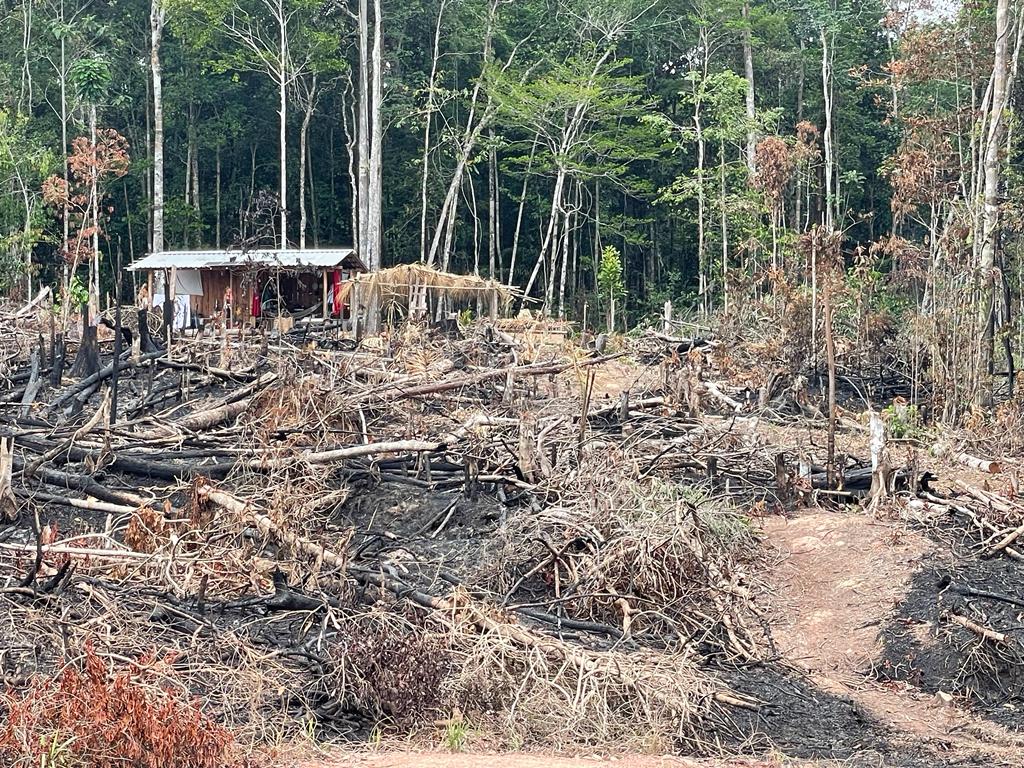
Deforested and burned area along the middle stretch of BR-319 highway. Photo by scientist Lucas Ferrante.

There’s still no information about the costs and sources of funds for this gigantic project. The same applies to a very essential monitoring system project, which was never presented.

Profiteers – All Eyes Focused on the Amazon

There are countless politicians, corporations, governmental agencies and organisations with either a hidden or visible interest in the reconstruction of BR-319 and hoping it succeeds. This project is a gateway to a heaven of natural resources waiting to be exploited and the highway will make their journey a much smoother process.

According to Fearnside, Rosneft, a giant Russian oil and gas company, with drilling rights to 16 extraction blocks located west of BR-319, approximately 35 km from the Purus River, by the Solimões Basin, would be one of the beneficiaries of the project.

Another very concerning sector is biofuel production in the Amazon. Biofuels are produced based on agricultural products, including sugar cane, corn, castor bean, palm oil and raw materials of animal origin.

According to a Global Witness report, BBF Group (Brasil Biofuels) and Agrapalma, two Brazilian palm oil (azeite de dendê) giants, are accused of various violations in the Amazon, including conflict with local communities, violent campaigns to silence indigenous communities and fraudulent land grabs.

BBF is the largest producer of palm oil in Latin America, also active in thermoelectric generation and biodiesel in the Amazon region (Acre, Amazonas, Rondônia, Roraima and Pará). The company announced that it‘s going to invest R$5 billion over the next three years in the production of biofuels, including corn ethanol. The BR-319 project would certainly facilitate their business developments in the region.

Studies coordinated by Ferrante point out that the expansion of plantations for the production of biofuels in the Amazon tends to encourage deforestation and collapse the forest, in addition to providing zoonotic jumps of viruses stored in the forest, generating a new global pandemic.

Based on scientific research, Ferrante managed to overthrow a presidential decree that released sugarcane to the Amazon, but according to him, corn and palm oil are still crops that have an enormous potential for environmental damage and to generate deforestation, demanding economic ecological zoning mainly for the BR-319 highway area.

Politicians, infrastructure companies, national and international corporations, all show great interest in this ambitious project, as the highway would be key to their business expansion.

The voice of a public figure and politician, the governor of Amazonas, Wilson Lima, would have been a great opportunity for us to understand more about this challenging project. Unfortunately, Lima did not respond to a request for an interview.

The only NGO in the region that agreed to be interviewed about the BR-319 project was IDESAM/BR-319 Observatory.

The Gordon and Betty Moore Foundation failed to respond a request for an interview.  Funbio responded, but failed to answer questions about the project.

Fundo JBS pela Amazônia mentioned that they we were unable to contribute to this matter, because the reconstruction of BR-319 had nothing to do with the fund and that this is not something that directly impacts their projects.

WWF Brasil did not have a spokesperson available to answer questions related to the project and asked that any questions be directed to BR-319 Observatory.

National and international media, politicians, corporations, governmental agencies, as well as some NGOs, seem to be reluctant to talk about the reconstruction of the BR-319 highway.

All studies so far show that this project lacks environmental governance and would be detrimental to the local communities as well as the rainforest. It also lacks an economic viability study, a monitoring system plan and consultation with the traditional and indigenous communities.

This appears to be a politically motivated plan with every president elected repeatedly making the same promise, selling the idea that the reconstruction of BR-319 highway would bring prosperity to the region, without considering that it may also bring pollution, illegal activities, violence, diseases, rampant and irreversible deforestation and destruction to the rainforest with catastrophic consequences to Brazil and the rest of the world.

If completed, this project may put in jeopardy the future and survival of the Amazon rainforest, all in the name of what they call “progress”!

Article available in Portuguese at A Escola Legal.

Humanity’s Historical Ties with Eugenics

Monica Piccinini

10 Aug 2021

In recent years, the world and its leading nation states, appear to have experienced a fundamental change in social thinking. Evidenced by the reversal of globalisation towards isolationism, the move away from political leadership towards populism, and the move away from truth towards the mass use of mis-information for political gain, control and power.

With these changes in social thinking, major democracies have seen the worrying rise of a series of consequential symptoms:  the far-right movement, white supremacy, widespread use of misinformation, discrimination, xenophobia, inequality, misogyny, homophobia, extremism, racism, denialism, and violence.

Is this fundamental change something new in society, or is it itself the result of actions and belief systems that originated in the distant past? An outstanding 2019 documentary on BBC4, “Eugenics: Science’s Greatest Scandal”, presented by science journalist and author, Angela Saini, and actor, presenter and activist, Adam Pearson, inspired my to write this piece.

Socially good intentions or not?

Eugenics (the word originated from the Greek for ‘good stock’ or ‘well born’), the term first used to describe a movement by Francis Galton, the British explorer and natural scientist, around the 1870’s, is the practice or advocacy of controlled selective breeding of human populations to improve the population’s genetic composition. It encouraged the most valuable people in society to procreate and discouraged it in those it considered less fit.

The world has perhaps unwittingly experienced ‘Eugenic’ ideals throughout its past 150-year history, with Eugenics featuring in some of the world’s most horrific historic events.

It appears that Eugenics continues to have an influence on policies being created by governments today and even more concerning is its resurgence within certain aspects of the scientific community.  Combined with recent technological advances in genetic science, the effects on the future of mankind could be both dramatic and irreversible.

Francis Galton, a cousin of Charles Darwin, was a superb statistician (he discovered correlation and regression to the mean), also having contributed in the fields of meteorology, anthropology, geology, biology, psychology and psychometrics. He was highly inspired by Darwin’s “The Origin of Species” (1859) and dedicated his work into the study of inherited traits in human society. In Galton’s view, the best babies came from the intelligent and good-looking people.

It’s hard to know whether Galton’s work was malevolent at its core, however, eugenics laid the foundation for one of the world’s most horrific historic chapters, the Nazi genocidal project and sterilization programs across the world, as well as euthanasia programs and Aktion T4, colonialism, mass murder and racial oppression.

Recently, University College London (UCL) apologised publicly for having had a role in promoting eugenics in the past by having links to eugenicists like Galton. Francis Galton funded a professorship in eugenics at the university, the Francis Galton’s Laboratory for National Eugenics, where the focus was not only on disability, but also on race.

According to a recent Reuters report, the state of California has agreed to compensate all the citizens who were forcibly sterilized under old laws, aimed at people who were deemed unfit to have children between 1909 and 1979.

Atrocities influenced by eugenicists like Galton were committed around the world. In the early 1900’s, Germany’s imperial forces, called Schutztruppe, murdered around 80,000 indigenous people (Herero and Nama) in Southwest Africa (Namibia today), one of the first genocides of the 20th century. Medical experiments were performed where people were injected with tuberculosis and smallpox, and decapitated skulls were measured.

Galton’s protégé, Professor Karl Pearson, was an English mathematician and biostatistician and the first chair of national eugenics after Galton died. He was an anti-Semite and considered the Jewish population as physically and mentally inferior, and that the solution to the decay of the British population was to stop the Jewish immigration.

“If you want to know whether the lower races of man can evolve a higher type, I fear the only course is to leave them to fight it out among themselves, and even then the struggle for existence between individual and individual, between tribe and tribe, may not be supported by that physical selection due to a particular climate on which probably so much of the Aryan’s success depended.” – Karl Pearson (1901).

In 1910, Winston Churchill became Britain’s secretary of state and was also considered a strong eugenics advocate.

“I do not admit for instance, that a great wrong has been done to the Red Indians of America or the black people of Australia. I do not admit that a wrong has been done to these people by the fact that a stronger race, a higher-grade race, a more worldly wise race to put it that way, has come in and taken their place”, Churchill’s words in 1937 to the Palestine Royal Commission.

It’s interesting to point out that eugenics is still reflected in some parts of society today. One example of this is the 11-plus exams still being used in some English schools and a product of Cyril Burt’s work. Burt was an educational psychologist and professor at UCL, worked very closely with the British government. He believed that intelligence was innate and that children from rich parents scored better than poor children was mainly because their parents were more intelligent.

To this day, some schools in the UK still perform the 11-plus testing regime, a harsh and unfair experience for students aged as young as 11 and 12, and the results can be traumatic, as some of the students who do not perform well are asked to move schools.

Another famous name to enter the eugenics list was the well-known Marie Stopes, a feminist, author, women’s rights campaigner and trained paleobotonist. She opened Britain’s first birth control clinic. Stopes was also a eugenicist and advocate for controlled selective breeding, calling for the “hopelessly rotten and racially diseased” to be sterilised and opposed inter-racial marriage.

Stopes was married to Reginald Ruggles Gates, a Canadian anthropologist, botanist, geneticist and eugenicist, obsessed with skin colour. Gates believed African-Americans to be a mentally inferior race and that racial intermarriage was the cause of some disabilities.

Eugenics also influenced many sterilisation programs across the world. After WWII, sterilisation policies were carried out in many countries in order to improve racial purity. In 1975, pressured by the American government (Lyndon B. Johnson), Indian prime minister Indira Gandhi, with the help of her son Sanjay, embarked on a mass sterilisation program, considered as one of the most troubling human rights violation the country has ever experienced. As a result, by 1977, over 8 million people in India were sterilised.

Some politicians, scientists and academics across the world continue to value and support the eugenics thinking. In 1974, British senior conservative politician, Keith Joseph, said in a speech, “the balance of our population, our human stock is threatened”, meaning the poor were breeding too fast, and the danger was they were going to swamp everyone else.

“If we are not prepared to predict and intervene far more early then there are children who are growing up, in families which we know are dysfunctional, then the kids a few years down the line are going to be a menace to society”, said Tony Blair, Britain’s former prime minister.

In the UK, there are growing fears about new legislation being put in place after Brexit. An example of this is the recently introduced bill that would allow authorities to criminally prosecute and jail asylum seekers who are intercepted trying to enter the United Kingdom without permission for up to five years.

Many other countries across the world have supported and adopted the eugenics thinking, including Brazil. In the first half of the 20th century, Brazil debated on sterilisation of the “undesirables” to improve the race. Brazil did not pass any sterilisation law, however, in the 1920’s and 1030’s discussions on the subject were amongst doctors, intellectuals, politicians and eugenicists. During Getúlio Vargas government, new immigration policies were approved, preventing the entry of immigrants considered racially inferior. A sterilisation program was never implemented in Brazil, as it was considered a violation of the strong catholic tradition in the country.

Recently, in an audio broadcast, a professor at the faculty of medicine at Federal University of São Paulo, Unifesp, mentioned that blacks and indigenous people were “culturally backward”, trying to explain the notion of pure race.

The GM Designer Babies…

As genetic science technology advances, doors may be open to new forms of high tech eugenics through human genome editing, like CRISPR (the technique that enables precise DNA editing developed by scientists Emmanuelle Charpentier and Jennifer A Doudna in 2012). This would create a non-accepting and more discriminatory society. The 1997 movie “Gattaca” exposed glimpses of what our world could look like if we take the wrong steps towards genetic modification, which will divide humanity against itself.

Nowadays, one has the option to select embryos without a faulty gene and implant it in the mother’s womb. Pre-implantation Genetic Diagnosis, PGD, is a technique that involves testing cell(s) from embryos created outside the body by IVF for a genetic disorder. Tests are carried out for the specific disorder that the embryos are known to be at significant risk of inheriting.

CRISPR pioneer and Nobel laureate Jennifer Doudna said in her book on the subject of genome editing, “the power to control our species genetic future is awesome and terrifying. Deciding how to handle it may be the biggest challenge we have ever faced”Doudna carried on saying, “we don’t have the ability to control the editing outcomes in a way that would be safe in embryos right now… It is very difficult to know how those edits will in fact affect the health outcomes of these kids“.

The World Health Organisation has recently released two new reports providing recommendations to help establish human genome editing as a tool for public health, with emphasis on safety, effectiveness and ethics.

“Human genome editing has the potential to advance our ability to treat and cure disease, but the full impact will only be realised if we deploy it for the benefit of all people, instead of fueling more health inequity between and within countries”, mentioned Dr. Tedros Adhanom Ghebreyesus, WHO Director-General.

According to Stop Designer Babies, WHO’s reports on human genome editing spend many words to say nothing concrete and fail to recommend the obvious solution to the risks of unregulated creation of GM designer babies. The obvious solution, according to SDB, would be to ban on human germline genetic engineering altogether. Editing the human genome can lead to unintended consequences and can lead to an even more divided and unfair society.

In 2018, one specific event shocked the world when Chinese scientist He Jiankui announced he had altered the DNA of twin babies with the intent to prevent them from catching HIV. The result was Lulu and Nana, born not immune to HIV. Instead, they were both accidently given versions of CCR5 that are made up and do not exist in any other human genome in the world. Their genetic changes are still heritable and could be passed on to their children. Jiankui also broke the law by forging documents and misleading the babies’ parents about the risks involved. He Jiankui was sentenced to three years in jail for conducting “illegal medical practices”.

Clear signs of worldwide social, economic and political instability and division show that, as a society, we are swimming into very dangerous waters. The Covid-19 pandemic has only exacerbated existing issues in our society. Countries have retracted, adopting protectionist views and a colonial mentality, therefore creating more walls and discrimination.

It is essential for our society to embrace a compassionate, fair and ethical approach to decisions being made on how we are born as well as how we live our lives. There is an urgent need for a legislative framework to be set up by world leaders, with the objective to protect the most vulnerable ones in our society. We must make sure we do not commit the terrible crimes and mistakes made in the past. This will define the future of humanity.

Brazil: The Land of Impunity

Monica Piccinini

3 June 2021

“Impunity is safe when complicity is general”, once said Mariano José Pereira da Fonseca, Marquis of Maricá (1773-1848).

Visiting my family in the south of Brazil in my early teenage years was always an eventful trip, as I had the opportunity to spend time with my cousins and at the same time I had the freedom to go out with them without being questioned and monitored by my parents. My cousins had a very well established circle of friends; the children of families with influence, power and wealth.

One day, I was told that one of their friends had committed a terrible crime; killing his mother! I was in a state of shock and horror. His parents had been recently separated and his mother was known to be parading town with younger boyfriends, which made him extremely embarrassed. We were then told he had left town, only to return a few months later as if nothing had happened. No one ever questioned him nor mentioned the event. This is the very first time I realised that there were two different set of rules in Brazil, one for the powerful and wealthy, the other one for the remainder of the population. I soon learned the name for it: impunity!

Brazil is known for being a friendly and hospitable country.  That aspect of the culture also extends to idolising and accommodating criminals from all over the world, no exception, including former Nazis like the “Angel of Death”, Josef Mengele and Franz Stangl; the infamous English criminal who helped plan and carry out the Great Train Robbery of 1963, Ronnie Biggs; a convicted fugitive Italian drug lord, Rocco Morabito, recently arrested in Brazil; one of the most important members of “Cosa Nostra”, Tommaso Buscetta; amongst many others.

It is worth pointing out that international criminals are a minority in Brazil, as the country is best known to be the land of impunity, a “safe heaven” for all types of local criminal activities committed by “businessmen”, politicians, the police, terrorists and drug lords.

“Corruption is not a Brazilian invention, but impunity is something very much ours”, once said TV presenter Jô Soares.

Corruption, violence and impunity are interconnected and run through every part of Brazilian society. Corruption leads to violence and impunity, an infectious disease affecting the most powerful in the country.

Published at Portal Brasil Empresarial, there are a few examples of violence, the fight for power, money, and impunity that has run through Brazilian politics for a very long time.

In June 1967, deputies Nelson Carneiro and Estácio Souto Maior, father of pilot Nelson Piquet, drew their weapons and exchanged fire in the Chamber of Deputies. With a .38 caliber revolver, Nelson Carneiro shot Estácio Souto Maior, who despite being wounded, managed to retaliate.

Four years earlier, on December 4, 1963, senator Arnon de Mello, father of the current senator and former president Fernando Collor de Mello, shot at senator Silvestre Péricles, who laid down on the ground and dodged the shots. One of the shots hit senator José Kairala, who died hours later. Fernando Collor’s father reacted to the threats, and during a speech in the Senate, he shot Péricles Silvestre.

In 1929, when the Federal Chamber was still headquartered in Rio de Janeiro, a discussion between deputies Sousa Filho and Simões Lopes resulted in death. Simões Lopes, who was armed, fired two shots at Sousa Filho, who died on the spot.

In all three occasions, all those involved were acquitted and were never held to account for their actions.

Crime-solving rates in Brazil are one of the lowest in the world. The country has loose criminal laws with soft penalties being applied to serious crimes, including incongruous criminal procedural legislation, which allows criminals to go free unpunished. Seven out of ten homicides are not punished in Brazil.

“An absolutely inefficient criminal law, unable to reach anyone who earns more than five minimum wages, has led us to build a country of rich offenders, a country in which people live on bid rigging, active corruption, passive corruption, embezzlement, money laundering. This was no accident. It spreads across the country”, said Luís Roberto Barroso, a Brazilian law professor, jurist and current Justice of the Supreme Federal Court of Brazil.

Currently there are about 500 criminal cases in the Supreme Court, criminal proceedings as well as investigations, most of them against parliamentarians, mentioned Barroso at Jornal do Comércio.

Corruption and impunity work from top down in Brazil. The current president, Jair Bolsonaro, and his family have been involved in various criminal and corruption scandals, accused of money laundering, running a paramilitary death squad, and stealing from the population. These scandals often lack scrutiny and go unpunished.

Authorities in Brazil have always been a fortunate class. The privileged forum favours certain public authorities, unlike the majority of the population, encouraging white-collar crimes, corruption, and impunity to take place.

Developed countries usually have a few positions with privileged jurisdiction, but in Brazil over 45,000 authorities have this privilege. The factors that contribute to an individual or organisation to commit a crime is highly influenced by the possibility of it being tried and convicted by a justice system.

Impunity is also present in the police force in Brazil. The recent events of Jacarezinho in Rio de Janeiro, where an operation by the Civil Police that resulted in the deaths of 25 people, including one police officer, was news across the world. The victims were suspected of criminal activities, but no proof yet has been presented.

“It’s completely unacceptable that security forces keep committing grave human rights violations such as those that occurred in Jacarezinho today against residents of the favelas, who are mostly Black and live in poverty “, said Jurema Werneck, executive director of Amnesty International Brazil.

A study called “Labyrinthine Investigations”, published by Conectas, reveals that reports of violations committed by police officers tend to be ignored and shelved. A complex bureaucratic mechanism capable of silencing victims and protecting crimes committed by police officers was identified.

“The institutions work to justify the conduct of the police officers, to avoid investigation and punishment”, said Adilson Paes de Souza, a retired Military Police Lieutenant Colonel who has a PhD from the Institute of Psychology of USP (University of São Paulo).

“The existing doctrine in the Military Police is one of militarisation and war against the enemy, and this also spills over into the Civil Police, the Public Prosecutor’s Office and the Judiciary. When the judge clear signs of torture that a detainee has suffered, the message is the following: this is the enemy, damn it, no standards and guarantees for him”, added Souza.

Brazil is like an orphan lacking protection and direction; a country being constantly fooled, beaten, controlled and exploited by ruthless greedy individuals and organisations. It has been left to fend for itself. It is bruised and traumatised. The criminals responsible are left unpunished, exempted of their heinous crimes.

Brazil’s Relationship With Violence

Monica Piccinini

19 May 2021

It was late 1970’s in the beautiful and peaceful coastal town of Praia da Costa, Southeastern Brazil, and I was on my way back home from school. I couldn’t fail to notice frantic shouting coming from a mini shopping mall about 200 meters away from where I was standing. I suddenly realised what was unfolding right in front of me, a distressed man firing his gun innumerous times at someone. In my entire life, I honestly can’t remember running as fast as I did then. This vivid memory of violence has stayed with me up to today.

Brazil is one of the most violent societies in the world!

Violence runs through Brazil’s entire history. It has become deeply engrained in the psyche of the population. A society has evolved where fear is an accepted part of every day life.

In order to understand this evolution you have to look back through time and the origins of Brazil. A culture of violence can first be seen in the young colonial period of Brazil (1540-1822), when the Portuguese Crown used violence against the indigenous people taking over their lands and imposing their white European culture and later during the period of enslavement of African peoples. This was followed by the Old Republic (1889-1930), in which the colonels used force and violence against rural populations in order to maintain political centrality and territorial unity.

Sadly the trail doesn’t stop there. A culture of violence continued in Brazil during the military dictatorship (1964-1985) with the legitimisation of state violence through persecutions, end of individual freedom, political repression, torture, exile, etc.

The troubled past has created a Brazil that has the 9th highest homicide rate in the world. Recently, the WHO published data revealing that Brazil has five times the world average of homicides.

According to data from the UN agency, deaths in Brazil reached 31.1 people per 100,000 habitants, compared to worldwide rate of 6.4 homicides for every 100,000 people. In Africa the rate is 10 deaths per 100,000, compared to just 3.3 per 100,000 in Europe.

In 2020, Brazil had the highest number of violent deaths in the world, 70,200 deaths, 12% of the total worldwide, surpassing violence in India, Syria, Nigeria and Venezuela.

This incredible headline number hides the suffering of many social groups within Brazil that face violence on an incredible scale. According to the Small Arms Survey, Brazil has the third highest number of deaths of women in the world. In 2018, a woman was murdered every two hours in the country.

A staggering 71.5% of people murdered in Brazil are black or brown, which evidences the correlation between violent death and high levels of social, race and economic inequality.

Children are also victims of violence. Between 2010 and 2020, at least 103,149 children and adolescent aged up to 19 years old died in Brazil, victims of aggression, according to a survey released by SBP, the Brazilian Society of Pediatrics. 2,000 of them were under 4 years old.

The list of affected groups within society goes on and on.  Probably the longest suffering group being the indigenous population of Brazil, who have faced violence from the very first day of colonial settlers landing on Brazil’s shores.

“In cities like Rio de Janeiro, gang violence, the excessive use of force by the State, a system of Justice corrupt criminality, the militarisation of certain areas and the social accumulation of violence – where violence generates more violence – is what marks the extremely high homicide rates”, according to Small Arms Survey.

We can’t deny the fact that violence in Brazil is chronic, a legacy that has become a systemic problem. One has to question the reasons for so much violence in one single country. But they are countless, complex and interconnected. 

Overall, the country has a flawed education system, a health system in desperate need of investment, serious issues of social exclusion, extreme racism, inequality, corrupt institutions, a failed judiciary system unable to maintain a rigorous protocol of punishment for violent crimes and unscrupulous and corrupt governance.

It has ineffective drug-fighting policies, serious arms and human trafficking issues and high circulation of weapons. Firearms accounted to 71% of crimes committed against the lives of Brazilians. From 1980 to 2016, nearly one million Brazilians died by gunshot wounds, according to Atlas of Violence.

With the levels of violence seen annually, it comes as no surprise that Brazil has one of the largest prison populations in the world, where more than 40% of prisoners have not yet been put on trial.

Sadly, there’s no quick fix to the issue of violence in Brazil. Violence is simply the symptom of so many deep problems. It will likely take generations of committed Brazilians to heal the patient. The support of the populist president, Jair Bolsonaro, with his radical and divisive policies, suggests this generation will not be one to start the healing process.

Brazil’s History Repeating Itself?

Monica Piccinini

30 Apr 2021

It is 1978 in beautiful sunny coastal city of Praia da Costa, southeastern Brazil, and President Geisel is in town. This is my very first memory as a child of Brazilian politics and dictatorship.

My mother grabs my hand, in the same way other mothers grabbed the hands of their children, and we all were rushed to the main city road.  One hand in our mother’s hand, the other waving a Brazilian flag frantically as Geisel passes by in his uniform followed by his entourage.

Unknown to us at the time, we were not only waving flags at Geisel, we were waving away our rights and accepting the unacceptable.  Many unaware of the conditions we were forced to live in. The 70’s was a turbulent time in the country, a time of restricted public liberties and violation of human rights, a culture of fear and repression, enforced on the population by a military junta.

Little did we know that Brazil would continue to be governed by the armed forces for seven more years.

Ernesto Geisel, an army general, President during the dictatorship, from 1974 to 1978, has been accused of authorising the torture, murder and disappearance of political prisoners. This information was included in a memo written in 1974 and released in 2018 by the director of the CIA, William Colby, addressed to Henry Kissinger, US secretary of state.  

In 1975, the death of journalist Vladimir Herzog, director-in-charge of the department at TV Cultura in São Paulo and culture editor for Visão magazine, marked a period of revolt in the country. Herzog was found dead by hanging in one of the cells of the Operations Centre for Internal Defense, known as DOI-CODI. Additionally, there were reports by the press about the disappearance and execution of countless members of the Brazilian Communist Party (PCB), and whoever opposed the regime.

In 2014, a final report was presented holding 377 people responsible for the crimes committed during the military regime, including 5 presidents.

According to a recent report published by Human Rights Watch, in May 2020, a federal court dismissed charges against people involved in the torture and killing of journalist Vladimir Herzog.

The criminals of human rights abuses from 1964 to 1985 dictatorship have been protected from justice by a 1979 amnesty law that the Supreme Court upheld in 2010, violating Brazil’s obligation under international law. Since 2010, federal prosecutors have charged about 60 former agents of the dictatorship with killings, kidnappings, among other crimes. Lower courts have dismissed most cases.

Memories of the dictatorship are still fresh and have not been forgotten by most Brazilians who lived during these unnerving, distressing and turbulent years. At the same time, Brazilians now have as a leader President Jair Bolsonaro, former military, who has repeatedly praised the dictatorship.

Bolsonaro has sought to minimise human rights violations during the years of dictatorship and has spread “misinformation” about the military regime, according to 5 United Nations rapporteurs.

Human rights have been violated in many areas during Bolsonaro’s administration. Since taking office, Bolsonaro, his allies, and government officials have been accused of lashing out at reporters over 400 times. In one instance, the federal police was asked by the government to investigate presumed defamation by two journalists and a cartoonist who criticised the president.

It is no secret the fact that Bolsonaro’s government has weakened environmental laws in Brazil, having transferred the responsibility for leading anti-deforestation efforts in the Amazon from environmental agencies to the armed forces. He also accused indigenous people and NGO’s of being responsible for the destruction of the rainforest, without any proof. Furthermore, the government also gave green light to criminal organisations engaging in illegal deforestation in the Amazon, who used intimidation and violence against forest defenders.

According to Human Rights Watch, the Bolsonaro administration has sabotaged environmental law enforcement agencies, falsely accused civil society organizations of environmental crimes, and undermined Indigenous rights. These policies have contributed to soaring deforestation rates in the Brazilian Amazon, an ecosystem vital for containing climate change.

Another point of concern is the recently sharp increase of violence in Brazil. In 2019, police killed a staggering 6,357 people, 80% of them were Black, one of the highest rates of police killings in the world. Police killings rose 6% in the first half of 2020 and homicides rose 7% during the same period.

According to the Human Rights Watch report, Bolsonaro’s government has also been accused of violating women’s and girl’s rights, environmental rights, sexual orientation and gender identity rights, migrants, refugees and asylum seekers rights, disability and children’s rights, amongst many others.

It is grim when one looks back in history and realises that Brazil remains a society of masters and slaves, continuously failing to invest in health, education, and tackle systemic corruption. Many other important issues, such as civil rights, discrimination, inequality, social justice, socioeconomic exclusion, political participation and environmental degradation continue to be deprioritised.

Examples from today and recent history should be a constant reminder that, unless the rotten trees are removed from their roots, the disease will continue to resurface and spread freely every four years for a very long time to come.