Brazil’s Yanomami and the Rise of Ultra-Processed Foods

Monica Piccinini

11 October 2023

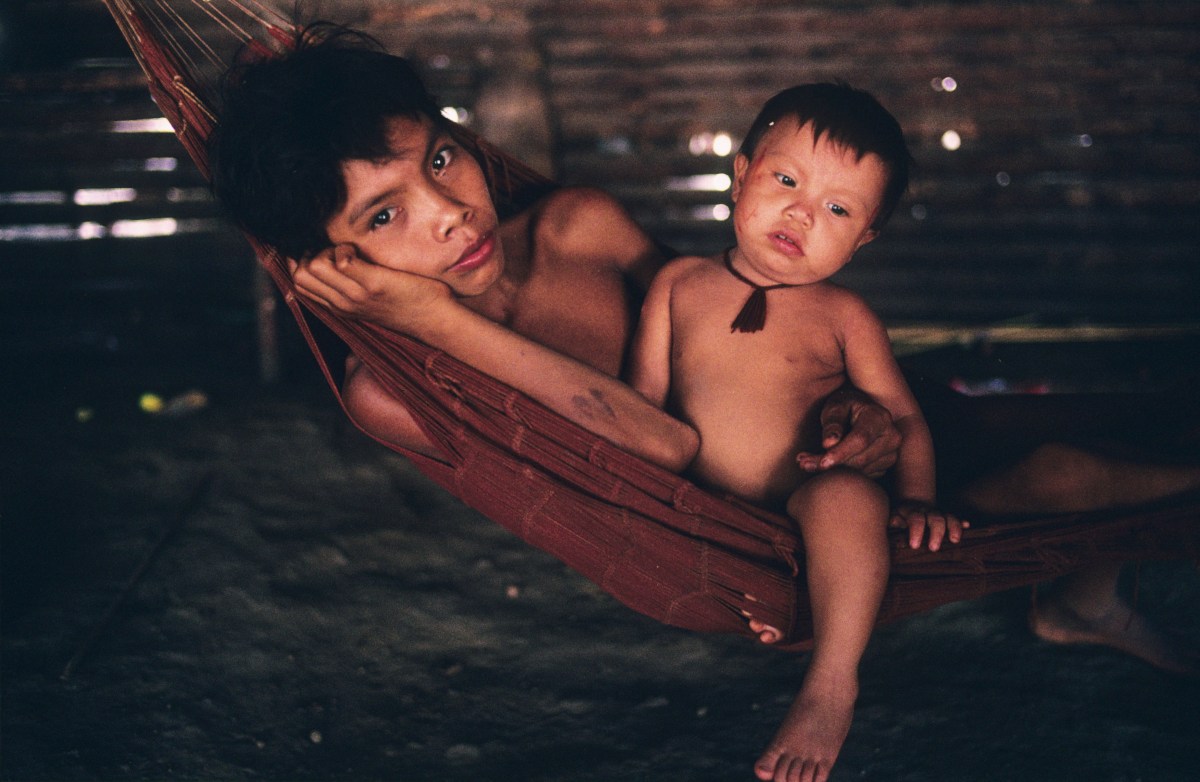
The Yanomami live in the rainforests of northern Brazil and southern Venezuela and are considered the largest isolated tribe in South America. The Brazilian state, corporations and illegal activities have for decades violated their rights and caused the deaths of countless Yanomami. However, they now face a growing new threat – from ultra-processed foods.

In the far northern region of Brazil, the Yanomami population consists of approximately 27,000 individuals, spread across more than 300 villages within the Yanomami indigenous territory, in an area of 9,664,975 hectares.

The health conditions afflicting the Yanonami community, including malnutrition and chronic diseases, are a result of the violation of their rights, unstable socio-economic conditions, and ongoing invasions of their territory. These circumstances have led to a social-environmental vulnerability within their population, placing their families, particularly children, at risk of consuming ultra-processed foods.

A study conducted by Brazil’s Oswaldo Cruz Foundation, Fiocruz, offers groundbreaking insights into the dietary patterns of Yanomami indigenous youth. It reveals that more than 90% of Yanomami aged 6 to 59 months exhibit short stature (linear growth stunting).

“Without a doubt, the Yanomami increased consumption of carbohydrates, sugar, salt, fat, food additives, and low-nutrient highly processed foods, contributes to nutritional and metabolic health concerns, specifically among their children,” explained Jesem Douglas Yamall Orellana, Fiocruz researcher of public health and epidemiologist at Fiocruz, and one of the authors of the study.

According to Orellana, the heightened consumption of ultra-processed foods among the Yanomami children not only significantly exacerbates their pre-existing health issues, but also gives rise to new ones.

Numerous research findings have established associations between ultra-processed foods and various health concerns, such as obesity, type 2 diabetes, cancer, depression, multiple sclerosis (MS), cardiovascular disease, and even mortality.

Last month, Brazil’s national health council president, Fernando Zasso Pigatto, issued a recommendation with following note:

“Considering that, in the scenario of poverty and hunger, the Yanomami people are hostage to the supply of processed and ultra-processed products, in many cases expired, satisfying external interests, which worsens the scenario of infectious disease, malnutrition, deficiencies, nutritional and chronic diseases, such as the onset of diabetes, hypertension and obesity.”

Study Data

The study group reported that the minimally processed ‘regional’ foods consumed by the Yanomami consisted primarily of fruits (69%), followed by corn, roots, or tubers (45%), peach palm or palm heart (33%), fish or crab (33%), and couscous (32%), according to the most frequently mentioned items.

The ultra-processed foods most commonly mentioned were cakes or cookies (25%) and chocolate or chocolate powder (6%). Some also consume soft drinks, soda, candy, artificial juice and yogurt, canned foods, instant noodles, among other items.

The Fiocruz study was designed as a comprehensive survey for children residing in villages within three remote regions of the Brazilian Amazon, offering valuable data for this particularly under represented group.

The research group consisted of Yanomami children ranging from six months to five years old, and the investigation took place within three Yanomami communities located in the Brazilian Amazon: Maturaca, Ariabu, and Auaris.

Map of the Yanomami Indigenous Territory, Brazilian Amazon. Image provided by Jesem Orellana.

The residents of Maturaca and Ariabu villages usually have more regular interactions with non-indigenous communities, which include military personnel, healthcare workers, illegal miners, loggers and criminal groups.

In contrast, the Ariabu population is relatively isolated, having limited contact with urban communities. Consequently, they enjoy greater territorial mobility, affording them the freedom to practice their traditional way of life.

The research findings indicated that the consumption of ultra-processed foods was significantly more prevalent in children from Maturaca (11.6 times higher) and Ariabu (9.2 times higher) in comparison to the children from Auaris.

This observation emphasises the importance of social contact with non-indigenous communities as a critical factor influencing the consumption of ultra-processed foods.

Another intriguing finding from the study was a 31% reduction in ultra-processed food consumption among children whose mothers had shorter stature when compared to those whose mothers had a proper height.

Orellana explained, “Typically, the most economically disadvantaged mothers in the community can be identified as those with higher short stature rates, limited or no income, a background of enduring poverty, and a history of hardships that have stunted their growth into ‘short adults.’ These mothers lack the means to purchase and access ultra-processed foods, which, in turn, works to their advantage.”

The general occurrence of ultra-processed foods stood at 32%, and this was linked to both the location of residence and the height of the mothers.

The Culprits

The Yanomami are traditionally categorised as hunter-gatherers, but the frequent invasions of illegal miners, loggers, and criminal organisations into their territory have a direct influence on the areas from which they gather their food, consequently affecting their dietary patterns.

Their families are compelled to interact with non-indigenous communities, resulting in their exposure to urban centers and the consumption of ultra-processed foods with poor nutritional content, high energy density, low fibre and micronutrient content, and an abundance of preservatives and industrial additives.

According to Orellana, what caught the interest of the group of scientists was the correlation between the increased consumption of ultra-processed foods by the Yanomami and a higher likelihood of them abandoning their agricultural practices.

“The Yanomami were historically known for their semi-nomadic lyfestyle, moving to new areas every two years to allow their previously occupied lands to regenerate. Nowadays, they are reluctant to leave their territory due to the invasion of illegal miners, loggers and drug traffickers, which has instilled fear in them about the possibility of violent attacks,” explained Orellana.

Orellana added, “The Yanomami traditionally relied on their understanding of sun and lunar cycles, as well as rain and drought patterns, to observe and manage soil and land dynamics. However, recent shifts in weather patterns, including extreme climate conditions, have disrupted their ability to accurately determine the optimal planting times for crops like corn and cassava.

“Furthermore, they now face concerns about fishing due to the contamination of their rivers by illegal mining activities, particularly the presence of mercury. These environmental challenges have led the Yanomami to increasingly rely on ultra-processed foods, as they find themselves struggling to maintain their traditional practices.”

The developments observed among the Yanomami over the past two decades is similar to the experiences of nearly all indigenous populations in Brazil that have been in direct contact with non-indigenous communities for over 50 years.

“In the last nine months, we’ve observed specific actions undertaken by the federal government to address issues in areas previously identified as housing various invaders, and these actions have received considerable media coverage,” mentioned Orellana.

He detailed how certain national issues are manipulated and exploited by both the government and the media to further their interests:

“Extensive operations were conducted in these areas (Yanonami territory), featuring visits by the president and ministers. Once these matters were no longer the focal point, attention shifted to a different region. These undertakings are often referred to as ‘political spectacles’ rather than genuinely impactful operations.”

Climate change and frequent invasions into the Yanomami land by illegal miners, loggers, and criminal groups are the primary factors that impact their diet, well-being, and traditional lifestyle, making them crucial determinants of their survival.

Orellana pointed out several potential measures that could effectively address some of the problems impacting the Yanonami community:

“Immediate action is essential to establish control over the territory and impose severe and efficient penalties on intruders. Without these measures in place, the issues affecting the Yanomami, such as increased consumption of high-processed foods due to the disruptions in their traditional agricultural practices, which is detrimental to their well-being and cultural heritage, will persist without resolution.”


Article published in The Ecologist: https://theecologist.org/2023/oct/12/indigenous-tribes-made-ill-processed-foods

Article published in The Canary: https://www.thecanary.co/global/2023/10/10/yanomami-people-brazil-ultra-processed-food/

Article published in Portuguese in A Escola Legal: https://aescolalegal.com.br/blog/2023/10/11/yanomami-envenenados/

Using Science to Block a Road to Ruin – The Amazon BR-319

Monica Piccinini

23 Feb 2023

According to two prominent scientists, Lucas Ferrante and Philip Fearnside, and the result of their studies, the ambitious reconstruction of the BR-319 highway, linking the capital Manaus in central Amazonia to the southern edge of the forest, Porto Velho, might be a catalyst to rampant deforestation with irreversible and catastrophic consequences to the rainforest.

BR-319, a stretch of 830 km, connecting the ‘arc of deforestation’, was inaugurated in March 1976, during the military dictatorship, under the government of General Ernesto Geisel, and abandoned in 1988. In 2015, Dilma Roussef’s government proposed reopening BR-319.

“The BR-319 highway cuts through one of the most preserved blocks of the forest, where it contains an enormous stock of carbon. This project is a threat to 63 indigenous lands and 18,000 indigenous people, not to mention the environment and biodiversity”, mentioned Lucas Ferrante, environmental scientist.

Brazilian Amazonia and Highway BR-319 (Manaus-Porto Velho). Source: map produced by scientist Lucas Ferrante in the ArcGIS software, deforestation data from INPE 2021.

Despite the warnings from scientists about the negative consequences this project may bring to the region, it’s considered a priority for Brazil’s new president, Luiz Inácio Lula da Silva. During an interview with a radio station in Manaus last September, he mentioned:

“We do not want to transform the state of Amazonas into a sanctuary for humanity. Millions of people live in the state of Amazonas. We have to give these people the right to civility, the right to live well, the right to come and go. It is entirely possible for you to work the climate issue correctly, work the environmental issue correctly and provide the necessary security so that you can build good roads that can connect the state of Amazonas with the rest of the country.”

However, according to Lucas Ferrante, the newly elected president of Brazil, Luiz Inácio Lula da Silva, only replicates a political boast that it is possible to establish territorial governance.

“We need to make some things clear, this is just political rhetoric, a bravado that does not consolidate. According to a study we published at Land Use Policy, the BR-319 highway area had a deforestation rate of up to 2.6 times higher than the deforestation rates observed in other parts of the Amazon, i.e., the state of Amazonas is no longer a isolated sanctuary, yet another area increasingly occupied by criminal organisations that encourage land grabbing and deforestation”, argues Ferrante.

“In addition, people have always had the right to come and go by other modes of transport, but they do not have the right to collapse one of the most biodiverse blocks of the rainforest, which is home to a wide variety of native peoples and which consequently, if deforested, could collapse the global climate,” added Ferrante.

Scientific Studies Raising Red Flags

Lucas Ferrante, environmental scientist, and Philip Fearnside, a biologist at Brazil’s National Institute of Amazonian Research (INPA) and Nobel Peace Prize winner for climate research (2007), both published various scientific studies highlighting the negative effects of this project on the Amazon rainforest.

The highway is a free path to illegal side roads in areas of large concentration of indigenous land, legal reserves and conservation units, giving illegal miners, loggers, squatters and land grabbers access to untouched forest and public lands.

Illegal timber seized by IBAMA agents along the BR-319 highway. Photo by scientist Lucas Ferrante.

As a consequence, these invaders are bringing a wave of destruction, instability, pollution, violence, disease, decay and death to the traditional communities, indigenous people and the environment around them.

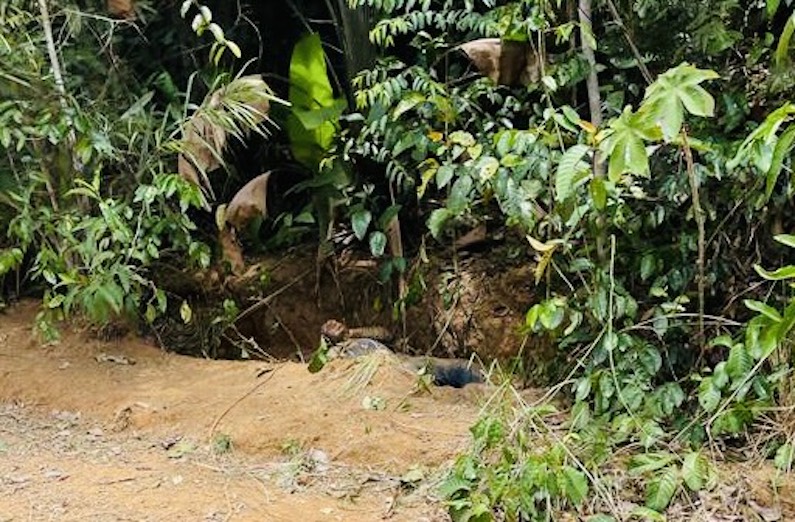
In October 2021, a Washington Post journalist, Terrence McCoy and scientist Lucas Ferrante, set themselves on a journey across the length of BR-319 highway, showing the path of destruction and devastation caused by illegal deforestation, land grabbing, mining, fires, violence and even killings. The burnt body of a dead man was found along the way after he had reported land-grabbing activities in the area to the federal police.

Photo of a burnt dead body around BR-319. Photo by scientist Lucas Ferrante.

In 2017, buildings belonging to IBAMA (Institute for the Environment and Renewable Natural Resources) and the Chico Mendes Institute for Biodiversity Conservation (ICMBio) in Humaitá were set on fire by miners and remain inoperative.

It is estimated that BR-319 and planned side roads will generate an increase of the deforested area by more than 1,200% between the highway and Brazil’s border with Peru. This projection relates to central Amazon alone, if extended to Peru, the numbers would increase significantly.

According to a scientific article published in the journal Land Use Policy by both Ferrante and Fearnside, despite environmental legislation requiring an environmental impact assessment (EIA) for one of the stretches of the highway, the project was given the green light from a judge, who authorised it without an EIA.

Additionally, the reconstruction of the highway lacks an economic viability study, EVTEA, required by law 5917/1973, as well as consultation with indigenous people required by International Labour Organisation (ILO) Convention 169 and by Brazilian law 10,088/2019.

The main transport route used in the region has always been via the Madeira River, making it a cheaper, cleaner and safer way to transport goods.

Fernanda Meirelles, executive secretary of the BR-319 Observatory, commented during our interview earlier this month:

“The LP, Preliminary License, was issued without consultations with the indigenous people and traditional communities, an important stage of the process that was not respected. We do not know whether consultations will be carried out in this current government or whether an intervention by the MPF (Federal Public Ministry) will be necessary to fullfil the obligation of consultation”,

“Public hearings were held during the pandemic, but in an inadequate way. There was no logistical support to guarantee the presence of traditional communities and indigenous people, in additional to having been held at a very inhospitable moment for any time of contrary opinion or manifestation. We even witnessed attacks suffered by researcher and scientist, Phillip Fearnside, during these public hearings”, added Meirelles.

According to data released by SEEG, the Greenhouse Gas Emissions Estimation System, between 2018 and 2019, the municipalities surrounding BR-319 highway had a staggering 16% increase in greenhouse gas emissions from land use and agriculture.

The reopening of this highway would also give agribusiness access to more land for expansion, including cattle farming, soy and palm oil plantations, monoculture expansion for large-scale biofuel production, as well as fossil fuel companies, hydroelectric dams, mining, etc.

As various studies indicate, including the ones published at Land Use Policy, and Environmental Conservation, these practices are already happening with the maintenance works of the road and would increase exponentially with the reconstruction of the BR-319 highway.

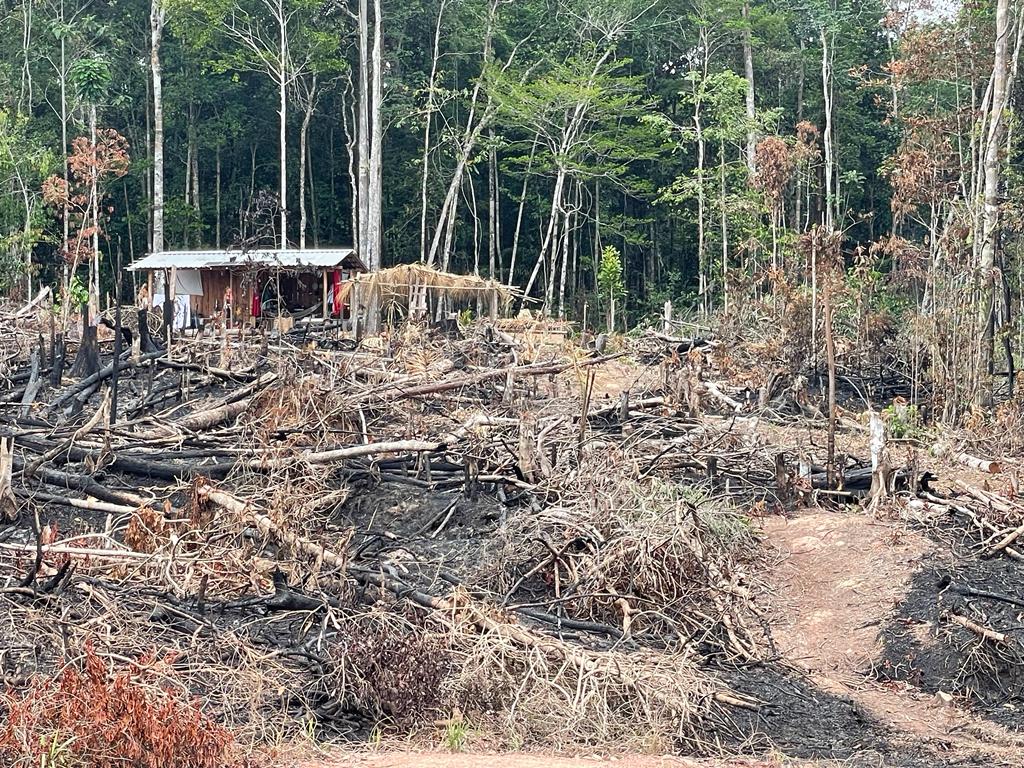
Deforested and burned area along the middle stretch of BR-319 highway. Photo by scientist Lucas Ferrante.

There’s still no information about the costs and sources of funds for this gigantic project. The same applies to a very essential monitoring system project, which was never presented.

Profiteers – All Eyes Focused on the Amazon

There are countless politicians, corporations, governmental agencies and organisations with either a hidden or visible interest in the reconstruction of BR-319 and hoping it succeeds. This project is a gateway to a heaven of natural resources waiting to be exploited and the highway will make their journey a much smoother process.

According to Fearnside, Rosneft, a giant Russian oil and gas company, with drilling rights to 16 extraction blocks located west of BR-319, approximately 35 km from the Purus River, by the Solimões Basin, would be one of the beneficiaries of the project.

Another very concerning sector is biofuel production in the Amazon. Biofuels are produced based on agricultural products, including sugar cane, corn, castor bean, palm oil and raw materials of animal origin.

According to a Global Witness report, BBF Group (Brasil Biofuels) and Agrapalma, two Brazilian palm oil (azeite de dendê) giants, are accused of various violations in the Amazon, including conflict with local communities, violent campaigns to silence indigenous communities and fraudulent land grabs.

BBF is the largest producer of palm oil in Latin America, also active in thermoelectric generation and biodiesel in the Amazon region (Acre, Amazonas, Rondônia, Roraima and Pará). The company announced that it‘s going to invest R$5 billion over the next three years in the production of biofuels, including corn ethanol. The BR-319 project would certainly facilitate their business developments in the region.

Studies coordinated by Ferrante point out that the expansion of plantations for the production of biofuels in the Amazon tends to encourage deforestation and collapse the forest, in addition to providing zoonotic jumps of viruses stored in the forest, generating a new global pandemic.

Based on scientific research, Ferrante managed to overthrow a presidential decree that released sugarcane to the Amazon, but according to him, corn and palm oil are still crops that have an enormous potential for environmental damage and to generate deforestation, demanding economic ecological zoning mainly for the BR-319 highway area.

Politicians, infrastructure companies, national and international corporations, all show great interest in this ambitious project, as the highway would be key to their business expansion.

The voice of a public figure and politician, the governor of Amazonas, Wilson Lima, would have been a great opportunity for us to understand more about this challenging project. Unfortunately, Lima did not respond to a request for an interview.

The only NGO in the region that agreed to be interviewed about the BR-319 project was IDESAM/BR-319 Observatory.

The Gordon and Betty Moore Foundation failed to respond a request for an interview.  Funbio responded, but failed to answer questions about the project.

Fundo JBS pela Amazônia mentioned that they we were unable to contribute to this matter, because the reconstruction of BR-319 had nothing to do with the fund and that this is not something that directly impacts their projects.

WWF Brasil did not have a spokesperson available to answer questions related to the project and asked that any questions be directed to BR-319 Observatory.

National and international media, politicians, corporations, governmental agencies, as well as some NGOs, seem to be reluctant to talk about the reconstruction of the BR-319 highway.

All studies so far show that this project lacks environmental governance and would be detrimental to the local communities as well as the rainforest. It also lacks an economic viability study, a monitoring system plan and consultation with the traditional and indigenous communities.

This appears to be a politically motivated plan with every president elected repeatedly making the same promise, selling the idea that the reconstruction of BR-319 highway would bring prosperity to the region, without considering that it may also bring pollution, illegal activities, violence, diseases, rampant and irreversible deforestation and destruction to the rainforest with catastrophic consequences to Brazil and the rest of the world.

If completed, this project may put in jeopardy the future and survival of the Amazon rainforest, all in the name of what they call “progress”!

Article available in Portuguese at A Escola Legal.

The ‘Billionaires’ Club’ with a Mission to Change the Weather

Monica Piccinini

5 Dec 2022

Solar geoengineering, SG, is the latest billionaires’ techno-utopian dream to reverse the impact of climate change.

As we have shown little progress in coming to an agreement to use conventional and sensible measures of climate change mitigation and adaptation, a ‘privileged club’ appears to be pursuing a worrying and ambitious plan to change our global weather.

Politicians and fossil fuel giants may also use SG as a way to buy time and as an excuse to delay the switch to a neutral carbon economy.

What’s Geoengineering?

Goengineering is a set of technologies used with the purpose to manipulate the weather and the environment to counterbalance the impacts of climate change.

This technology is divided in two categories. The first one is carbon geoengineering or carbon dioxide removal (CDR), which seeks to remove carbon dioxide from the atmosphere.

The second and most important one is solar geoengineering, solar radiation management (SRM), stratospheric aerosol injection (SAI) or stratospheric albedo hacking (SAH), which seeks to reflect fraction of sunlight back into space to cool the planet.

This technology mimics a volcano eruption, where sulfate aerosol (or calcium carbonate, aluminum or diamond dust) is released into the atmosphere creating particles reflecting sunlight back into space, therefore cooling the earth. One of the ideas is to send high-flying aircrafts to inject sulfate dioxide particles into the atmosphere.

There are a considerate growing number of parties interested and invested in deploying this technology for a variety of reasons.

Investors

Photo 37710625 © Syda Productions | Dreamstime.com


Billionaires, financial and technology institutions within Silicon Valley and Wall Street are funding and supporting the research and governance of geoengineering technology. They consist of a group of individuals and organisations with strong ties to corporate power.

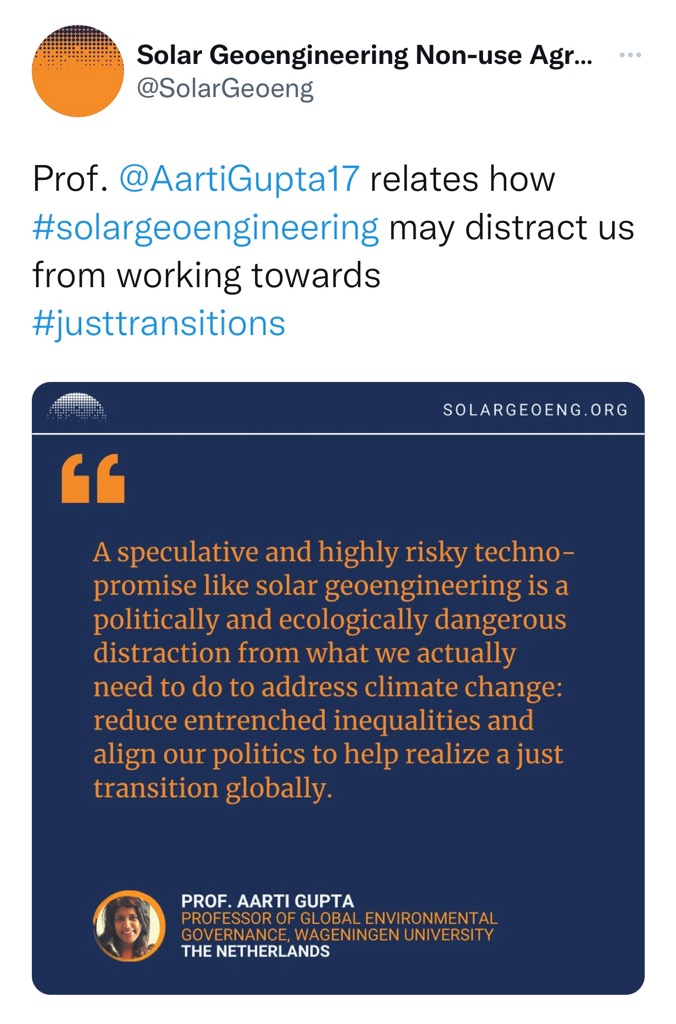
According to Solar Geoengineering Non-Use Agreement, a group of seven organisations in the US have funded at least a couple of SG research projects in the last few years.

FICER is Bill Gates’ fund for geoengineering research, managed by Harvard Solar Geoengineering researchers David Keith and Ken Caldeira. Silver Lining is another firm funded by LowerCarbon Capital and First Round Capital with Goldman Sachs and JP Morgan executives on the board.

Billionaire and co-founder of Facebook, Dustin Moskovitz, and partners Cari Tuna and Holden Karnofsky, formerly Bridgewater Associates, also fund a geoengineering project by Open Philanthropy Project.

Additional players funding such projects include EDF, Environmental Defense Fund, which have partnerships with Citigroup, GE, McDonald’s Shell, Tyson and Walmart. Others include Alfred P. Sloan Foundation of General Motors, Pritzker Innovation Fund, founders of the Hyatt Hotels, and VK Rasmussen Foundation, founded by the Swedish inventor and businessman Villum Kann Rasmussen.

As the fossil fuel industry refuse to commit and scale down production worldwide and transition to renewables, denying and ignoring the negative impact they are causing to climate change and continue to do business as usual, governments, investors and researchers see an extraordinary opportunity to push for geoengineering technology to be deployed sooner rather than later.

The Good, the Bad, and the Very Ugly

Photo 46018102 / Earth Fire © Ig0rzh | Dreamstime.com


What are the advantages of SG?

According to a few scientific studies, this technology would result in an immediate cooling effect worldwide, with a possibility of reducing the rise of sea level, extreme weather and heat waves.

Additionally, other studies also suggest that SG would be a financially attractive solution to climate change. Obviously, cost efficiency is extremely appealing to governments and corporations.

The Aspen Institute Climate Policy Enters Four Dimensions paper by David Keith and John Deutch, suggests that the direct costs of implementing SG appear to be “quite small, with the global annualised costs perhaps under $20 billion per year well into the latter half of the century. By comparison, the damage-reduction benefits could be 100 times this amount”. SG is a fairly inexpensive technology and politically practical.

“Solar geoengineering is not necessary. Neither is it desirable, ethical, or politically governable. The normalisation of solar geoengineering as a research topic and as a speculative policy option must be stopped”, said Frank Biermann, professor of global sustainability governance, Copernicus Institute of Sustainable Development, Utrecht University.

In January, a coalition of over 370 academics, 30 organisations in 54 countries, signed a letter in calling for an international non-use agreement on SG. They argue that this technology poses an unacceptable risk if deployed as a future climate policy option. Signatories include professor Frank Biemann, Utrecht University, professor Melissa Leach, CBE, FBA, Institute of Development Studies, amongst many others.

To some, the proposal of spraying the stratosphere with aerosols to block incoming sunlight in order to cool the planet is allegedly a frightening and dangerous idea. Besides, this technology, which has not yet proven to be successful, could discourage the urgent need to reduce green house gas emissions and put a pause to climate action.

Various concerning negative impacts from SG have been discussed within the scientific community, including the disruption of the climate system, affecting rain fall patterns and increasing droughts. Agriculture would be hit hard and the world would experience extreme famine.

Sulfates injected into the atmosphere eventually come down as acid rain, which affects soil, water reservoirs, and local ecosystems. The spraying of this chemical into the atmosphere forms very fine particles that can cause respiratory illness.

This technology is not entirely understood and not proven to be successful, as research is entirely based on modeling and not on external experiments.

Once SG is deployed, we may be locked into it forever, without a reverse gear. It’s called “termination shock”. Furthermore, once SG is stopped, the natural cycle will take over once again and we will see a rapid rise in temperatures, therefore we would see a disruption of every major system on earth, without time for adaptation and resulting in the destruction of ecosystems.

Who gets to decide on the climate?

Perhaps another frightening aspect of SG relates to geopolitical risks and issues around governance. A single or combination of powerful nations may “lead the pack” and decide to deploy this technology, which will impact and cause immediate and direct harm to other regions.

This technology may be used as a war tool and a form of weaponisation, causing inequality, ramping up disputes and conflicts across the globe. We already live in a political system that has no ability to make collective, serious and fair agreements.

The White House Office of Science and Technology Policy announced that they are coordinating a five-year research plan to SG technology. Their focus is to develop a cross-agency group to coordinate research on such climate interventions, in partnership with NASA, the National Oceanic and Atmospheric Administration (NOAA), and the Department of Energy.

“ You cannot judge what the country does on solar-radiation modification without looking at what it is doing in emission reductions, because the priority is emission reductions”, mentioned Janos Pasztor, executive director of the Carnegie Climate Governance Initiative.

“Solar-radiation modification will never be a solution to the climate crisis”, Pasztor added.

Political control over SG would affect and impact the poorest and most vulnerable countries. The poorer nations are extremely vulnerable to any changes in their environment and would be threatened the most by side effects that might result from the deployment of SG at a global scale.

We are working against the clock and can’t afford to make even bigger mistakes than we already have. We know what to do about climate change, and yet, the biggest polluters and fossil fuel giants refuse to accept the blame and make the necessary changes in order to reverse the effects of climate change.

For every crisis the world faces, window of opportunities unlock for the ones who have their eyes focused on power, control and profit. The hungry “visionaries”, a group comprising of politicians, capitalists, corporate power, billionaires and scientists, are trying to push for the deployment of an untested technology that my drive us into a steep dive towards a catastrophic and irreversible chaos.

Are we going to continue doing business as usual?