

Monica Piccinini
1 May 2024
Over the past few decades, Chinese investment in Brazil’s Amazon region has significantly grown and broadened, particularly in sectors like agriculture, mining, infrastructure, and energy. However, this influx has sparked concerns about its environmental and social consequences. As debates intensify, the delicate balance between economic development and ecological preservation remains uncertain.
This year marked the 50th anniversary of Sino-Brazilian diplomatic relations, yet their initial connection traces back to 1881 with the establishment of the first diplomatic mission.
Brazil’s relationship with China intensified with the formation of BRICS in 2009, an intergovernmental organisation consisting of Brazil, China, Russia, India, and South Africa. Additionally, Egypt, Ethiopia, Iran, and the United Arab Emirates have also become part of the group.
A profitable partnership
China stands as Brazil’s largest trading partner. In 2023, bilateral trade between the two nations totalled US$ 157 billion, with Brazil’s exports to China reaching US$104 billion.
A study published by the Brazil-China Business Council (CEBC) in 2023 highlighted the considerable export potential of Brazil’s northern region to China, with projections exceeding US$11 billion.
Just like many other collaborations Brazil has established with other nations, its partnership with China seems to stand out as one of the most profitable. This is primarily due to China’s extensive population and its crucial push for expansion and industrial progress to satisfy the significant needs of its people.
While Chinese projects and investments in Brazil appear beneficial for both parties, concerns arise regarding their alignment with sustainable development standards, particularly in the Amazon region.
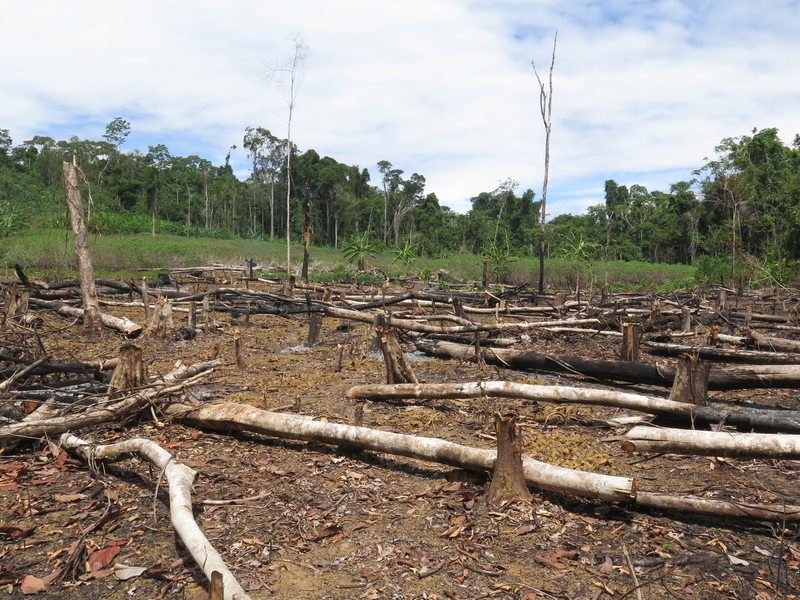
There’s apprehension that these initiatives could contribute to widespread deforestation, degradation, and climate change, undermining the region’s role as a carbon sink. Such degradation heightens the risk of zoonotic diseases emerging and spreading, posing a substantial public health threat to both Brazil and the global community.
João Cumarú, researcher at Plataforma CIPÓ (an independent non-profit research institute) and master’s student in Chinese politics and diplomacy at SIRPA (复旦大学, Fudan University, China), explained:
There are notable examples and commendable practices within Chinese territory. However, it’s essential to conduct a thorough analysis to determine whether these practices will be replicated in territories beyond China’s borders.
Livestock
In 2023, China imported 2.2 million tons of meat from Brazil, totalling over US$ 8.2 billion.
According to the Brazilian Institute of Geographics and Statistics (IBGE), the number of cattle slaughtered in the country reached 29.8 million in 2022, marking a 7.5% rise from the previous year. In 2023, beef production surged to 8.91 tons in 2023, reflecting an 11.2% increase compared to 2022.
João Gonçalves, senior director for Brazil at Mighty Earth said:
Through our satellite monitoring we are still finding rampant destruction driven by the meat and soy industries in Brazil. Brazilian beef giant JBS is sourcing from suppliers who are destroying nature with impunity. Our latest research identified a total of 105 deforestation cases linked to JBS, covering over 185,000 hectares of deforestation in the Amazon and the Cerrado.
JBS’ plans to ramp up beef exports to China will mean more cattle and more land grabs, with all the negative impact that brings for forests and the Indigenous communities and wildlife that depend on them.
JBS has big expansion plans, including listing on the New York Stock Exchange. Access to more funds will lead to more nature destruction. We’re urging the US Securities and Exchange Commission to block JBS’ proposed listing on the NYSE over its continued, outsized impact on climate change and Brazil’s precious biomes.”
In March, Carlos Fávaro, the Minister of Agriculture, Livestock, and Food Supply (MAPA), announced that an extra 38 Brazilian meat processing facilities had been approved to export meat and meat products to China:
This is a significant moment for both sides. China will receive high-quality meats at competitive prices, ensuring agricultural products for its population, while Brazil gains the certainty of job creation, opportunities, and the growth of the Brazilian economy. It’s a historic day in the Brazil-China trade relationship, a historic day for our agriculture.
In 2023, JBS was part of a delegation sent by Brazil’s President, Luiz Inácio Lula da Silva, to China, aiming to negotiate a new export agreement between the two nations.
Lula doesn’t appear hesitant to conceal his unwavering support for JBS and the growth of cattle farming in the country, irrespective of the environmental consequences, such as deforestation, greenhouse gas emissions, and the violation of traditional and indigenous communities’ rights.
Cattle farming contributes to around 80% of deforestation in the Amazon region. The primary states for cattle production in the Brazilian Amazon are Mato Grosso, Pará, and Rondônia.
The process of forests being converted into pasturelands results in elevated temperatures, altered precipitation patterns, and the escalation of extreme weather events. These conditions disrupt climate regulation and the water cycle essential for crop production in Brazil, resulting in considerable losses.
Dr Peter Alexander, senior lecturer in global food systems and security at The University of Endinburgh, mentioned:
We must consume less meat, reduce food waste, establish a more efficient and equitable system, and address pressing human health concerns such as malnutrition and obesity. How can we tackle these challenges within a system that currently fails to promote such outcomes? Moreover, how do we transform this system to prioritise these objectives? These questions linger, as these issues are often considered politically risky and potentially detrimental to electoral success.
Soya
China’s voracious appetite for agricultural commodities extends to soya, as it remains the world’s leading importer, with Brazil standing as the largest producer globally.
In the 2022/2023 crop season, Brazil achieved yet another milestone, setting a record by harvesting around 154.6 million tonnes of soya, reflecting a remarkable 23% increase compared to the previous year’s production of 125.5 million tonnes. In 2023, China soya imports from Brazil reached 69.95 million tonnes, a 29% increase from the previous year.
Brazil has implemented a soya moratorium agreement, where participating companies pledge not to buy soya from farms where soya cultivation has led to deforestation of land in the Amazon biome after July 22, 2008. This initiative aims to eradicate deforestation from the soy production process.
Despite numerous pledges from China National Cereals, Oil and Foodstuffs Co (Cofco) to combat deforestation and improve its supply chains, an inquiry by Repórter Brasil revealed that in 2021, the company sourced soya from deforested regions in Mato Grosso state, situated within both the Cerrado and Amazon regions, through indirect suppliers.
Chinese companies have substantially expanded their footprint in Brazil via mergers and acquisitions. For instance, Hunan Dakang of the Shanghai Pengxin group holds a 57% stake in Fiagril, a Brazilian company specializing in supplying agricultural inputs such as soy, corn, fertilisers, and offering technical support to farmers.
When asked about the trade volume between Brazil and China and Brazil’s dependency resulting from it, Cumarú explained:
Presently, China might view Brazil as a significant market and a commodities exporter. However, historical trends suggest they won’t rely solely on one supplier to fulfil their requirements. There’s a trend towards diversifying energy sources and advancing technologies for land development and restoration within China. The Brazilian government should closely monitor this trend.
Furthermore, our focus shouldn’t be solely on investment expectations; we must also enhance and integrate gains from these investments. A crucial aspect where we’ve fallen short is technology transfer, which could potentially decrease Brazil’s dependence on China.
As soya production expands, the development of logistical corridors becomes necessary to facilitate the flow of grains to ports, thereby reducing freight costs. This has prompted numerous investments in infrastructure, including road and railway projects.
Infrastructure
Chinese investments in Amazonian infrastructure primarily focus on the construction of dams, roads, ports, and railway systems. These initiatives aim to improve transportation routes and lower the costs associated with exporting commodities to China.
The China Communications Construction Company (CCCC) holds an 80% stake in the Brazilian construction firm, Concremat, and engages in numerous projects across the Amazon region.
The logos of both CCCC and Concremat are featured on Brazil’s National Department of Transport Infrastructure (DNIT) website in connection with the paving of the BR-319 highway in the Amazon. This highway stretches 885.9 km, linking the central Amazonian capital, Manaus, to Porto Velho, situated at the forest’s southern edge.
The paving of BR-319 highway has the potential to trigger widespread deforestation, environmental degradation, biodiversity decline, displacement of indigenous communities, increased spread of infectious diseases, surge in illegal mining and logging, and escalation of organised crime.
Last year, Pará’s governor, Helder Barbalho, signed an agreement in Beijing, China, in the presence of the deputy president of China Communications Construction Company (CCCC), paving the way for the construction of Ferrovia do Pará. This railway will connect Marabá with the port of Vila do Conde in Barcarena.
Another significant project is Ferrogrão (EF-170), a 933 km greenfield railway venture designed to connect Sinop, in Mato Grosso state, to Itaituba, in Pará state. This railway passes through environmentally protected areas and indigenous territories within the Amazon region.
In 2022, greenfield ventures predominantly characterised the entry of Chinese investments into Brazil, accounting for 59% of the total number of projects.
Ferrogrão has received support from major agribusiness players such as Cargill, Bunge, Louis Dreyfus, and Amaggi, motivated by their primary goal of exporting commodities to China and Europe at reduced expenses. However, this project raises concerns about increased deforestation, degradation, and environmental violations. It’s set to impact numerous indigenous communities, including the Kayapó, Mundukuri, and Panará peoples, who denounce the railway as the “rails of destruction.”
Precious minerals
The Brazilian Amazon is a focal point for the extraction of raw materials as part of national and state economic development agendas. Consequently, the region is witnessing various socio-economic and environmental challenges.
Brazil is a powerhouse in the global mining industry, with significant production and export capabilities in both raw and processed minerals. This includes vital resources such as iron, gold, copper ore, and bauxite—the primary source material for alumina and aluminium.
Bacarena, located in the Pará state, serves as crucial hub for these activities. The region is home to substantial bauxite deposits, concentrated mainly in three key districts: Trombetas, Almeirim, and Paragominas-Tiracambú. This positions Brazil as one of the world’s largest holders of bauxite potential.
In a webinar organised by CEBC in February, Ricardo Biscassi, head of external affairs for Brazilian mining company Vale and CEBC director, disclosed:
The total iron ore exports from Brazil in 2023 to all countries were 380 million tonnes. Of this total, 64%, that is, 242 million tonnes, were sent to China, showing the relevance that China has in the iron ore market, and obviously in the steel market…of these 242 million tons that were exported to China, 76% came from Vale.
In February, a Chinese delegation consisting of representatives from Zhuhai Sino-Lac Chain Co., Guangdon Nonfengbao, and Hohai University, visited the state of Pará, declaring their intent to invest in various sectors within the region, including collaborating on a biofertilizer project with the Federal Rural University of Amazonia (Ufra).
One of the key attractions for Chinese investors in the state of Pará is the municipality of Bacarena, which falls within Brazil’s Export Processing Zone (EPZ). This zone provides a variety of incentives, such as tax exemptions, making it highly attractive to foreign investors.
Approximately 60% of what is produced in Pará, the second largest state in the Amazon region, is exported to China. In 2023, the mineral sector comprised 84% of Pará’s foreign sales. Iron accounts to 80% of these exports, serving as an indispensable material for China’s civil construction market.
There’s a lingering question that remains unresolved. While it’s understood that the Chinese government has implemented green credit policies for companies operating internationally, such as guidelines for overseas mining ventures, there’s uncertainty regarding the level of compliance with these policies. It seems that there isn’t a significant commitment from the Chinese side. Considering China’s substantial investment and trade volumes, this undeniably raises concerns,” declared Cumarú.
In April, Brazil’s Foreign Trade Chamber (Camex) decided to increase the import tax on 11 steel products by up to 25%, aiming to reduce steel imports from China. This action was taken in response to the substantial influx of Chinese steel flooding the Brazilian market at discounted rates.
Lithium represents yet another incredibly valuable resource. China has set its sights on a potential joint venture or acquisition of the Canadian mining company, Sigma, situated in the state of Minas Gerais. The objective is to enhance the battery production operations of Chinese firm BYD in Manaus, the capital of Amazonas. BYD has begun to build a car factory in in Camaçari, in the state of Bahia, an investment of approximately US$ 3 billion.
We must remain mindful of water scarcity as an additional global challenge. Projections indicate that by as soon as 2030, global demand for freshwater is anticipated to exceed the available supply by 40 to 50%, affecting both brown and green manufacturing sectors. There’s a possibility that Chinese manufacturing, currently concentrated in Asia, might shift towards countries abundant in water resources, such as Brazil, including the Amazon region.
Energy
China has made significant investments in Brazil’s energy sector. The State Grid Brazil Holding S.A., a Chinese state-owned energy company, holds control over 24 national power transmission companies in Brazil, including those operating in the Amazon region.
State Grid has announced plans to invest $3.6 billion to upgrade energy transmission lines in Brazil, along with an extra $38 billion in the Brazilian energy sector. They secured a bid to construct 1,500 km of lines across Maranhão, Tocantins, and Goiás states, which includes building substations. Additionally, the company is already managing the 2,500 km Belo Monte UHVDC transmission project.
In December 2023, State Grid secured the largest power transmission auction in Brazil, gaining rights to construct over 4,471 km of new transmission lines across the states of Goiás, Maranhão, Minas Gerais, São Paulo, and Tocantins.
Another Chinese state-owned enterprise, the Three Gorges Corporation, manages 12 hydroelectric power plants, three of which are situated in the Amazon region. These include Cachoeira Caldeirão in the state of Amapá, Santo Antonio do Jari on the border between the states of Pará and Amapá, and the São Manoel hydroelectric power plant situated on the Teles Pires River, bordering the states of Mato Grosso and Pará.
Numerous infrastructure development initiatives in the Amazon region have sparked controversy due to their potential to escalate deforestation, degradation, urbanisation, traffic, and conflicts in remote rainforest areas. These projects directly affect traditional and indigenous communities, alongside the environment.
The Belo Monte hydroelectric dam and reservoir, located along the Xingu River in the Amazon region of Pará, serve as an example of the detrimental impact that large-scale infrastructure projects can have on biodiverse areas, including the displacement of communities, increased deforestation, and degradation of the aquatic ecosystem of the Xingu River.
Intellectual property
The Amazon rainforest is emerging as a key market for bioproducts, drawing attention both nationally and internationally for its wealth of opportunities in promoting a bioeconomy.
By 2022, Brazil’s National Institute of Industrial Property (INPI) had identified 43,400 patents for innovations involving Amazonian flora filed globally. China led the count with 18,965 applications, followed by the USA with 3,778.
The patenting of products derived from Amazonian genetic resources without fair sharing of benefits with local communities and without respecting their rights raises significant concerns. Given the Amazon’s vast wealth of genetic material, this situation could potentially fuel the illicit trafficking of forest products (biopiracy).
High alert
There are numerous uncertainties regarding the socio-environmental consequences of some Chinese investments in the Amazon region and Brazil, as well as how the local population will gain from the extensive exploitation of natural resources and the development of infrastructure in environmentally delicate zones such as the Amazon.
The increased demand from China for commodities could lead to a rampant exploitation of Brazil’s and the Amazon’s natural resources and deepening the country’s dependence on China.
Cumarú spoke about the dynamics of Chinese foreign policy:
One of the principles guiding Chinese foreign policy is non-interference in the internal affairs of other nations. They adhere to the rules of engagement in the countries where they invest, effectively absolving themselves from issues they may be directly or indirectly involved in.
The call for a more proactive approach from the Chinese government can only gain traction if it originates from the Brazilian government, led by the president and the relevant ministries.
In April, China and Brazil entered into a bilateral agreement that includes collaboration in television between China Media Group’s Xinhua News Agency and Brasil Communications Company (EBC). In 2019, Grupo Bandeirantes in Brazil also signed an agreement with China Media Group, focusing on joint productions and sharing content.
The ministries of culture from Brazil and China gathered on April 25 to explore opportunities for cultural exchange between the two countries, covering cinema, publications, libraries, museums, heritage, and copyright.
There are increasing concerns about potential efforts to influence, regulate, and limit information dissemination in Brazil, as there are questions whether China might seek to promote its political, economic, and social ideologies. Such actions could potentially pose risks to both the environment, including the Amazon region, and the sovereign interests of the Brazilian population.
The future of the Amazon, Brazil, and global environmental sustainability is heavily influenced by the relationship between Brazil and China. With their considerable power, these two key players have the potential to address the ongoing environmental destruction and protect indigenous rights in the region. The world will be watching closely the developments of this partnership.
The BRICS Policy Center has not responded to a request for an interview.


 YourVoiz