

Monica Piccinini
21 Jan 2022
According to Allied Market Research, nanotechnology innovation is projected to reach $33.63bn by 2030, as it continues to permeate our daily lives and in industries.
Nanotechnology is science, engineering, and technology conducted at the nanoscale, which is about 1 to 100 nanometers. Nanoscience and nanotechnology are the study and application of extremely small things, nanoparticles, that can be used across all the other science fields, such as chemistry, bio medical, physics, mechanics, materials science, engineering, among others.
The nanotech industry has revolutionised our world, being used in a wide range of products and manufacturing processes, such as to transport medicine around our bodies, diagnostics, to purify wastewater, being added to products such as refrigerators, in cosmetics, providing antimicrobial activity, in food and drinks, UV filters in sunscreens, amongst many others.
Additionally, some believe that as the nano industry grows, it will help us in many other ways, such as to solve the energy crisis, cure and diagnose diseases and help to save our environment. It is already being used in implants, disease diagnostics, surgical tools, to target delivery of medicine, pharmaceuticals, in agriculture and construction, etc.
According to Science Daily, a multi-institutional research team led by scientists at the Advanced Science Research Center at the Graduate Center, CUNY, the City University of New York, has designed nanoparticles that can communicate with and slow the development of cancer cells. The work has uncovered a novel framework for the potential development of drug-free cancer therapies.
A new approach to brain tumor treatment using photodynamic therapy (PDT) with nanotechnology has been explored in a review published in the journal Biomedicines. Unlike radiotherapy and surgical resection, PDT can treat micro-invasive areas and protect critical brain tissue with a high probability of success.
As opposed to surgical resection and radiation, PDT can treat micro-invasive regions while preserving sensitive brain areas. These potential benefits over conventional therapies have been shown to improve results in clinical situations with low overall survival and a high incidence of iatrogenic damage.
Another advance in nanotech is the work of a lab owned by Youyang Zhao, PhD, of the Stanley Manne Children’s Research Institute at Ann & Robert H. Lurie Children’s Hospital in Chicago, which has developed a nanoparticle able to deliver genome-editing technology, such as CRISPR/Cas9 to endothelial cells (cells that line blood vessel walls), allowing researchers to introduce genes to inhibit vascular damage and/or promote vascular repair, correct gene mutations, and turn genes on or off to restore normal function. This would help treatment of diseases caused by endothelial dysfunction (a type of non-obstructive coronary artery disease, CAD).
Research & More Knowledge Required

We can’t deny that the application and benefits of nanotechnology are immense, but on the other hand, in order to take advantage of this ever growing technology, we need to make sure that the handling of these novel particles and materials are done in a safe way.
“Little is known about how large concentrations of nano-particles are used in industrial products. We also do not know what size particles they use – size also has an effect on whether they can enter a cell,” said Barbara Korzeniowska, from the department of Biochemistry and Molecular Biology at SDU (The University of Southern Denmark).
“But we know that a lot of people are involuntarily exposed to nano-particles, and that there can be lifelong exposure,” added Korzeniowska.
Nanomaterials exhibit at least one dimension between 1 and 100nm. They are natural, process-derived or manufactured. There is also a wide range of types of nanoparticles, each with a distinctive chemical composition, size and shape, allowing them to be used in various unique applications.
There is not enough research and limited knowledge about the potential risks posed by nanoparticles, which enter our bodies via ingestion, inhaled or absorbed by the skin. These tiny particles have a nano-scale dimension, bio-persistency and insolubility, therefore may cause pulmonary, cardiovascular, circulatory, neurological diseases due to their ability to pass biological barriers in the body.
“We need to know more about the conditions in which nanoparticles can affect us and how we can safely handle these materials,” mentioned Christina Isaxon, researcher at LTH (Ergonomics and Aerosol Technology) and NanoLund.
“If you don’t know how dangerous something is, you should always apply the precaution principle, that is, to handle the material as though it were toxic and ensure exposure is minimised at all stages,” added Isaxon.
The Possible Effects
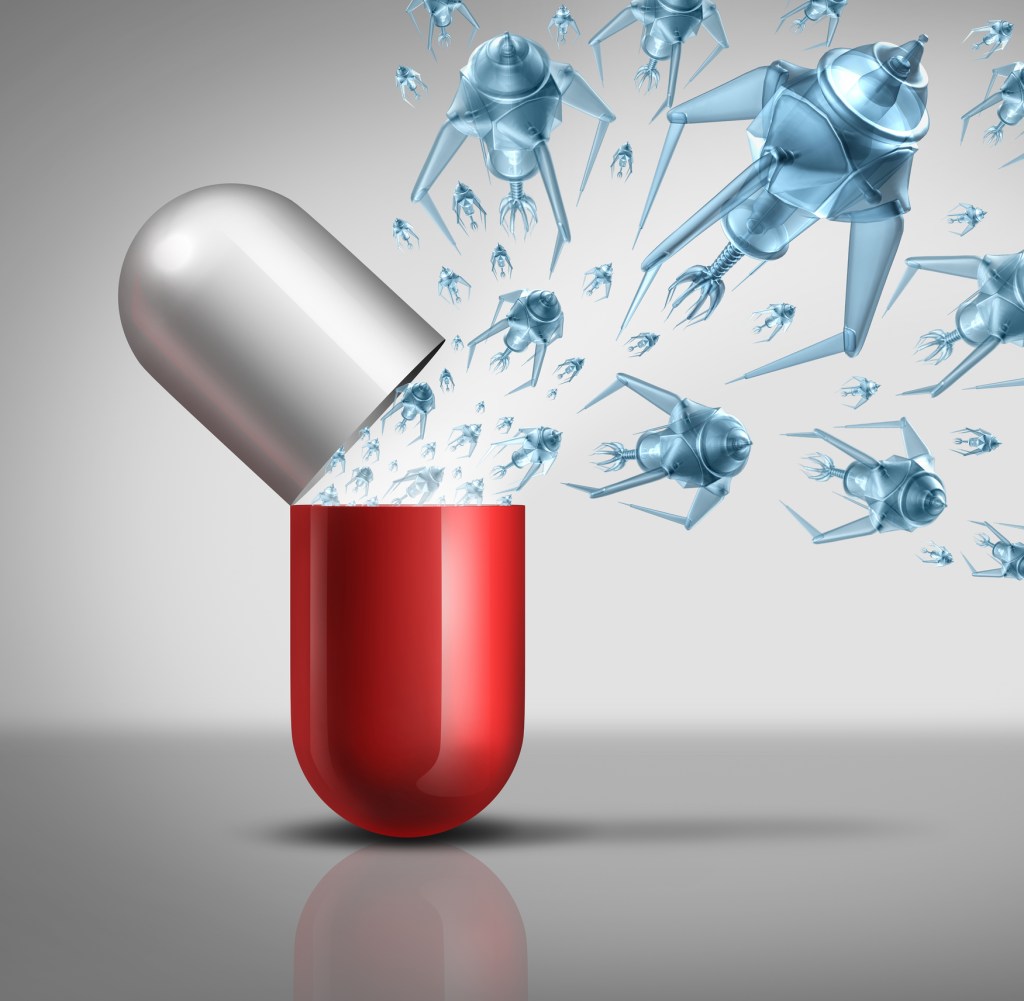
There are three ways nanoparticles can enter the body, either via food/drink intake, respiration or exposure to the skin tissue. Once inside the bloodstream, they are readily dispersed.
If inhaled, nanoparticles have a high probability to be deposited in the lungs, they can also translocate to sensory neuronal pathways to reach secondary organs and tissues, such as the vascular endothelium, the heart and the brain.
“We have found evidence that these particles go on to organs like the liver, spleen and kidneys, all of which combat toxins. However, traces have been spotted in the heart and brain”, mentioned Dr. Wolfgang G. Kreyling, a biophysicist who has coordinated all aerosol-related research within the Focus Network Nanoparticles and Health of the Helmholtz Zentrum München (HMGU).
An Imperial College research published in Nature Communications Chemistry shows that gold nanoparticles can be toxic to cells. Small nanoparticles are capable of disturbing membranes around the cells. They can attach to the outside of membranes, become embedded within in them, or be completely engulfed and enter the cell, affecting its ability to function.
“The expanding production of nanoparticles has led to increasing concerns regarding their impact on human health and the environment in general. Identifying nanoparticles hazardous to natural organisms is difficult given the wide variety of nanoparticles, their diverse properties and the complexity of biological entities,” mentioned the lead researcher, Claudia Contini, from the Department of Chemistry at Imperial.
Occupational exposure is another worrying factor. Workers exposed to carbon nanotubes have shown a significant increase of biomarkers of fibrosis. IARC, the organisation for cancer research of the World Health Organisation, WHO, have classified one type of carbon nanotubes (Mitzui 7), as potentially carcinogenic in humans.
Ken Tachibana from Sanyo-Onoda City University in Japan has been studying the adverse effects of nanoparticles on fetuses and newborns, which may have a critical effect on future generations. His team has shown that nanoparticles have a negative effect on the neural development of mice, as the particles somehow alter gene expression. Levels of dopamine and its metabolites were also altered after exposure to nanoparticles, which could potentially affect mental health in later life.
Research is ongoing, but Tachibana and his team suggest the possibility that nanoparticles transferred from pregnant mothers alter the DNA methylation state of neural stem cells of offspring.
Nanotech in Food & Cosmetics

The addition of nanoparticles to food can result in increase of shelf life, nutrition, and overall appeal of foods. Some nanoparticles have been developed to add the nutritional value of food without affecting the food itself.
Synthetic nanoparticles additives such as titanium dioxide (TiO2) or silicon dioxide (SiO2) can be found in food products and labeled as E-numbers under E171 for TiO2 and E551 for SiO2. TiO2 is used as a colourant in sweets, chewing gums and candies.
The European Food Safety Authority (EFSA) has evaluated all available studies on effects in animals of nanoparticles used in food. In May 2021, the EFSA updated its safety assessment of E171 and concluded that titanium dioxide can no longer be considered safe when used as a food additive taking into consideration many thousand of studies.
Synthetic nanoparticles in food must be labeled. Additionally, open and clear communication between the scientists, regulators and the public is essential for the continue use of nanoparticles in food products, as well as funding for further research in order to keep consumers safe.
Silver nanoparticles (NAg) are currently the most widely produced nanoparticle, due to its physicochemical characteristics and multifaceted antimicrobial mechanisms.
The healthcare sector is actually one of the largest markets for Nag, used as a coating agent in medical devices, catheters, dressings, organ and dental implants in order to inhibit bacterial colonization.
Products containing colloidal silver (contains silver nanoparticles) have been widely sold and its manufacturers claim they can stimulate the immune system, improve skin disorders, heal wound, and prevent various diseases like flu, eye infections, herpes, etc.
Colloidal silver can be taken orally, in spray form or cream applied to the skin. Despite all claims, colloidal silver has no known function in the body. In fact, the Food and Drug Administration (FDA) ruled in 1999 that colloidal silver products weren’t safe or effective. They sued several manufacturers over false health claims. These products continue to be sold worldwide.
According to scientific advice on the safety of nanomaterials in cosmetics published by the Scientific Committee on Consumer Safety, SCCS, the SCCS is of the view that there is a basis for concern that the use of colloidal silver (nano), as notified through the Cosmetic Products Notification Portal, CPNP for use in cosmetic products, can pose a health risk to the consumer.
The widespread use of NAg has triggered concerns over the development of silver-resistant bacteria. A growing number of studies have been published describing bacterial resistance in response to different forms of silver agents, including NAg. Silver resistance has been reported in Acinetobacter baumannii.
Acinetobacter baumannii is an opportunistic nasocomial bacterial pathogen, recently listed as the number one critical level priority pathogen due to the significant rise of antibiotic resistance. This type of bacterial is associated with nosocomial infections (healthcare-associated infections, HAI), causing pneumonia, sepsis and soft tissue necrosis.
There is also further concern regarding the “cocktail effect” resulting from the combination of different types of nanoparticles. Not enough research has been carried out in order to assess how a combo of different types of nanoparticles may affect our health and the environment.
As described at the SCCS report, it’s possible that the chemical nature of each of the components that make up a nanomaterial is safe individually, but may pose a hazard when put together in the form of a nanoparticle as such, or cause indirect effects by delivering the components to unintended places in the body.
As nanotechnology grows exponentially, there is an urgent need to set up open and transparent studies, recommendations, guidelines and regulations in regards to detection, toxicity, exposure and safe handling of these novel synthetic particles in all products, in order to assure its safety and prevent additional harm being inflicted in our lives and the life of our planet.



 YourVoiz