
Monica Piccinini
7 January 2026
Climate change, fungal disease, and the Brazilian hospital on the frontline of a heating world.
In October 2025, healthcare workers and patient companions on the oncology ward of Santa Rita de Cássia Hospital in Vitória, capital of Brazil’s Espírito Santo state, began reporting respiratory illness: coughing, fever, fatigue, shortness of breath.
Treatments that usually worked failed, and recovery was slow or absent.
As more people fell ill, it became clear the problem wasn’t individual, something was circulating through the hospital itself.
After weeks of investigation, state health authorities confirmed 33 cases of histoplasmosis, an infection caused by the fungus Histoplasma capsulatum. The organism, commonly found in soil enriched by bird and bat droppings, had entered a clinical environment assumed to be sealed from ecological exposure.
This wasn’t a failure of hygiene alone. It was a sign of environmental change reaching places designed to keep it out. It was an organism older than humanity itself, one that’s learned to survive in a world we’re rapidly changing, overheating.
This fungus is part of the environment. But environmental exposure can reach places we believe are controlled, said Tyago Hoffmann, Espírito Santo health secretary.
The outbreak wasn’t an anomaly; it was a warning.
The invisible kingdom
Fungi are essential to life on land. They decompose organic matter, cycle nutrients and sustain plant ecosystems. Without them, soils would fail and forests would collapse. Yet they remain among the least studies and least understood organism on Earth.
Scientists estimate there may be between 1.5 and 3.8 million fungal species and fewer than 10 per cent have been formally described. Even fewer are studied for their impact on human health.
Historically, this gap in knowledge hasn’t been particularly dangerous, as our bodies have been protected by heat. The average human temperature, around 37oC, creates a natural biological barrier, which most fungi simply couldn’t survive.
As global temperature rises, this barrier is weakening. Fungi are adapting, species once restricted to cooler environments are now evolving to tolerate higher heat. Some are now capable of surviving at temperatures closer to those of the human body.
Fungal pathogens pose a serious threat to human health. Climate change will make these risks worse, said Viv Goosens of the Wellcome Trust.
What’s shifting isn’t fungal behaviour, but the ecological conditions that once limited it.
Adaptation
Climate change doesn’t create fungal disease from nothing. It reshapes the conditions in which fungi live, spread and persist.
Warmer temperatures expand the geographic range of many species. For example, changes in rainfall change soil moisture, helping fungi flourish in places they once couldn’t. Floods carry spores across landscapes, and droughts dry out soil, allowing microscopic particles into buildings never designed to keep them out.
Fungi are exceptionally good survivors, as their spores are light, durable and capable of travelling long distances. In a destabilised climate, those survival traits become a public health risk.
Medical researchers increasingly recognise climate change as a driver of emerging fungal disease. A review published in Therapeutic Advances in Infectious Disease warns that warming temperatures and ecological disruption are redrawing the global map of disease.
We’ve already seen what this looks like with Candida auris. First identified in 2009, the multi-drug-resistant fungus has since been detected in hospitals in more than 50 countries across six continents. Many researchers believe rising environmental temperatures may have helped it overcome the thermal barriers that once prevented fungi from infecting humans.
Dr. Norman van Rhijn at the University of Manchester said:
We’ve already seen the emergence of the fungus Candida auris due to rising temperatures, but, until now, we had little information of how other fungi might respond to this change in the environment.
Fungi are relatively under researched compared to viruses and parasites, but these maps show that fungal pathogens will likely impact most areas of the world in the future.
The victims
Histoplasma capsulatum has long been present across the Americas. Infection occurs when spores are inhaled, often after soil is disturbed by construction, wind or changes in ventilation.
In Vitória, investigators believe spores entered Santa Rita de Cássia Hospital through the air conditioning system or structural vulnerabilities. Once inside, they encountered people least able to resist infection: immunocompromised cancer patients and overstretched healthcare workers.
Histoplasmosis often resembles flu or pneumonia, delaying diagnosis. In healthy individuals, it may resolve without treatment, but in vulnerable people, it can spread beyond the lungs and become fatal.
Similar patterns are emerging elsewhere. Fungal diseases are appearing in new regions, linked to warming temperatures, ecological disruption and failing infrastructure.
Inequality
Those most exposed are rarely those most responsible.
Healthcare workers, cleaners, junior staff and patient companions are often the first affected and the last protected. Many live in hotter neighbourhoods, rely on underfunded public health systems and lack access to early diagnosis or paid leave.
The communities least responsible for fossil fuel emissions are being forced to breathe the consequences first. This is climate injustice, playing out at the microbial level.
Despite growing evidence of risk, fungal disease remains neglected. There are few antifungal drugs, rising resistance and limited surveillance. Research funding and political attention remains minimal, particularly when compared to viral threats affecting wealthier populations.
A warning
The Santa Rita de Cássia Hospital outbreak isn’t just a medical story; it’s an ecological one. It shows how environmental disruption doesn’t stay outside hospital walls. It enters buildings through air systems, infrastructure weaknesses and assumptions of separation between human health and the natural world.
Climate change is often discussed in distant terms, such as melting ice caps, burning forests and rising seas, but its effects are already present in hospitals, workplaces and lungs.
Human health depends on stable ecosystems and when those systems destabilise, disease patterns change. The spores that circulated through a hospital in Brazil carried a message we can’t afford to ignore.
Climate change is reshaping disease, and the institutions designed to protect us are no longer insulated from the consequences.
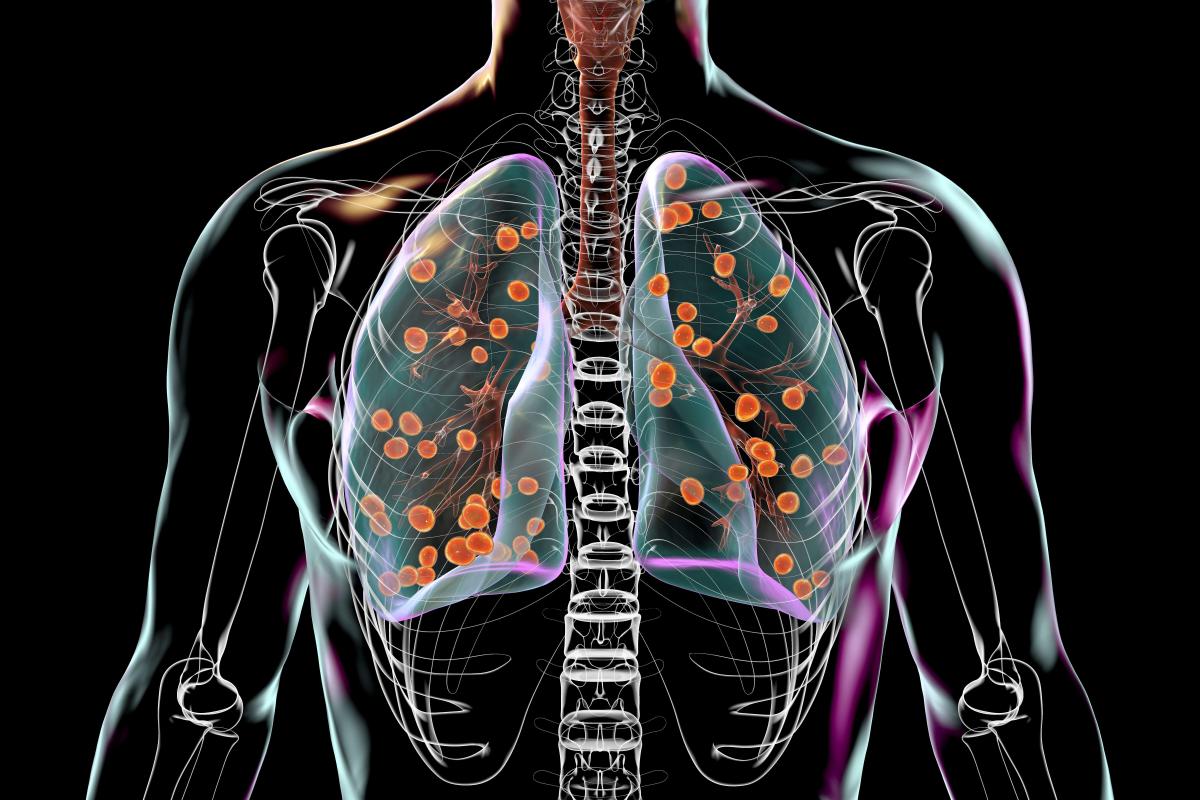
Featured image: lung histoplasmosis, a fungal infection caused by Histoplasma capsulatum. Photo credit: Kateryna Kon/Science Photo Library/Alamy

 YourVoiz
Obrigado Monica. Posso republicar na revista Ciência&Você? Abraço.
LikeLiked by 1 person
Olá! Claro que pode! Agradeço!
LikeLike
Está publicado. https://ciências https://xn--cincias-kya você.aescolalegal.com.br http://xn--voc-hma.aescolalegal.com.br
Veja na home
Obrigado. Forte abraço Sempre que quiser envie para revistas@aescolalegal.com.br
LikeLiked by 1 person