
Monica Piccinini
03 June 2026
Beneath Brazil’s forests, farms and cities, a vital water reserve is showing signs of strain. A new study indicates that groundwater levels in parts of the country are declining at rates comparable to those observed in some of the world’s most heavily exploited aquifer systems.
Water has always been central to Brazil’s identity, shaping its landscapes, economy and ecosystems. From rivers of the Amazon to the seasonal floods that transform the Pantanal into one of the world’s largest wetlands, water has helped define both the country’s geography and its development.
For generations, this abundance created the belief that Brazil would never face serious water shortages. However, evidence emerging from beneath the surface suggests that some groundwater reserves are becoming increasingly vulnerable to environmental and human pressures.
A study led by Augusto Getirana, a scientist at NASA’s Goddard Space Flight Centre in the Hydrological Sciences Laboratory, examined more than two decades of groundwater dynamics across Brazil using satellite observations, artificial intelligence tools and groundwater monitoring systems.
The findings reveal a mixed picture. While some aquifers continue to recover naturally after periods of drought, others show persistent declines linked to agricultural expansion, mining activity, climate variability and growing water demand.
According to the researchers, groundwater declines observed in some Brazilian aquifers resemble patterns documented in heavily stressed groundwater systems in Bangladesh, India, Iran and the US, researchers reveal.
The study assessed groundwater conditions across Brazil’s 12 major river basins and examined several important aquifer systems, including the Alter do Chão, Urucuia, Bauru-Caiuá, Guarani, Pantanal, Solimões and Parecis.
Groundwater supplies approximately 55% of Brazil’s water demand and supports more than half of the country’s municipalities. In many regions, it provides a critical buffer during droughts and helps maintain water supplies when surface reservoirs decline.
Despite its importance, groundwater monitoring remains limited. Across a territory of roughly 8.5 million square kilometres, Brazil operates only about 500 federal groundwater monitoring wells, leaving large areas insufficiently observed.
On the question of whether Brazil’s historical water abundance may have encouraged complacency, Getirana said:
I would not say that Brazil mistook abundance for security. What has changed is that the assumptions that worked in the past may not be sufficient for the future.
Over the past few decades, Brazil has experienced a series of major water crises, including the electricity rationing crisis of 2001, the severe droughts of 2014–2015, and the water shortages that affected several regions in 2021. At the same time, population growth and economic expansion have increased water demand.
Groundwater has increasingly become part of the solution. What surprised me in this study was seeing evidence that groundwater use for irrigation and public water supply has expanded enough to leave a detectable footprint on groundwater storage.
Brazil is not facing nationwide water insecurity today, but these findings suggest that the country’s traditional confidence in abundant water resources may need to be reconsidered in a changing climate and under growing demand.
Pressure beneath the Cerrado
Some of the strongest signs of groundwater decline are occurring in central Brazil, particularly in parts of the Cerrado and within the São Francisco and Paraná basins. These regions have also experienced extensive agricultural expansion.
Often overshadowed by the Amazon, the Cerrado is regarded by hydrologists as one of South American’s most important water-producing landscapes. Major river systems originate there, including rivers that contribute to the Amazon, Paraná, and São Francisco basins.
Native vegetation plays a crucial role in regulating water movement by allowing rainfall to infiltrate gradually into the soil, replenishing aquifers and sustaining river flows beyond the rainy season.
Over recent decades, millions of hectares of native vegetation have been converted into soya plantations, cattle pasture and irrigated agriculture.
The study found evidence that some aquifers experienced years in which little or no groundwater recharge occurred. In those years, rainfall failed to replenish underground reserves at historical rates. Researchers identified these patterns in portions of the Urucuia Aquifer, the Guarani Aquifer’s recharge zone and other heavily used groundwater systems.
Many of these areas support Brazil’s agricultural economy. If recharge rates continue to weaken, groundwater extraction could become increasingly difficult to sustain during prolonged droughts.
The São Francisco basin emerged as one of the regions experiencing the most severe groundwater losses in Brazil, driven by intensive water use, drought, land-cover change and shifting rainfall patterns.
As noted by Getirana, groundwater can mitigate drought impacts, although its reliability is declining in many regions:
During prolonged droughts, rivers, lakes, and reservoirs are typically the first water sources to decline. Forests help sustain water resources by promoting infiltration into the soil and aquifers, while also influencing regional atmospheric circulation and rainfall patterns. Aquifers often serve as the long-term reserve, the savings account of the hydrological system.
Our results suggest that groundwater systems are becoming less reliable in regions where water demand is highest. The strongest storage declines occur in densely populated and economically active regions, indicating that some of these natural safety nets are being placed under increasing pressure.
The Amazon
The Amazon contains some of the world’s largest freshwater reserves. While researchers found evidence that groundwater systems in parts of the region are becoming more variable, the changes are not uniform across the basin.
Getirana and colleagues found that large portions of the Amazon maintained stable groundwater conditions during the study period, and some regions even experienced gains in groundwater storage. These findings suggest that certain groundwater systems remain resilient under favourable environmental conditions.
Near Manaus, groundwater levels fluctuate in response to the seasonal rise and fall of the Negro and Solimões rivers. However, extreme climate events appear to be affecting these natural cycles.
The 2015-2016 El Niño event may have represented a significant shift in groundwater behaviour in several areas, with some aquifers moving from relatively stable conditions to more persistent declines.
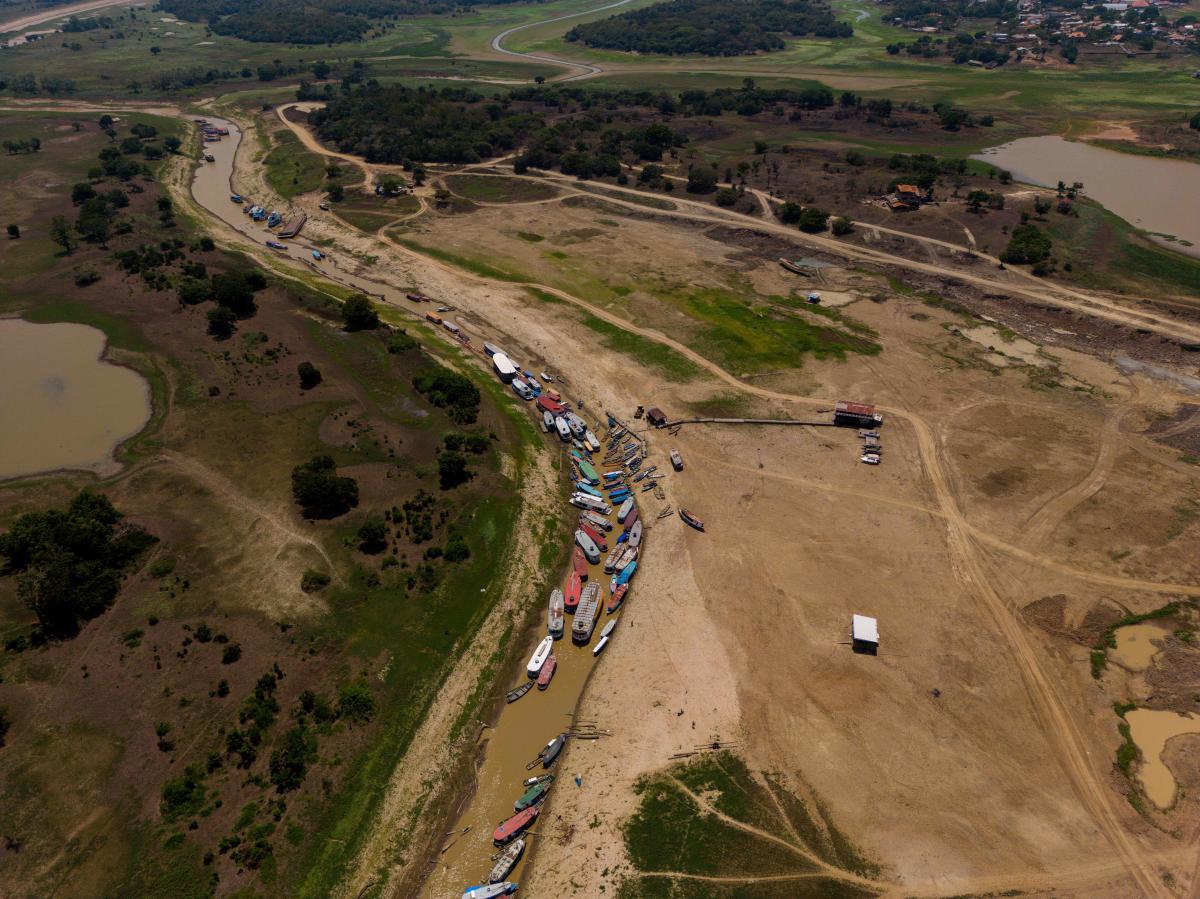
Recent droughts have driven Amazon rivers to historically low levels, disrupting transportation, isolating communities and affecting ecosystems throughout the basin.
At the same time, southern Brazil has experienced severe flooding. The researchers note that groundwater conditions can influence flood risk because saturated underground systems lose their capacity to absorb additional rainfall, increasing runoff.
Taken together, these findings suggest that Brazil’s water challenges increasingly involve variability and extremes, rather than simple questions of water abundance or scarcity.
Reflecting on the wider significance of the findings, Getirana said:
I think one of the broader lessons is that abundance and sustainability are not the same thing. Brazil possesses some of the largest freshwater resources on Earth, yet our results show that groundwater systems can still experience persistent losses when climate variability, land-use change, and growing water demand act together.
Many societies have historically treated natural resources as effectively inexhaustible because they seemed abundant relative to human needs. What modern observations and satellite records increasingly show is that even very large systems have limits.
Groundwater is particularly important because it is largely invisible. Unlike rivers or reservoirs, changes underground can go unnoticed for years or even decades. Studies like this one help make those hidden changes visible before they become larger problems.
Fire, mining and groundwater extraction
The Pantanal, the world’s largest tropical wetland, is also experiencing growing pressure.
The researchers identified declining groundwater recharge in parts of the region, a trend associated with drought, land-use change and increasingly severe fire seasons.
Fires can have long-lasting effects on water systems, destroying vegetation, altering soil structure, reducing infiltration and making it more difficult for aquifers to recharge after dry periods.
Mining activity also contributes to additional pressure in some areas. In parts of the state of Minas Gerais, groundwater is pumped from underground systems to support mining operations. This can lower groundwater levels, alter river flows and affect surrounding communities.
Examples from other parts of the world demonstrate how difficult it can be to reverse the changes once large-scale extraction has altered water systems.
Around the Dead Sea, decades of river diversion, mineral extraction and groundwater overexploitation have contributed to a dramatic fall in water levels, accelerating shoreline retreat and the formation of thousands of sinkholes.
Similar concerns are emerging in Brazil’s Amazon. In Autazes, a major potash project being developed by the Canadian company Potássio do Brasil has raised warnings from researchers, Indigenous organisations and local communities about possible impacts on groundwater, wetlands and connected freshwater systems.
Environmental assessments and independent reviews have highlighted risks including increased sediment runoff, greater water turbidity and pressure on ecosystems linked to the Madeira River, one of the Amazon Basin’s most important waterways. While the long-term consequences remain uncertain, these cases illustrate how mining can alter water systems far beyond the boundaries of the extraction site itself.
An emerging challenge
Brazil isn’t running out of water, but abundant resources don’t eliminate vulnerability.
The study found that only a fraction of rainfall ultimately reaches and replenishes groundwater reserves. In some regions, recharge remains robust, but in others, it appears to be weakening.
Brazil experienced major water crises in 2000-2001, 2014-2017 and 2021. These events have often been viewed primarily as rainfall shortages.
The new findings suggests that deeper changes may also be affecting the country’s water systems. As climate change accelerates and pressure on land and water resources increases, groundwater is likely to become an increasingly important component of Brazil’s long-term water security.
Despite the challenges identified in the study, Getirana remains optimistic about the growing public awareness of water security issues:
Studies on water availability, drought, groundwater, and climate impacts are increasingly reaching mainstream media and public debate. Scientific knowledge alone does not change policy or management practices. Real change happens when governments, institutions, and society recognize the problem and act on the evidence.
The fact that groundwater and water security are becoming topics of national conversation in Brazil is encouraging. When science reaches the public and informs decision-making, it creates opportunities to improve monitoring, planning, and long-term water management.
When asked what people might see decades from now as the earliest indication that Brazil’s groundwater systems were under pressure, Getirana said:
The challenge today is not the absence of warning signs. The challenge is ensuring that this information becomes part of the decision-making process. Fifty years from now, I suspect people will look back and say that the first warning signs came from the combination of satellite observations, scientific studies, and recurring water crises that revealed vulnerabilities that had previously gone unnoticed.
For decades, Brazil relied on the assumption that abundant water resources would offset rising demand and environmental pressures. The evidence presented in this study suggests that protecting groundwater may become just as important as safeguarding rivers, forests and wetlands in the decades ahead.
Photo featured: Parintins, Brazil, September 2023. Boats stand at the edge of a river whose water level has dropped due to drought. Credit: Aguilar Abecassis/dpa/Alamy Live News


