
Monica Piccinini
3 August 2026
Can the world’s largest beef industry become sustainable – or is sustainability itself being redefined?
For decades, cattle have symbolised the destruction of the Brazilian Amazon and the Cerrado. Ancient rainforest has given way to vast pasture, replacing some of the planet’s richest ecosystems with grazing land. But the industry’s impact extends far beyond deforestation. It has reshaped land ownership, concentrated wealth, altered political power and become deeply embedded in Brazil’s economic development.
Forests were not lost through chainsaws and fire alone. Behind every cleared hectare lay an economic model that rewarded converting living forest into private wealth. Roads opened remote regions, timber financed the first wave of clearing, fire consumed what remained, and cattle turned deforested land into an asset that could be bought, sold, mortgaged and defended. Within that system, a standing forest held little financial value.
Today, cattle are being reframed. As governments, investors and agribusiness seek ways to reduce agricultural emissions, livestock is no longer presented solely as a driver of environmental decline. It’s now being promoted as part of the climate solution through “regenerative” ranching, “low-carbon” beef, digital traceability and green finance.
This shift extends beyond farming practices. It reflects changes in environmental governance, where climate policy, financial markets and conservation are becoming more closely interconnected. The question is no longer simply how to reduce the environmental cost of cattle production, but whether the industry can continue expanding while claiming to operate within ecological limits.
How is this shift taking place, who’s driving it and what does it mean for the future of the Amazon? Does the reinvention of cattle represent a genuine environmental transition or a financial model that allows one of Brazil’s most powerful industries keep growing under the language of sustainability?
Cattle, deforestation and a changing narrative
Around 80 per cent of cleared land in the Amazon has been converted to pasture. In the neighbouring Cerrado, one of the world’s most biodiverse biomes, cattle ranching and large-scale commodity agriculture have replaced native ecosystems across an immense area.
Decades of satellite monitoring, scientific research and government investigations reach the same conclusion: pasture is the dominant land use established after Amazon deforestation, and cattle ranching remains its main direct driver. Not every hectare was cleared solely for beef production. Cattle have also served to occupy disputed land, consolidate speculative claims and prepare properties for resale or conversion to other agricultural uses.
The consequences extend well beyond forest loss. Clearing and burning release carbon accumulated over decades or centuries. Cattle emit methane through digestion, while manure and pasture management generate additional greenhouse gases. Replacing forests and native savannahs with pasture also degrades soils, alters river systems, fragments habitats and accelerates biodiversity loss.
Across parts of the Amazon, cattle expansion has remained closely linked to land grabbing, fraudulent property claims and the illegal occupation of public, protected and Indigenous land. Prosecutors, journalists and human rights organisations have repeatedly documented ranches associated with forced labour, intimidation and violence against Indigenous peoples, traditional communities and smallholders. These abuses do not characterise every producer, but they remain a persistent and well-documented feature of the industry’s history.
Data from Brazil’s Ministry of Labour and Employment, compiled by Repórter Brasil, revealed that 65,600 workers were rescued from slavery-like conditions between 1995 and 2024. More than 17,300 worked in livestock farming, making it the sector with the highest number of recorded cases. As one rescued worker observed: “Here, cattle are treated better than workers”.
For years, international debate framed livestock expansion and forest conservation as opposing forces. The challenge was to limit the environmental damage caused by an industry whose growth had become inseparable from the advance of the agricultural frontier.
Over the past decade, that debate has shifted. Governments, researchers, development agencies, environmental organisations, banks, philanthropies and meat companies have moved from asking whether cattle production should change to asking how it can be aligned with climate policy.
The change began with language. Reports once centred on deforestation now promote “low-carbon beef”, “regenerative’ ranching, “nature-positive” and “sustainable” production. Practices such as restoring degraded pasture, improving animal nutrition, reducing slaughter age and increasing productivity are presented alongside climate finance, satellite monitoring, digital traceability and environmental investment.
Many of these proposals offer genuine environmental benefits. Restoring degraded pasture is preferable to clearing new forest. Effective traceability can expose abuses that have long remained hidden within supply chains. Stronger environmental agencies, reliable land registries and better technical support could all strengthen responsible producers while excluding those who profit from illegal deforestation.
Greater efficiency, however, doesn’t necessarily reduce environmental impact. Producing beef with fewer emissions per kilogram does not automatically reduce total emissions, land use or ecological pressure. Animals may reach slaughter weight sooner, lowering methane intensity, while overall emissions continue to rise if herd sizes and production keep expanding.
That distinction matters in a country with around 238 million cattle, more than its human population, and the world’s largest beef export industry. Brazil is pursuing two ambitions at once: presenting livestock as part of its climate strategy while expanding the scale and competitiveness of its beef sector.
Behind the reports, investment funds and institutional partnerships, another story begins to emerge. The reinvention of cattle is no longer only about forests, pasture or methane. It also concerns credit, environmental data, financial products and the rapidly expanding market for investments described as green, climate-aligned or nature-positive.
The organisations involved do not all share the same objectives, nor does this diminish the work of scientists, public officials and practitioners who have spent decades protecting forests and improving rural livelihoods. The more important question is whether sustainable cattle represent a genuine transformation of livestock production, or a financial and technological model that allows the industry to continue expanding.
Rewriting the language of sustainability
The transformation of Brazil’s cattle industry did not begin on ranches. It began with a change in language.
For decades, debate about Brazilian livestock centred on deforestation, biodiversity loss, greenhouse-gas emissions, illegal land occupation and labour abuses embedded in beef supply chains. The objective, even if politically difficult, was clear: reduce the environmental damage caused by one of the world’s largest cattle industries. But that’s no longer the dominant conversation.
Rather than questioning whether livestock production should continue expanding, policy now largely assumes that cattle will remain central to Brazil’s economy. The challenge has become making the industry more productive, more transparent, more technologically sophisticated and more attractive to climate-conscious investors.
The distinction is subtle but significant. If the problem is the scale of the cattle industry, policy responses might include limiting production in ecologically vulnerable regions, discouraging frontier expansion and reducing pressure for continued growth. If the problem is inefficiency, the solutions become better genetics, restored pasture, digital monitoring, faster animal growth and new forms of rural credit.
Language matters because it shapes policy. It influences what governments measure, where financial institutions invest and what counts as environmental progress. Terms such as “low-carbon” beef, “regenerative” ranching, “nature-positive” and “sustainable” production do more than describe farming practices; they redefine the problem itself.
That shift is reflected in research produced through the Amazônia 2030, a collaboration between the Amazon Institute of Man and Environment (Imazon) and the Climate Policy Initiative (CPI). Its work recognises the role extensive ranching, degraded pasture and deforestation have played in transforming the Amazon, while arguing that future investment should focus on existing production areas rather than new agricultural frontiers.
The recommendations are practical: redirect rural credit towards measurable productivity gains, expand technical assistance, restore degraded pasture, strengthen georeferenced monitoring and clarify the legal status of public forests vulnerable to speculative occupation. The underlying argument is that Brazil can produce more beef on land that has already been cleared, reducing the incentive to destroy additional forest.
The logic is persuasive. If degraded pasture supports only a small number of cattle, restoring it should increase production without requiring new land. In theory, higher productivity could spare land for conservation or ecological restoration. Whether that happens depends less on productivity than on governance.
Higher yields reduce pressure on forests only when environmental protections prevent expansion and restored land is genuinely conserved. Where enforcement is weak, greater efficiency can have the opposite effect, making cattle production more profitable, attracting new investment and increasing pressure to expand.
History offers no simple answer. Agricultural intensification has reduced pressure on land in some regions while accelerating expansion in others. Outcomes depend on demand, infrastructure, credit, law enforcement and whether higher profits are channelled into restoring existing land or acquiring new properties.
One statistic illustrates the point. Research cited by Amazônia 2030 suggests that every hectare of restored pasture between 2000 and 2023 coincided with approximately 2.35 hectares of new deforestation. The figure describes a historical association rather than proving that restoration caused forest loss, but it challenges the assumption that productivity gains automatically displace frontier expansion.
The central question, then, is not whether pasture can be made more productive. It can. The question is whether those gains are accompanied by safeguards that prevent higher profits from financing further deforestation.
The same tension runs through the broader language of “low carbon” livestock.
IDH, the Sustainable Trade Initiative, promotes programmes that combine pasture restoration, technical assistance, finance and market access to support lower-emission cattle production. Its partnerships in Brazil bring together environmental organisations, agribusiness, financial institutions and development agencies around a common objective: transforming livestock through investment rather than contraction.

A similar approach appears in the World Resources Institute‘s New Economy for the Brazilian Amazon, where livestock reform forms part of a broader programme linking universities, NGOs, businesses and policy organisations around climate-compatible economic development.
Other initiatives follow the same pattern. The Brazil Restoration and Bioeconomy Finance Coalition (BRBFC) brings together commercial banks, development institutions, philanthropic foundations and environmental organisations to support large-scale investment in restoration and nature-based enterprises.
These organisations differ in governance, priorities and political outlook, and they should not be viewed as a single coordinated project. But their programmes share a strikingly similar vocabulary: productivity, resilience, restoration, traceability, measurable impact, environmental services and blended finance.
Taken together, these initiatives reveal a broader shift in environmental governance. Livestock is no longer framed simply as an environmental liability requiring tighter regulation. It’s also presented as an opportunity for climate investment, environmental data and participation in emerging markets for carbon, biodiversity and ecosystem services.
The implications extend beyond cattle ranching. Forests, biodiversity and restored landscapes are treated as measurable economic assets. Financial institutions are developing products that reward environmental performance, while digital technologies generate the data needed to verify and trade those assets.
Brazil sits at the centre of this shift. It contains the world’s largest tropical rainforest, the vast Cerrado and millions of hectares of degraded pasture that could be restored or intensified. That combination makes the country not only an environmental priority but also one of the world’s largest potential markets for climate investment.
Because cattle occupy so much of Brazil’s land, they lie at the heart of that opportunity. Pasture can simultaneously be presented as a climate problem, a restoration opportunity and a financial asset awaiting more productive use.
The reinvention of cattle, then, is about far more than reducing methane emissions. It’s about repositioning one of Brazil’s largest economic sectors within a rapidly expanding market for climate finance.
Whether that ultimately places ecological limits ahead of economic expansion remains the defining question.
Brazil’s forest restoration market could deliver $141 billion opportunity for companies and investors, according to an Orbitas report.
Following the money
The reinvention of cattle is not being driven by environmental policy alone. It’s also shaped by a growing financial architecture that links climate targets, agricultural production and global investment.
Programmes promoting low-carbon livestock rarely operate in isolation. Instead, they emerge from partnerships between governments, development agencies, philanthropic foundations, commercial banks, investment managers, meat companies and environmental organisations.
Together, these actors are redefining not only how sustainability is financed but also how it is measured.
Such cooperation is neither unusual nor inherently problematic. Restoring degraded pasture, improving supply chains and supporting responsible producers require long-term investment that public finance alone is unlikely to provide. The more significant question is how these partnerships influence the definition of sustainability itself.
When environmental programmes are designed around the expectations of financial markets, success tends to be measured through investment returns, risk reduction, scalability and quantifiable outcomes. Values that resist simple measurement like cultural survival, territorial rights, biodiversity or the intrinsic value of forests, can become harder to accommodate.
IDH, the Sustainable Trade Initiative, illustrates this changing landscape. Established in 2008 through collaboration between the Dutch government, civil society and the private sector, IDH works across global commodity supply chains, including cocoa, coffee, cotton, palm oil, soy and beef. In Brazil, it supports pasture restoration, technical assistance and financial mechanisms designed to accelerate lower-carbon livestock production.
IDH’s funding reflects the breadth of today’s sustainability economy. Alongside support from the Dutch Ministry of Foreign Affairs and Switzerland’s State Secretariat for Economic Affairs (SECO), strategic funding has come from Denmark’s Ministry of Foreign Affairs (DANIDA), Norway’s Ministry of Environment (NORAD), the European Union, the Bill & Melinda Gates Foundation, the Laudes Foundation, the Mastercard Foundation, the IKEA Foundation and the UK’s Foreign, Commonwealth and Development Office (FCDO).
This illustrates a broader change in environmental governance. Policy is no longer shaped solely by governments and regulators. It increasingly emerges through partnerships in which public institutions, philanthropy, financial organisations and commercial interests work together to influence environmental outcomes.
One of the clearest examples is IDH‘s Cria Fund. Developed with investment manager Violet, part of the VERT Group, the fund aims to expand access to finance for small and medium-sized cattle producers across the Brazilian Amazon. It combines rural credit with digital technical assistance and market access, bringing together land, data and capital.
By 2030, the fund aims to mobilise US$50 million, support 1,000 producers and cover 150,000 hectares under practices classified as sustainable. An initial US$10 million investment is intended to reach 250 farmers managing approximately 12,000 hectares.
For many producers, access to affordable finance remains a genuine barrier. Restoring pasture, purchasing equipment and adopting new production systems all require capital that conventional rural credit often fails to provide.
The Cria Fund also illustrates a broader shift. Environmental performance is becoming inseparable from participation in financial systems. Lending decisions increasingly depend on production data, geospatial monitoring and digital technical assistance. Access to capital is linked not only to farming practices but also to the ability to generate and verify environmental information.
For producers, this could improve access to premium markets while rewarding better environmental performance. It also raises important questions. Who owns the data generated through these programmes? How might that information influence future lending decisions? Who determines which production systems qualify as regenerative? And what happens to producers who cannot afford the required technology or whose land documentation remains unresolved?
These are not arguments against environmental data or rural credit. Rather, they show how financial inclusion can create new forms of dependence alongside new opportunities.
The choice of Violet as the fund’s investment partner highlights another significant trend. Companies specialising in structured finance and capital markets are becoming central players in environmental policy. Issues once addressed primarily through agricultural extension services and public regulation are increasingly managed through blended finance, private investment and financial products designed to attract institutional capital.
That evolution was evident during London Climate Action Week 2026, where IDH, CPI, representatives of the UK’s Foreign, Commonwealth and Development Office (FCDO), investors and financial institutions focused less on forests themselves than on the financial mechanisms needed to make regenerative livestock commercially viable.
The same logic extends beyond cattle. Launched during the G20 Summit in 2024, the Brazil Restoration and Bioeconomy Finance Coalition (BRBFC) brings together public banks, private financial institutions, conservation organisations and international development agencies with the goal of mobilising at least US$10 billion for restoration and bioeconomy projects by 2030.
Its membership includes Banco do Brasil, BNDES, BTG Pactual, Conservation International, IDB Invest, Instituto Arapyaú, Instituto Clima e Sociedade, Mombak, The Nature Conservancy (TNC), re.green, WWF Brasil, the World Bank Group, the World Economic Forum, among others.
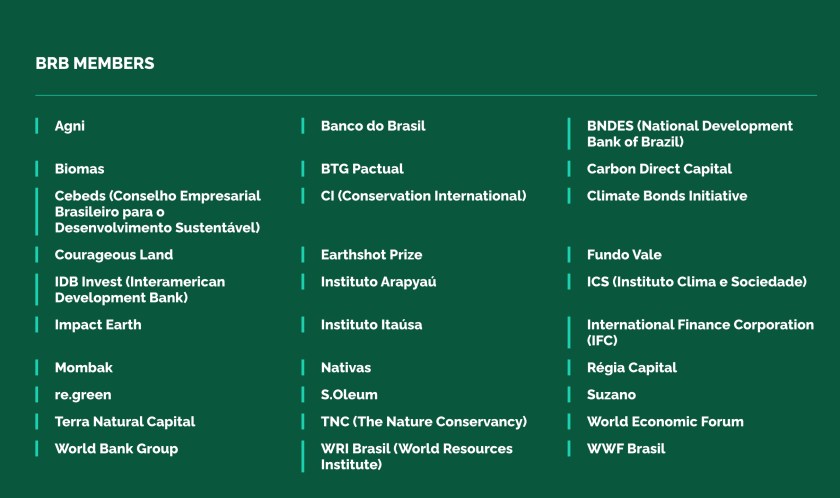
By July 2025, coalition members reported commitments of US$2.6 billion. They also aim to restore or protect five million hectares while directing US$500 million towards projects involving Indigenous peoples and local communities.
The ambition is to replace the frontier economy with one that generates value through restoration rather than deforestation. Forests become investable assets rather than obstacles to economic growth.
That vision holds genuine promise. Long-term restoration requires long-term capital, and Indigenous organisations and community groups have often struggled to access conventional finance.
But restoration and the bioeconomy remain broad concepts. They may support the recovery of native ecosystems, but they can also include commercial forestry, carbon markets and agricultural systems with very different ecological and social outcomes.
Although BRBFC is not a livestock programme, it operates within a landscape dominated by cattle. Decisions about restoring, intensifying or repurposing pasture inevitably shape the future of Brazil’s largest agricultural sector.
Taken together, these initiatives point to something larger than individual projects. Environmental governance is becoming more integrated with global finance. Forests, biodiversity, pasture and ecosystem services are being translated into assets that can be measured, valued and incorporated into investment strategies.
Across most of the programmes examined, the future being proposed does not involve producing less beef. Instead, it’s about producing beef more efficiently, monitoring it more closely and connecting it to new flows of capital.
In this vision, sustainability does not replace growth. It becomes the mechanism through which growth is expected to continue.
Can traceability deliver?
If one idea has become central to the promise of sustainable cattle production, it’s traceability. Policy papers, corporate sustainability reports and investment strategies present it as the solution to one of the livestock industry’s oldest problems: knowing where an animal has spent its life.
In theory, every animal would be identified from birth, every movement between farms recorded, and every property checked against satellite imagery, environmental embargoes, Indigenous territories and labour violations. Regulators, investors and consumers could then verify whether beef sold in São Paulo, Brussels or Shanghai came from a lawful and deforestation-free supply chain.
Without reliable traceability, however, claims of low-carbon or deforestation-free beef remain difficult to verify. Brazil has made significant progress in monitoring livestock production, yet the systems on which traceability depends remain fragmented, unevenly implemented and, in some cases, vulnerable to manipulation.
Three mechanisms form the current framework: the Rural Environmental Registry (CAR), the Animal Transit Guide (GTA) and agreements between federal prosecutors and slaughterhouses known as the Meat Industry Conduct Adjustment Agreement (Meat TAC). Together they mark an important advance in transparency, but they also expose the weaknesses that continue to limit effective oversight.
Created under Brazil’s Forest Code, CAR is a digital register in which landholders declare property boundaries, areas of native vegetation, legal reserves and agricultural land. Those declarations can be compared with satellite imagery, protected areas and environmental embargoes, making CAR an essential tool for environmental governance. Its main weakness is that the information is initially self-declared and becomes reliable only after verification by state environmental authorities. That process has progressed slowly, leaving a backlog with millions of registrations awaiting validation.
The consequences extend well beyond environmental regulation. Banks consult CAR before approving rural credit, meat companies use it to screen suppliers and investors rely on it to assess environmental risk. If the underlying information is incomplete or inaccurate, every decision built upon it becomes less reliable.
Research by the Centre for Climate Crime Analysis, reported by Repórter Brasil, highlights the problem. Between 2019 and 2024, 14,223 properties in the Legal Amazon altered their CAR registrations in ways that removed environmentally restricted areas. Across those changes, around 4.9 million hectares disappeared from declared property boundaries. Such alterations do not in themselves prove wrongdoing, but the scale of the changes, and the removal, in some cases, of environmental embargoes and overlaps with Indigenous territories, raises serious concerns about the integrity of the system.
Tracking land is only part of the challenge. Reconstructing the life of an individual animal is more complex because Brazil’s beef industry operates across multiple farms. One property may breed calves; another raises them and a third prepare them for slaughter. The Animal Transit Guide records those movements, but it was designed primarily to control livestock disease rather than reconstruct an animal’s environmental history.
That distinction has important consequences. Slaughterhouses have traditionally monitored only their direct suppliers, the farms selling animals immediately before slaughter, while earlier stages of the production chain often remain outside the system. An animal may therefore spend much of its life on illegally cleared land before being transferred to a compliant property shortly before slaughter. The final transaction appears lawful even though much of the animal’s environmental history remains hidden.
The practice, commonly described as cattle laundering, doesn’t necessarily rely on forged documents. Instead, it exploits the gaps between systems that record different stages of the supply chain without communicating effectively with one another. The farm supplying the slaughterhouse may satisfy environmental checks while properties where the animal previously lived remain effectively invisible.
Electronic identification, integrated databases, satellite monitoring and automated risk analysis could help close part of that gap by making it far more difficult to erase an animal’s history. These technologies represent genuine advances over the fragmented systems currently in place, but they cannot substitute for effective governance. Electronic tags cannot resolve fraudulent land claims, satellite imagery cannot enforce environmental law, and digital platforms cannot verify inaccurate property declarations or compensate for weak institutions and inadequate enforcement.
Ultimately, traceability is less a technological challenge than a question of governance. Its credibility depends on reliable public registries, independent verification, transparent information, effective regulators and meaningful consequences for those who breach environmental law.
Brazil’s monitoring systems are becoming increasingly sophisticated, but sophistication shouldn’t be mistaken for certainty. Until cattle can be tracked reliably from birth to slaughter, and every stage of the supply chain is subject to effective oversight, claims that beef is deforestation-free will remain only as strong as the weakest link in the chain.
Who defines sustainable cattle?
That question runs through every stage of the debate.
The term “sustainable” cattle appear throughout government strategies, investment prospectuses and corporate reports. Beef is described as “low carbon”, ranching becomes “regenerative”, and supply chains are labelled “nature positive”. The language suggests a settled conclusion, but the meaning of sustainability remains contested.
There is no single scientific definition that determines whether industrial cattle production in the Amazon and Cerrado can be considered sustainable. A farm may satisfy one standard because it hasn’t cleared forest recently while failing another because its animals originated from unmonitored suppliers. It may reduce emissions per kilogram of beef while increasing overall production and it may restore one area while its supply chain expands into another.
Much of the argument for “low carbon” livestock rests on the distinction between emissions intensity and absolute emissions. Better pasture management, improved nutrition, selective breeding and earlier slaughter can reduce greenhouse-gas emissions per kilogram of beef by shortening the time cattle spend emitting methane. These gains are meaningful, but the atmosphere responds to total emissions rather than production efficiency.
If emissions per kilogram fall while herd sizes remain stable or decline, overall emissions can decrease. If productivity improves while cattle numbers and beef production continue to grow, total emissions may remain unchanged or even increase. For a country with the world’s largest commercial cattle herd, that distinction is fundamental.
Methane makes the issue particularly significant. Enteric fermentation remains the largest source of agricultural methane worldwide. Although methane persists in the atmosphere for a shorter period than carbon dioxide, its warming effect is especially powerful during the decades immediately after it is released. Reducing methane emissions can therefore slow near-term warming, yet doing so remains politically challenging because cattle are central to one of Brazil’s most important export industries.
The debate over methane accounting illustrates how contested these questions have become. Some researchers and industry groups support alternative metrics, including Global Warming Potential Star (GWP*), arguing that conventional accounting overstates the long-term warming effect of stable livestock herds by treating methane like long-lived greenhouse gases. The Intergovernmental Panel on Climate Change (IPCC), however, continues to advise against using GWP* for national emissions accounting because it does not fully capture the warming contribution of each methane emission. The debate is technical, but its implications are political because they influence how livestock emissions are interpreted and, ultimately, how sustainability itself is measured.
Technology occupies a similarly prominent place in the reinvention of cattle. Satellite systems detect deforestation, electronic tags follow animal movements, artificial intelligence analyses supply-chain risks and digital platforms integrate environmental, financial and production data. Together, these tools have transformed the ability to monitor livestock production across a country the size of Brazil, providing information that would have been unimaginable only a generation ago.
Technology, however, cannot resolve the political questions at the heart of the debate. Satellite imagery can reveal where forests have been cleared, but it cannot prosecute those responsible. Digital registries can identify overlaps with Indigenous territories, but they cannot guarantee that authorities will intervene. Financial platforms can measure compliance with selected indicators, but they cannot determine whether continued expansion of cattle production is compatible with ecological limits.
A broader pattern emerges. Political and social challenges are repeatedly reframed as technical ones, illegal occupation becomes a problem of data quality, weak law enforcement becomes a question of monitoring, and ecological limits become issues of efficiency and optimisation. Better technology undoubtedly improves oversight, but it cannot replace effective governance.
The same pattern helps explain why finance has become so closely intertwined with environmental policy. Before sustainability can be rewarded by investors, it must first be translated into measurable data. Once quantified, environmental performance can be verified, priced and incorporated into financial decisions. In that process, sustainability becomes not only an ecological objective but also a financial category.
None of this diminishes the value of restoring degraded pasture, improving traceability or supporting producers who want to adopt better practices. Nor does it suggest that the organisations discussed here share identical motivations. Public development banks, environmental organisations, producers and investment funds often participate in the same initiatives for very different reasons.
The evidence does suggest, however, that the authority to define sustainability is gradually shifting. Ecologists may judge cattle production by its impact on forests, biodiversity and climate. Indigenous peoples may judge it by whether their territories, cultures and rights remain intact. Farmers may judge it by whether they can maintain viable livelihoods without losing control of their land or becoming dependent on new financial and technological systems. Investors, by contrast, tend to prioritise measurable indicators, standardised reporting and quantifiable risk.
The question is not whether one perspective is inherently more legitimate than another. It’s who ultimately has the authority to decide which definition shapes policy.
That matters because language guides regulation, regulation directs investment and investment reshapes landscapes. Success cannot be measured simply by the number of cattle fitted with electronic tags, hectares restored or billions of dollars committed to green finance.
The more meaningful test is whether forests remain standing, methane emissions fall in absolute terms, Indigenous peoples retain control of their territories and rural prosperity no longer depends on pushing the agricultural frontier further into natural ecosystems.
Whether the reinvention of cattle proves to be a genuine environmental transition or a more sophisticated justification for business as usual will ultimately be judged not by the language of sustainability, but by those outcomes.
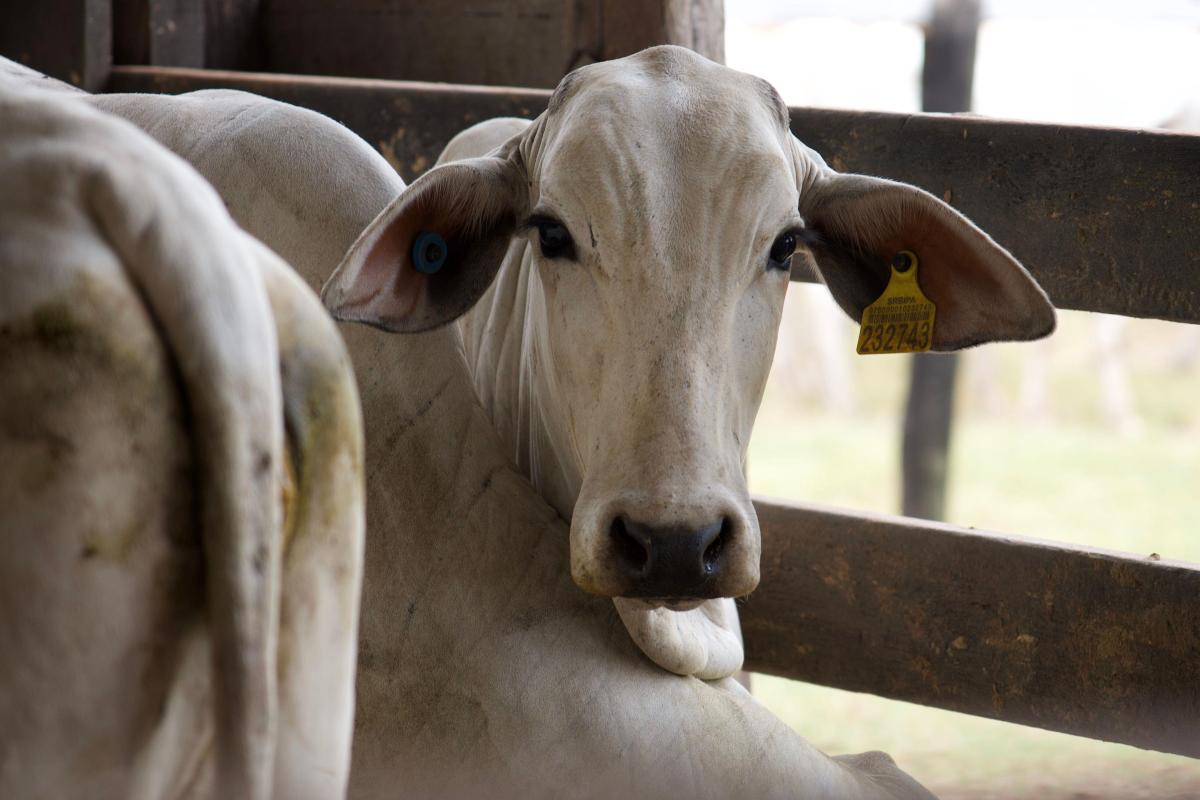
Featured image: a cow with a traceability ear tag is pictured in a ranch in Sao Joao do Araguaia, Para state, Brazil, 12 September 2025. Credit: Zhou Yongsui/Xinhua/Alamy Live News


3 thoughts on “The reinvention of cattle”