
Monica Piccinini
27 October 2026
Rich countries want electric cars, renewable energy and net zero. But there is another race behind this promise: a race for the minerals, land and natural resources needed to make it happen. South America is at the centre of it, and once again, Indigenous, traditional and rural communities, along with the world’s most fragile ecosystems, are being asked to pay the price.
The green transition offers hope. Europe wants electric cars and batteries, China is investing heavily in renewable technologies, and governments across the world have made commitments to cut carbon emissions from their economies.
But every battery, power network, wind turbine and electric vehicle needs huge amounts of minerals and other raw materials. Much of what the world’s richer economies want lies under the land of the Global South and that part of the story gets far less attention.
For more than five centuries, South America has supplied the outside world with its wealth. From silver and gold taken during the European colonisation, to sugar, rubber, timber, oil, gas, soy, beef and other commodities.
Now the world wants lithium, copper, nickel, cobalt and other minerals labelled as ‘critical’. The commodities and the countries competing for them may change, but the pattern of who extracts the resources and who bears the harm remains painfully familiar.
Green colonialism
Researchers writing in The Sociological Review have a name for this: the “coloniality of green transformation”.
They argue that the green transition is intensifying old patterns of extraction. Raw materials leave poorer regions, which are left with much of the environmental damage, while richer countries enjoy the benefits. Now the same practices can be defended as climate action.
Losing your land or water doesn’t hurt less because the lithium taken from it will go into an electric car. And when a forest becomes a carbon credit that a company can trade, it doesn’t stop being someone’s home, territory, history and source of life. Calling it an “offset” changes none of that.
The struggle for these resources now involves more powerful players. China has built a strong economic position in South America and is a major trading partners for countries including Brazil and Chile. The United States and the European Union are also trying to secure access to the region’s raw materials.
So ‘the West and the Rest’ is no longer quite the right division. But South America’s assigned role in the world economy has hardly changed: supply what the powerful need.
This cannot be blamed on one government or one political belief.
A 2026 research article published in Springer Nature’s Humanities and Social Sciences Communications argues that green colonialism goes beyond mineral extraction.
Ioannis Rigkos-Zitthen, a postdoctoral researcher at Roskilde University in Denmark and author of the research, points to the inequalities embedded in the global organisation of production and consumption.
He argues that the real question is not whether the world should move away from fossil fuels, but who controls the resources needed for that transition. He said:
Demand for critical minerals can create real development opportunities, but the crucial issue is who controls extraction, processing and investment; who captures value; and who bears environmental and social costs.
For countries like Chile and Brazil, he says, earning money from exports is not enough. They must also have the power to determine how their resources are developed, and whether particular projects should go ahead at all. He explained:
Governments and communities should have the capacity to determine the pace and terms of development, including when a proposed project is not acceptable.
Governments of left, right and centre have kept extraction going, including those elected on promises of change. Some demand a bigger share for the state or promise to spread the profits more fairly. But the pressure to open land to mines, oil, gas, industrial farming and other forms of extraction remains.
Now they can say those resources are needed not just for growth, but to save the planet.
Sacrifice
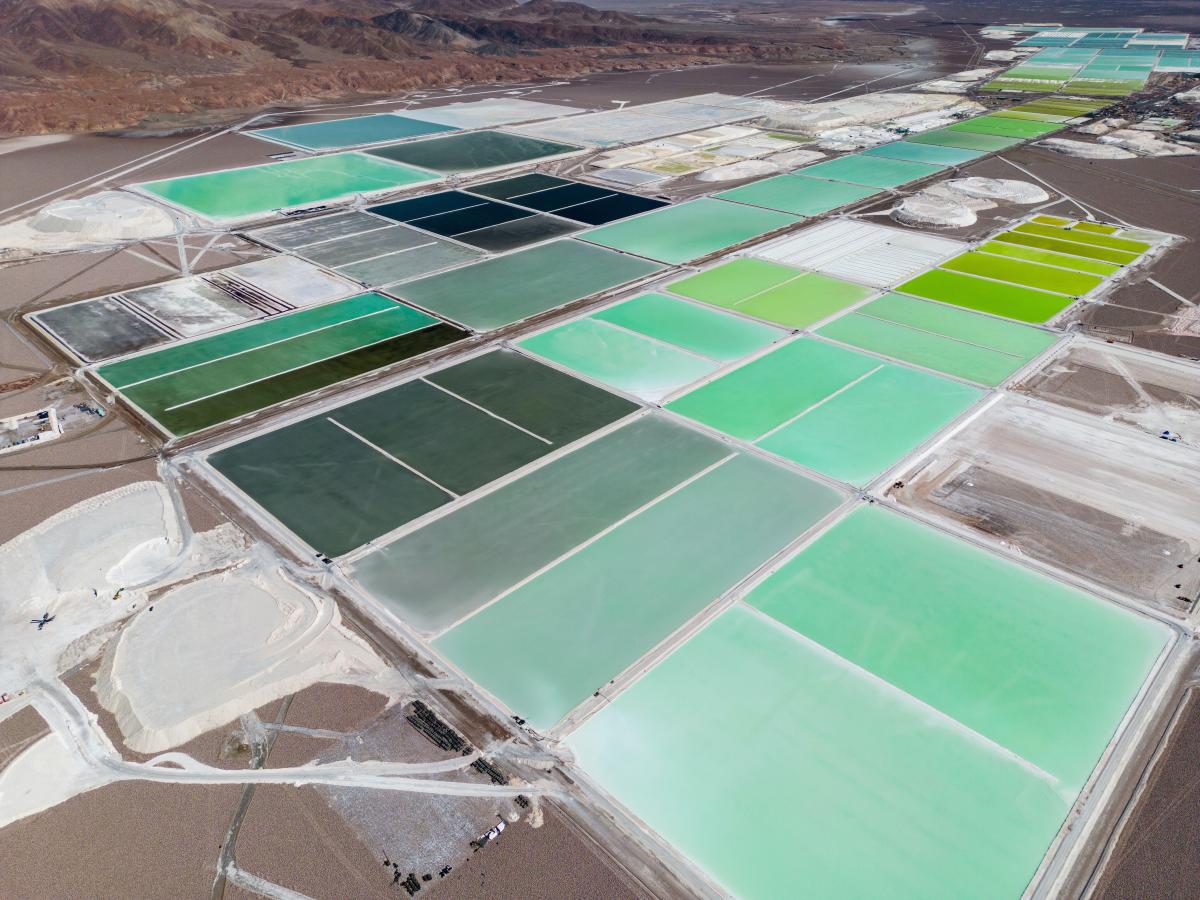
Chile shows what this means on the ground. Its vast lithium and copper deposits are increasingly important as demand grows for electric cars, batteries and renewable energy infrastructure.
According to the research, approximately 87 per cent of Chilean exports consist of raw materials with little or no processing, while mining has made up more than half of the country’s exports for decades.
Chile is the world’s biggest copper producer its second biggest lithium producer, holding some of the largest reserves of both minerals.
By 2040, Europe’s demand for lithium could be 14 times what it was in 2020, mainly because of batteries for electric cars and energy storage. For Chile, that means growing pressure from abroad to dig up more of the minerals other countries need to meet their climate targets.
Much of that mining happens in the Atacama Desert, one of the driest places on Earh. Here, mines compete for scarce water with farmers, communities and the living ecosystems.
Researchers have counted 758 mining tailing dumps created over time. This waste contains chemicals and heavy metals that pollute soil, water and air and eventually enter the food chain.
Some mining areas have been called “sacrifice zones”: places where people and nature are made to bear the damage so that economic life elsewhere can carry on.
Just think about those two words: sacrifice zones. Who decided these places could be sacrificed? And who gets the benefits?
An electric car on a European street may be cleaner where it is driven, but its story began long before anyone plugged it into a charging point. Its copper and lithium came from somewhere. The pressure on water, the pollution and the mining waste don’t vanish just because the driver cannot see them.
Rigkos-Zitthen warns that the way countries measure environmental progress can conceal these costs. A country may reduce pollution within its own borders while relying on imported products whose extraction and production have damaged environments elsewhere. He explained:
Yes, environmental progress can be misrepresented if it is measured only through emissions and pollution generated inside national borders. Production-based measures remain useful, but consumption-based accounts reveal environmental pressures embodied in imported goods.
Carbon emissions alone, he argues, tells only part of the story:
Carbon accounting alone cannot capture the full consequences of mining, including water use, ecosystem disruption, waste and territorial change.
According to figures cited by some researchers, copper mining uses around 35 per cent of Chile’s electricity and 20 per cent of its diesel fuel. The mining sector accounts for about 21 per cent of the country’s greenhouse gas emissions.
Indigenous lands on the frontline
Indigenous, traditional and rural communities are especially exposed to this race for minerals.
A study in Nature Sustainability examined 5,097 projects involving minerals needed for the energy transition. It found that 54 per cent were on or near Indigenous lands. Include peasant lands and the figure rises to 69 per cent. For lithium reserves and resources, the overlap with Indigenous lands was 85 per cent.
The Business & Human Rights Resource Centre’s 2026 Transition Minerals Tracker shows the human cost behind these figures. It recorded 447 allegations of abuse linked to transition-mineral extraction in South America since 2010, with 97 in 2025 alone. Of the allegations recorded in 2025, 64 concerned copper and ten lithium. Peru recorded 26 and Chile 25.
The reports repeatedly raise problems with water and pollution, poor consultation, failures to secure free, prior and informed consent, attacks on people defending their land and violations of Indigenous rights.
These are allegations, not proof that every company named is responsible. But the figures reveal the scale of the concerns surrounding an industry promoted as essential to tackling climate change.
Colonialism was never only about occupying land. It was also about the power to decide that another people’s land, resources and work could be used to serve someone else’s idea of progress.
In Brazil, the scale is striking. An investigation by Repórter Brasil, using data from the Observatório da Transição Energética, found 2,055 mining applications or processes that overlapped with, or lay within ten kilometres of, 278 Indigenous territories.
That amounted to 44 per cent of the country’s Indigenous lands covered in the study. Of the 29,213 applications and processes examined for 27 minerals, half were filed between 2021 and 2025.
These are not all working mines, but they show how Indigenous territories can become surrounded by mining interests long before digging starts.
For Rigkos-Zitthen, the urgency of tackling climate change cannot justify taking decisions away from the people whose land and livelihoods are at stake. He said:
Climate urgency should not be interpreted as permission to suspend democratic rights or disregard territorial claims. Projects promoted as necessary for a global public good can impose concentrated costs on communities whose lands, water and livelihoods are directly affected.
Nor can a project’s importance to the global economy automatically override community objections. He added:
Decisions must respect applicable law and Indigenous rights, including free, prior and informed consent where required, and create real possibilities to alter, relocate or reject a project.
The SIRGE Coalition has warned that mining is being given a green name while the old disputes over Indigenous land and consent remain unresolved.
In the Amazon, a different promise of development has brought a similar fight over rights.
In Autazes, in the Brazilian state of Amazonas, Potássio do Brasil, a subsidiary of the Canadian company Brazil Potash, is developing a potash project. It’s promoted as a way to make Brazil less dependent on imported fertilisers.
But Mura communities have opposed it for years, and the project has faced legal scrutiny over its effects on their land and lives.
Brazil’s Federal Public Prosecutor’s Office (MPF) has challenged the environmental licences, saying Indigenous rights, the effects on territory and the duty to consult communities have not been properly respected.
In May 2026, the MPF again asked for the licences to be cancelled. The company says its consultation process and authorisations are valid and reported a favourable Supreme Court decision in August.
Chile also shows that these inequalities didn’t begin when a mine arrived. They have been built over generations.
Research in the municipality of Valdivia traces the unequal share of environmental benefits and dangers through settler colonialism, the displacement of Mapuche communities, the devastating 1960 earthquake and later neoliberal urban development.
Colonialism leaves its mark on the land: who owns it, who is pushed aside, who has green space and who lives with its risks.
Selling the forest
Mining is only part of the story. The Amazon is now valuable not only for what can be taken from it, but for the carbon the forest can hold.
Carbon markets put a price on the carbon stored by forests. Credits can then be bought and sold, so that pollution in one place is supposedly balanced, on paper at least, by protecting carbon in another.
The promise sounds good. Protect forests, support communities and tackle climate change at the same time.
But studies of REDD+ projects (Reducing Emissions from Deforestation and Forest Degradation) in the Amazon, have found serious problems. They include limits on traditional ways of using land, much smaller financial benefits than Indigenous and traditional communities had hoped for, and conflicts over who controls territory.
People who have done little to cause climate change may be told to change how they live on their own land, while companies and consumers elsewhere keep polluting and buy carbon credits to make up for it.
Researchers call this “carbon colonialism”.
These markets don’t arrive on empty land. They enter places where people fought over ownership for generations. Large areas of the Brazilian Amazon still have uncertain or contested land titles. Researchers warn that carbon credit projects can become caught up in land grabbing and speculation.
In 2024, Brazil’s Federal Police investigated a criminal organisation accused of using carbon projects to help make the theft of around half a million hectares of public land appear legitimate.
This is not climate justice.
Whose transition?
Climate change is real, dangerous and already hitting many of the same communities at the centre of this story. Moving away from fossil fuel is essential. But a transition that continues to take land and resources from poorer regions while denying communities a say in their future risks reproducing the inequalities it should be helping to overcome.
Researchers have proposed other ways to think about the transition: stop shifting environmental damage onto others, build stronger local economies, protect people’s ability to grow their own food, share wealth more fairly, keep ecosystems healthy and stop treating every part of nature as something to buy and sell.
Rigkos-Zitthen believes a genuinely fair transition must also challenge the assumption that economic growth is always the measure of progress. But he rejects the idea that everyone, everywhere, should be expected to consume less. He said:
Wealthy societies have particular responsibilities to reduce ecologically excessive material consumption, while poorer societies must retain the capacity to expand access to housing, healthcare, energy, infrastructure and other essential needs.
The fundamental question is not simply how much economies grow, but what is produced, for whom, under whose control, and with what social and ecological consequences.
He also rejects the idea that ordinary people should carry the main responsibility for changing their lifestyles when more sustainable choices remain beyond their means:
It’s deeply problematic to place primary responsibility for the ecological transition on ordinary people while the economic structures that shape their choices remain largely unchanged.
We cannot simply blame households for not purchasing electric vehicles or accessing more sustainable food when these alternatives remain economically inaccessible to many.
A just transition must transform the conditions to access, production and distribution rather than moralise individual consumption.
The political consequences of ignoring these inequalities could be serious.
Rigkos-Zitthen warns that when climate policies are seen as unfair or imposed from above, the resulting anger can be exploited by far-right and authoritarian movements. But those same grievances can also drive demands for a fairer and more democratic transition. He explained:
When climate policies are experienced as imposed from above, with their costs disproportionately affecting ordinary households and vulnerable communities, the resulting grievances can be exploited by far right and authoritarian movements.
However, these grievances can also become the basis for democratic and progressive political mobilisation demanding greater social justice, redistribution and popular participation in the ecological transition.
The political challenge is not to dismiss such grievances, but to develop democratic institutions capable of addressing them.
For him, a fairer transition means giving people genuine power over the decisions that shape their lives, rather than simply consulting them after the important choices have already been made. He said:
Their lesson is not simply that local communities should be consulted more often; it is that democratic institutions must be capable of redistributing decision-making power.
My broader argument is that grassroots initiatives, communing practices and solidarity economies need to develop relationships with public institutions, political organisations and coalitions operating across geographical scales if they are to transform the wider structures that shape their possibilities.
Instead of asking how the Global South can produce enough for the North’s transition, we should be asking what a transition would look like if communities, their land and the limits of nature came first.
The climate crisis demands deep change. But if Indigenous, traditional and rural communities still have to defend their land from outsiders, if South America is still treated as a storehouse of raw materials, if distant powers still decide what forests and rivers are worth, and if some people still get to consume while others must sacrifice, then colonialism has not ended.
It has only been painted green.
Featured image: Lithium fields in the Atacama Desert in Chile, South America. Source: FREEDOM_WANTED/Alamy.


